







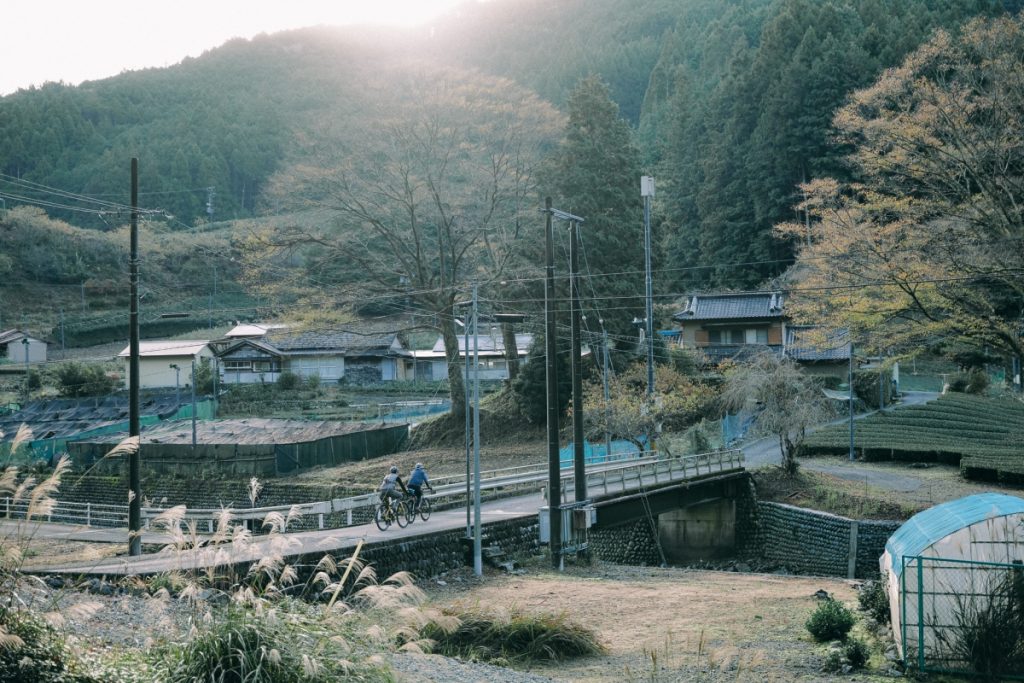
The Katsuo Trail is a 220km loop with 6,300 meters of elevation gain, running from Yaizu City to Kawane Honcho at the southern edge of the Southern Alps. The trail passes through Shizuoka, Fujieda, and Shimada along the way. While PAPERSKY issue no.71 introduced the hiking route of the trail, you won’t want to miss this circular route dedicated to cycle enthusiasts. Continue reading for the juicy details.
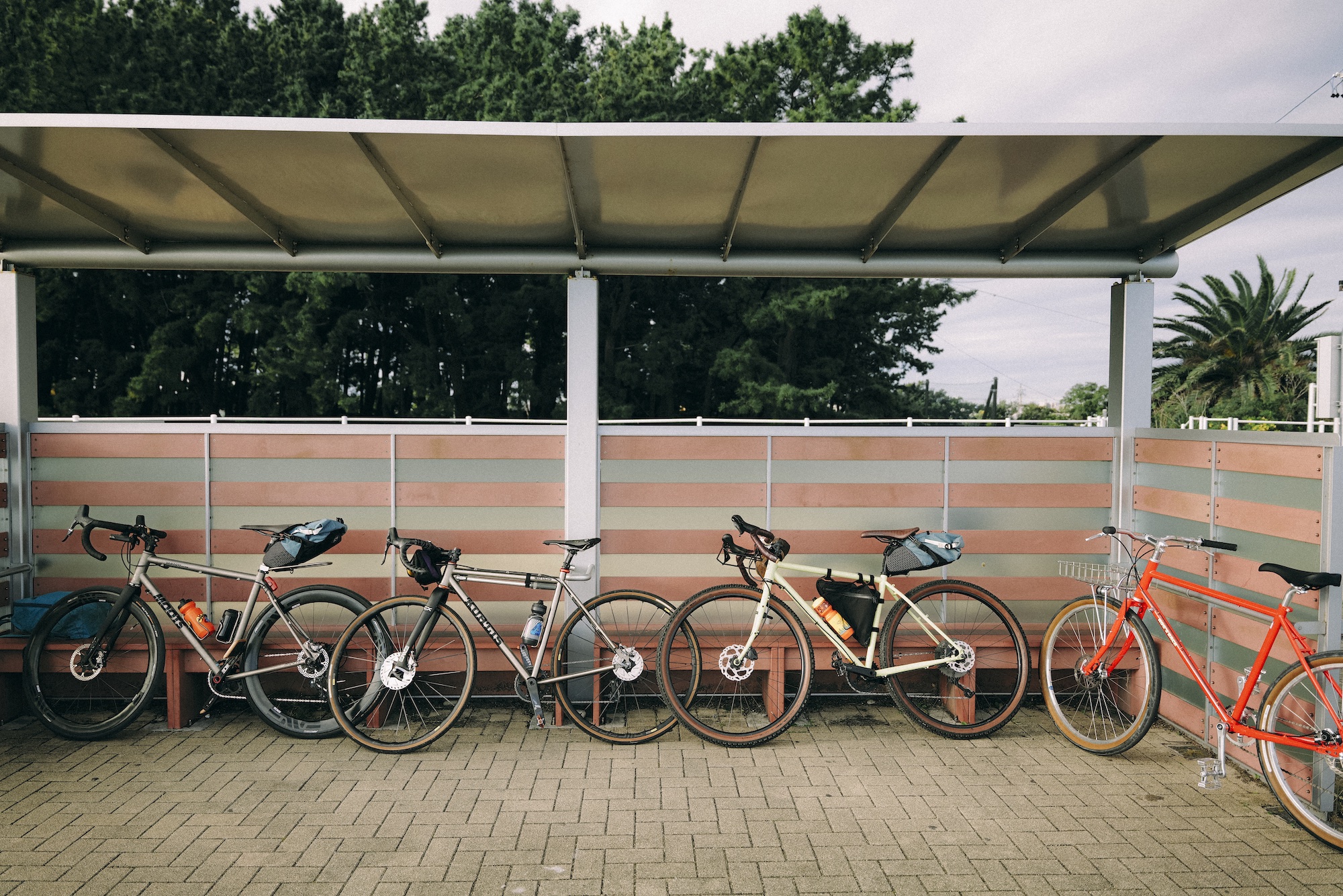
From race-ready titanium frames to gravel bikes with chunky tires, the riders bring all kinds of bikes for this tour.

To give you some background, the Katsuo Trail, opening this summer (2025) was developed around the concept of “trail learning.” The trail is an invitation to hike, run, or ride, through the communities of Yaizu, Shizuoka, Fujieda, Shimada, and Kawane Honcho, all tightly linked by the Ōigawa River, while discovering their local histories and traditions, and experiencing the region’s rich natural tapestry of sea, mountains, and rivers.
Its playful icon? The katsuo, or bonito (also known as skipjack tuna). It’s a nod to Yaizu’s long-standing identity as a “katsuo town” and one of Japan’s top ports for reeling in katsuo.
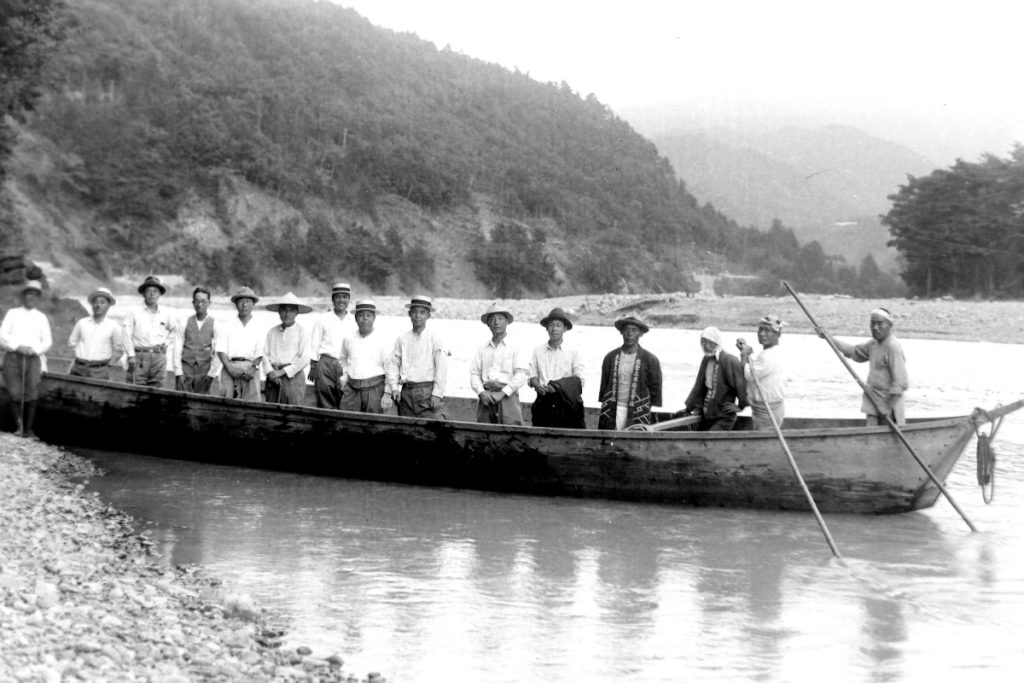
Upriver from Yaizu Port, the Ōigawa River’s tributaries wind through the heavily forested mountains of Kawane Honcho. Timber from these forests was once prized for major constructions like Sumpu Castle and Sengen Shrine, and was transported downstream via this main artery. Interestingly, the hatchō-ro—traditional katsuo boats once used in Yaizu—were reportedly built using this very timber, transported down from Kawane Honcho.
The Katsuo Trail shines a light on this reciprocal relationship between the sea’s bounty, represented by katsuo, and the mountain’s blessings, represented by timber—an exchange that has long connected Yaizu and Kawane at opposite ends of the river.
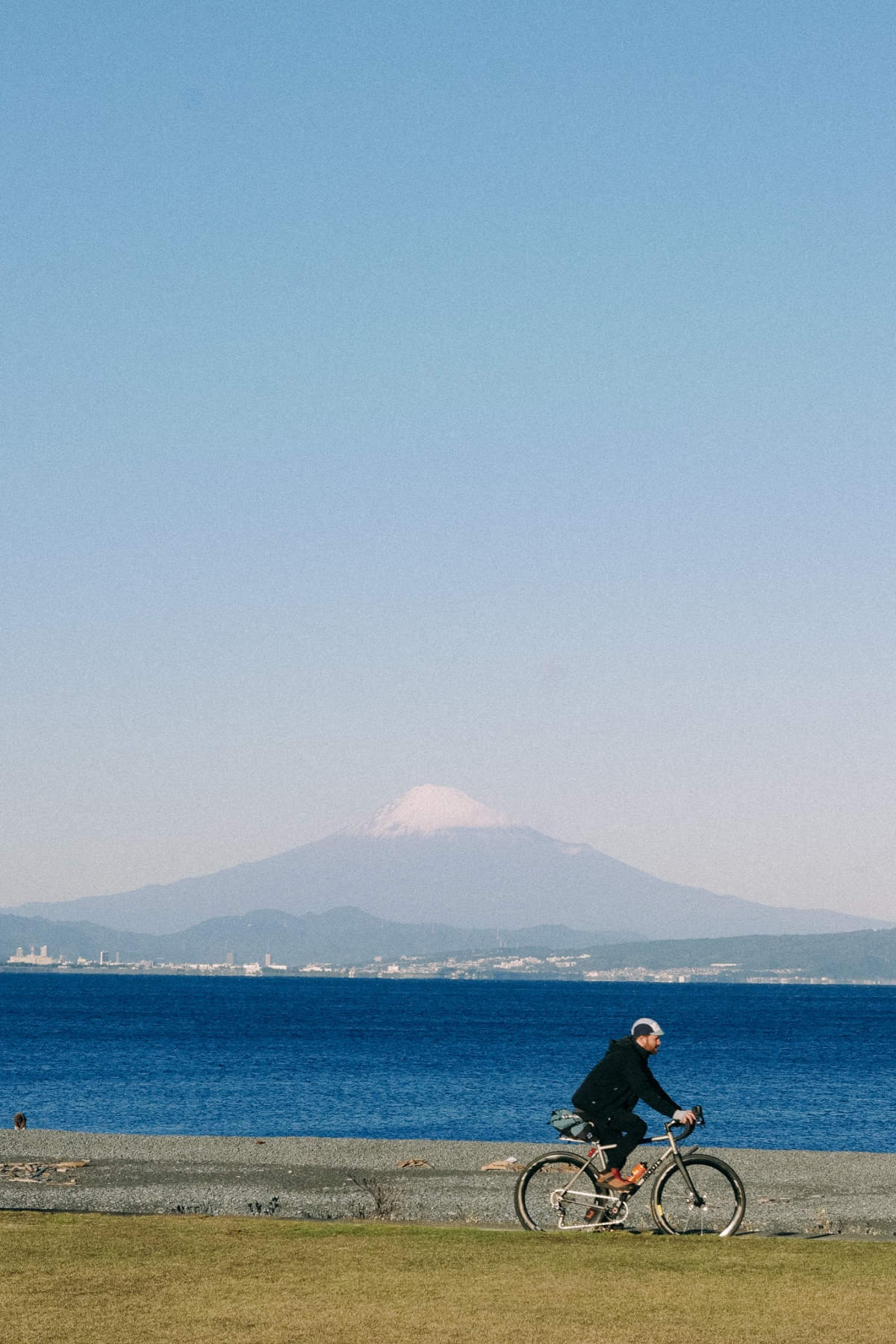

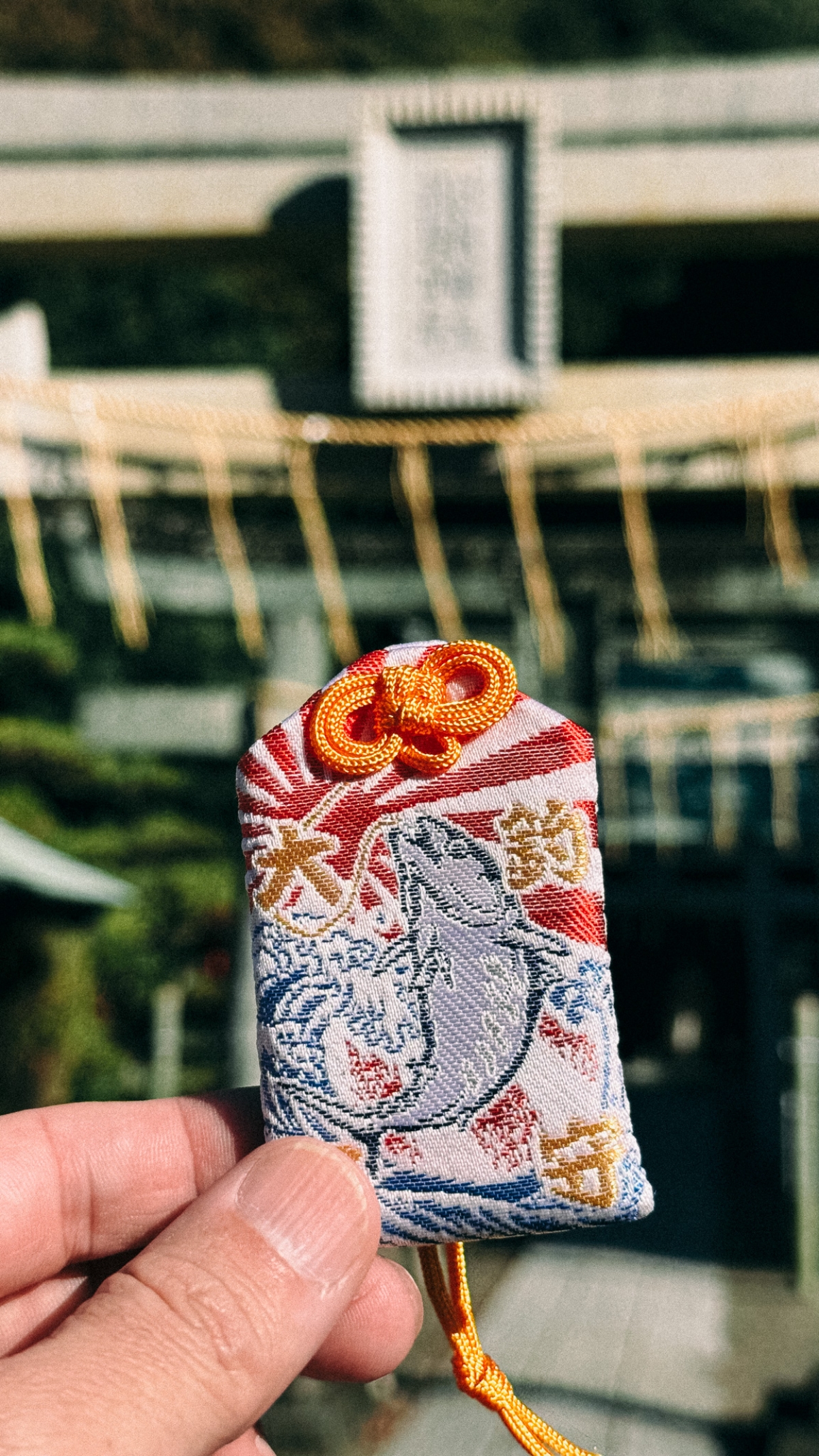
The ride begins at Ishizuhama Park in Yaizu, just like the hiking route. Snow-capped Mt. Fuji sees the cyclists off—an auspicious start if there ever was one. After a quick stop at Nahe Shrine to pray for a safe journey (and to pick up the famous katsuo good luck charm), the route follows the Setogawa River. Tracing parts of the old Tōkaidō road, the path winds through Okabe-juku, a former post town, and into the Asahina area.
This quiet region is known for the Asahina Dairyuusei, a traditional event held every two years where massive handmade fireworks are launched skyward. One of the towering wooden launch platforms stands out dramatically amid the rural landscape. An early lunch at Michi-no-Eki Gyokuro no Sato features a local specialty: Okabe-jiru, a hearty pork-based miso soup with the essential grated yam (tororo). From there, it’s time to tackle the first real climb.
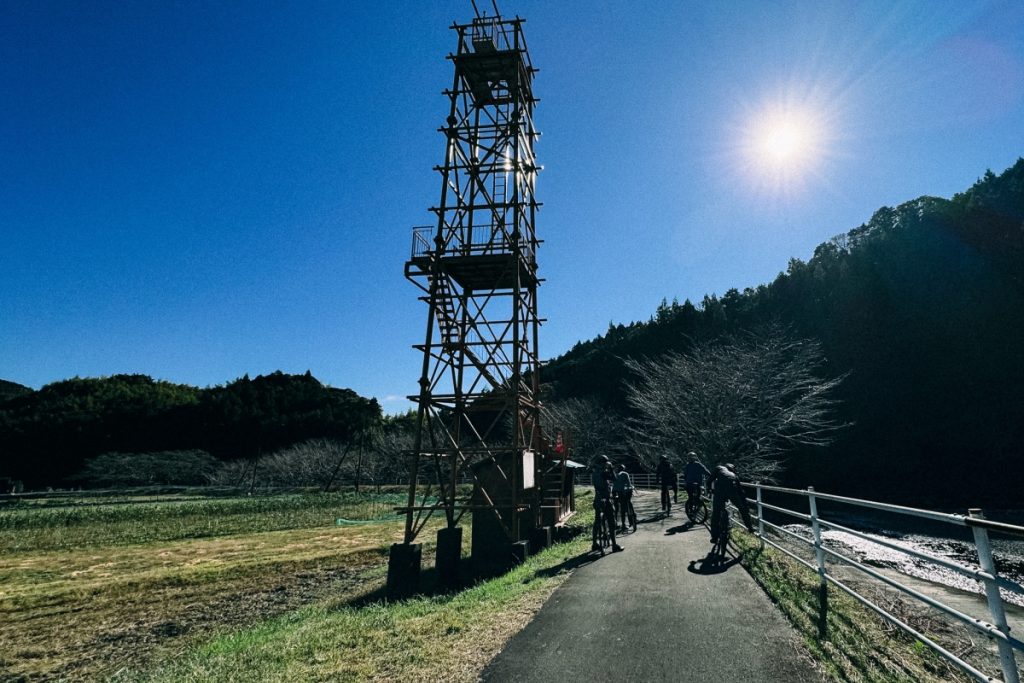

Fast or Slow, it Doesn’t Matter.
Climb Passes at Your Own Pace.
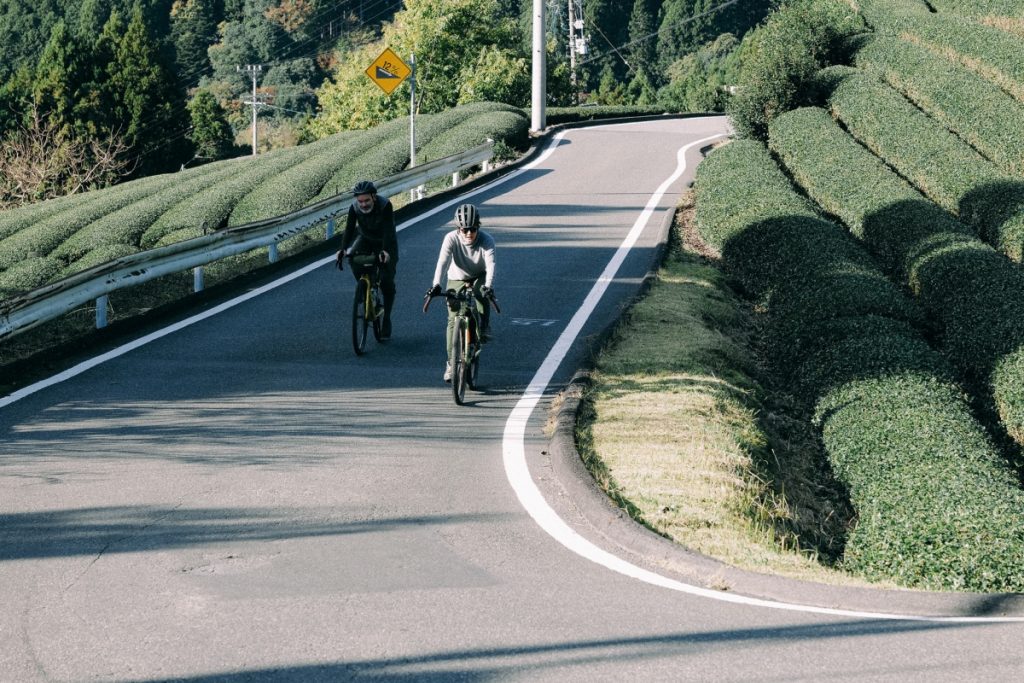
Heading north along the road that runs beside the Asahina River, we enter the village of Aohane, where the real climb begins. It’s a steady stretch of steep hills. Takafumi Nagashima, a mechanic from Naruoka Cycle in Shimada who guides our ride, mentions that hill climbers often come here on weekends. That explains why the area feels like a bit of a hidden favorite. The views of the tea fields that open up along the way help keep our spirits high.

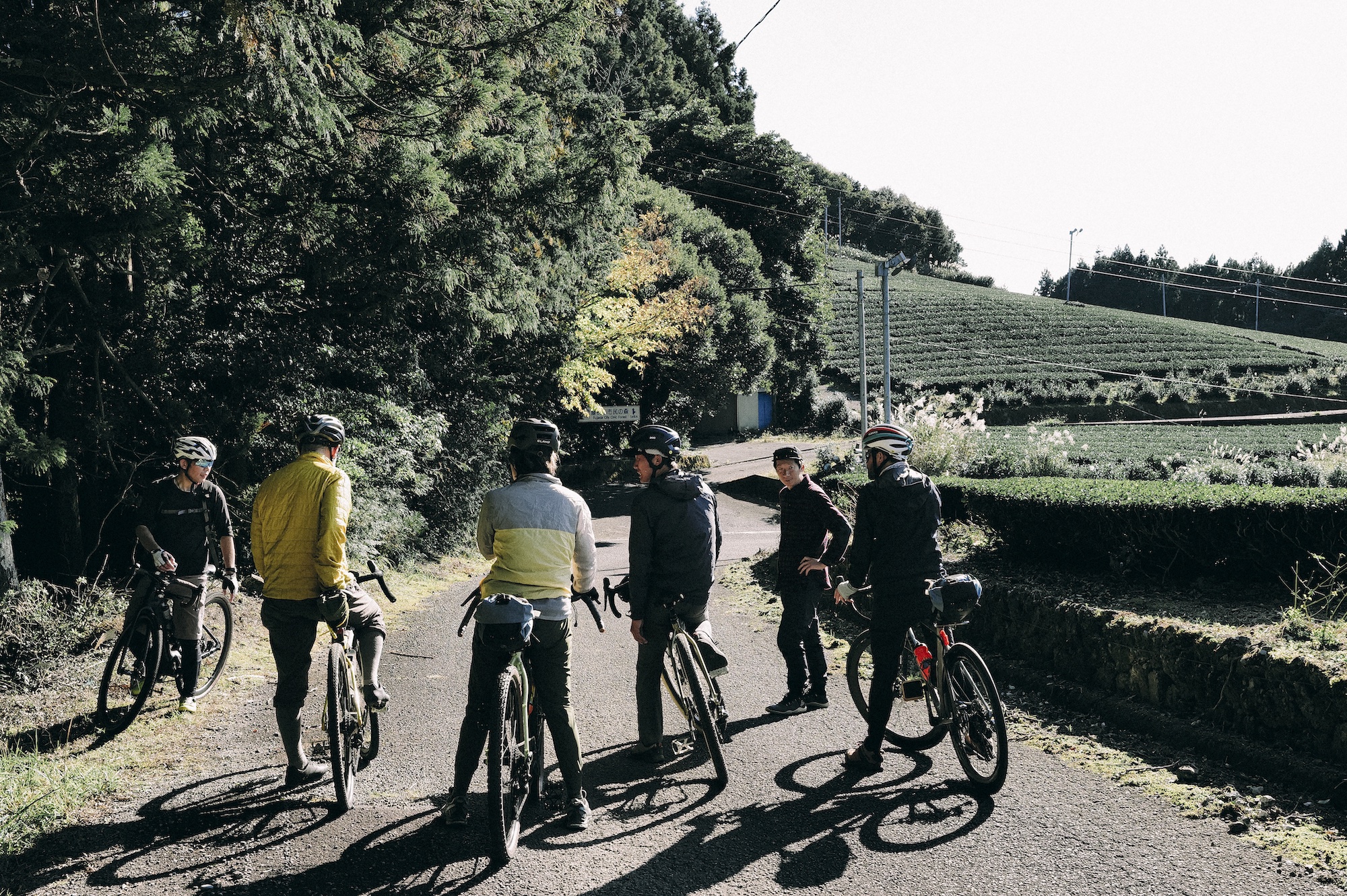
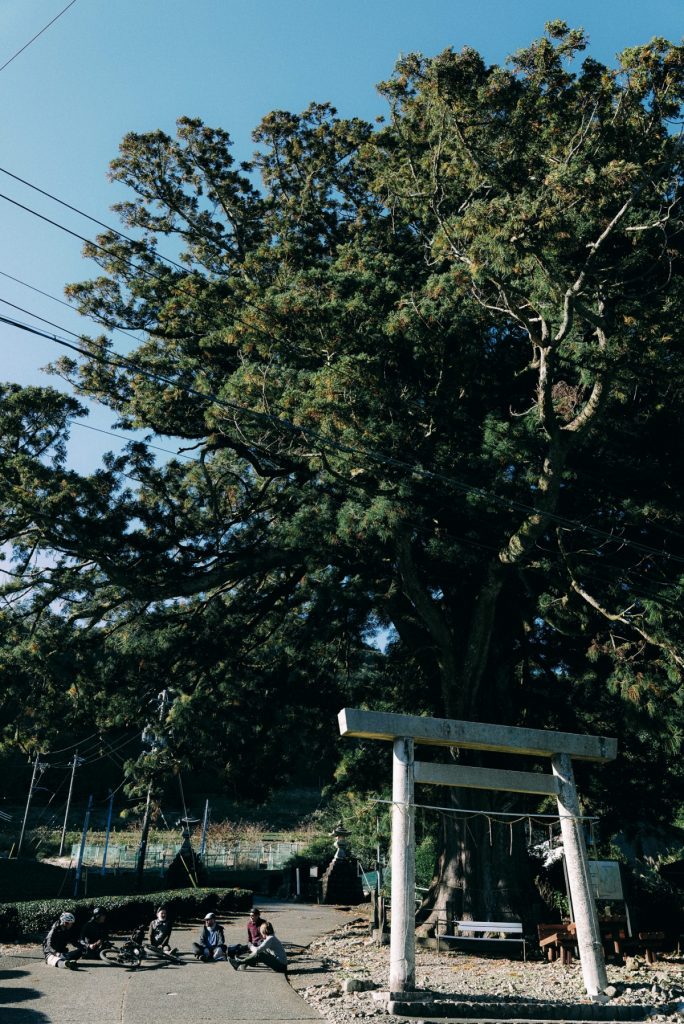
Even past Aohane, the hills keep coming. After a series of climbs and descents, we finally roll into our stop for the night in Sasama just as dusk begins to settle over the mountains. Dinner at Minshuku Fukui is a feast of seasonal mountain goodness: sizzling local shiitake steaks grilled on ceramic plates, generous portions of grated yam, and perfectly salted yamame trout.
Later that night, we step outside and are stunned by the sheer number of stars peeking out over the mountain ridgelines. It’s hard to believe that we were looking out over the Pacific Ocean this morning, and now we’re deep in the mountains. That feeling of covering real ground—watching the landscape gradually shift before your eyes—is exactly what makes a bike journey like this so unforgettable.
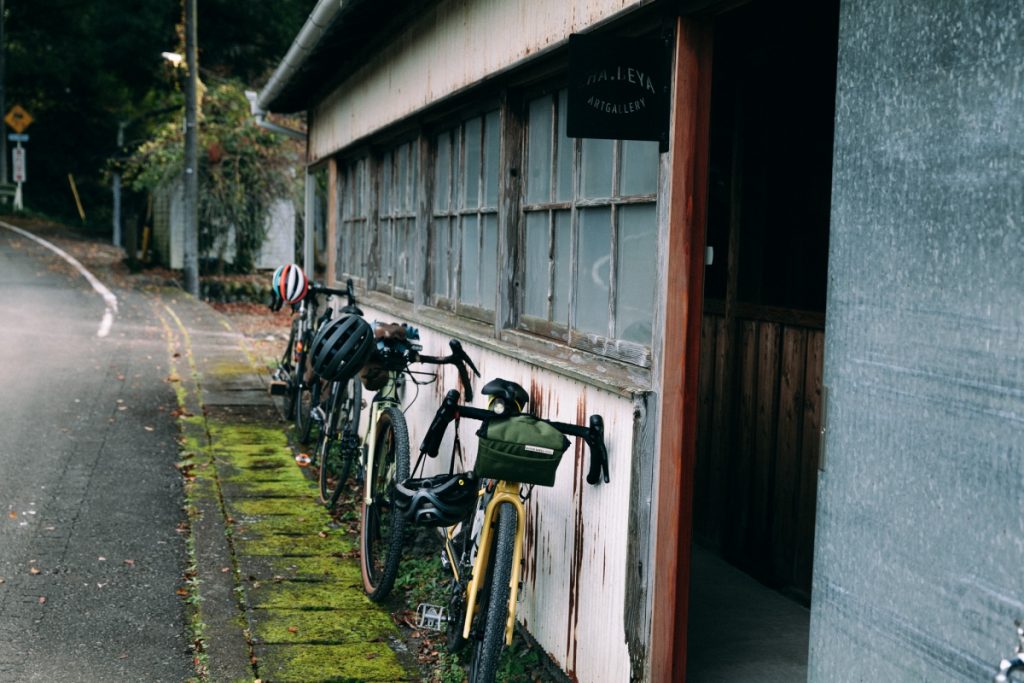
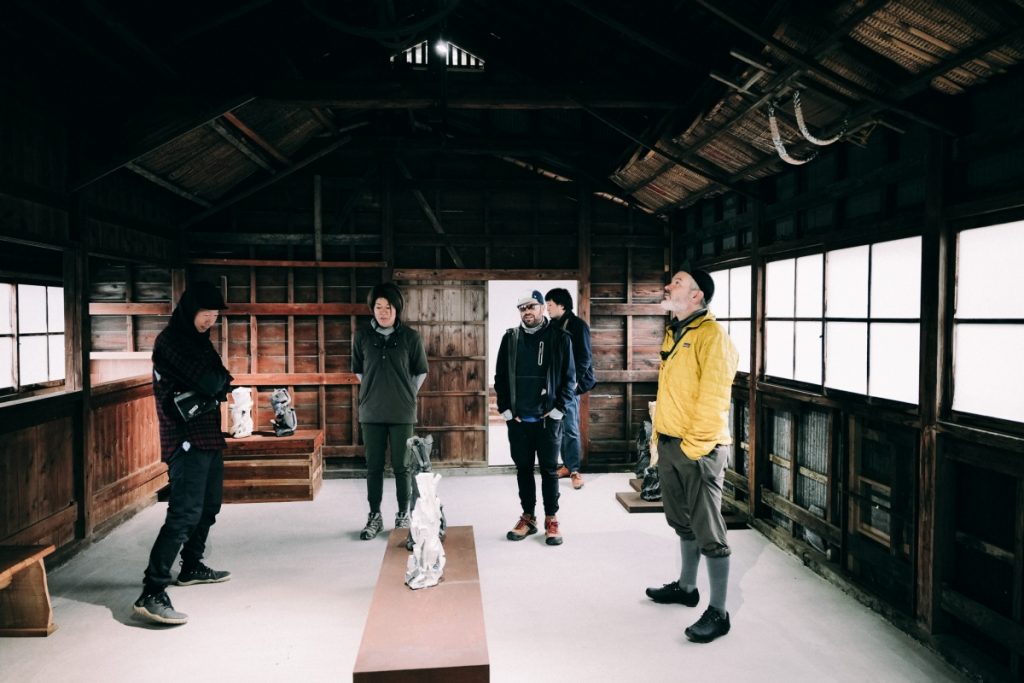
On the morning of Day 2, before setting off, we stop by Cha.Beya, a gallery housed in a renovated tea factory. This area has been working to revitalize the community through ceramics, with the former Sasama Elementary School now serving as an exchange center between rural and urban parts of the greater Shimada City. Every two years, it also hosts a ceramics festival, and Cha.Beya was created as part of that initiative. The gallery features a permanent collection of pieces by local ceramic artist Shozo Michikawa, and its rotating exhibitions highlight work by resident artists of Sasama.
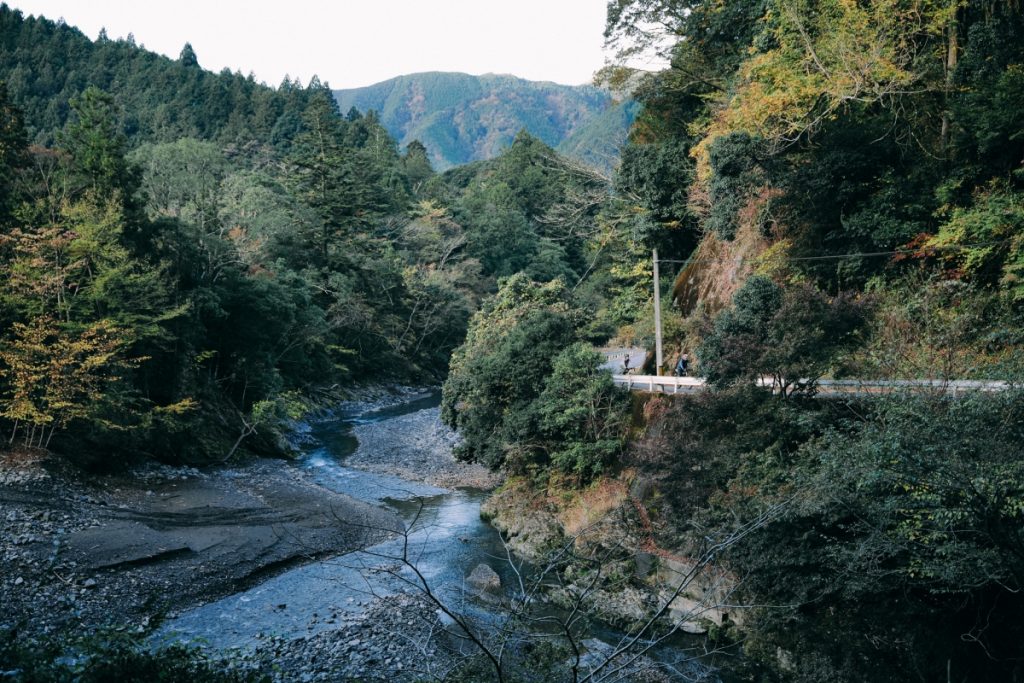
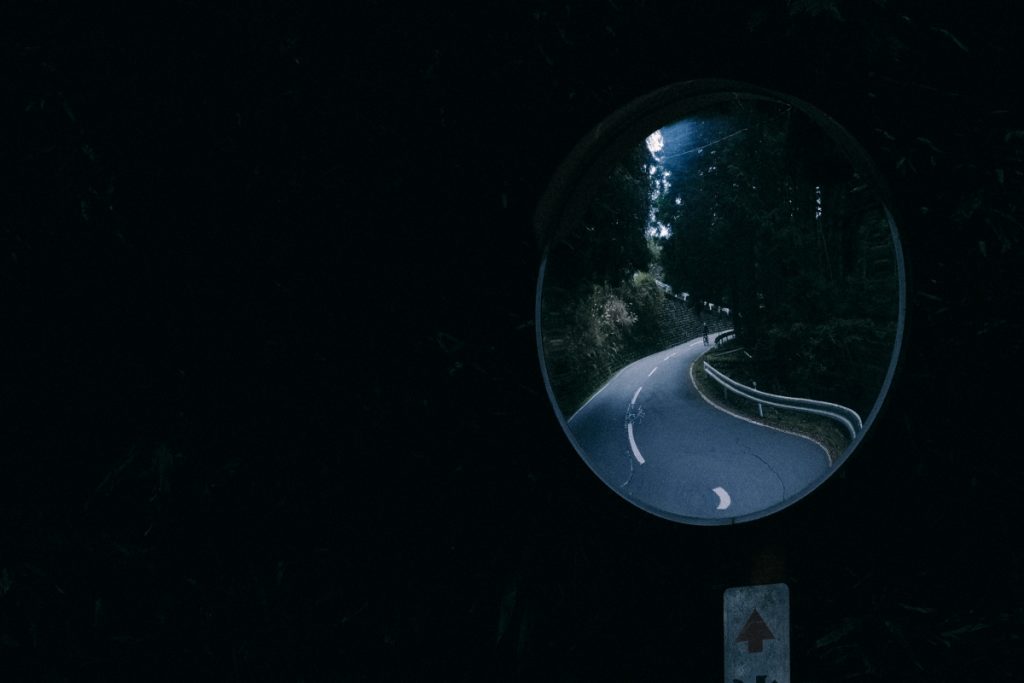
After leaving the gallery, we cruise through a picturesque mountain community dotted with tea fields. A glance at the elevation map confirms it’s a continuous climb to Kawane Honcho. Once past Sasama, we find ourselves grinding up a forest road with no views in sight.
Since leaving Yaizu, there has been zero trace of anything remotely resembling the “katsuo” in Katsuo Trail, and we can’t help but wonder where this is all leading. But after about an hour and a half of climbing, we hit the national road. That means that just ahead, the Sugio Hananoki Viewpoint/rest stop comes into sight. Perched on the border between Shizuoka City and Kawane Honcho at 775 meters above sea level, the lookout is said to offer views of Mt. Fuji on clear days. Today, though, the iconic peak is hidden behind thick white clouds.
Kawane Tea and Traditional Tea Chests
After reaching the highest point of the day just past the rest stop, it’s a long, thrilling descent straight to Senzu Station on the Ōigawa Railway. At the foot of the hill, chilled from the downhill cruise, we find warmth in a cup of fragrant Kawane tea. The tea served at Tabata Tea Shop, right in front of the station, has a gentle sweetness and mellow richness unique to sencha.
Feeling recharged, we strike up a conversation with the shop owner, who shares more about Kawane tea:
“Tea has been grown in the Kawane area for over 500 years. That’s because the region’s steep terrain and deep river valleys create big temperature shifts between day and night. In the early morning, mist rises and wraps around the terraced fields. This mist is what gives Kawane tea its distinctive flavor.”


Curious about the tea chests stacked in towers inside the shop, we asked the owner. She told us there’s a local studio in town that specializes in making them. Tea chests are essential for storing tea leaves, thanks to their excellent resistance against moisture, pests, and oxidation. From the late Edo to early Meiji period, tea stored in these chests was transported along the Shizuoka Kaidō to Yokohama Port for export overseas. Intrigued, we decided to pay a visit to Maeda Workshop to see how they’re made.
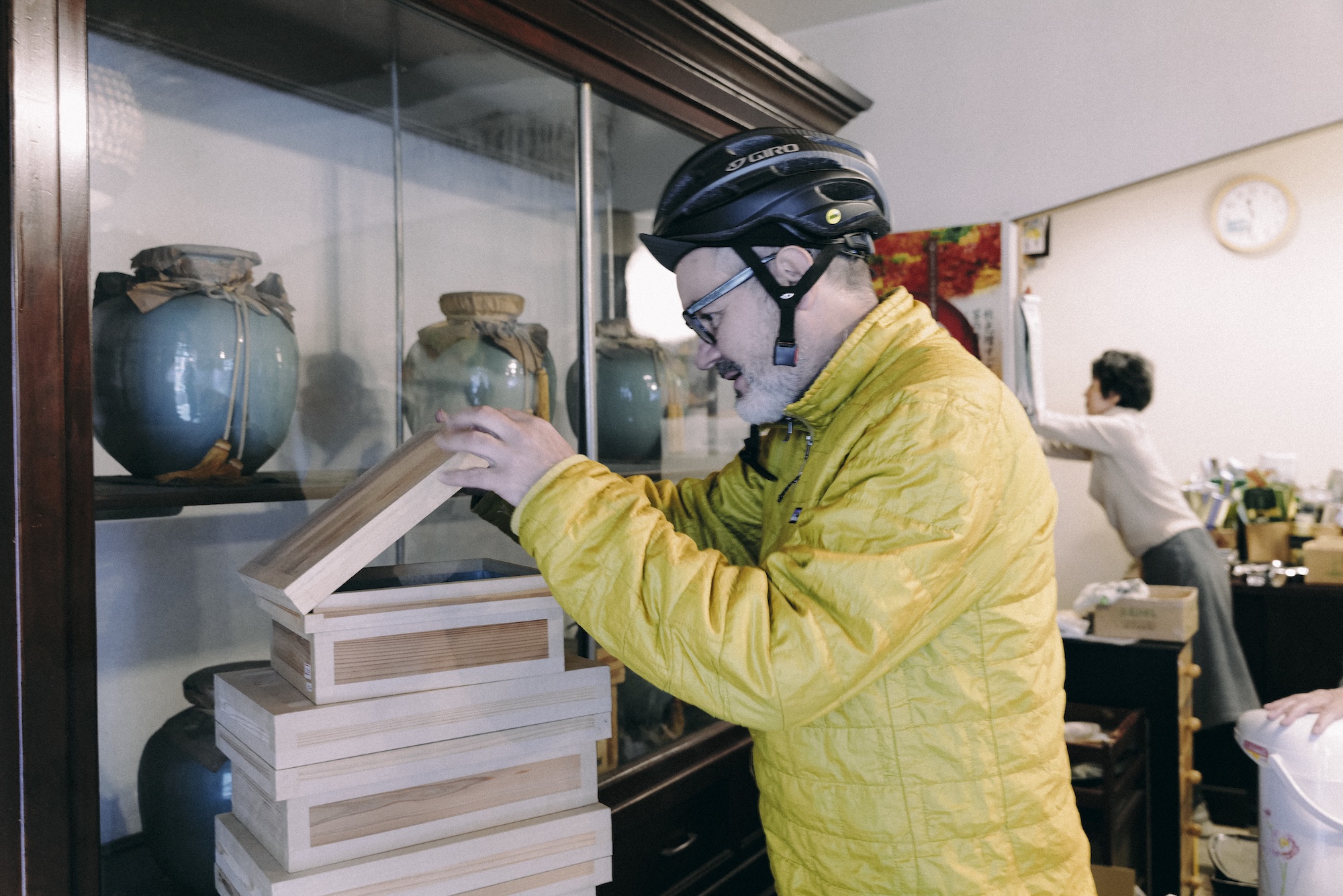
James, a cyclist from the UK, smiled as he recalled, “Come to think of it, we used tea chests like these back home too. Boy, this brings back memories!”
One fun fact about tea chests: today, only three makers in all of Japan exclusively specialize in them—one being the Maeda Workshop. Under the guidance of a master craftsman in his 70s, a small team of artisans in their 30s to 50s craft a range of chests from locally sourced cedar. Their moisture, pest, and oxidation-resistant properties come from the tin plating inside each box. While lead solder is commonly used for the interior welding, Maeda Workshop made the switch to a lead-free tin solder due to health concerns. “It’s significantly more expensive,” they admit, “but the quality of our product has improved immensely.” They now export their tea chests to the U.S., U.K., Canada, and Qatar.
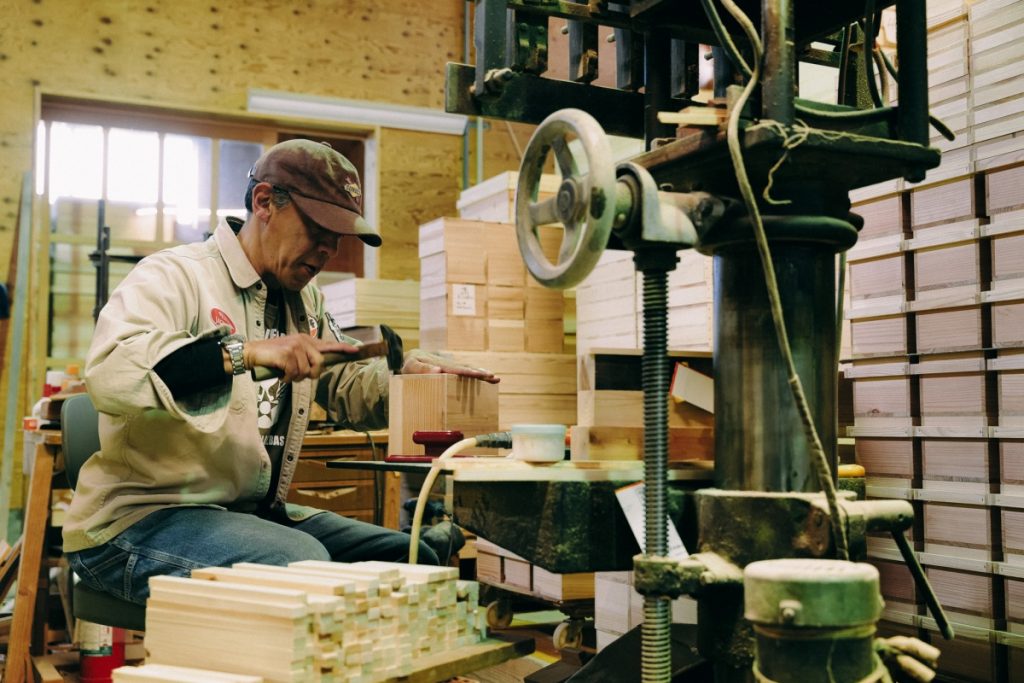
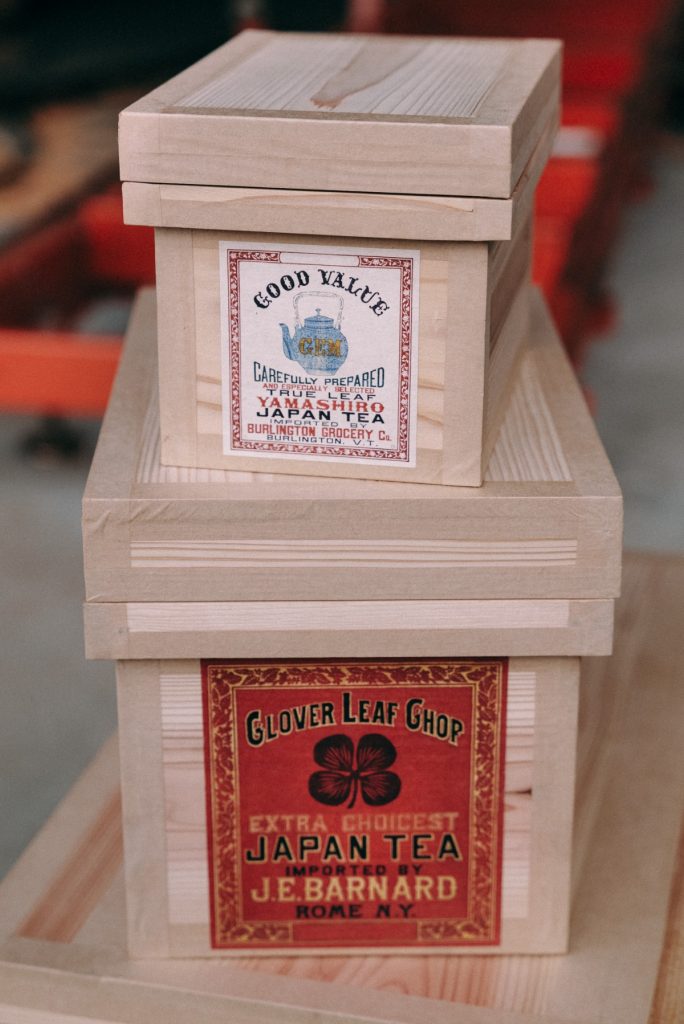
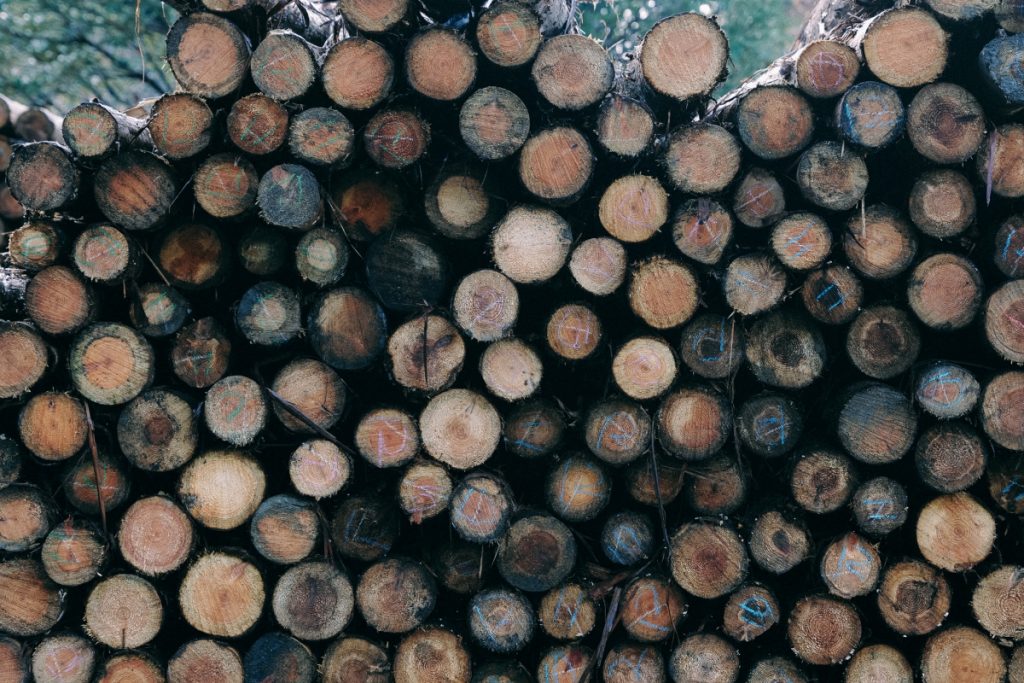
We select suitable, locally cut cedar wood, have it milled in Shimada, and let it dry for three months before crafting it into tea chests here. Because they’re resistant to humidity, insects, and oxidation, these chests are now used not only for tea leaves but also for storing coffee beans, rice, dried foods—even cameras and lenses,” says Kieko Sonoda of Maeda Workshop.
One of the more interesting aspects is how they make use of the wood shavings produced during the tea chest-making process. Some of it is spread over tea fields, while most is given to poultry farmers to line chicken coops or mix with manure for compost. A portion even ends up in Yaizu, used in the smoking process for katsuobushi (hardened bonito). And just like that, katsuo makes a surprise reappearance. This natural collaboration is a small but powerful reminder of the connection between mountain and sea, between Yaizu and Kawane Honcho.
We finish up Day 2 with a soak in the hot springs at Sessokyo Gorge—but first, a stop at the Kawane Honcho Museum Yamabiko. The museum offers an immersive look at the local working lifestyle of the region, shaped by forestry and the Ōigawa River. Its displays illustrate how timber was transported downstream to the coast, shedding light on the core story behind the Katsuo Trail.

A Night at a Unique Guesthouse
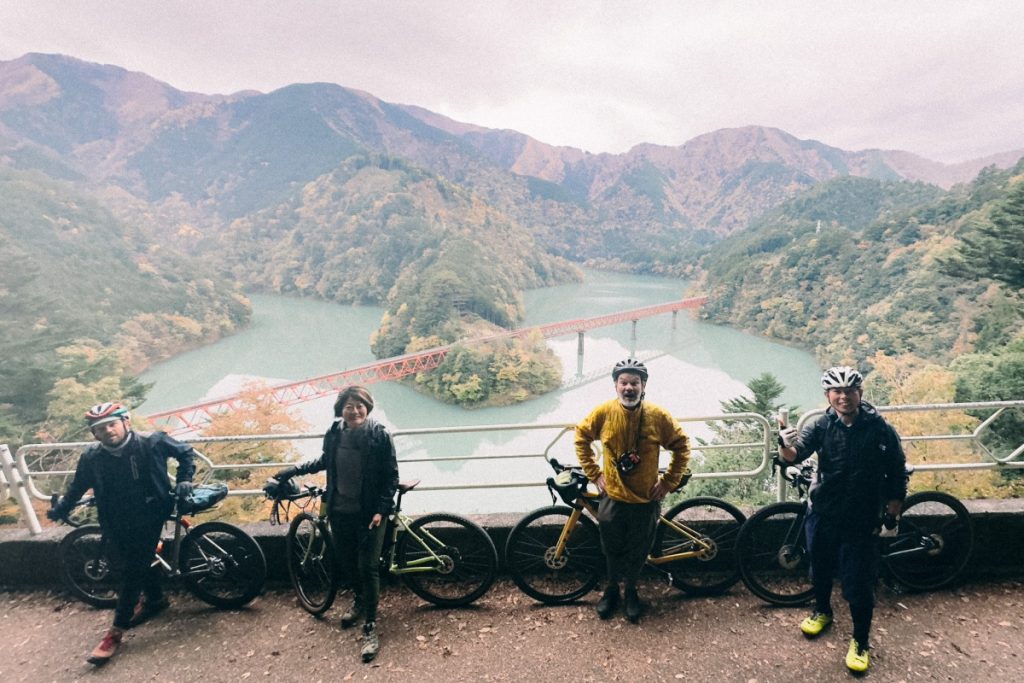
After exploring the museum, we head to the famous Sessokyō Onsen, known for its exceptional water quality. This rare sodium bicarbonate cold mineral spring is clear, silky-smooth, and highly regarded among hot spring enthusiasts across Japan. To return to Senzu Station, we board the Ōigawa Railway’s South Alps Abt Line. This train, the only Abt-system railway in Japan, climbs the steepest gradient in the country, winding leisurely along the gorge. From Senzu, we hop back on our bikes and make our way to Mikansei, a unique guesthouse run by a Japanese–American couple.
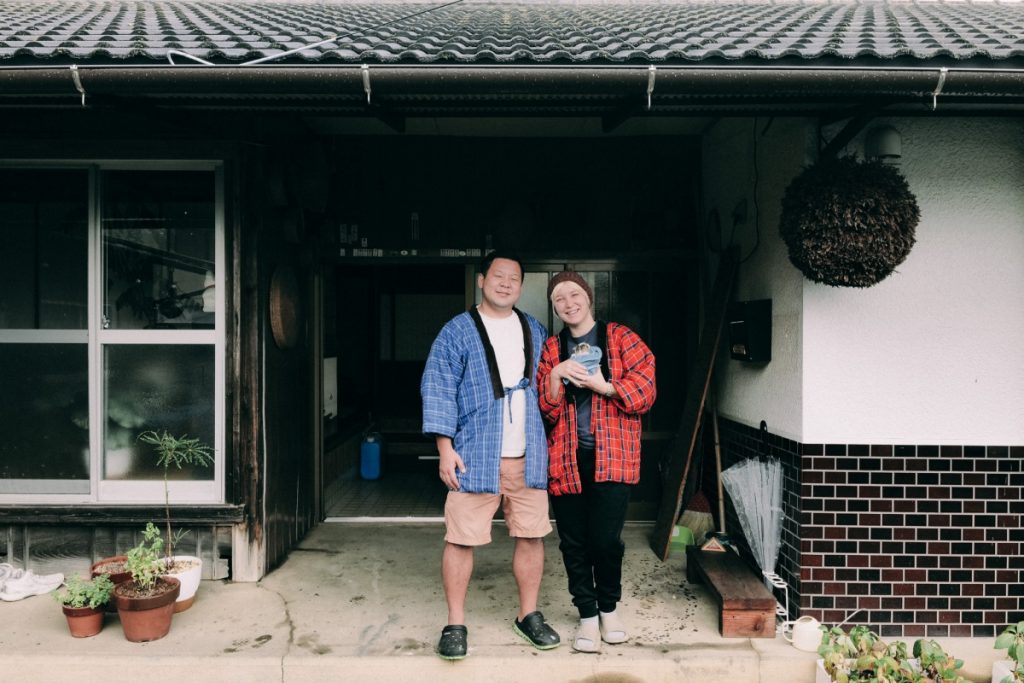

The Tsukashimas opened Mikansei in May 2024. Claire, originally from a small town near Yosemite, California—even smaller than Kawane Honcho—met Shiro, from Kanagawa, here in Shizuoka. Drawn to the area’s nature, climate, and culture, as well as the charm of a 110-year-old kominka, they decided to relocate and open this guesthouse. While still a work in progress, they chose the name Mikansei (meaning “unfinished”) to reflect the idea that nothing, whether a house, town, or person, is ever truly complete.
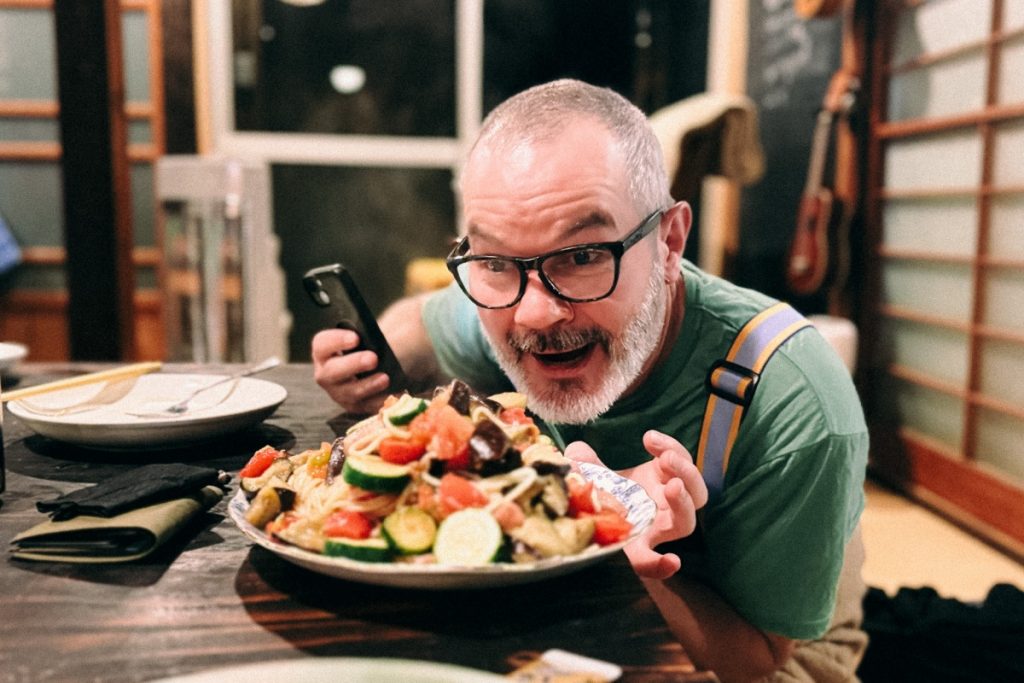
A stay at Mikansei is self-catered. Guests cook their own meals in the shared kitchen, and sometimes even prepare and enjoy meals together with the owners. The result is a cozy, communal atmosphere that makes the place feel more like a home than a hotel.
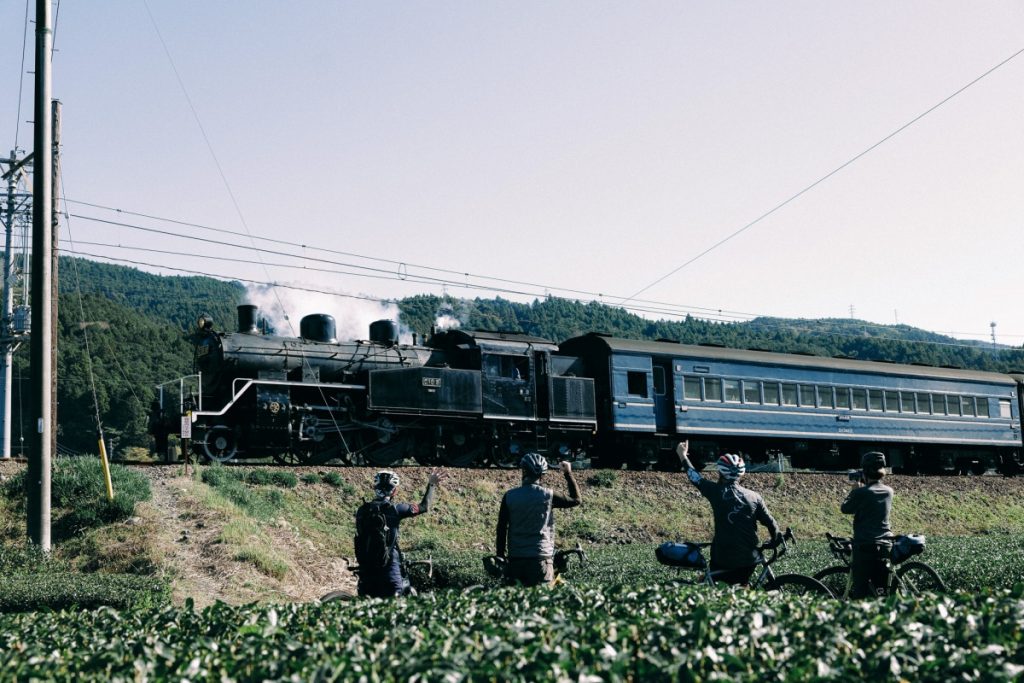
We bid farewell to Claire and Shiro at Mikansei and start Day 3. Today’s ride follows the Ōigawa River downstream from Kawane Honcho to Shimada for the river section of the journey. The paved roads are mostly flat and surrounded by tea fields, but some stretches see heavy traffic, so we keep our focus sharp as we ride.

Towering 7 meters high, a bamboo sculpture of a hand suddenly appears in front of us. Tenohira by artist Masayoshi Koyama—one of the standout works from UNMANNED: The Art Festival for Unmanned Stations / Ōigawa 2024, held from February through March. The festival transforms the Ōigawa River region of Shimada City and Kawane Honcho into a stage for contemporary art, with 30 site-specific works inspired by local materials like tea chests and the Ōigawa River itself. Koyama spent two months in the area creating this oversized hand, inviting viewers to imagine the conversations and community encounters that helped give it shape.
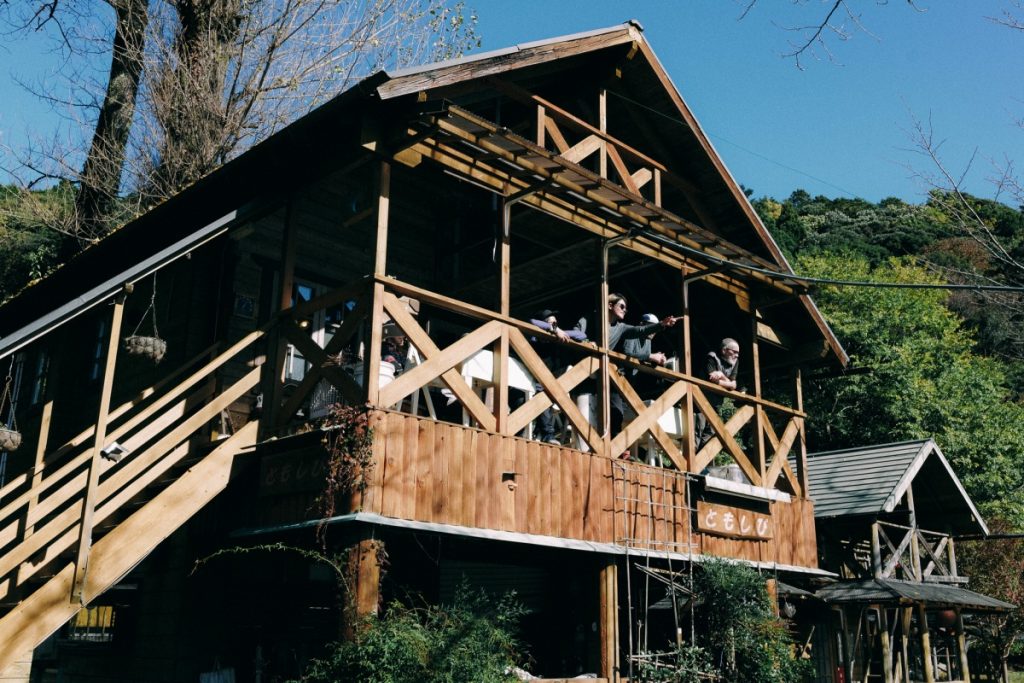

Crossing the “Uncrossable River”
Near Ieyama Station on the Ōigawa Railway, we make a quick stop at Taiyaki-ya for their signature treat—crispy-edged matcha taiyaki. Then comes the highlight we’ve been waiting for: a ride on the EL (electric locomotive) Train to Shin-Kanaya Station. Sure, we could ride our bikes the whole way, but if timing allows, the train journey is too charming to pass up. From Shin-Kanaya Station, it’s just one last pedal to our lodging for the night—Orecchi no Himitsukichi.
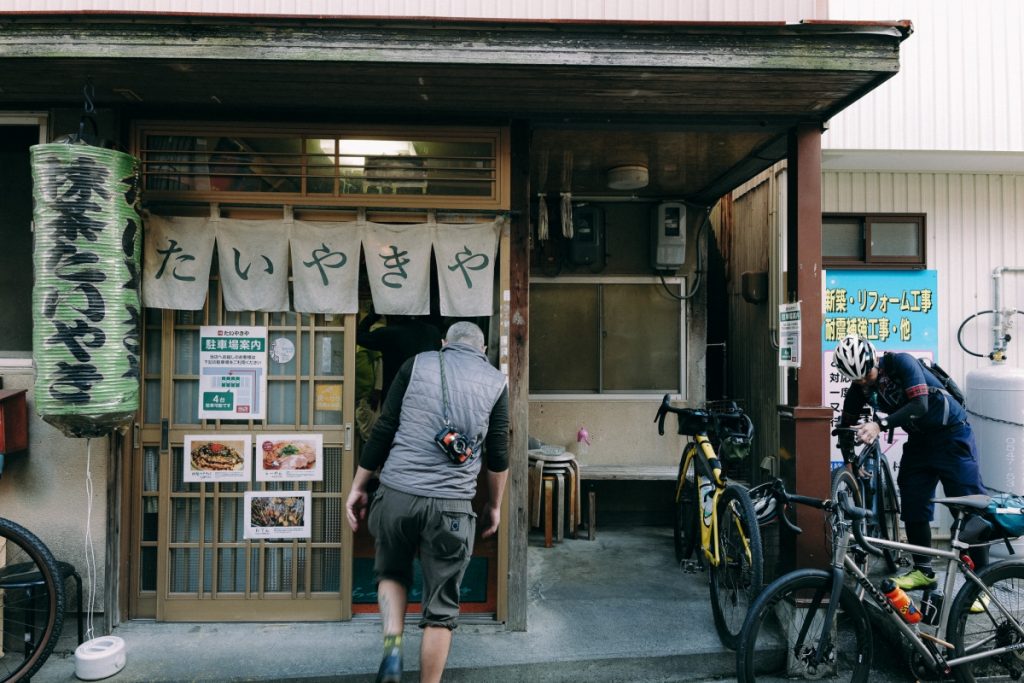
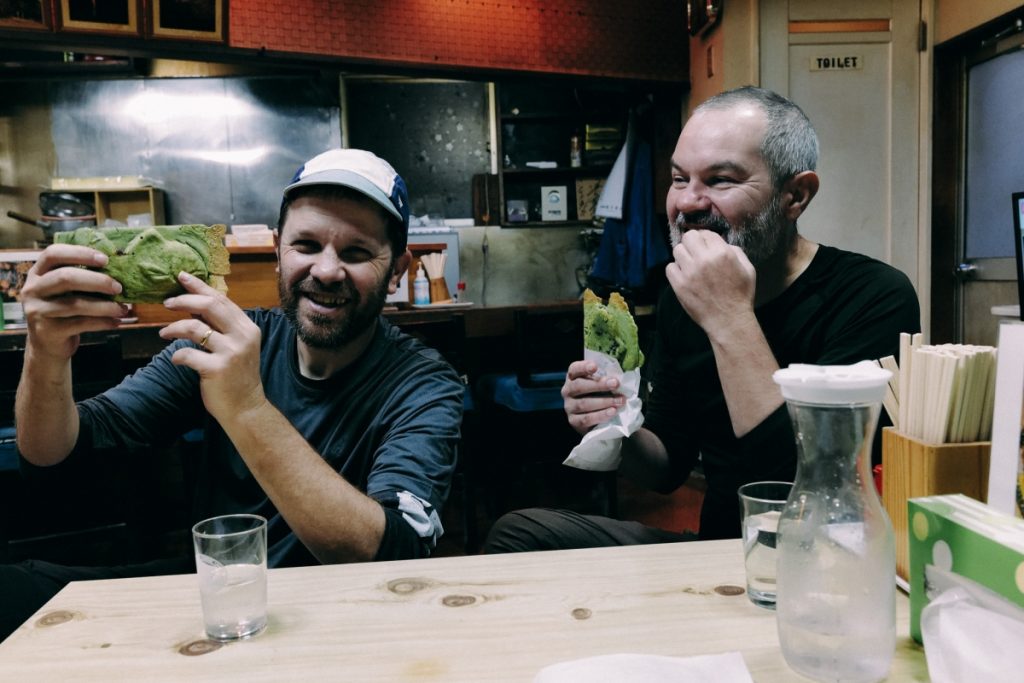
The final day’s highlight is a deep dive into the history and culture of Kanaya and Shimada, former post towns along the old Tōkaidō route. We start by crossing the Ōigawa River toward JR Shimada Station, stopping first to pay our respects at Ōi Shrine, then swinging by Naruoka Cycle, where our guide and mechanic Nagashima-san works. At Shimizuya, just outside Shimada Station, we pick up their famous mini manju. This bite-sized treat gained notoriety after catching the eye of Lord Matsudaira of the Matsumae Domain during his sankin-kōtai travels (a system requiring feudal lords to travel to Edo to show loyalty), and has since become a beloved local specialty. Light and addictive, it’s best to buy more than you think you’ll need.
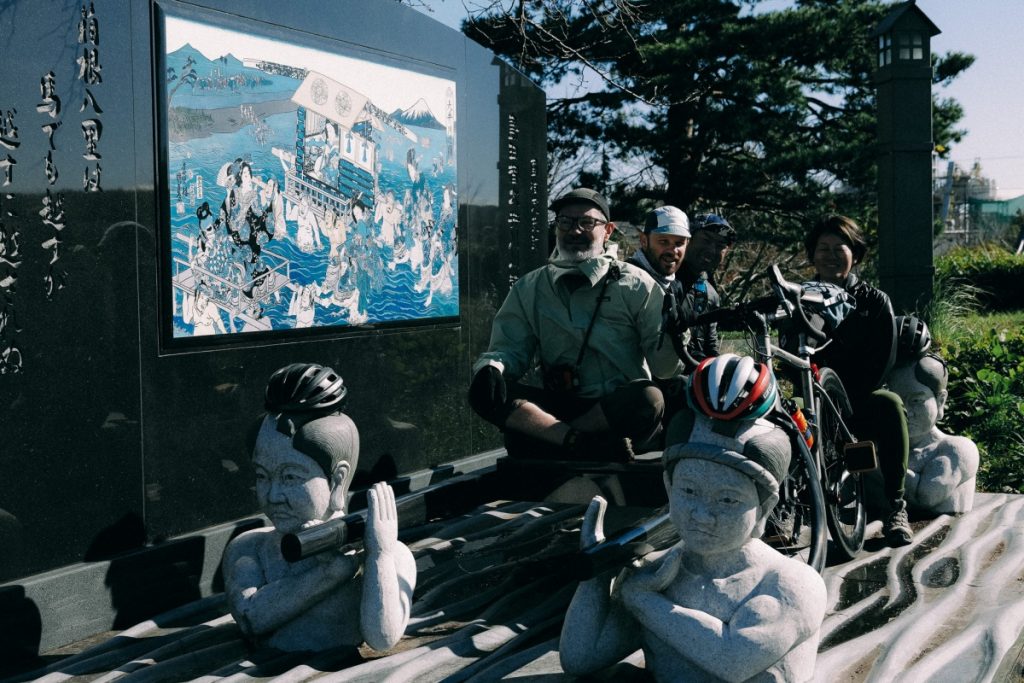
Next, we head to the Ōigawa River Crossing Historical Site. During the Edo period, the Ōigawa was considered one of the most difficult points on the Tōkaidō. Because no bridge or ferry was allowed, travelers relied on “kawagoshi-ninsoku,” or porters who carried people across on their backs or transported them using sedan-like platforms called “rendai.” A formal crossing system and checkpoint known as the kawa-kaisho were established, and at its peak, more than a thousand porters were stationed on both banks. Today, parts of that infrastructure, like the old checkpoint and porter stations, have been reconstructed at the site.
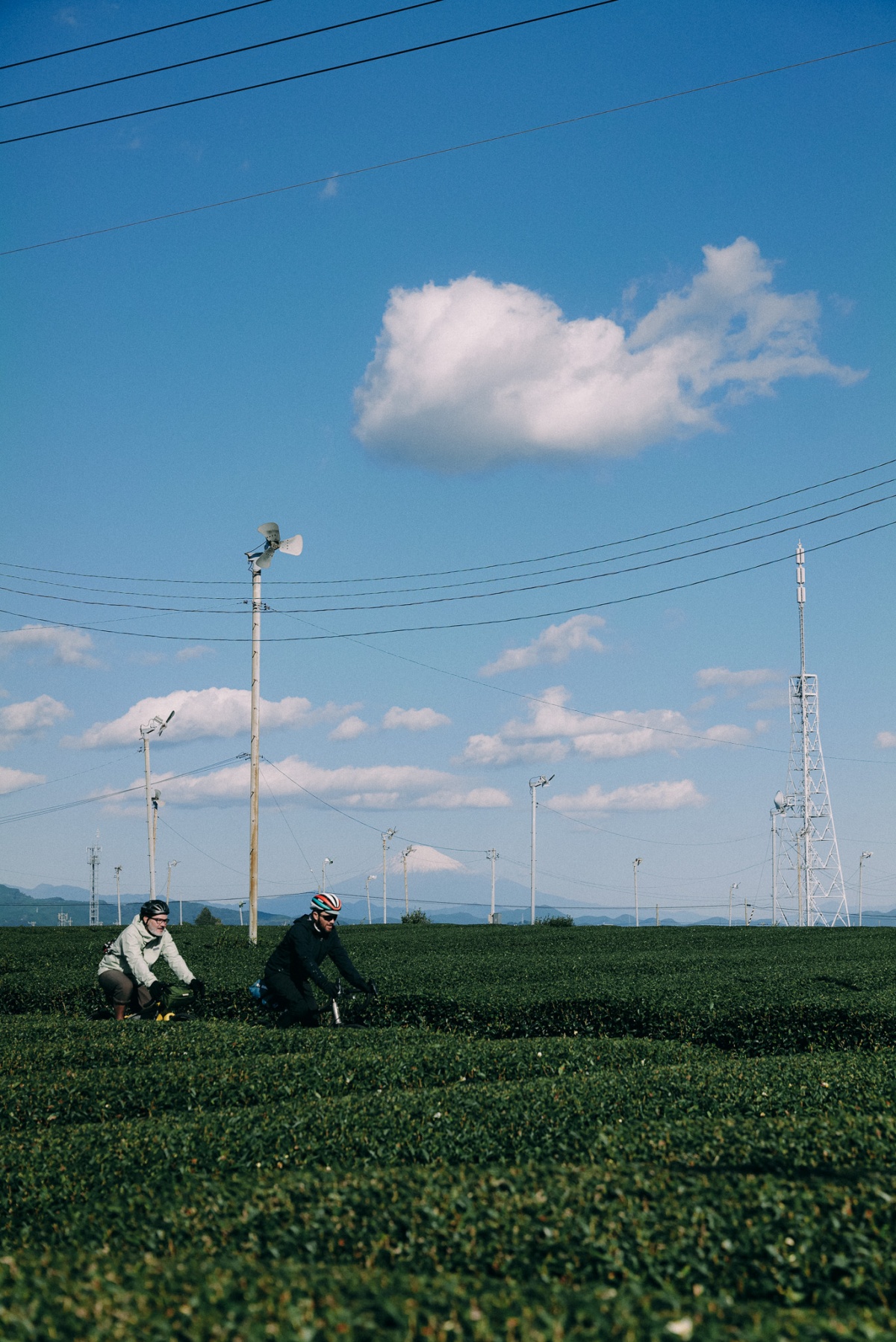
Crossing the Ōigawa River once more, we climb the hill past the JR Kanaya Station and reach the Makinohara Plateau. Spanning an incredible 50 million square meters, Makinohara is home to Japan’s largest tea plantation. The land was cultivated in the early Meiji period by over 250 former samurai who had lost their positions after the return of lands and titles to the Emperor. Led by their captain, Kageaki Chujo, they were joined by former river porters who had also lost their livelihood after the abolition of the Kawagoshi system. Together, they transformed a stretch of wasteland once shunned even by farmers into a thriving tea-producing region. When the Tōkaidō railway line opened in 1889, it allowed Makinohara tea to be shipped across the country, fueling its rise to fame. The statue of a samurai overlooking the plateau is none other than Chujo himself.
The Finish Line in Sight.
Time to Cross the Iconic Hōrai Bridg!
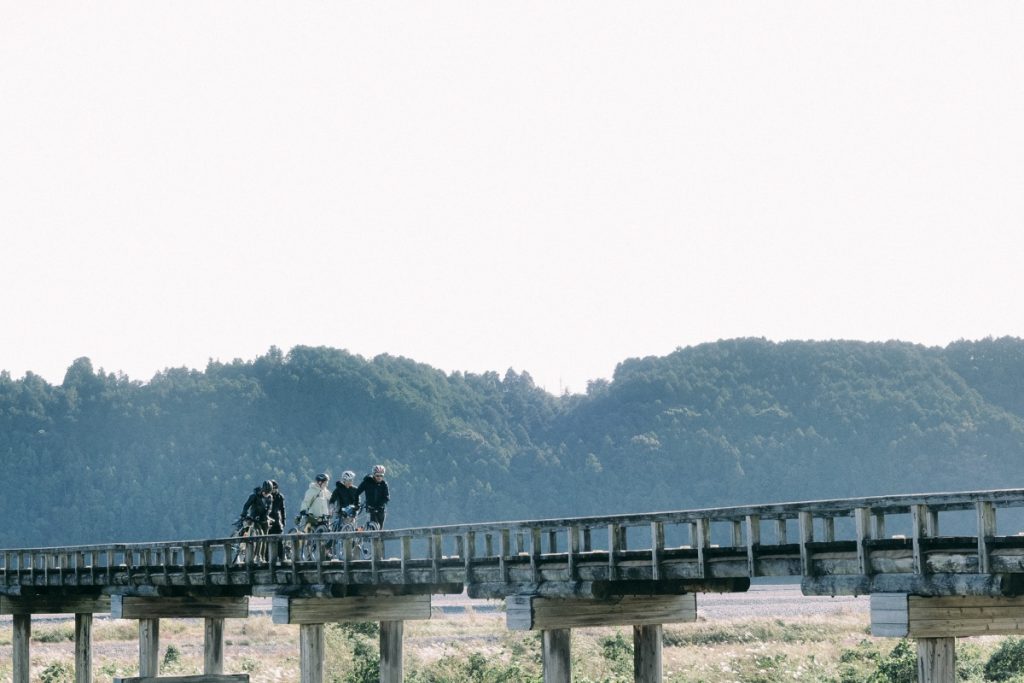
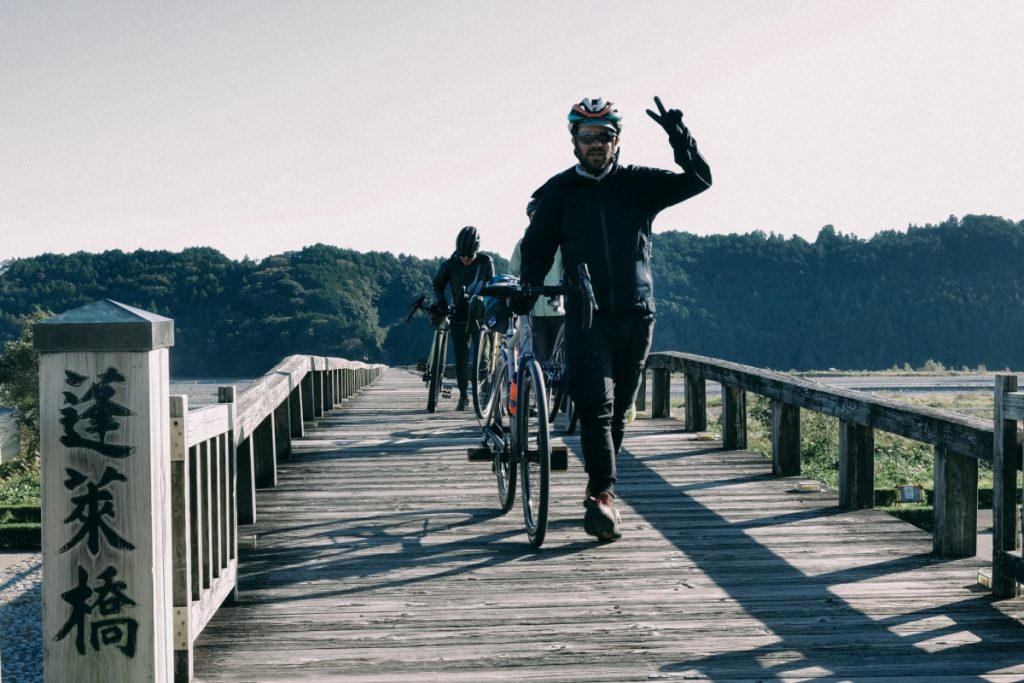
After a long downhill ride from tea plantations on the Makinohara Plateau, we reach Hōrai Bridge—the world’s (yes, world’s) longest wooden pedestrian bridge at 897.4 meters. Still used as a farm road today, the bridge is also a popular destination for tourists thanks to its views of Mt. Fuji. Battling gusts up to 17 meters per second that nearly knock over our bikes, we manage to make it across. From there, we follow the leisurely “Liberty” marathon course along the Ōigawa River back to Ishizuhama Park. The perfect way to end the journey? A plate of seared katsuo, Yaizu style.
From grated yam dishes and forest climbs to cedar tea chests and sprawling tea fields, our ride through the Ōigawa River region in pursuit of katsuo has been jam-packed with unexpected discoveries. This land holds stories so deep and varied, one trip is hardly enough to uncover them all.

【Travel Guide】
KATSUO TRAIL
http://do-labs.org
Michi-no-Eki Gyokuro no Sato
https://www.shizutetsu-retailing.com/gyokuronosato/
Naruoka Cycle Shop
https://naro-jp.com
Minshuku Fukui
https://shimada-ta.jp/hotel/hotel_detail.php?id=26
Maeda Workshop
https://kawanechabako.jp
Kawane Honcho Museum Yamabiko
https://www.town.kawanehon.shizuoka.jp/soshiki/shakaikyoiku/shiryokanyamabiko/index.html
Sessokyo Onsen
https://www.sessokyoonsen.com/
Sessokyo Onsen
https://www.guesthousemikansei.com
Orecchi no Himitsukichi
https://ore.pepper.jp
