







Aiming for An “Edible Museum”
Yasuhiro Tomari, a native of Miyakojima, honed his craft in French cuisine before discovering his own culinary voice. His approach dives deep into the rich diversity and uniqueness of Okinawan food culture, particularly Miyakojima. The result is an unparalleled dining experience that captures the heart and soul of Ryukyu.“
Take, for example, a dish crafted entirely from locally grown vegetables. In Miyakojima, farmland is called “pari,” and in a playful twist of words, the women who work these fields are affectionately dubbed “Parisiennes.” This nickname reflects a lighthearted spirit born from resilience—a nod to those who had no choice but to toil the arid, flat terrain, making the most of a land that was far from fertile. This story adds depth to his creation, the Parisienne, a vegetable dish served with a touch of heart and history.
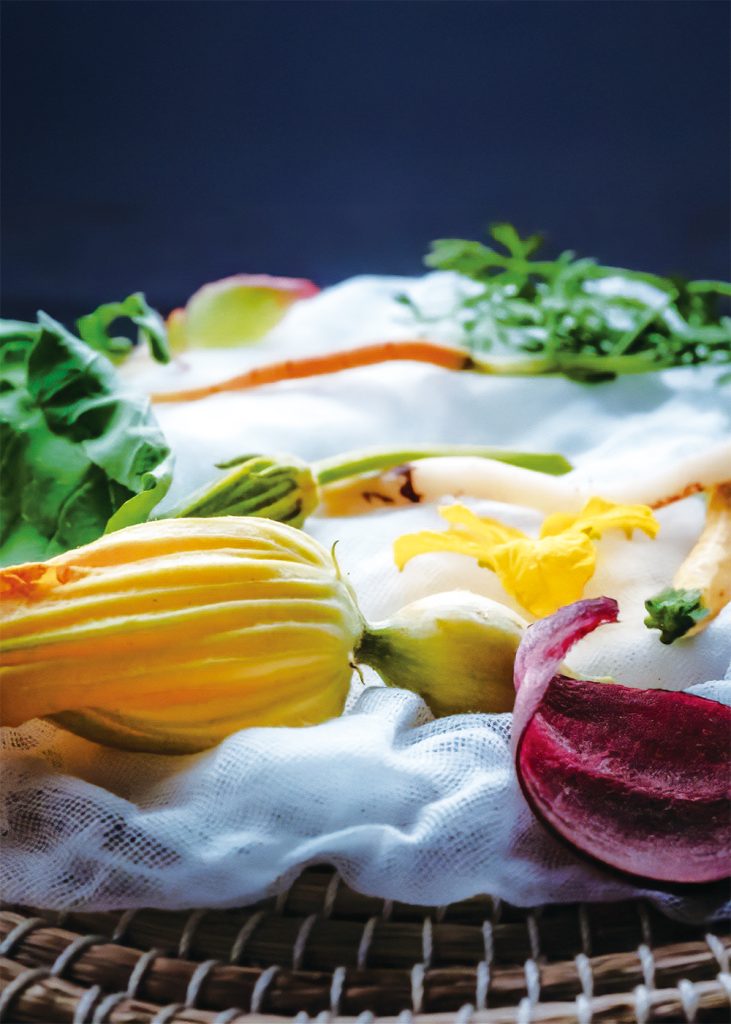
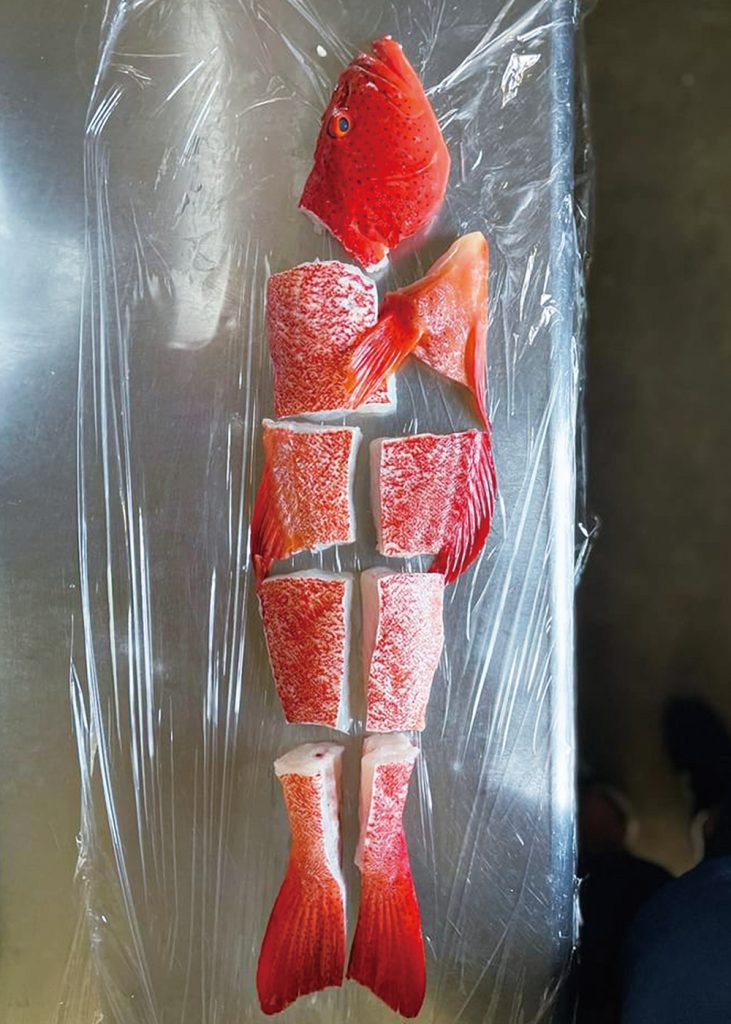
“My goal is to create a space that’s part restaurant, part museum,” explains Tomari-san. “As a chef rooted in Miyakojima, I want to offer a dining experience that reflects the island’s uniquely rich food culture.”
He often visits museums for creative inspiration. One such example is the skeleton replica of a deer known as Miyako Norojika (Capreolus Miyakoensis) displayed at the Miyakojima City Museum, discovered in a 25,000-year-old archaeological site. Although no deer species live on the island today, people once relied on these animals for sustenance. To him, this too is an authentic part of Miyakojima’s culinary history—one he has chosen to resurrect for the modern palate.
“Alongside the deer remains, they found what is believed to be the world’s oldest shell jewelry. The people back then likely ate the shellfish to survive. That inspired me to create a dish combining venison and shellfish. I want to take this concept even deeper. Someday, I hope to craft an entire tasting menu that brings the museum’s entire history to life.”
Having stepped down as head chef of Miyakojima’s renowned État d’Esprit, Tomari-san is now preparing to open his own restaurant. The chosen location? A corner of Karimata, where local culture runs deep. The anticipation is palpable as the birth of his bold vision for Miyakojima Gastronomy draws near.
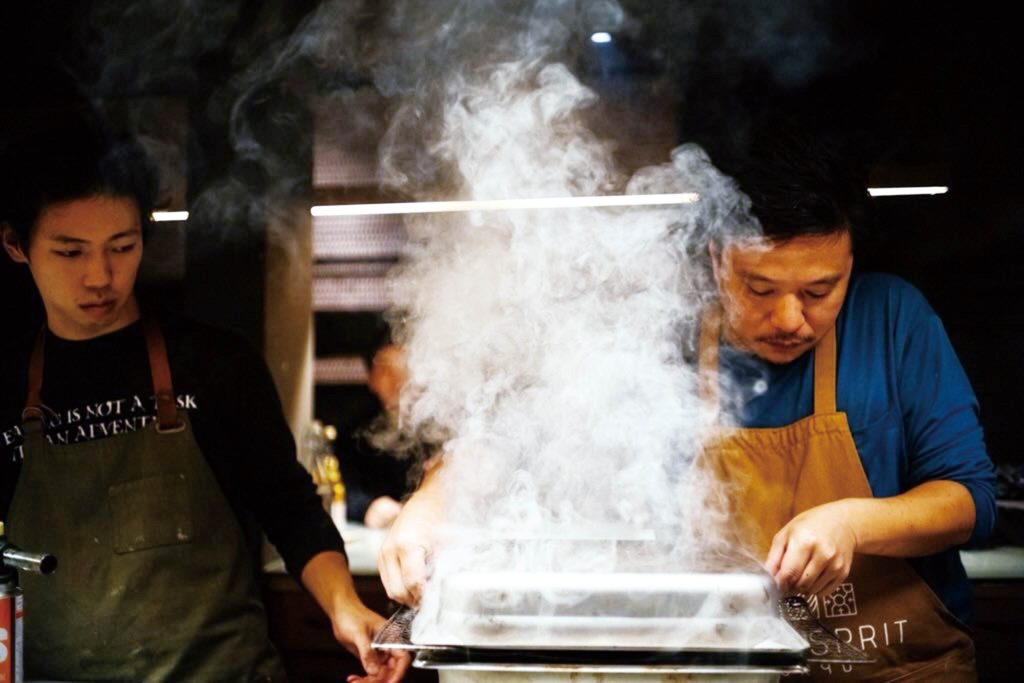
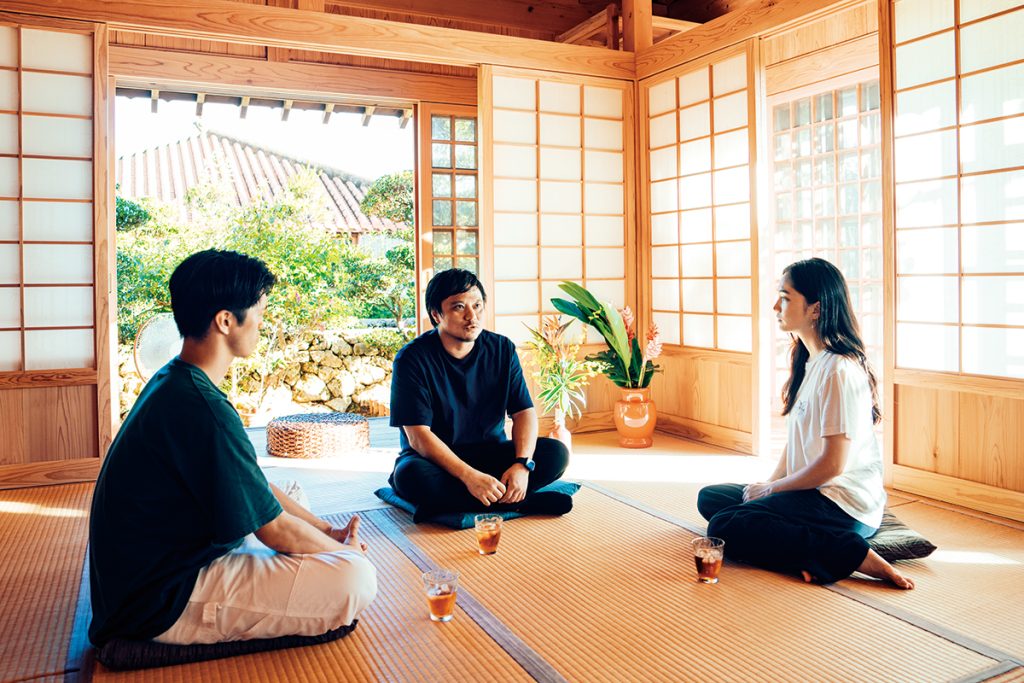
Yasuhiro Tomari
Born in 1984, Miyakojima. Chef. At 20, he moved to Tokyo to study Italian cuisine, followed by rigorous training in French culinary arts before heading to France. Upon returning to Japan, he became the Executive Chef of “État d’Esprit” on Irabu Island at 31. Currently, Tomari is preparing to open his own restaurant.
