







Timeless Blessings and the Rise of a New Culture
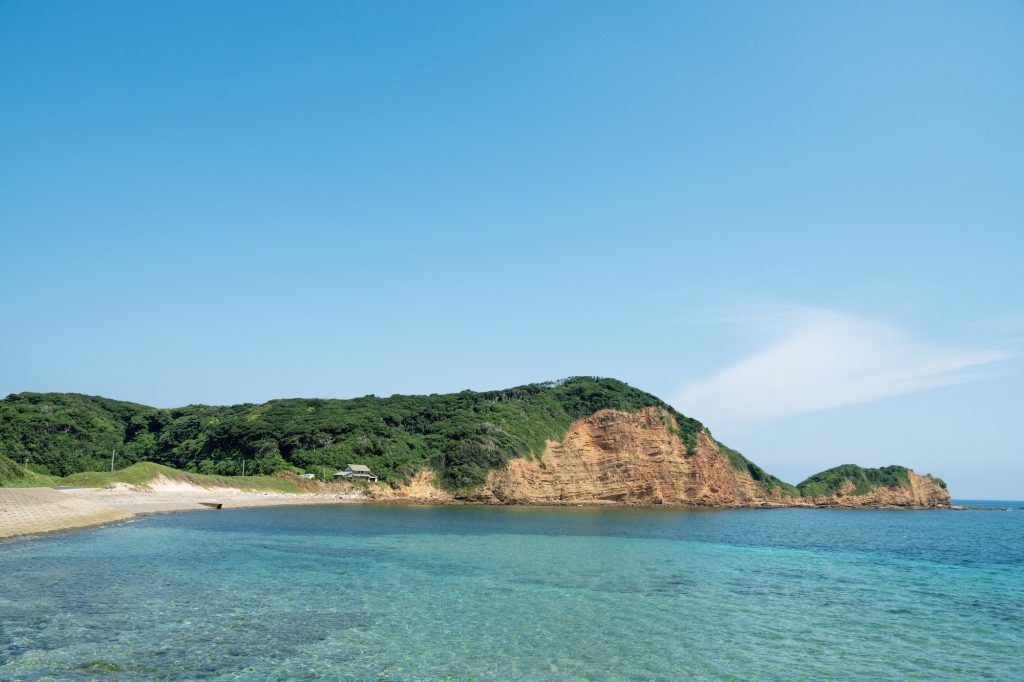
The sea breeze stirs the evergreens, shaping soft, flowing ridges. Beside them, huge cliffs give you a sense of the scale of nature over millions of years. The calm, clear waves lap at the cove, and the coral washed ashore gleams in the sunlight, creating a scene you could watch forever. According to the Kojiki, Iki was one of the first eight islands created by Ijanaki and Ijanami in the lower lands. In the Yayoi period, it was a vital strategic point connecting Japan with the continent, with people and goods passing through. During the Yamato Administration Imperial Court period, more than 200 burial mounds were erected in just fifty years to project power and intimidate the continent. Even afterward, it functioned as a border stronghold in times of conflict, carrying heavy duties on numerous occasions. The island made its fortune from whaling, starting in the Edo period and continuing into the modern era, with one of Japan’s three wealthiest men hailing from there. Today, the fishing industry still thrives, and the islanders take pride in the fresh squid and fish caught in the same waters as Yobuko.

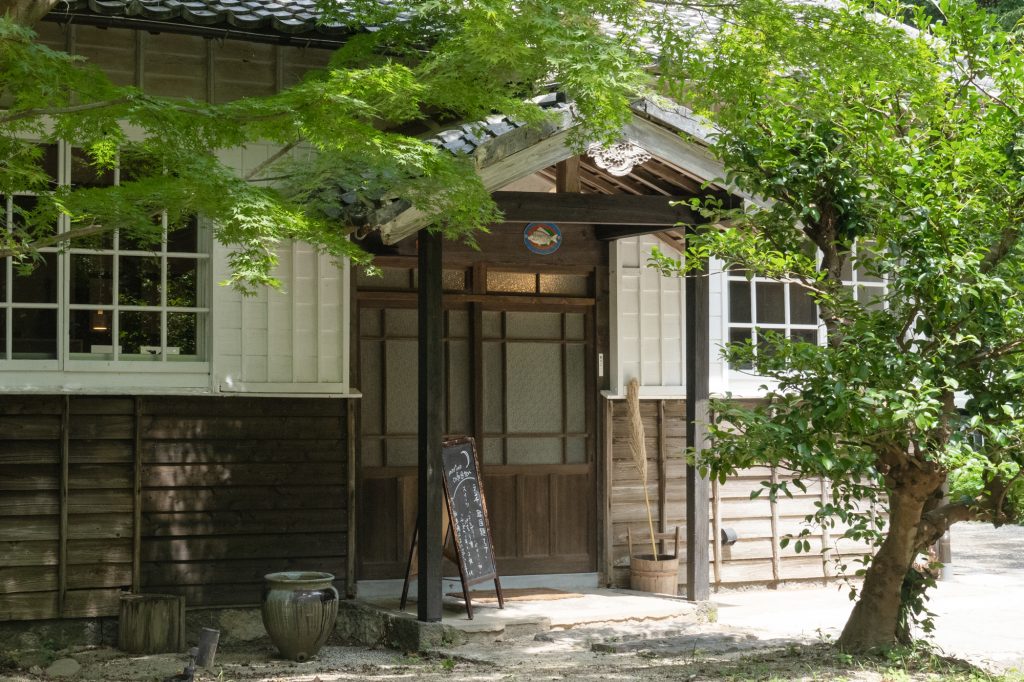
The island’s agriculture is thriving, and the rice is known for its delicious taste. Mr. Imoto, the owner of ‘Morino Cafe@Ten,’ a charmingly renovated Taisho-era medical clinic, explained this to us. He and his chef moved to Iki from the mainland, enchanted by the island’s appeal. The restaurant’s signature is oriental cuisine, using locally grown ingredients and reflecting its heritage as a place of cultural exchange. ”The island offers much more than just food,” said Imoto-san, guiding us to a shrine he had recently discovered on the hill behind his restaurant. “There are over 1,000 shrines and temples here.” The shrine, small and old-fashioned, stood quietly in the midst of a simple wooded area. Bathed in the beautiful light of the morning sun, it was a solemn sight, evoking the deep religious beliefs of the islanders of a bygone era.


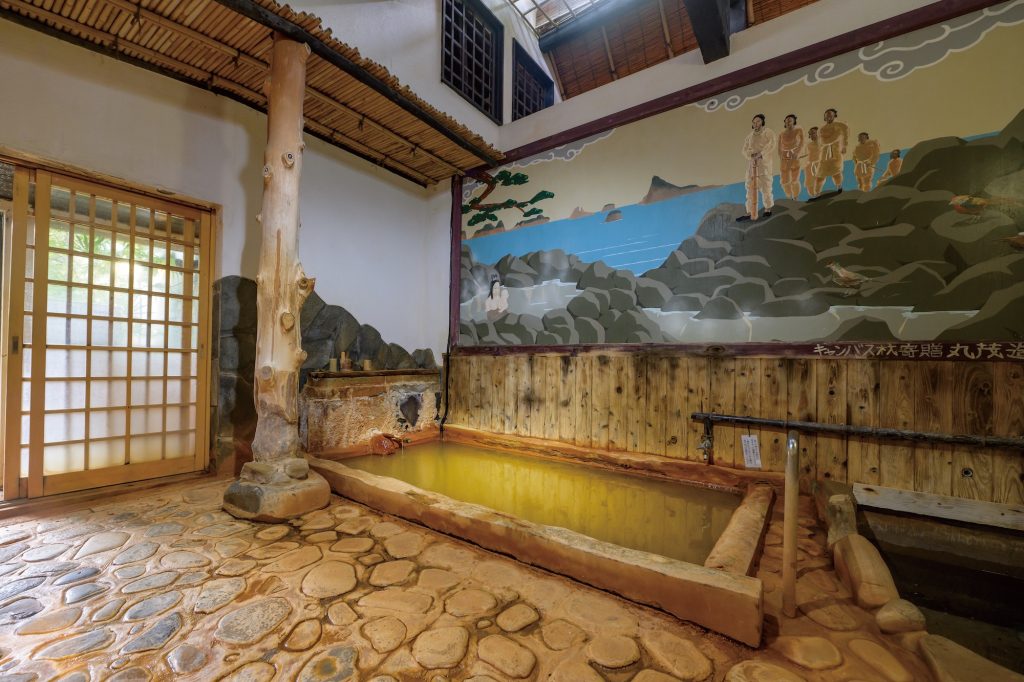
Iki Island is divided into four towns, which are roughly spread across the island. While life in each town is generally self-sustaining, there are many innovative individuals working to foster new connections between the island and the outside world. One such person is the proprietress of the Hirayama Ryokan, who has taken the initiative to publish a hot spring newspaper. Through this publication, she seeks to share the allure of Yumoto Onsen-kyo, a 1,700-year-old therapeutic hot spring resort, where each hot spring facility boasts its own unique source.
“The hot spring water is exceptionally concentrated, approximately fifteen times stronger than the standard concentration recommended for medical treatments. Each facility offers a distinct water quality, allowing visitors to experience a variety of therapeutic benefits. The spring’s brown, murky water seemed to carry the weight of centuries, having served as both a healing bath for children and a rejuvenating treatment for the skin.” The young proprietress’s genuine passion for the spa was truly captivating, imbuing her words and actions with a sincerity that resonated deeply.

The Mutsumi Mokuyon Building stands as a remarkable fusion of tradition and innovation, drawing people in with its unique design. In contrast to the costly fire-retardant materials used in high-rise wooden buildings in urban areas, this is Japan’s first four-story wooden structure built with solid timber—readily available on the market. “I wanted to create something that was unique to this place,” explained Matsumoto-san, the visionary architect behind the project. He drew upon ancient Japanese craftsmanship and building techniques to design a space that engages all five senses, from the texture and scent of the wood to its warm, inviting aesthetic. The building was conceived as a way to unify three distinct elements: the adjacent hot springs, a yakiniku restaurant specializing in Iki beef, and a creative French restaurant featuring local seafood. The goal was to merge these separate entities into a harmonious whole. The first floor houses a café, complete with a children’s corner filled with picture books and toys. The second floor offers budget accommodations, while the third floor is dedicated to a co-working space. The fourth floor serves as an open, flexible area. Bathed in natural sunlight, the entire building now functions as a cultural exchange center—a vibrant community hub where both locals and visitors can gather.

“Recently, unique and captivating attractions have been emerging across the island, and Iki is increasingly becoming a destination where people can stay for several nights,” Matsumoto remarked. “I hope we can contribute to its revitalization.” He is confident that the building’s immense potential will bring his vision to fruition.
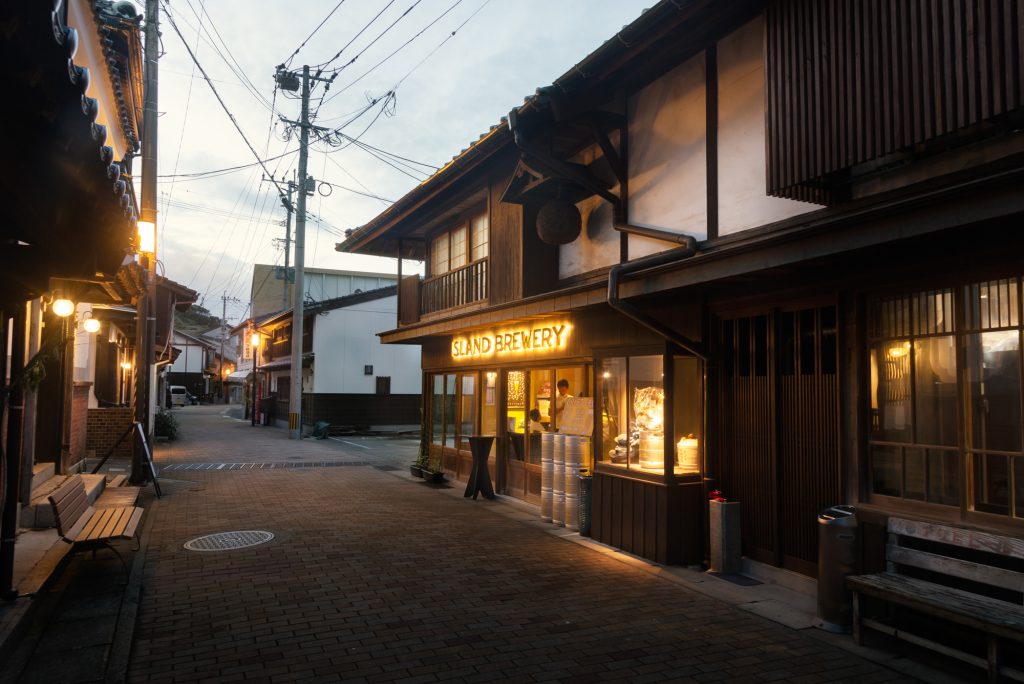
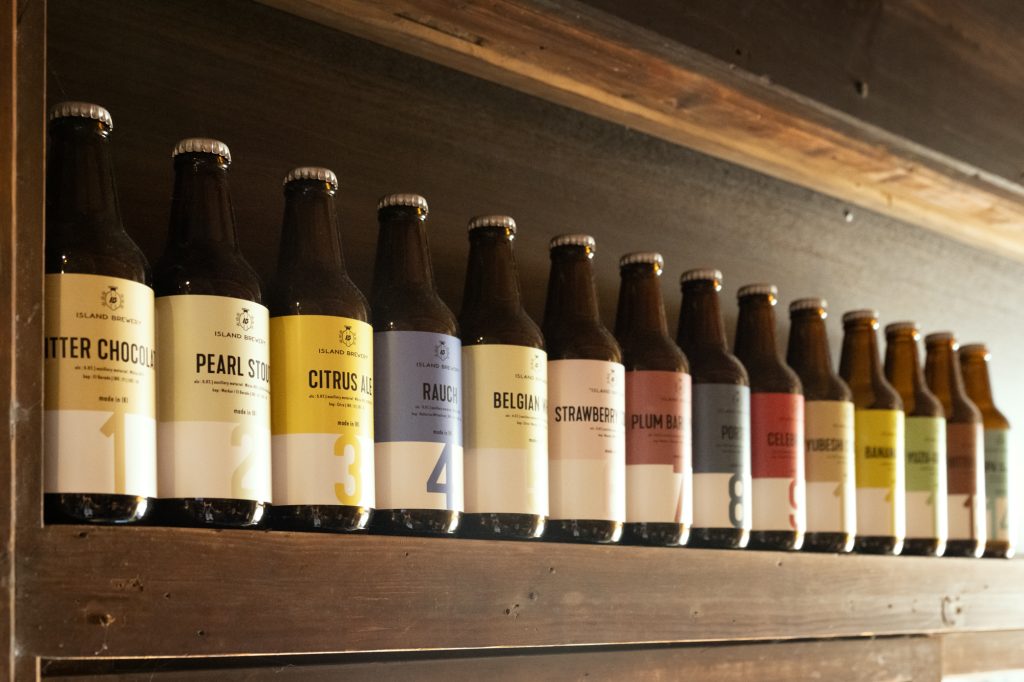
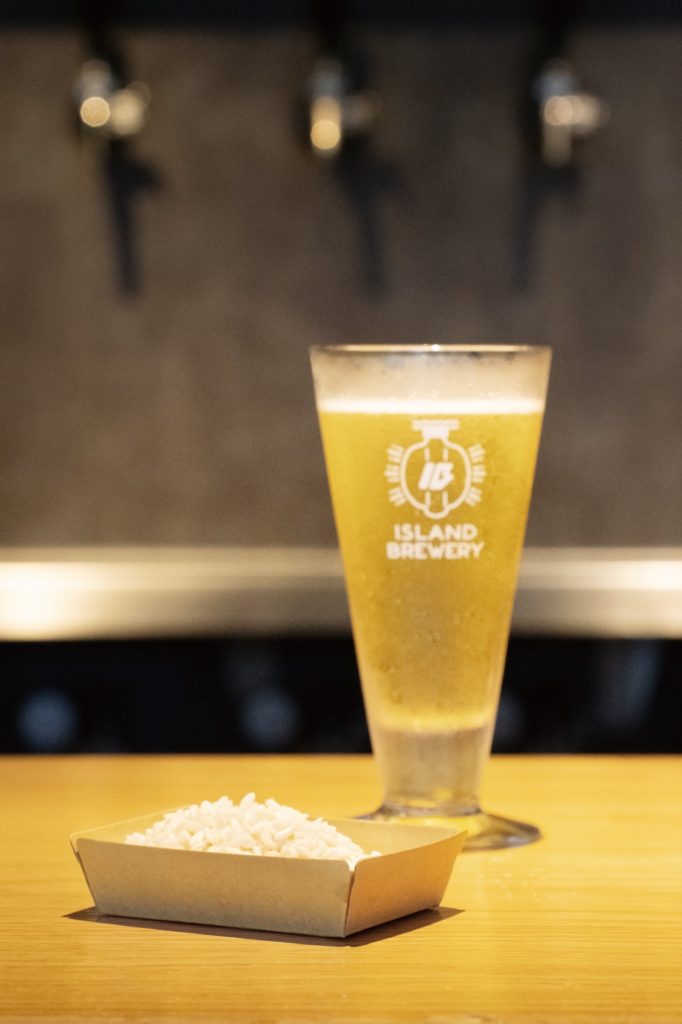
Island Brewery is the first microbrewery on Iki Island, founded by Harada-san, the fifth-generation owner of a sake brewery established during the Meiji era. Harada-san crafts a smooth yet flavorful ale that “pairs perfectly with fish,” using white malted rice known for its subtle acidity and natural sweetness. “I started this business to help revitalize the town,” he explained. Like Harada-san, the people of Iki share a profound affection for their island. There is something undeniably special about this place, a quality that captivates the hearts of its people and propels them forward in their efforts to nurture and sustain their community.
A Journey Through Tranquility and the Charm of Yesteryear
Shikanoshima Island is connected to land by a sandbar, a rare geographical feature in Japan that can be crossed from both sea and land. On the journey to the island, the sight of the bustling city of Hakata, seemingly floating on the sea, evokes a sense of adventure that is unique to this place. With an outer circumference of just 10 kilometers, the island can be easily explored in an hour by bike. Here, the sea, nature, and everyday life come together in a compact space, allowing you to experience the essence of travel in a short amount of time.

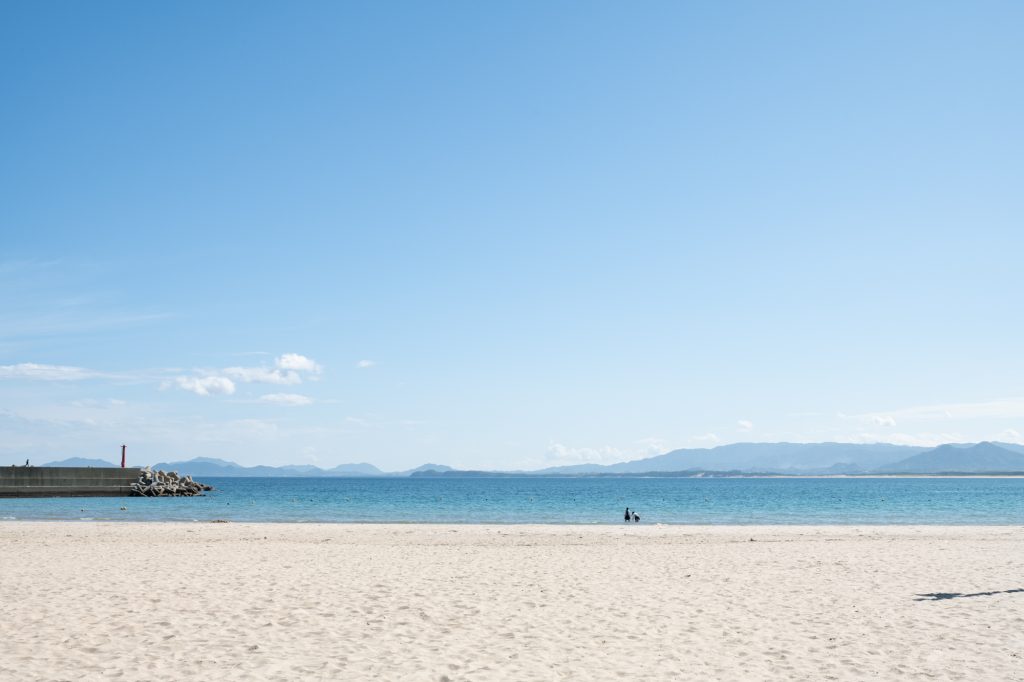
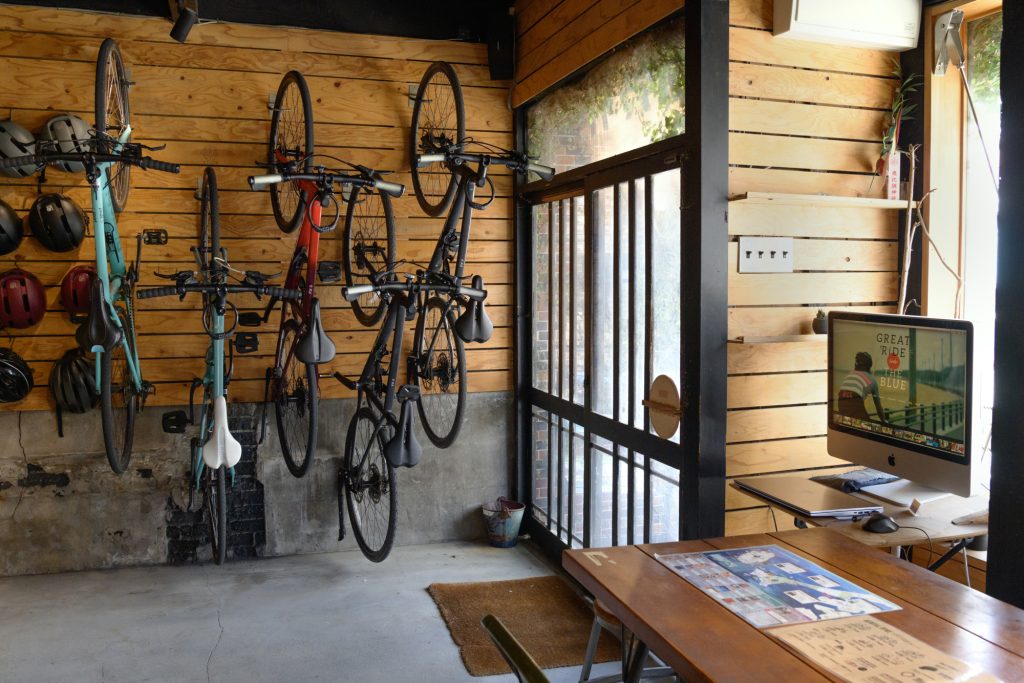
Just a short walk from the ferry terminal and the island’s entrance market is a beach that attracts plenty of tourists during the summer. Adjacent to it is the path leading to Shikaumi Shrine. Nearby, you’ll find ‘Shikashima Cycle,’ a bike rental shop and café, alongside a spice curry shop and a popular restaurant known for its sazae (turban shell) rice bowl, which often has a long line. The area is a charming mix of old and new, with a steady rhythm of local shops and private homes.
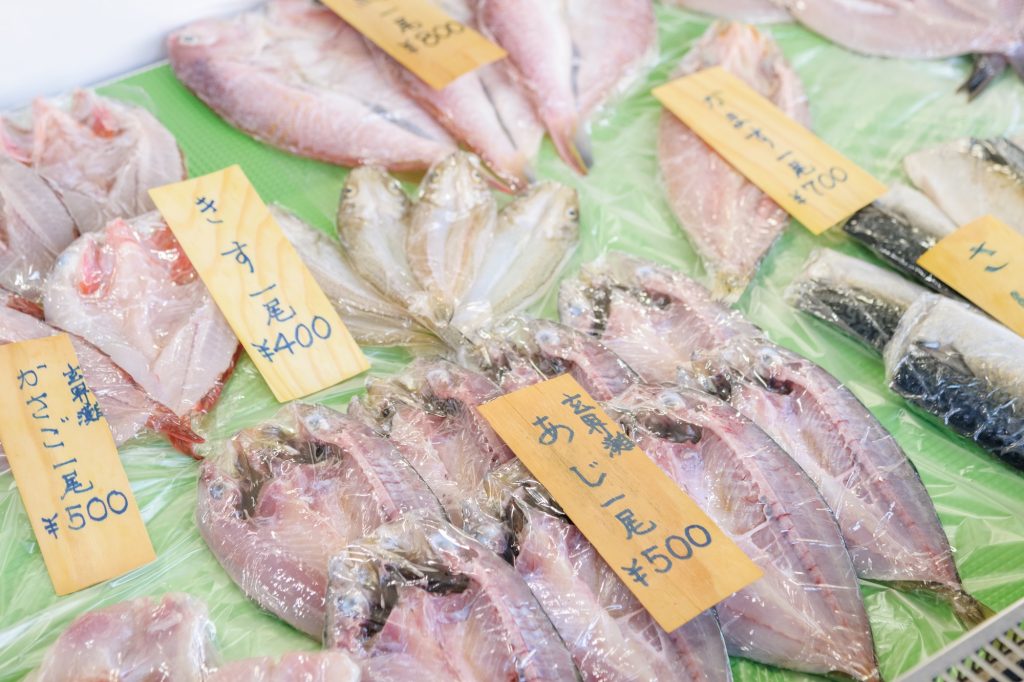
Ueno Ichibei Shoten, located midway up the path to the shrine, is a long-established dried fish shop that has been in business for 90 years. Despite its small size, the store once sold its products in several department stores and is now cherished as a unique island souvenir, drawing a loyal following from both near and far. “We don’t do anything special,” he explained. “It’s all about preparing oily fish quickly. That’s the key.” The ‘salted fish’ we received as a souvenir had the perfect balance of salt, enhancing the sweetness and richness of the flesh. The wisdom of the islanders, who have long lived in harmony with the sea, became all the more apparent.
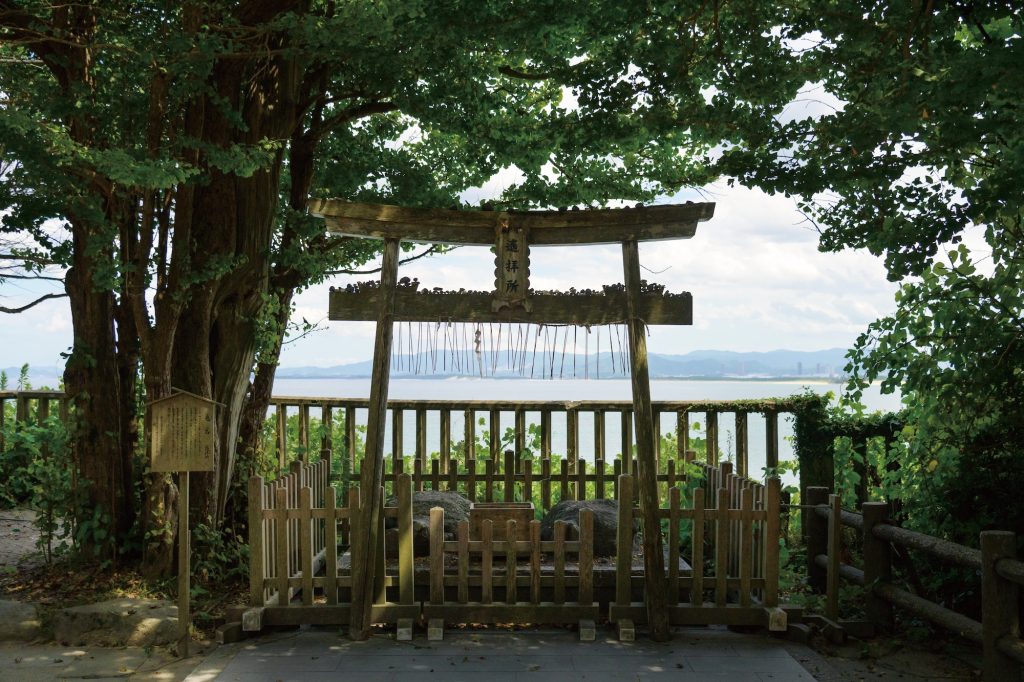
At the end of the approach to the shrine, Shikaumi Shrine sits atop a small hill, offering a view of Hakata Bay. The shrine is dedicated to the three Watatsumi-no-Mikoto deities, who are revered as protectors of the sea. According to legend, these deities were born when Izanagi no Mikoto performed a purification ritual in the sea and have since watched over the fishermen of the Genkai Sea. This legend has evolved into a tradition, and even today, the misogi purification ritual is performed at New Year’s, primarily by adult men on the island, accompanied by a priest.

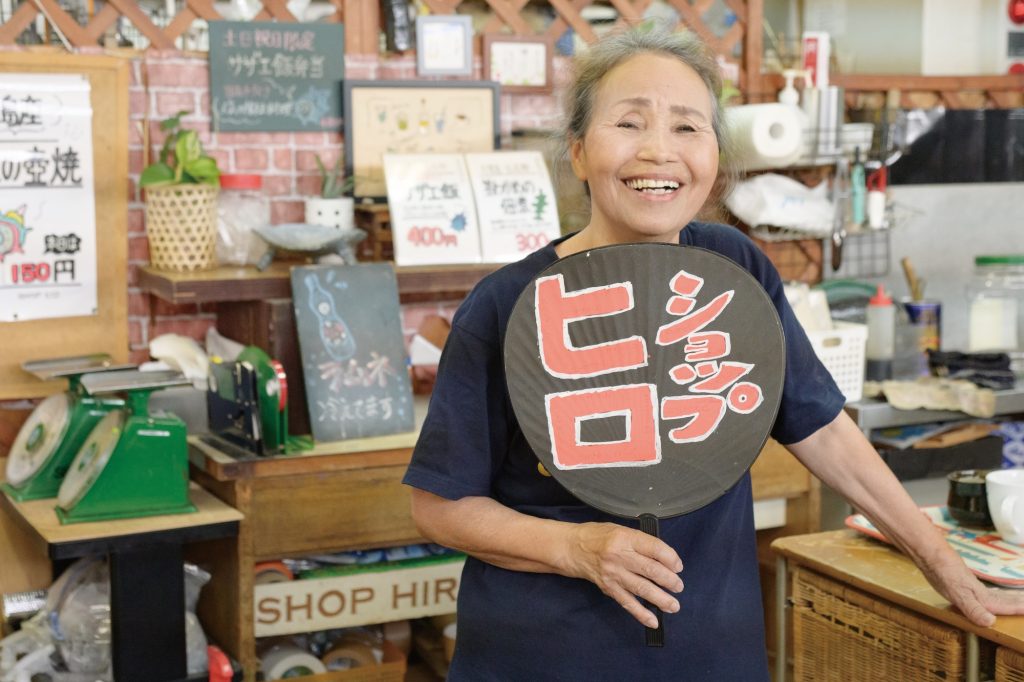
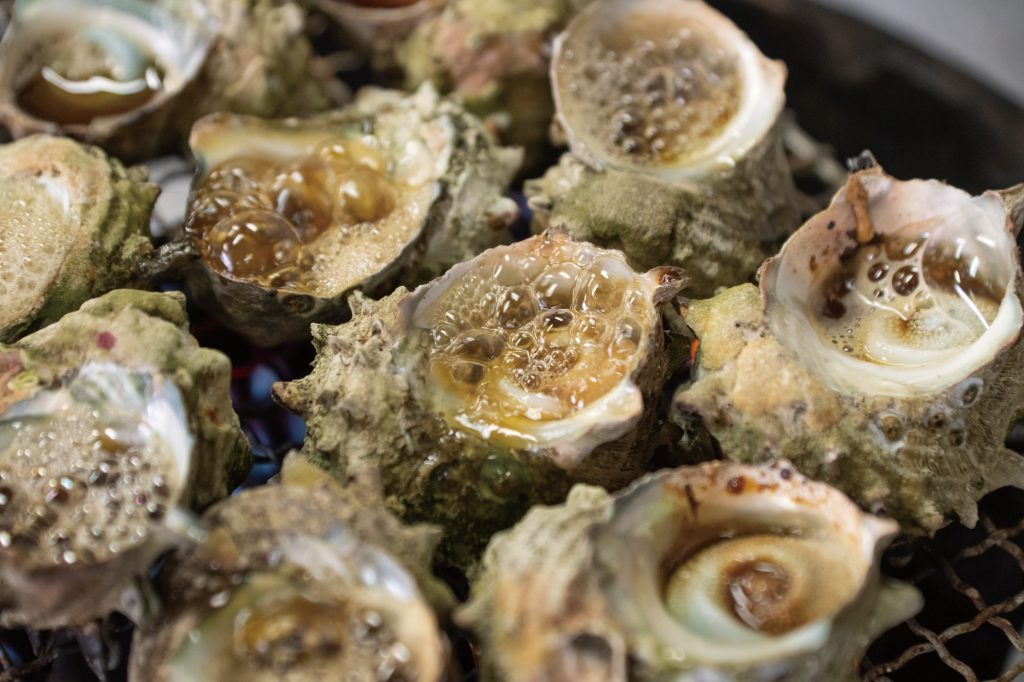
Proceeding clockwise around the island from the entrance, one soon reaches Shop Hiro, a charming little store run by a married couple—one a native of Shikanoshima, the other a skilled potter. In addition to their renowned turban shell rice and freshly grilled turban shells served in their own shells, the shop offers a wide range of prepared foods and daily necessities. Island locals gather around the corner table, enjoying a relaxed atmosphere, while travelers lend an ear to the island’s stories. The lady of the house often joins the conversation, and before long, everyone is smiling. This warm, spontaneous exchange is a daily occurrence at the shop, where old-fashioned social interactions and a laid-back ambiance create a sense of community. It’s a true reflection of the couple’s inviting personalities.
Halfway around Shikanoshima, the faint silhouette of Iki Island could be seen across the sea. The setting sun bathed the Sea of Genkai in a crimson glow. The journey between these two islands—distant yet connected by myth and history, each with its own distinct culture—left us with a deep sense of satisfaction, as if we had traveled through two different countries.

Tour of Iki and Shika Island by Boat and Bicycle
Tour de Nippon in Fukuoka & Iki
To be held on March 15 (sat) and 16 (sun), 2025
On the first day, take a boat trip from Hakata Port to Iki, where you will enjoy the magnificent scenery of Iki and the energy of the land as the sea breeze blows you along. In the evening, enjoy the famous Yumoto Onsen hot spring and the delicacies of the sea and mountains of Iki to your heart’s content.
Day 2 begins with a boat trip to Shikanoshima Island, Fukuoka. The tour will circle the island, exploring significant sites where you can immerse yourself in the history and atmosphere of Shika Island. Plans are underway for a special donburi topped with seasoned fish from the Genkai Sea, along with a unique island experience. Join us for two days of discovering the best of both Fukuoka (Shika Island) and Nagasaki (Iki City).
*Signing up for the participation on Tour de Nippon in Fukuoka & Iki will start from the end of January.
Tour de Nippon Guide
Fukuoka City & Iki City
morino cafe@ten
757 Hakozaki Kuginoo, Ashibe-cho, Iki City
TEL:080-1980-9453
Hirayama Ryokan
77 Tateishi Fure Nishikatari, Katsumoto-cho, Iki City
TEL:0920-43-0016
Mutsumi Mokuyou Building
TEL:407-1 Katahara Fure, Gonoura-cho, Iki City
0920-47-1819
Island Brewery
249 Katsumoto ura, Katumoto-cho, Iki City
0920-42-0010
Shikashima Cycle
417-1 Shikanoshima, Higashi-ku, Fukuoka City
TEL:050-6874-4398
Ueno Ichibei Shoten
481 Shikanoshima, Higashi-ku, Fukuoka City
TEL:092-603-2745
Shikaumi Shrine
877 Shikanoshima, Higashi-ku, Fukuoka City
TEL:092-603-6501
SHOP Hiro
1285-1 Hiro, Higashi-ku, Fukuoka City
TEL:092-603-6866
