







Homage to the resilient spirit of a great unifier
1,423… 1,424… 1,425… Whew! I had climbed the 1,425 stone steps of the approach and finally arrived at Horaiji Temple.
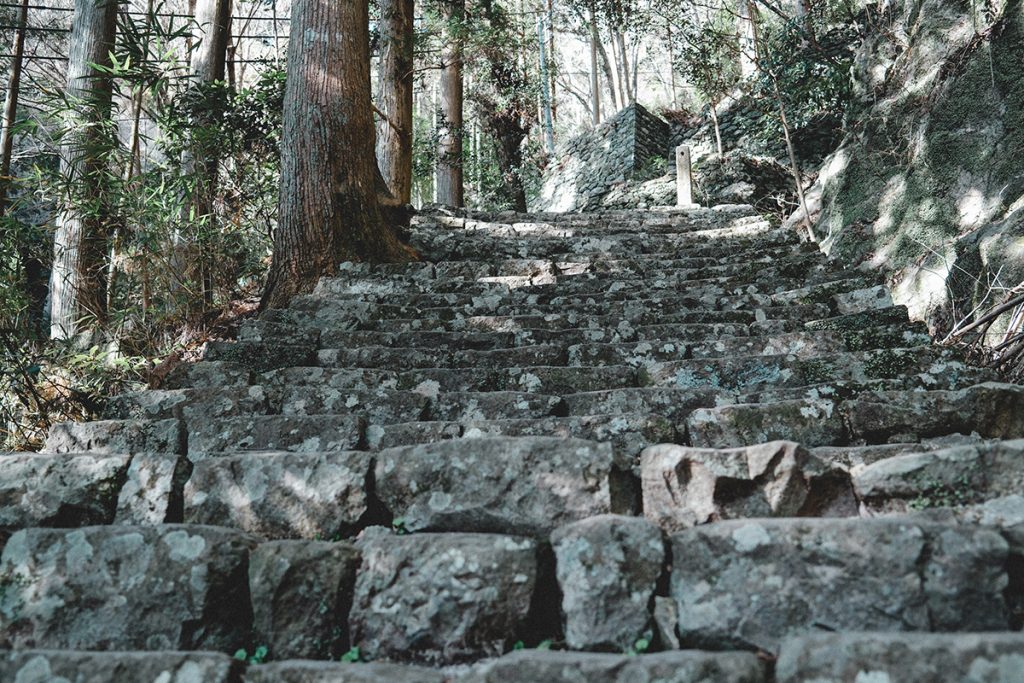
The old Mikawa Province, forming the eastern part of modern Aichi Prefecture, home to Shinshiro City, has no shortage of stories about Tokugawa Ieyasu (1543–1616), a “great unifier” of Japan who established the Edo shogunate and ushered in a 260-year-long period of peace and stability, from 1603 to 1868. Horaiji Temple is no exception: Ieyasu’s mother is said to have come here to pray she would give birth to a strong male child.
Her wish came true and she had a son, later known as Ieyasu, who was born during the hour of the Tiger, on the day of the Tiger, in the year of the Water Tiger. What’s more, the temple’s protective deity for the direction of the Tiger, called Toradoji (tiger child), vanished at the time of Ieyasu’s birth, and reappeared upon Ieyasu’s death; Ieyasu was deified as its incarnation.

Moved by this legend, the third ruler of the Edo shogunate, Tokugawa Iemitsu, established Horaisan Toshogu Shrine within Horaiji Temple and enshrined his grandfather.
As I went to offer a prayer at the hall of worship, I was met by an unfamiliar object. It was cone shaped and painted orange, and had an innocent-looking face. Charming.
This was Shinshiro City’s traditional folk toy Toradoji.

“Nanakorobi yaoki [fall seven times, get up eight]—Lord Ieyasu’s life was full of ups and downs, and his ability to overcome setbacks made him a great unifier of Japan. Toradoji is a self-righting doll painted with a tiger motif that pays homage to his resilient spirit,” says Fusayo Takeuchi from Takeuchi Clockmaker (Yoshiichi Shoko Trading). Her use of an honorific to refer to the legendary shogun is typical of a Mikawa local.
“The folk toy represents wishes for good fortune, protection against evil, success in life, and the treasure of children. The traditional color is ocher, but we offer a variety of colors as well as sizes, like orange for prosperity across generations, black to ward off evil, and red associated with the 15th century feudal lord Ii Naotora.”

Fusayo inherited the craft of Toradoji making from her parents, Osamu and Kumiko. That is, the folk toy associated with Ieyasu was made by hand by just one family of horologists.
From solo maker to community production
“I love working with my hands. I still do some work in the shop every day,” says Osamu with his rustic dialect.
Osamu is a lifelong clockmaker who has worked day and night with precision components such as gears and springs, and made all kinds of jigs by hand. Take his handmade hammers, for instance—he has over a hundred, each for a different purpose.
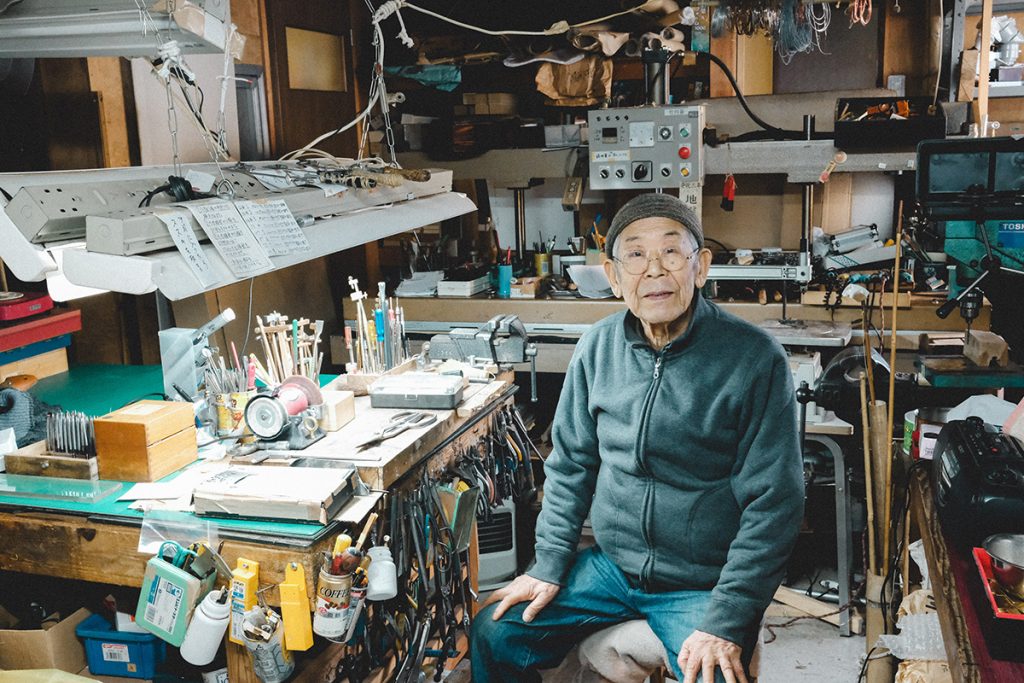
If Toradoji was created by a man who loves working with his hands past the age of 80, that would make perfect sense, but let’s not jump to conclusions here. Actually, Fusayo says, there was an original doll made by a relative named Yoshiichi Suzuki from the 1960s for about three decades.
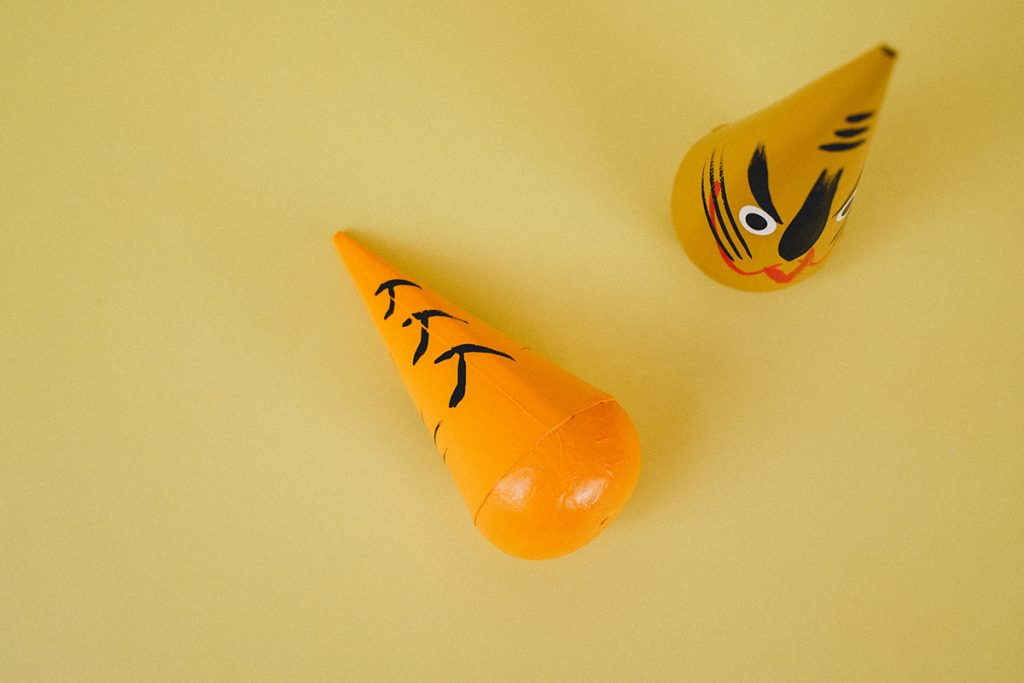
“Grandpa Yoshiichi was a distant relative on my father’s side. He ran a newsagent’s shop, and on the side, made folkcraft objects like Toradoji and wholesaled them to souvenir shops along the path approaching Horaiji Temple and hot spring inns in the neighboring Yuya Onsen,” says Fusayo.
“But because he worked alone, there isn’t much information left about his small side job. We locals who live here don’t pay much attention to our souvenirs, you know. For a long time, I had no idea Grandpa Yoshiichi made Toradoji.”
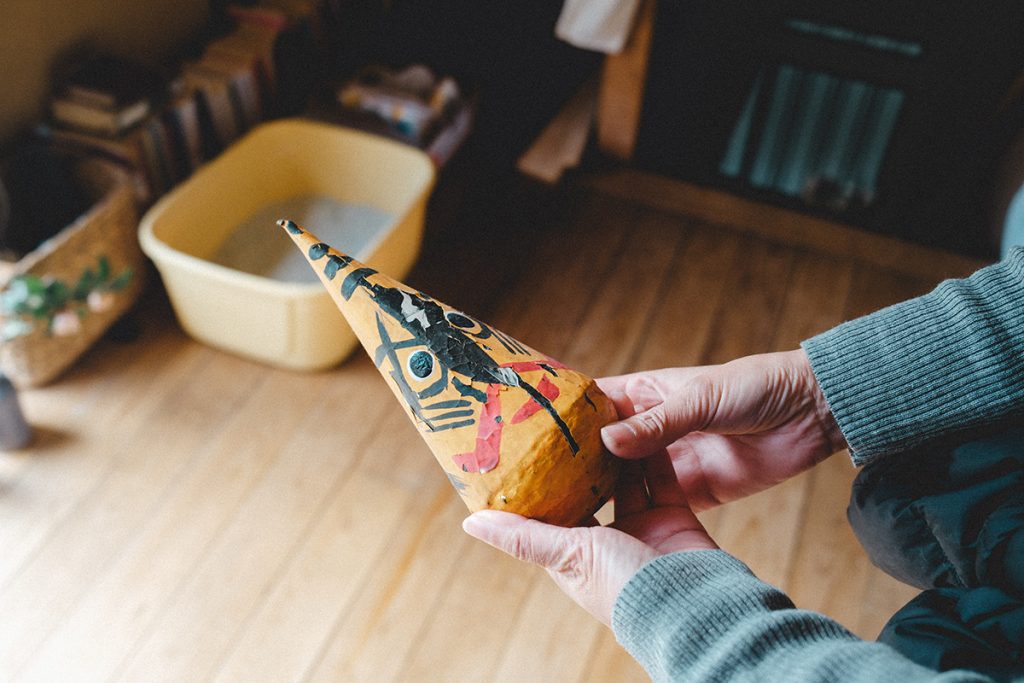
When Yoshiichi retired and passed away, the craft of Toradoji making came to a halt. The hiatus lasted for nearly two decades.
“What a waste to let the craft die out—when the idea of reviving it came up among our relatives, they chose my parents to take on the task,” says Fusayo.
“Why? Because they were clockmakers, naturally! My parents were told they had the deftest fingers of all the relatives, so would they make Toradoji again. It was as simple as that.”

Osamu and Kumiko were already in their late sixties at the time. They hesitated in the beginning, spent several years of trial and error, and managed to bring back the craft in 2010. By a stroke of luck, it was the year of the Tiger.
If it had been any other year, the hiatus of Toradoji might have been prolonged, and the traditional folk toy might not have seen an annual production of 3,000 dolls today.

“Toradoji takes a lot of time and effort to make. We mold the bottom out of clay, place three stone weights on top, glue on the cardboard soaked in water in a cone shape, color the body and paint the face with acrylic paint, and put the finished doll in the box—we even make the packaging by hand. The difficult part is balancing the weights to make sure the doll stands up. Also, we want a stable quality of finished products, but it’s tricky, because if the dolls look too polished, they lose that handmade charm,” says Fusayo.
“With my parents getting on in age, I have been playing a central role in production since 2024. I’ve reviewed the work processes, and today carry out production with help from my older sister, my relatives, and my neighbors. I was born and raised here and yet I didn’t know about Toradoji, but now I’m a part of its revival and slow but steady growth, and so many people are extending a helping hand. I’m really grateful for that.”
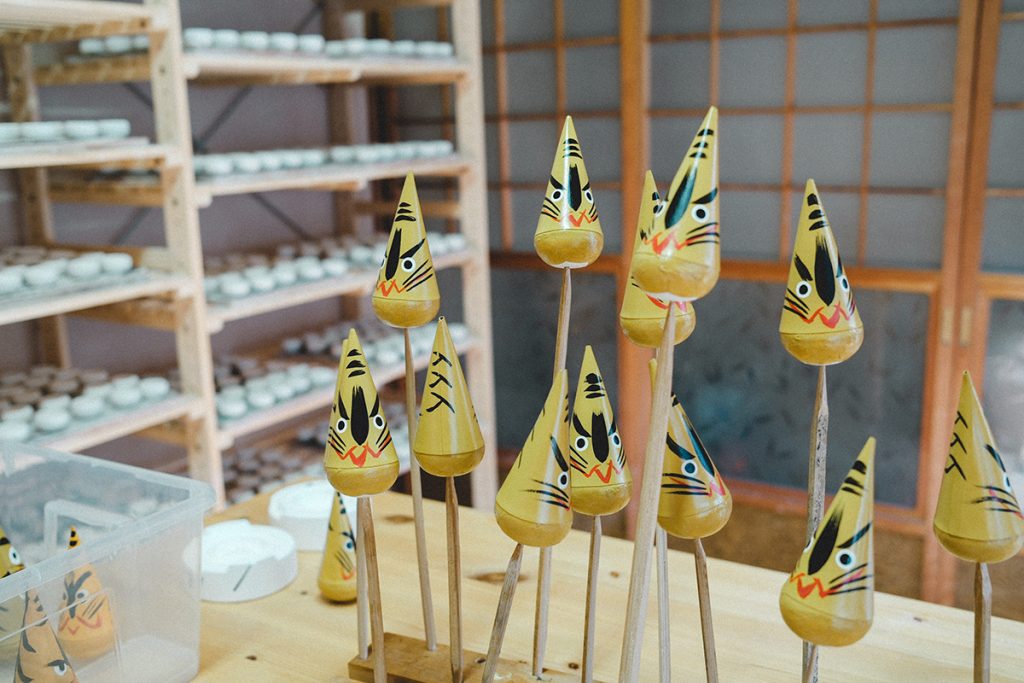
As I admired the self-righting traditional folk toy, I realized that the spirit of nanakorobi yaoki (fall seven times, get up eight) was not Ieyasu’s alone but the very history of this Toradoji that was discontinued once and revived by the Takeuchi family.
Kumiko says with a gentle smile, “As long as Toradoji made a comeback, I hope it will stay around for a long time.”
Takeuchi Clockmaker (Yoshiichi Shoko Trading)
Takeuchi Clockmaker makes and sells handmade Toradoji (tiger child), a traditional folk toy associated with the legendary Shogun Tokugawa Ieyasu in Shinshiro City, Aichi Prefecture. Toradoji dolls can be purchased online or obtained as amulets at Horaisan Toshogu Shrine.
https://toradouji.theshop.jp