







1,300 years of history and mysterious paintings
Sorry but I couldn’t help reaching out—that’s my right hand in the picture above. These are variations of unglazed clay dolls portraying monkeys. From left: Dango-zaru (dumpling-shaped monkey), Kodaki-zaru (child-hugging monkey), and Meshikui-zaru (rice-eating monkey). There is also Umanori-zaru (horseback-riding monkey).

The adorable monkeys are Konohazaru, traditional folk toys made in the Konoha area (currently Gyokuto Town, Tamana District) of Kumamoto. At first glance, the toys look like works of fine art—in fact, some are on display at Eames House, in California—but ancient writings reveal a legend dating back to the year 723.
Four refugees from the capital of Nara were living humbly in Konoha. An old man appeared in their dreams and told them to worship Kasuga Taisha Shrine. Following the revelation, they gave an offering of ritual utensils they made from red clay from Mt. Konoha. When they threw away the leftover clay, it turned into a monkey and scampered away. Then, the men had another revelation that making monkeys from the red clay from Mt. Konoha would bring happiness. And that was the beginning of Konohazaru.
Konohazaru gained popularity as a good luck charm for warding off disease and disaster, and bringing fertility and marital harmony. It boasted nationwide recognition as a folk toy.
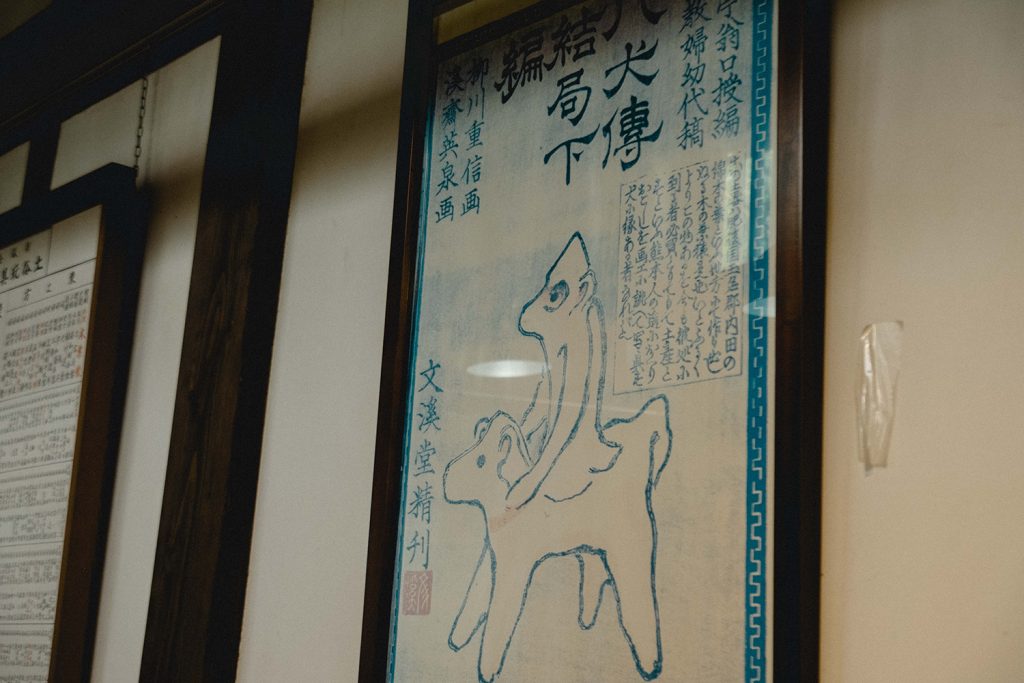
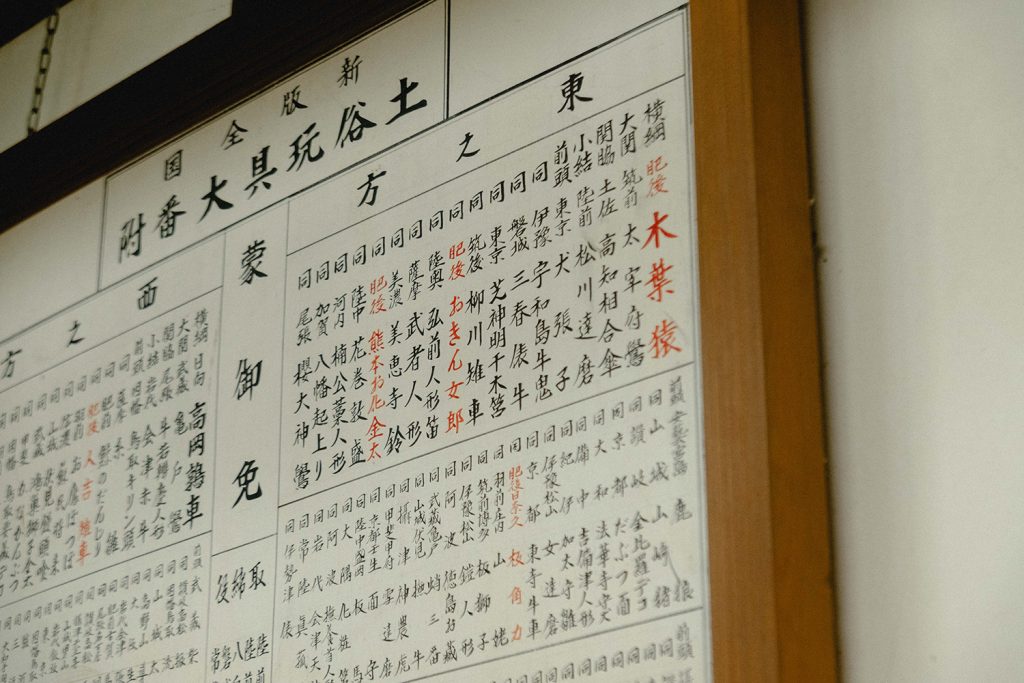
Konohazaru is depicted in the cover art of a volume of Nanso Satomi Hakkenden (The Biographies of Eight Dogs), a long novel by the leading figure of Japanese literature in the Edo period, Kyokutei Bakin (1767–1848). A ranking of Japanese folk toys in 1916 lists Konohazaru as the East Yokozuna, meaning the highest champion.
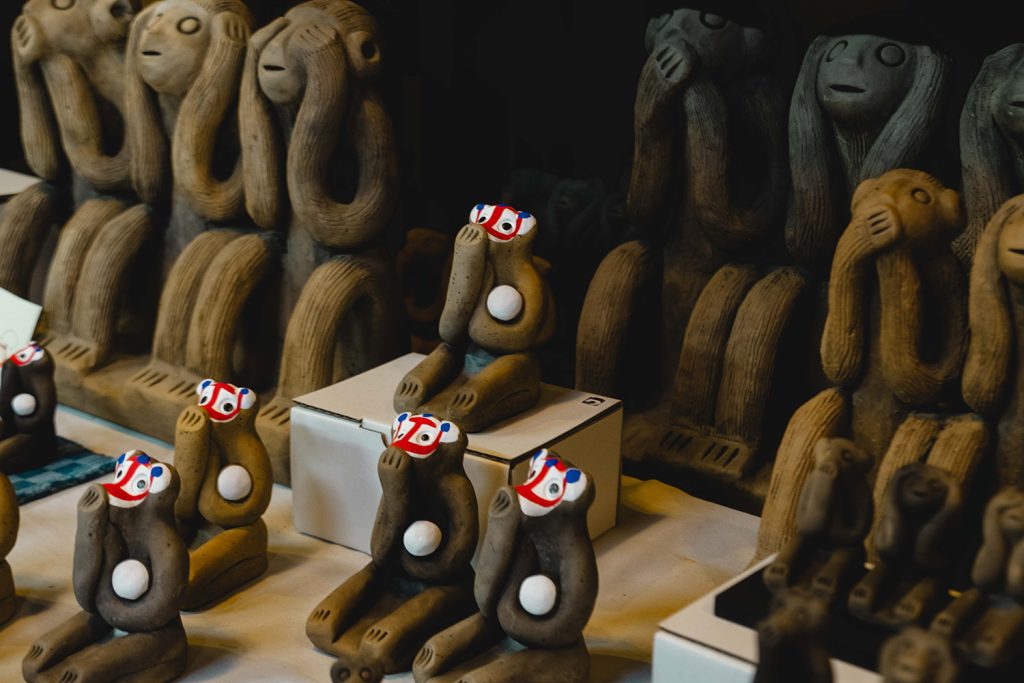
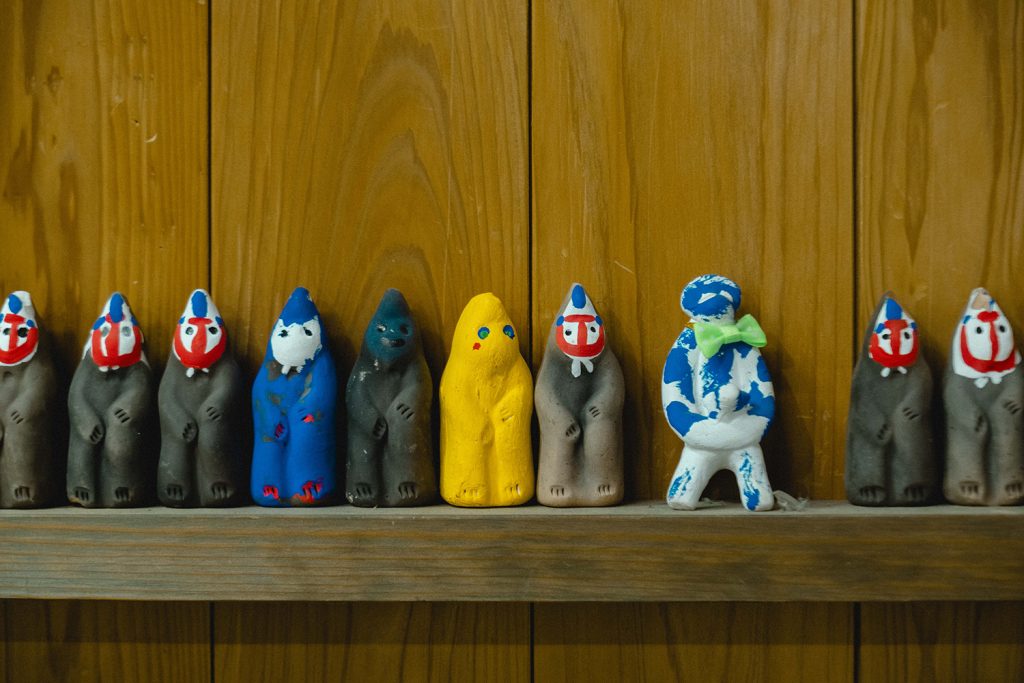
The unglazed simplicity is appealing too, but it’s the originality of the painting that makes Konohazaru unforgettable. The primitive white, red, and blue spotted pattern is somehow reminiscent of the tribal body paintings of the South Seas.
This painting is part of the tradition passed down for generations. A charm against evil, arteries and veins, a child’s smallpox scars—there are various theories as to the origin of the design, but the precise meaning remains unknown. One thing is for sure: The painting is filled with wishes and prayers.

“Around the Meiji period [1868–1912], when my grandfather was a child, there were still four studios. But now, we are the only family left. How many generations of us have been in business? So many that we’ve lost count!
“As far as we know, my father is the seventh generation since our lineage was revived. I am the eighth generation. We’re just a family running a small business. We aren’t all that keen on generations.”
So says the cheerful Sae Kawamata of Konohazaru Pottery, the only extant studio making the clay monkeys. Sae is the youngest of three sisters. She studied ceramic art in a junior art college before returning and apprenticing with her father. She currently runs the family business while raising three children.
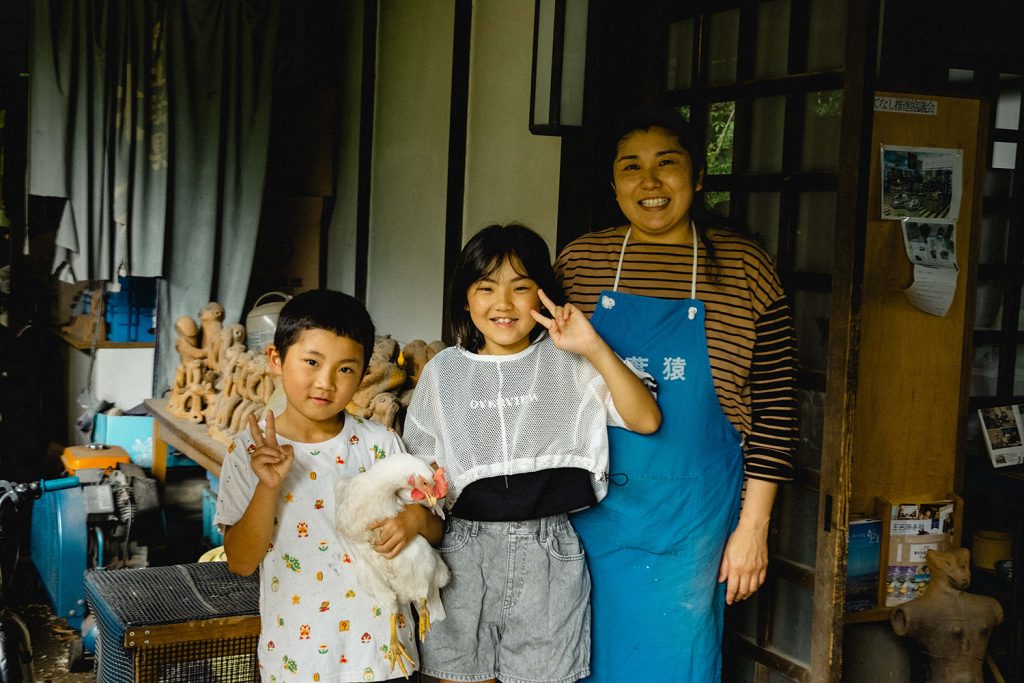
“Ever since I was little, I had a feeling I wanted to continue my father’s work,” says Sae.
“You know how in grade school, you write your future dream and post it on the classroom wall? Where everyone else wrote cake baker or soccer player, I wrote proprietor of my family business.”
Monkeys for success in business and fertility
In total, there are about a dozen variations of Konohazaru. Sae offered to demonstrate the forming of Meshikui-zaru. The monkey holds a white rice ball in its left hand and takes a bite with its right hand, with the wish that the owner will enjoy success in business and never go hungry.
Sae takes a ball of clay and rolls it into coils to sculp the monkey with her fingers. Konohazaru is not mass produced with a mold. Each piece is handmade by coiling, and this gives each monkey a unique expression.
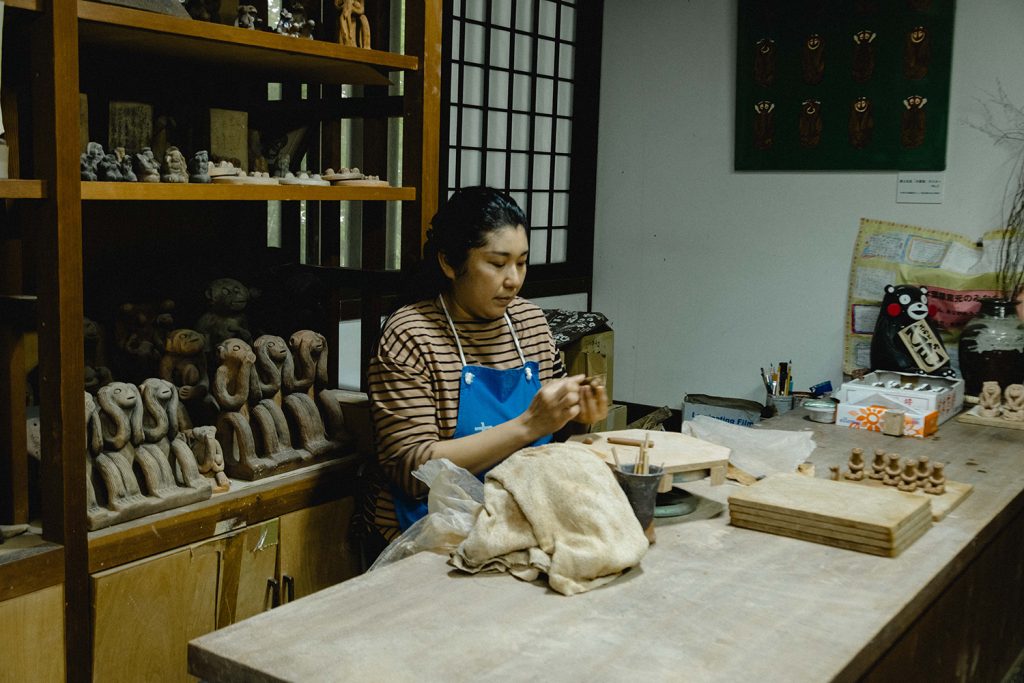
“No two monkeys are the same,” says Sae.
“After shaping, we leave the dolls to dry for two to three weeks, and then spend a whole day firing and smoking the unglazed pieces. We fire the kiln once a month and make about 500 monkeys at most. Painting is the final step, and the monkeys are complete.”
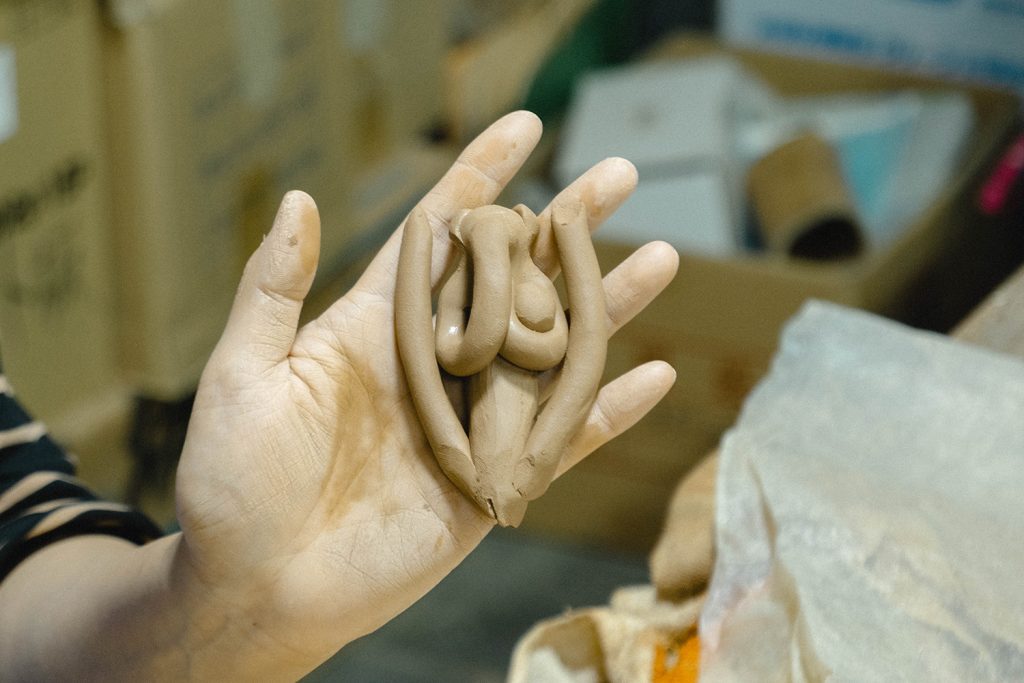
“What do I think about while working every day? Probably what am I going to make for supper that evening,” says Sae.
“I had always sat next to my father making monkeys since I was a child, so taking over the business didn’t feel like such a big deal. I am told my monkeys have a softer expression than my father’s though.”
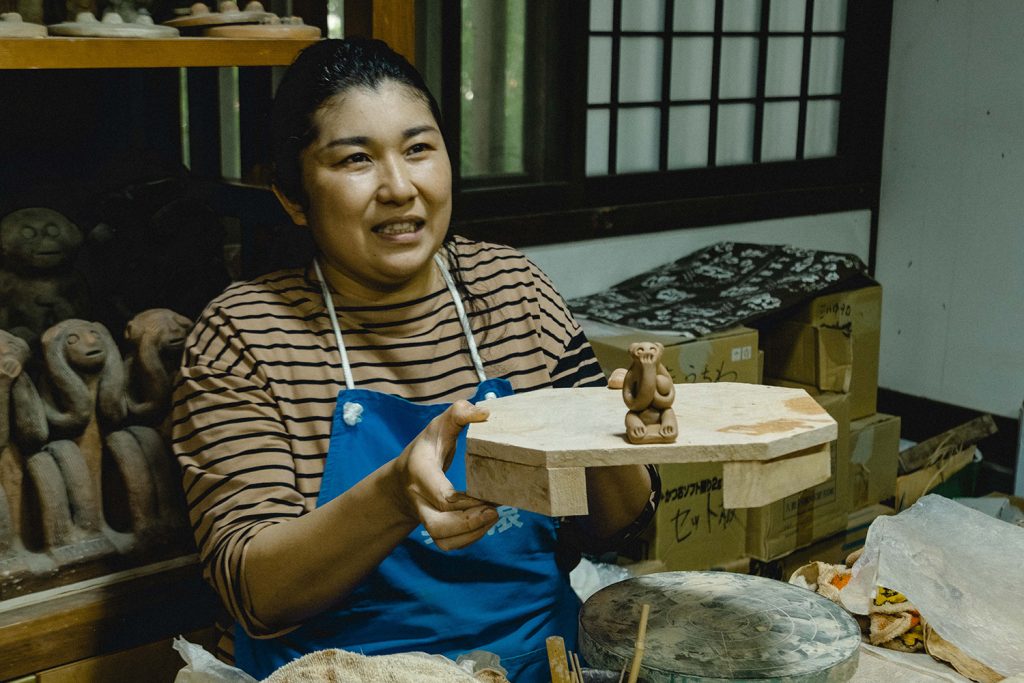
“I’ve always enjoyed making Kohonazaru, and I enjoy it even now. That was never a problem. My concern was that as a woman, when I married I wouldn’t be able to carry our family name. My father’s generation cares a lot about tradition, so that was my biggest conflict.
“The people in Kumamoto have been very supportive though. When we were featured on the local TV, an old lady phoned me out of the blue. I expected a complaint, but she just wanted to thank me for keeping the craft alive. Remembering that phone call really boosts my motivation.”
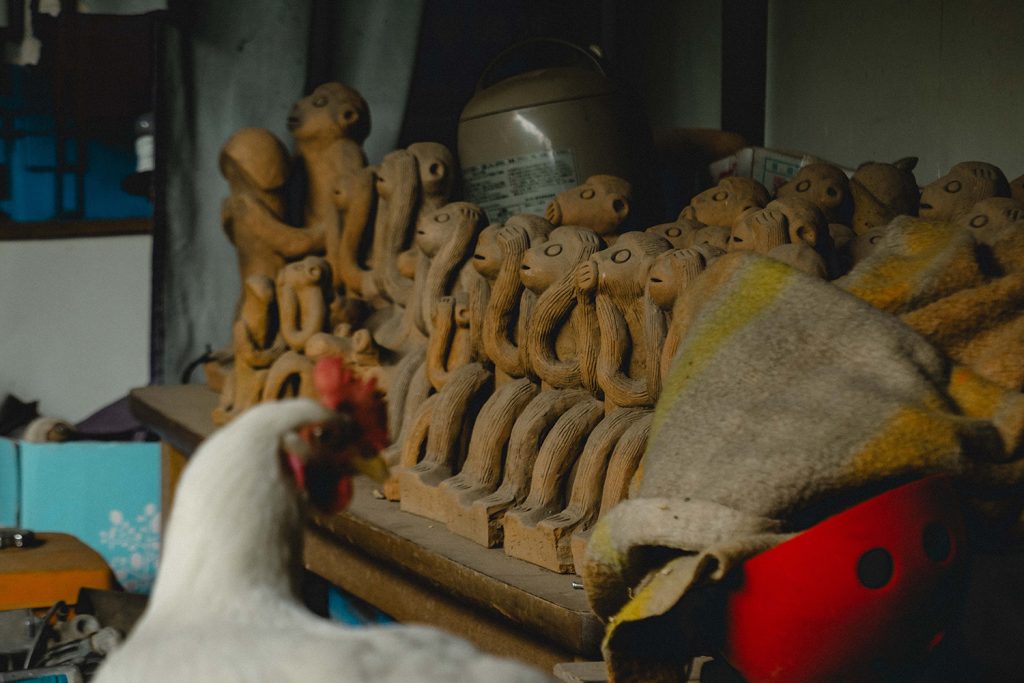
These days, Sae’s son, Naoto, is offering to take over as the 9th generation.
He is still in the third grade and is curious about everything. At any given time, he usually has two future dreams. One changes (it could be a baker, for instance), but the other is constantly proprietor of his family business.
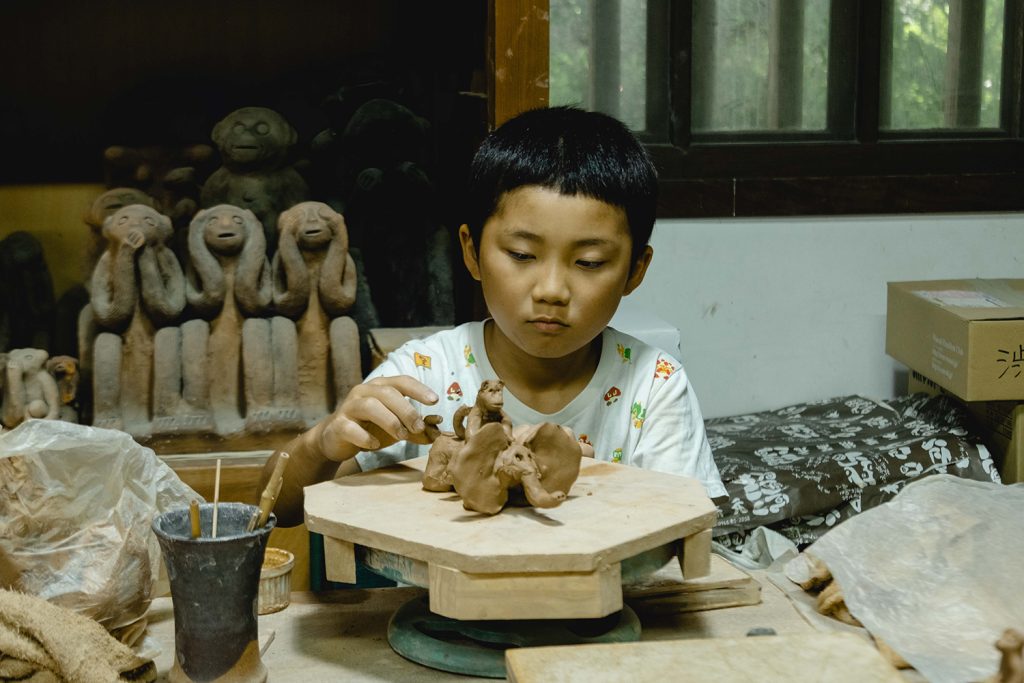
“Children are incredibly creative. I could never come up with his painting designs, for example. Even now, he’s making up a new shape . . . Naoto, is that an elephant-riding monkey?”
“In the old days, they used to roll out a mat in the backyard and make Konohazaru while they watched the children play. Our craft is closely connected with our daily lives and with nature. We’re a family running a small business of making folk toys by hand. I hope to carry on and keep the tradition alive just the way it is.”

Konohazaru Pottery
Konohazaru Pottery is the only extant pottery studio making Konohazaru (Konoha monkeys), or unglazed clay dolls portraying monkeys. The studio also sells the folk toys and offers clay craft classes. Konohazaru is designated a Traditional Craft of Kumamoto Prefecture.
TEL:0968-85-2052