







We feel beauty in the overwhelming presence of nature, and struggle to somehow capture it.
I’ve always said that good people do and design good things, but in a confusing society how do you find your way through the myriad of choices of —creative— life without compromising yourself or the environment?
Once again I journey to Kyoto, this time to visit Takeshi Nakajima and learn what Modern Design, East Coast Hip Hop, and Traditional Japanese Craft have in common.

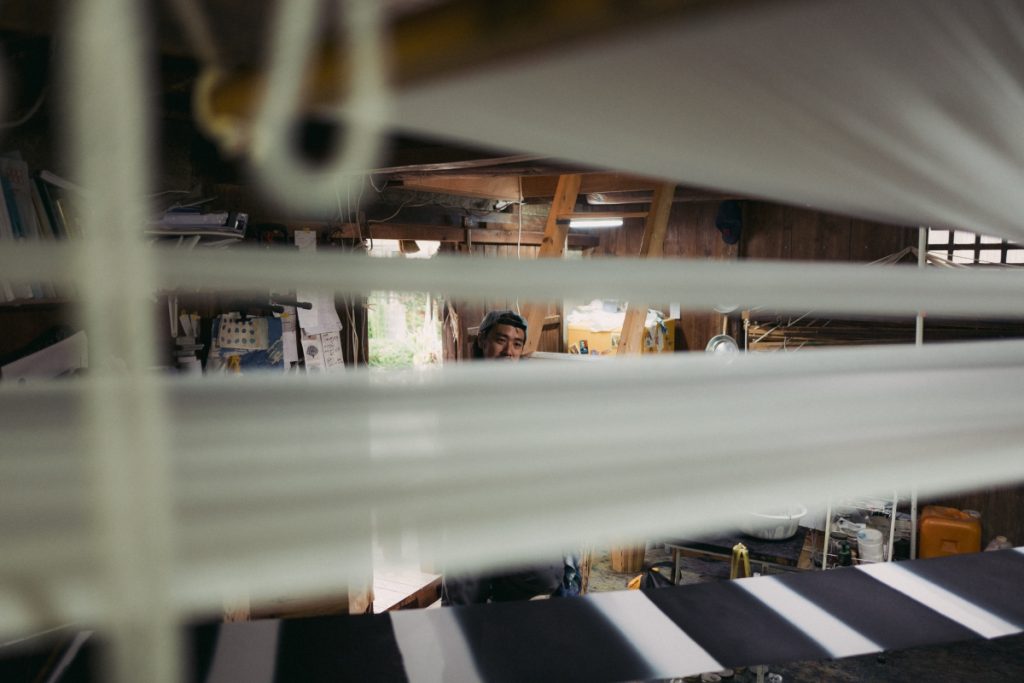
In a small neighbourhood in west Kyoto I find dyeing artist Takeshi Nakajima using a small brush to apply dye to long pieces of fabric suspended diagonally across his small converted studio. I was surprised to learn this was how his beautifully hand crafted textiles were produced.
Kimono, and furoshiki steeped in Japanese culture all decorated with Takeshi’s contemporary designs. Items made using a tradition of square shaped patterns producing very little waste. Simple yet functional, flexible, practical and timeless in design; naturally fitting the needs of humans for thousands of years.
A twenty-something architecture graduate with a head full of modern design and American street culture, packed his bags and headed for New York in 2008.
Takeshi’s story somewhat reflects my own as I myself did the same —years earlier— ending up in a shared loft on Canal St. a few doors down from Pearl Paints (for those who know). Art and skateboarding called me to Manhattan; architecture & Hip Hop called Takeshi to The Bronx, surprising me once again —we dared not visit.
As in many stories of adventure, we go seeking answers in far away lands only to discover what we already possessed. Seeing the beauty of Japan in the eyes of people he met, Takeshi rediscovered the importance of having his own values as a Japanese person. The answers he searched for were within himself and his own culture.

On returning home with this new appreciation (and the ability to speak English) he set about experiencing as many traditional industries as he could. Knowing he wanted to work with his hands, he just needed to find which craft fit them.
The moment I came across the process of Hikizome (brush-dyeing), I knew this was the one! I remember being so excited by it.
Now at Takeshi’s studio I learnt about his brush technique developed during the Edo period (1603-1868). Although I had seen Hikizome fabrics many times I never paid any attention to the process which created it. So on entering Takeshi studio I was immediately mesmerised by his confident technique.


In the middle of working on a piece of fabric with others hanging above his head. He skilfully manipulated the brush, fabric and dye; some parts blurring and others crisply sharp. His t-shirt displayed a few ink drops, the floor a colourful splatter design although I never saw a drop split —his hands were spotless.
“My fascination with working with my hands remains the same no matter how many years I do it” he explains how “after many years of practice my hands have developed a wider range of subtle sensations”. The more Takeshi practices, the ever more expressive he becomes. “The feeling that experience becomes part of your body is very rewarding.”
What is true for Takeshi, is true for us; the accumulation of our experiences —both physically & psychologically— are reflected in every creative expression. Yet we humans are prone to overthinking our actions and purpose, too concerned with tradition, trend, fame and fortune —perplexing the process. The key is in letting go of trying to be something and just follow the magic flow of muscle memory and do something —something naturally you.
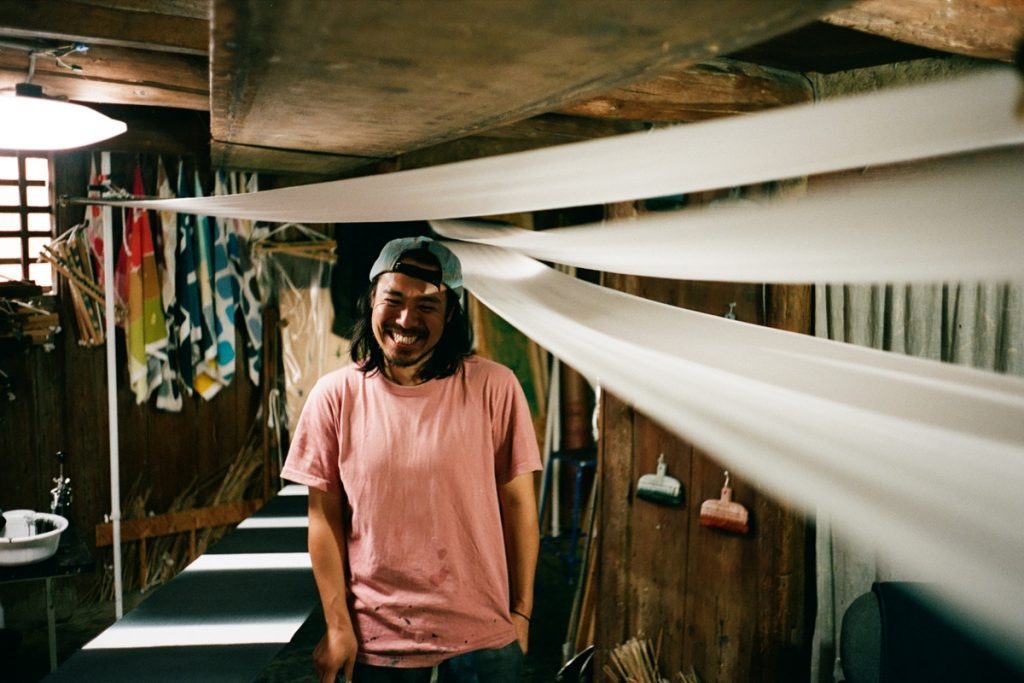
For those who aspire to make things better, being in nature plays an important role in returning to your natural state, bringing back your innate sensitivities to discovery and emotion, and to being themselves.
As Takeshi worked I asked him one challenging question after another, sometimes causing him to pause and think. I feared I might ruin the design he was working on, but he didn’t seem to worry. Ever relaxed, we talked while he worked.
Growing up in Shiga Prefecture, childhood days were freely spent immersed in nature naturally learning and creating during inquisitive play; catching fish, inspecting insects and building secret camps. “I think this is the basis of my imagination that led me to where I am today.” Perceptive play in an ever changing natural environment where you never encounter the same scenery or conditions twice; stimulates the imagination of new possibilities. “Creating designs from scratch is a product of such curious imagination.”
As a human being, I want to create beautiful things that only humans can make, and I think this is an important form of respect for nature.
As humans (artists) it is our inherent natural ability (responsibility) to both create and appreciate beautiful things. A sensibility allowing a respectful betterment of culture and our natural environment.
Beautiful things move us, make us grateful, and make us cherish them. I believe that people who understand this feeling can do the same with nature.
Our form and needs remain essentially unchanged; a piece of cloth to wear, carry our belongings or wipe things which need wiping. However, the way we design, produce and consume things has dramatically changed —not always for the better. Not too long ago the practice of repurposing kimono was common practice. Wearing thin from daily use, the pleasure of owning and using such cherished textiles could be extended by giving them new life as beautiful functional accessories.
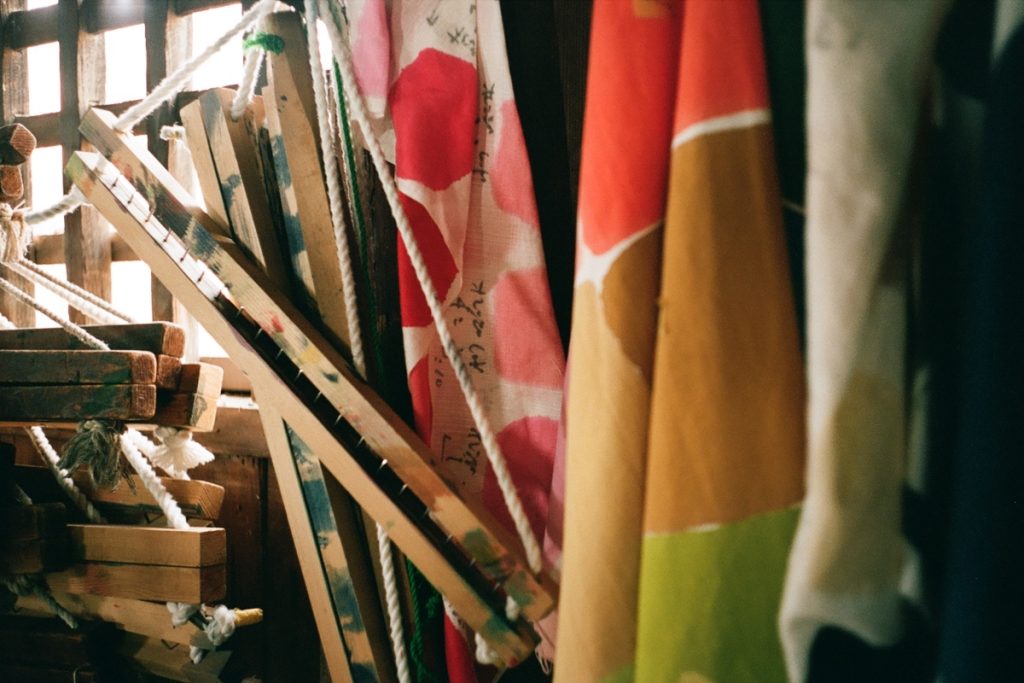
Inspired from past practices and an appreciative responsibility towards the environment. Takeshi has designed a creative process which not only encourages a cherished long use, but also produces very little production waste. Fashioned in such a way that off-cuts from one design are used in another or sewn into contemporary bags and towels inspired from patterns centuries old. Takeshi’s textiles are both traditionalistic and modernistic in design, equally at home on Japanese yukatas worn during summer festivals or on couture worn on the streets of New York.

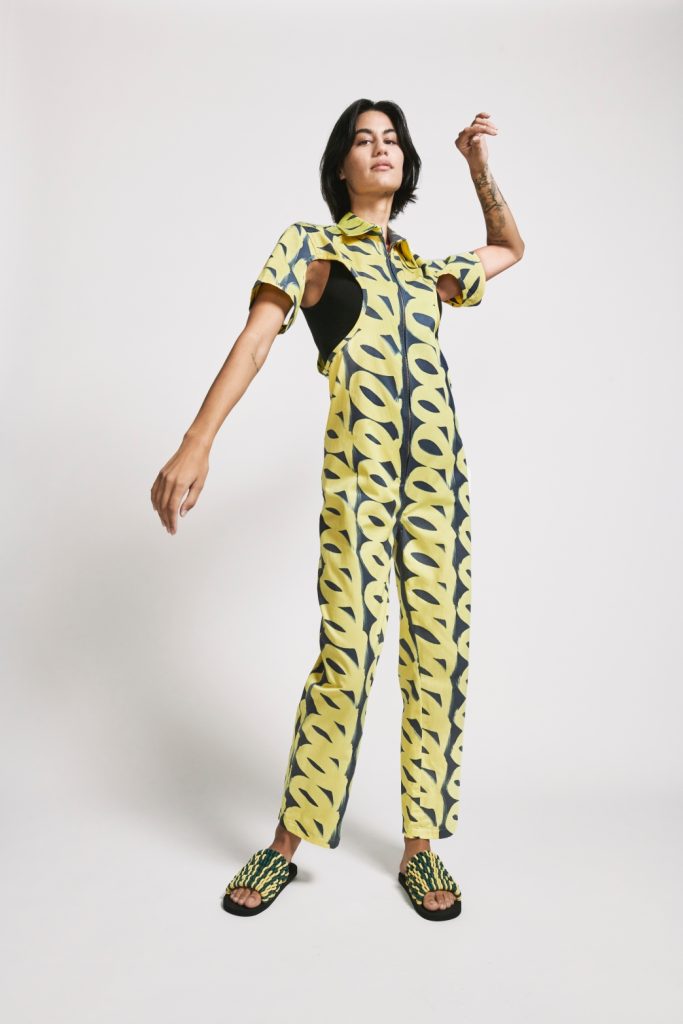
It’s true, not all beautiful things are kind to the environment, but we do have a choice in the way we make, use, and reuse the things we produce in our personal —creative— lives. Beautifulness and goodness dwell in nature, the nature surrounding and within us. Make respectful choices for both, not out of trend or any other reason, expressed through empty actions and words, but through the sensitive expression of our-natural-selves.

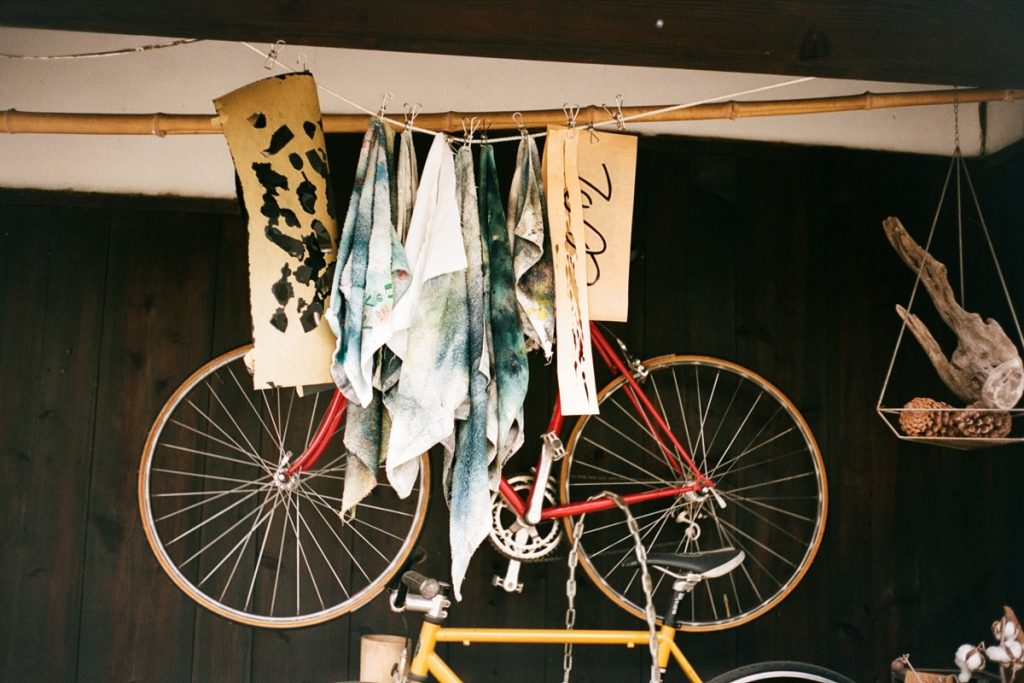
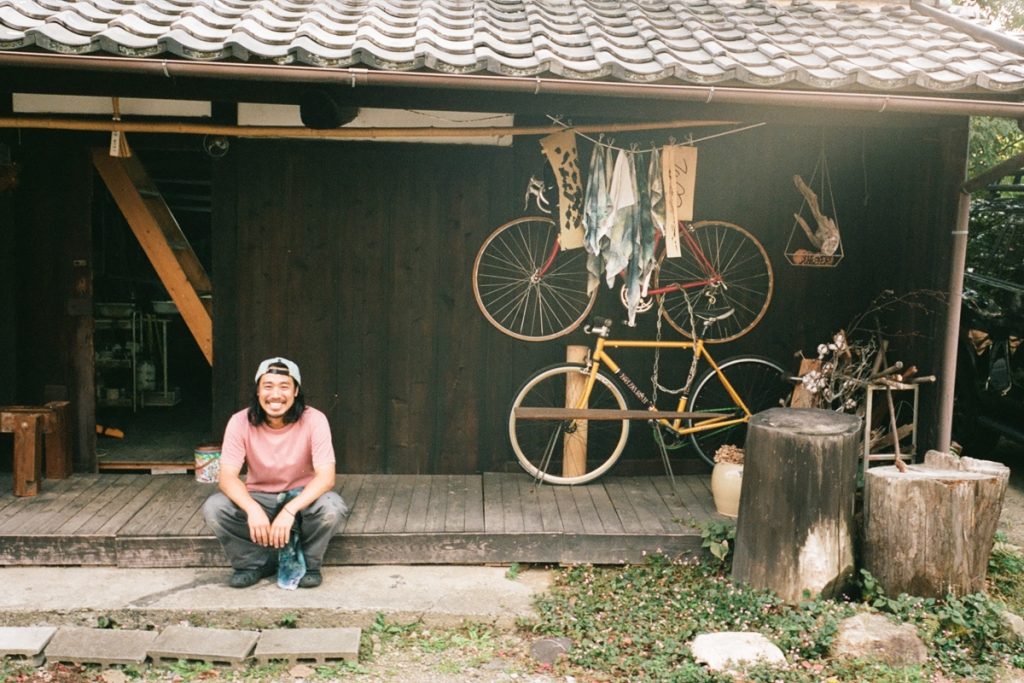
We hypothesised about craft/design, tradition/technology and what it means to be environmentally friendly until we thoroughly confused ourselves, leaving only one more question to ask. “What is the meaning of success?” Takeshi’s simple and meaningful answer was “Being satisfied with your own work and activities, and the happiness of your family and friends around you.”
I now know why Takeshi’s textiles express something uniquely different from anything I had ever seen. The natural combination of practised skill, imaginative play, hip hop and design, combined with a respect for nature, community and the tradition of Japanese crafts; all expressed in a single brush stroke.
And so it goes…
If you liked this story you might like to read & subscribe James’s newsletter.