







It’s about an hour by Shinkansen from Tokyo Station. The noise of the city gradually fades, and outside the window, Mount Asama slowly looms larger.
Long cherished as a summer retreat, Karuizawa has in recent years seen a rise in dual-base residents and transplants, ex-urbanites drawn by its comfortable distance from central Tokyo. Architect Masaki Kato, who founded the design studio Puddle, is one of them.
“Now I spend the first half of the week in Tokyo, and the latter in Karuizawa.”

Fully at home here, Kato quietly opens a window onto Karuizawa’s everyday life.
“Horse and the Sun”
A slice of daily Karuizawa life
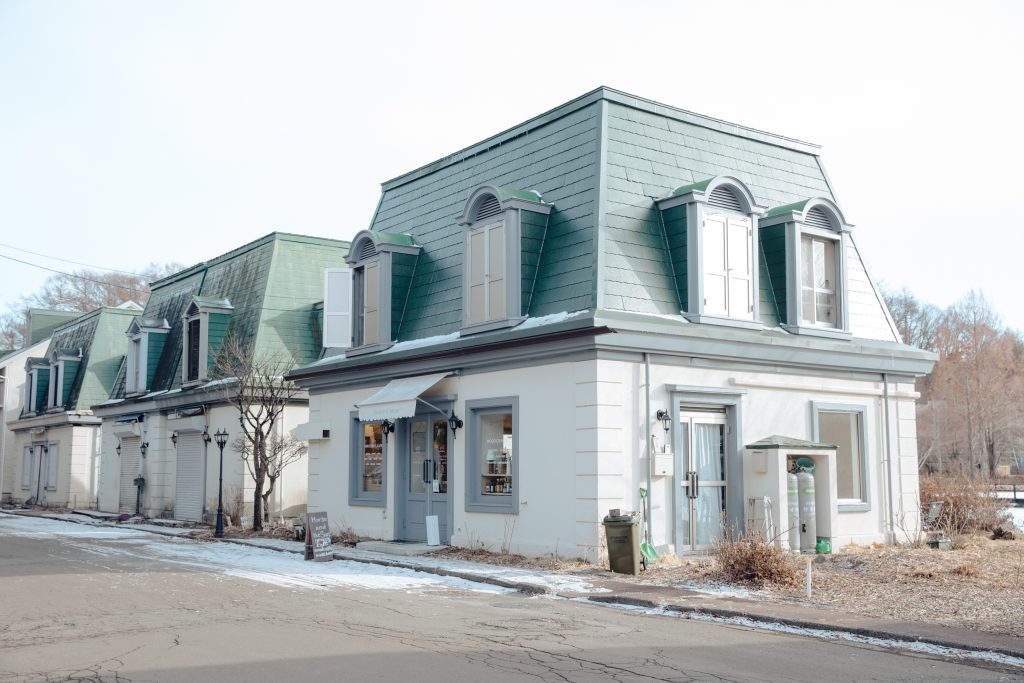
Our first stop was Horse and the Sun, a grocery store carrying vegetables, fruit, and drinks from small-scale producers.
Owner Kyoko Takahashi previously lived in Kamiyama, Tokushima. Alongside vegetables and fruit grown around Karuizawa, she also stocks produce from makers in Shikoku during the winter months. It’s not just a place to shop. You can order doughnuts and churros as well. The doughnuts are simple yet layered in flavor, while the churros are light on the outside and soft within.
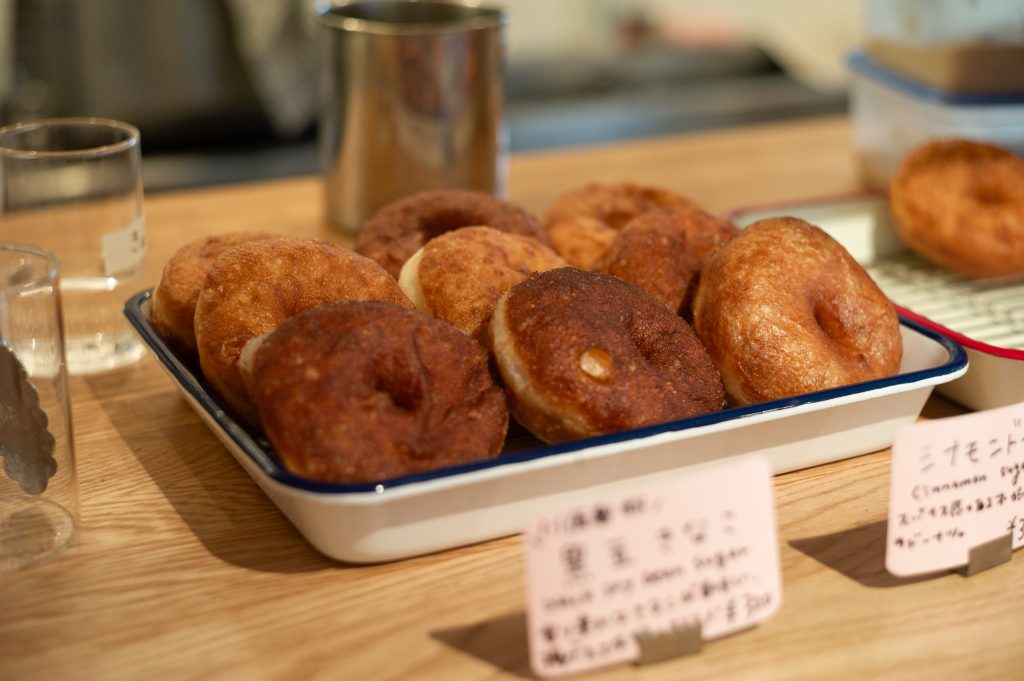
An eat-in space invites you to linger over coffee and enjoy your food on the spot. Just behind the shop lies the lake, and through the windows, the day’s light and shifting breeze drift gently inside.
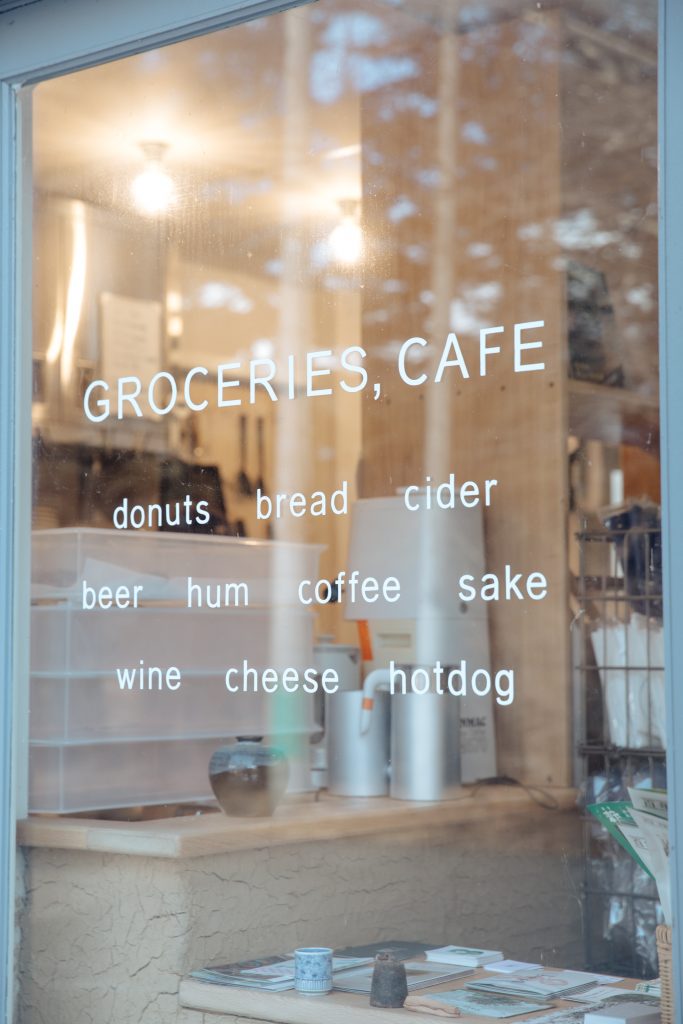
“I come about once a week,” Kato says with a calm smile. It’s not simply a place to stock up on necessities. “Sometimes they’ll even source something my wife has requested.” In that small exchange, you sense the quiet pleasure of living in this town.
Karuizawa has long embraced Western influences, cultivating a culture of its own. Newcomers are neither singled out nor kept at arm’s length, but welcomed much like a neighbor next door. That open spirit can be felt throughout the town.
A Place Where Children Discover Picture Books
“Ehongo Hondō”
Karuizawa is also known for its strong educational environment, drawing many families who relocate in search of a wholesome place to raise their children. This aspect of the town was one of the reasons the Kato family chose to live between two bases.
A short walk through town reveals children running freely in every direction. Yet until 2018, there had long been no place in Karuizawa where they could choose picture books for themselves.
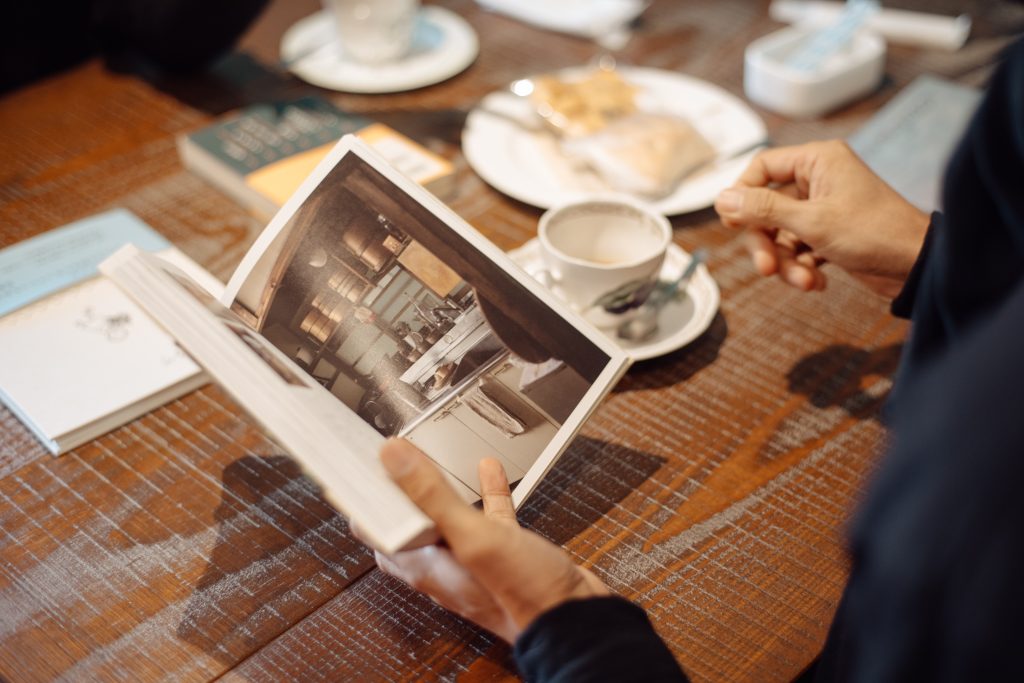
“I want children to know the joy of having their own picture books.” That simple wish led owner Satomi Hirabayashi to open “Ehongo Hondō.” From the beginning, she has handpicked each title, imagining how children might respond. “The time spent choosing is half the fun,” she says with a gentle smile. It feels less like stocking shelves and more like searching for a single book to place into someone’s hands.
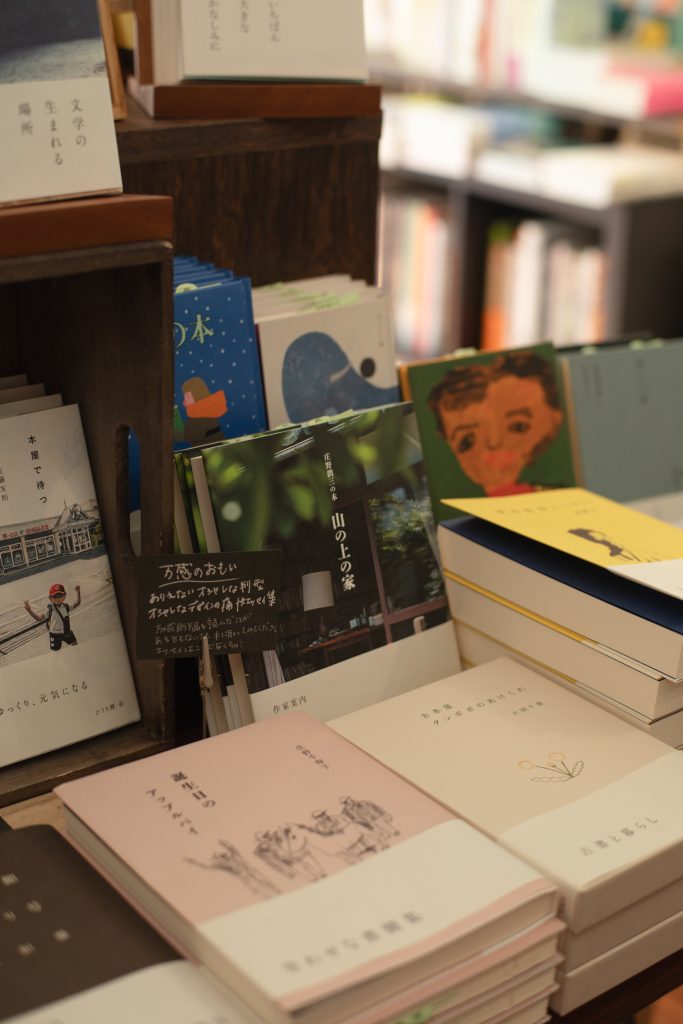
Step inside the renovated villa and you’re met with a convivial, intimate atmosphere.
Kato’s wife, Naka, is a regular here. “I check in with Hirabayashi-san every so often about which picture books to choose. If I decide on my own, I tend to gravitate toward the same kinds of stories.” For Naka, the owner’s perspective is a steady guide. Though meant for children, many of the books feature fresh design and unexpected themes that catch an adult’s eye as well. “The ones she recommends are always titles I would never have found on my own. I end up enjoying them just as much,” she says with a smile.
You can linger over a book with a freshly brewed coffee or juice in hand. Every Thursday, the shelves groan with carefully crafted breads and sweets. “They’re so tasty I buy them not only for my family, but as little treats for friends too,” Naka says. Browsing for picture books, drawn in by the scent of something freshly baked, is part of the ritual.
Living, Seen Through Things
“NICEFOLKS”
Our next port of call was a select shop called “NICEFOLKS.”
Owners Takashi and Aya Yumoto have spent more than 30 years working closely with fashion and everyday objects in Nagano and Ueda. In 2025, following a move to Karuizawa, they started a new chapter here. The decades of experience they’ve accumulated quietly shape the ambiance of the space today.
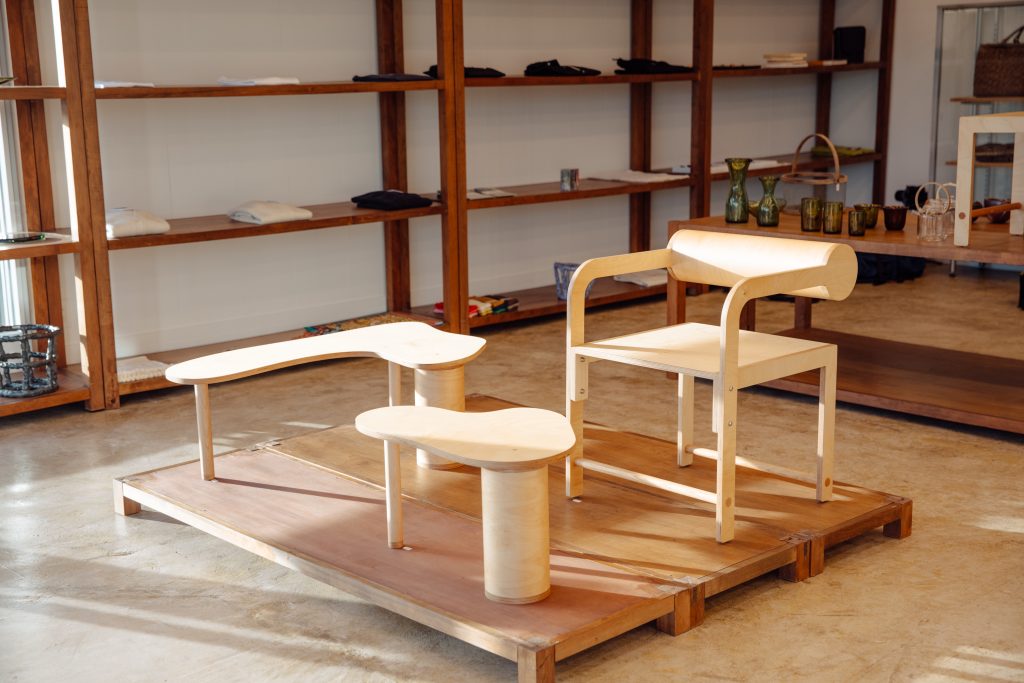
Step inside and you’re first struck by the generous space and the quiet pace of time. Clothing, furniture, and crafts by makers from across Japan are thoughtfully arranged throughout. None are ordinary finds; each invites you to pause and reach out. Every piece is meticulously chosen with an understanding of the maker’s background and philosophy.
When Takashi speaks, it feels less like a sales pitch and more like an introduction to long-time partners. As you listen, you sense not only the story of each piece, but also snippets of recent exchanges and everyday conversations. Even the relationships behind the work come vividly into view, which is part of what makes the experience so compelling.
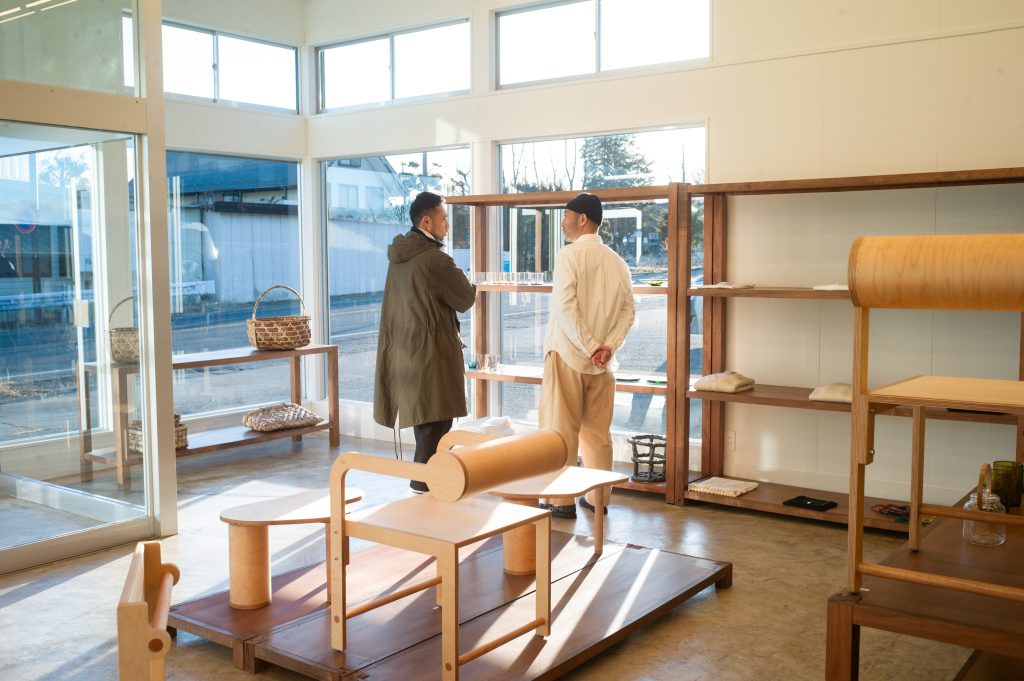
Kato-san notes, “Those two know how to convey the richness of each piece in a way that’s both engaging and thoughtful. That’s why makers feel comfortable entrusting their work to them.” He also points out that the shop carries a well-curated selection of Nagano-made items, including traditional crafts from Saku City. “Everything here has a story,” he says. “You can’t help but linger.”
Listening to Takashi speak about the background of each piece, you move slowly along the shelves. You pick something up, turn it in your hands, lean in to study a detail, then step back to take in its form as a whole, testing its weight and texture. In that quiet repetition, choosing an object becomes something more. Almost without noticing, you find yourself reflecting on the way you live, and on what you’ve valued all along.
By the time you step back outside, you may find yourself walking through the town in a slightly different frame of mind.
Where the Journey Ends, Living Begins
“stand fog”
Our final stop was “stand fog.” Just steps from “Horse and the sun,” the shop opened in October 2025. Even as a newcomer, it already captures the ease and quiet pleasure of living in this town.
Owner Hiroki Morimoto honed his craft as a sommelier at caveman in Nihonbashi, Tokyo, and since 2021 has also overseen the wine selection for SANU 2nd Home. Here, the cuisine centers on vegetables grown by his wife, Ayumi, in the neighboring town of Tsumagoi.

Simple preparations sharpen the contours of each ingredient, allowing the vegetables’ depth and quiet vitality to come through with clarity. The dishes find their full expression alongside wine. Light-handed seasoning meets the wine’s fruit and structure in natural harmony, and with each plate, the glass empties almost without notice.
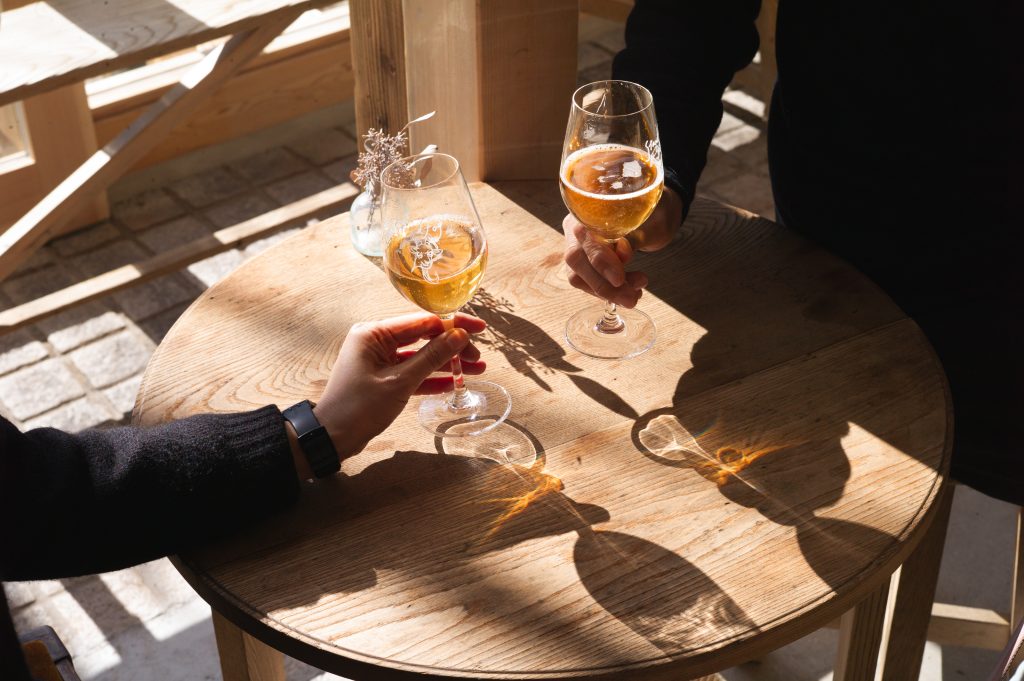
Step into the wine cellar and the air shifts. Bottles line the walls, each carefully chosen, each hinting at good hours ahead. “It’s great that you can enjoy a meal and wine here not only at night, but casually at lunch too,” Kato says. Naka smiles, adding, “We can even bring our dog, which isn’t always possible at places like this.” For them, this is not an eatery reserved for special occasions, but a place to casually meet up with friends, to share food and wine without ceremony.
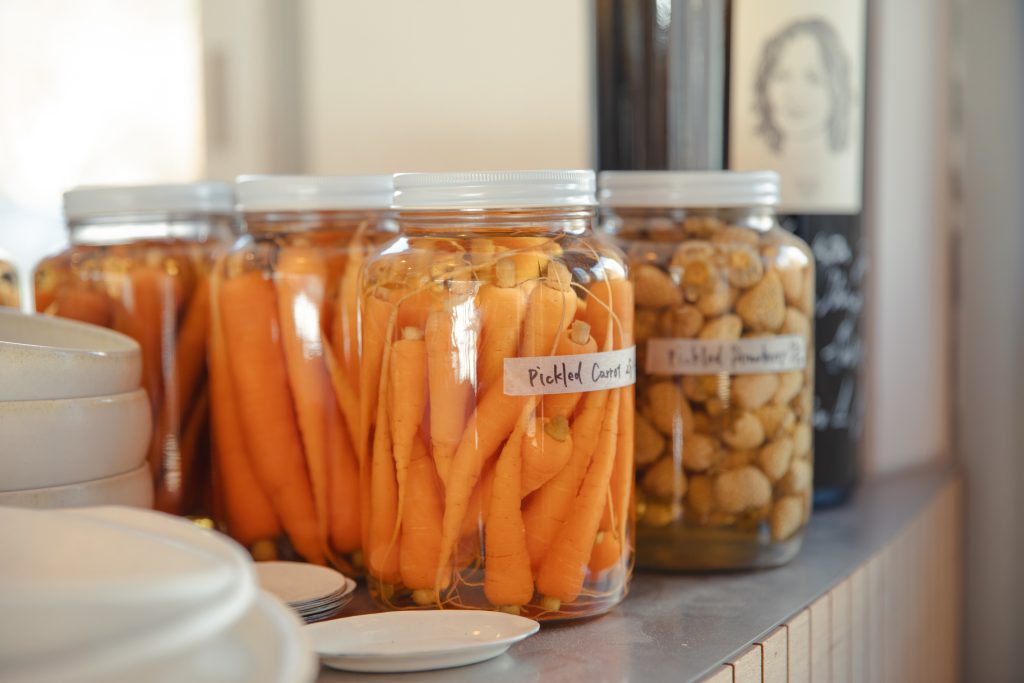
Vegetables grown by dedicated hands, prepared with care and paired with thoughtfully chosen wines. Through the meal, the rhythms of this town begin to settle quietly within you.
The mind naturally turns to when the next visit might be, and whom to bring next.
The journey may end, but connection to this place only deepens from here. One more reason to come back has taken hold.
Karuizawa Travel Guide
Horse and the sun
348-55 Hotchi, Karuizawa-machi, Kitasaku-gun, Nagano
090-6380-4366
Ehongo Hondō
2450-2 Nagakura, Karuizawa-machi, Kitasaku-gun, Nagano
0267-31-5183
NICEFOLKS
4209-1 Nagakura, Karuizawa-machi, Kitasaku-gun, Nagano
0267-31-5268
stand fog
342-110 Hotchi, Karuizawa-machi, Kitasaku-gun, Nagano