







Cyclists can immerse themselves in the natural beauty of Shizuoka Prefecture, savor local delicacies, and interact with friendly residents along the way. “RIDE Ōigawa,” a dedicated bicycle route established by the Ōigawa River Basin Cycle Tourism Council, offers a unique blend of cycling, sightseeing, and hands-on experiences.
“RIDE Oigawa” offers four unique cycling courses, each showcasing the beauty of the region. The Kawagoe Ride (18.6 km) explores Shimada and Kanaya, while the Onsen Ride (58.8 km) stretches from Kawane Town in Shimada City to Kawanehon Town. For those seeking hidden landscapes, the “Hidden Gem Ride” (27.7 km) takes cyclists through the remote Okui area along the Oi River. Meanwhile, the Lakeside Ride follows the shores of Ikawa Lake, offering two route options: the Ikawa Lake Ferry Course (8.8 km) and the Tashiro Long Course (22.8 km). This time, we embarked on a 2-night, 3-day cycling journey from Senzu Station on the Oigawa Railway to Shimada City, combining the Hidden Gem Ride, Onsen Ride, and Kawagoe Ride to experience the best of Oigawa on two wheels.
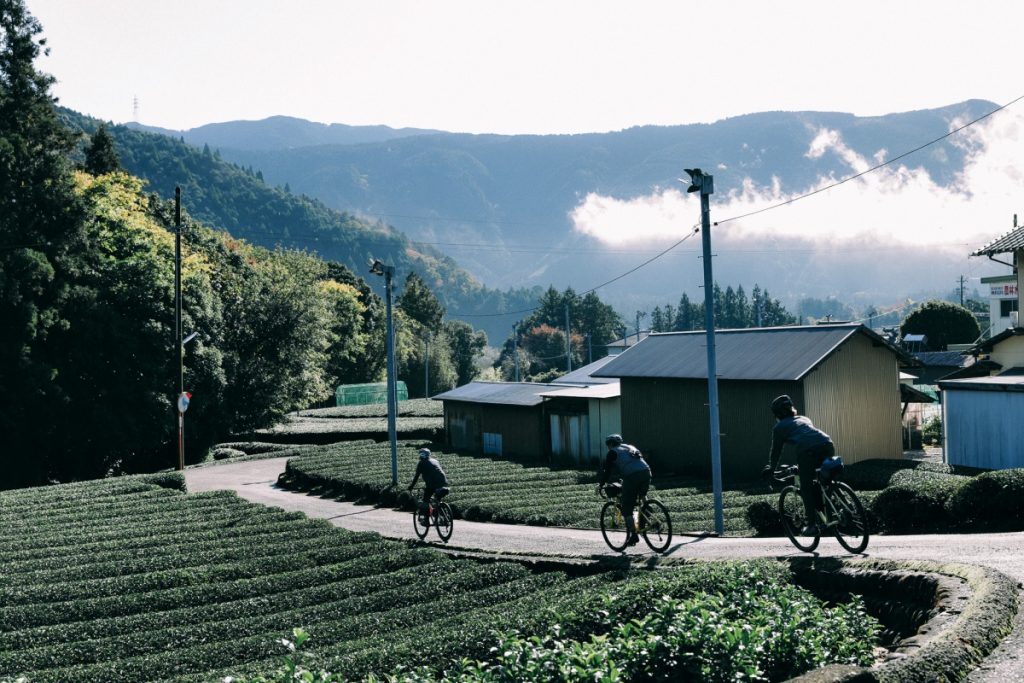
We began our journey at Kanaya Station on the JR Tōkaidō Honsen Line, then boarded the Ōigawa Railway and a community bus, disembarking at Senzu Station. On the first day, we took on the “Hidden Gem Ride”, which started at Senzu Station, turned around at Sessokyo Onsen Kaikan, before returning to the starting point. The route is mostly uphill on the way there, making for a challenging ride.
Having made our way to the Kawane tea production area, we couldn’t miss the chance to sample the local tea near Senzu Station. At the Tabata Tea Shop, right across from the station, we savored the soft sweetness and mild richness of Kawane-cha, a variety of sencha green tea. After settling in, we chatted with the owner, who shared that tea cultivation in the Kawane area has been ongoing for over 500 years.
“Kawane, nestled between mountains along the Oku Ōi River, experiences extreme temperature shifts between day and night. This creates morning fog that blankets the tea fields on the steep slopes, contributing to the unique flavor of Kawane tea.”

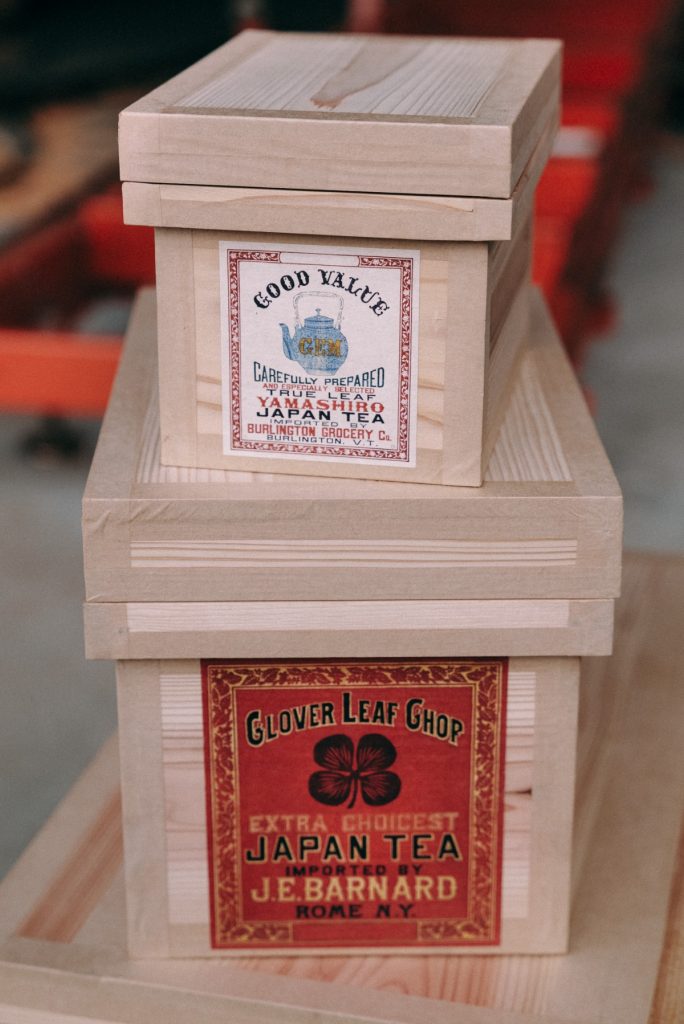
Curious about the tea chests stacked in the store, we asked the owner and learned that a local workshop specializes in making them. Tea boxes are essential for preserving tea leaves, protecting them from moisture, insects, and oxidation. During the late Edo and early Meiji periods, tea leaves in these boxes were transported via the Shizuoka Highway to Yokohama port for export. We then proceeded to Maeda Kobo to see the tea box-making process firsthand.
Currently, only three manufacturers in Japan specialize in tea boxes, and one of them is Maeda Kobo. At this workshop, five craftsmen, ranging from their 30s to 50s, work under the guidance of a master in his 70s to create tea boxes of various sizes using local cryptomeria wood. The key to their moisture, insect, and oxidation resistance lies in the tinplate lining. While lead solder is typically used for welding, Maeda Kobo has switched to lead-free tin solder, ensuring safety. The company now exports its tea boxes to countries such as the United States, the United Kingdom, Canada, and Qatar.
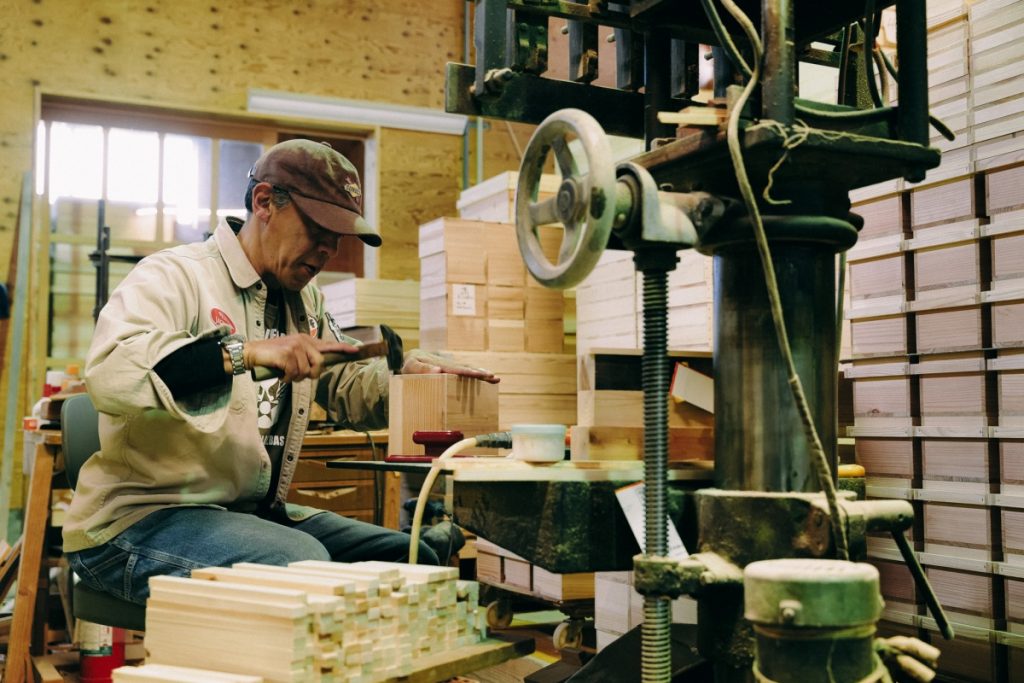
“The wood is sourced from locally harvested sugi (Japanese cryptomeria), selected for its suitability in tea boxes. It’s milled in Shimada, dried for three months, and crafted into tea boxes here,” explained Kieko Sonoda of Maeda Kobo. “Thanks to its moisture- and insect-proofing properties, it’s now used not only for tea leaves, but also for storing coffee beans, rice, dried goods, and even cameras and lenses.”
A key aspect of their process is the sustainable use of plane shavings produced during tea box manufacturing. These shavings are spread on tea plantations, collected by poultry farmers to line chicken coops, or mixed with chicken manure to create compost. This approach reflects a strong awareness of the local forest ecosystem and the importance of its circular sustainability.
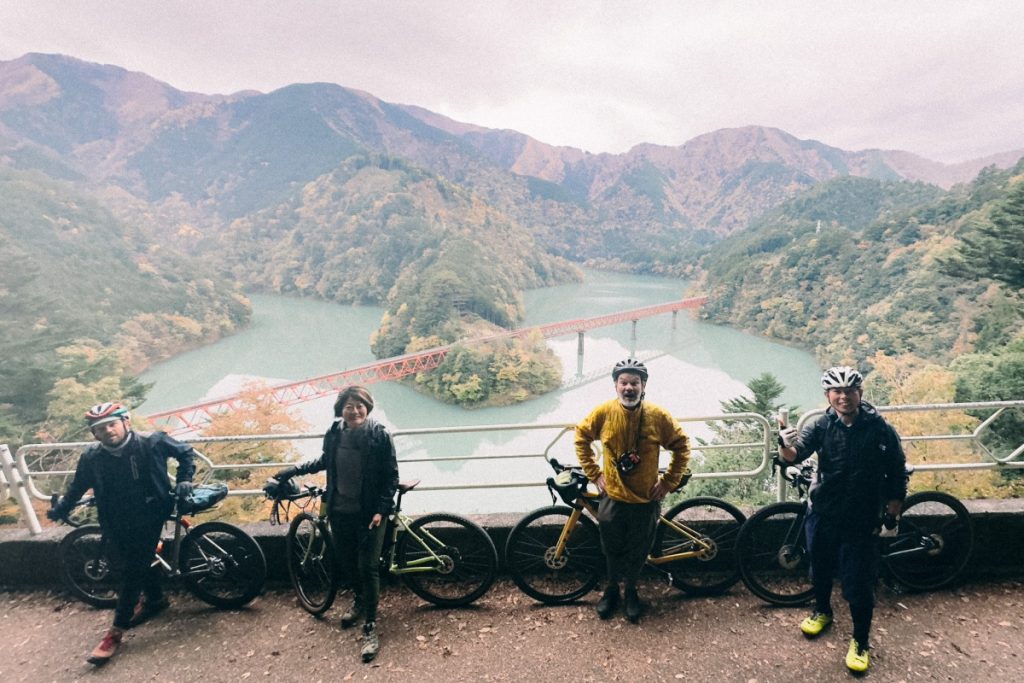
After leaving Maeda Kobo, the journey continues to the renowned hot springs of Sessokyō Gorge. Along the way, we stop at the Kawane Honmachi Museum Yamabiko, which offers an immersive look at life and industry in the region. The museum showcases the deep connection between the forestry industry and the Oigawa River, illustrating how lumber—once presumably used for tea boxes—was transported to coastal areas.

A night in a unique guesthouse
As the time for the return train approached, we decided to take a different route. Instead of cycling back, we hopped on the Oigawa Railway Southern Alps Aputo Line, the only apt-type train in Japan, which leisurely winds along the steepest section of the valley. From Senzu Station, we then mounted our bikes and headed to Mikansei, a guesthouse run by a Japanese-American couple.
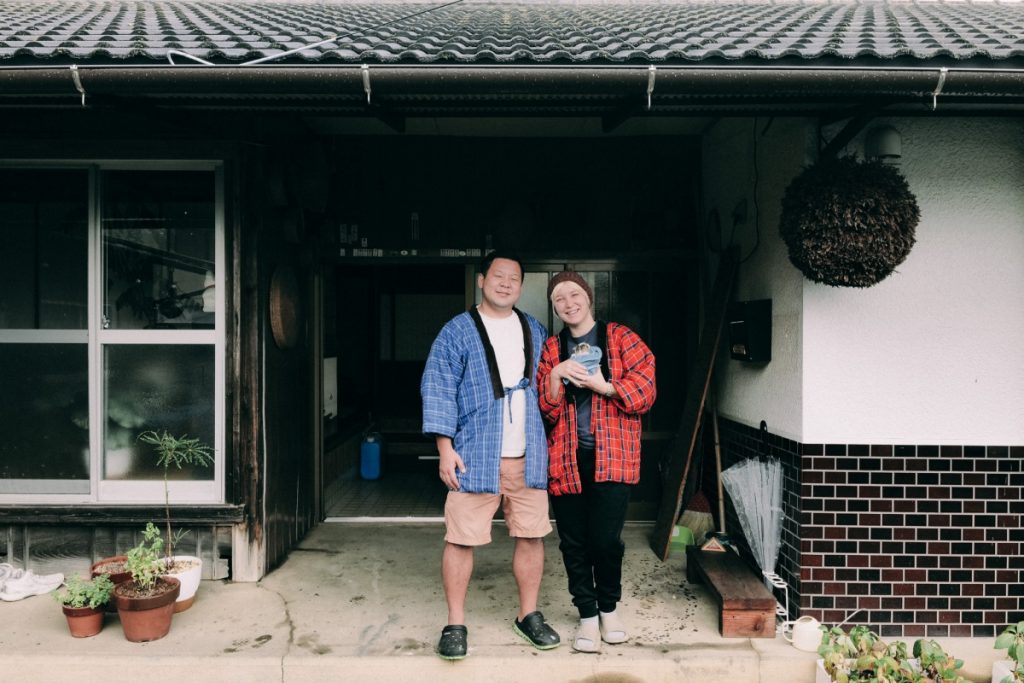


The Tsukashimas opened Mikansei in May 2024. Claire, hailing from Yosemite, California, and Shiro, from Kanagawa Prefecture, met in Shizuoka and fell in love with Kawane Honmachi’s nature, climate, and a 110-year-old traditional Japanese house. They decided to move here and run it as a guesthouse. Although they are gradually making changes to the house, they named it “Mikansei” (meaning “incomplete”), saying, “It would be boring if it were finished; the house, the town, and the people are in a state of flux.” At this no-frills inn, guests prepare their own dinner and breakfast in the shared kitchen, and the owners sometimes join in, creating a warm, family-like atmosphere.
On the second day, we bid farewell to the couple at “Mikansei” and got back in the saddle. On this day, we followed the route of the “Onsen Ride” from Kawane Honmachi to Shimada. While the original “Onsen Ride” was a circular course starting from Kawane Onsen Sasamawatari Station, passing through Ieyama Station, turning around at Senzu Station, and returning to the starting point, this time we took a route that followed the second half of the “Onsen Ride,” starting from Mikansei, then heading to Ieyama Station, and finally reaching Shimada Station. This route follows a narrow prefectural road with heavy traffic. Surrounded by tea plantations, the paved road descends, making it easy to get carried away by the speed, so caution is advised. The road continues south, with the landmark “Shiogo Suspension Bridge” to the side. On the way to Jina Station on the Oigawa Railway, we passed through the “shortest tunnel in Japan” before reaching the coffee shop “Tomoshibi,” which overlooks the Oigawa River.
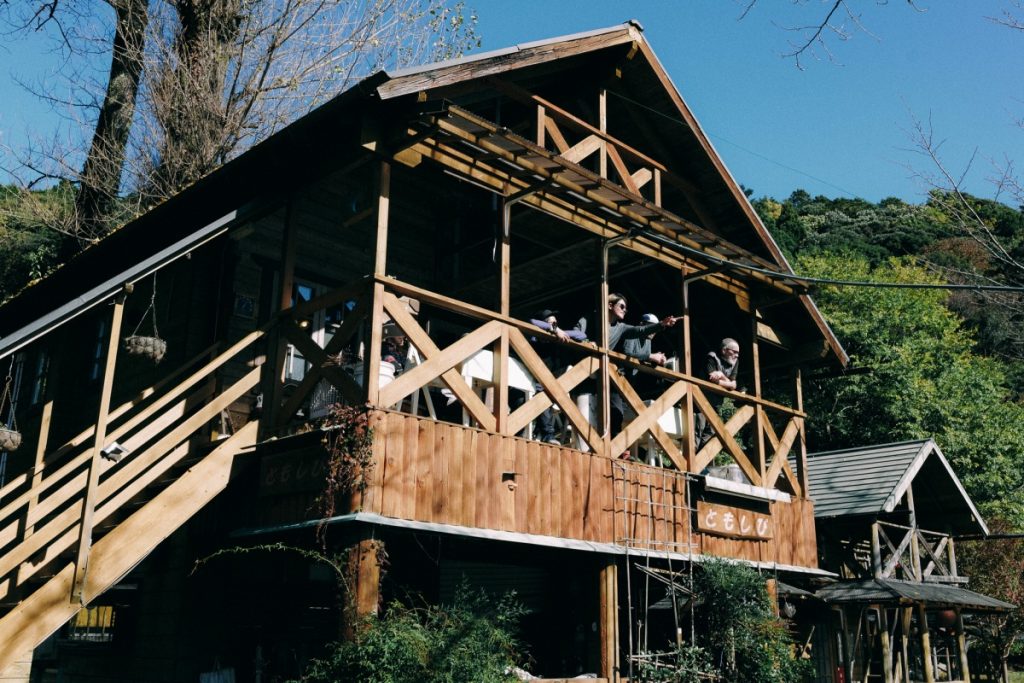

After “Tomoshibi,” we crossed the Showa Bridge to the right bank of the Ōigawa River, continuing along the first half of the “Onsen Ride” route toward Ieyama Station. Suddenly, amidst the vast tea plantations, we encountered a 7-meter-high bamboo palm sculpture! The “UNMANNED Station Art Festival/Ōigawa 2024” transformed the Ōigawa River basin in Shimada City and Kawane Honmachi into a stage for contemporary art, featuring 30 works inspired by local elements like “tea chests” and the “Ōigawa River.” The oversized palm sculptures were created during the artist’s two-month residency, sparking curiosity about the interactions and conversations that led to these unique creations.

Through tea plantations and across the treacherous Ōi River
Around Ieyama Station on the Ōigawa Railway, we stopped by Taiyaki-ya to try their famous green tea taiyaki. Afterward, we took the EL train to Shin kanaya Station, a long-awaited destination. While driving to Shin Kanaya is an option, it is highly recommended to experience the retro train ride. Near Shin Kanaya Station, we visited “Kadode OŌigawa,” an information hub for the Ōigawa River basin, where we browsed souvenirs and local specialties. Inside, the “Tourist Information Ōinavi” offers a cycle pit, and we refreshed ourselves at the green tea tap before heading back to our lodgings at “Orecchi no Himitsukichi.”
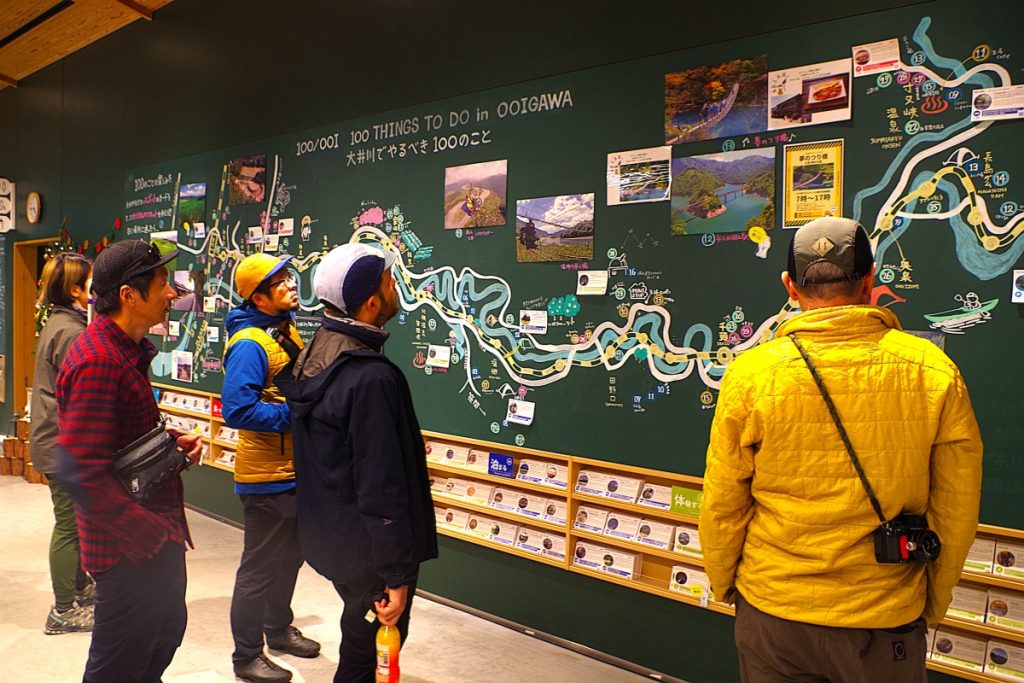
We visited the Tourist Information Ōinavi at Kadode Ōigawa, which touts itself as a “hands-on food park for green tea, agriculture, and tourism.” Reflecting on the route so far, we explored the “100 Things to Do in Ōigawa” exhibit.
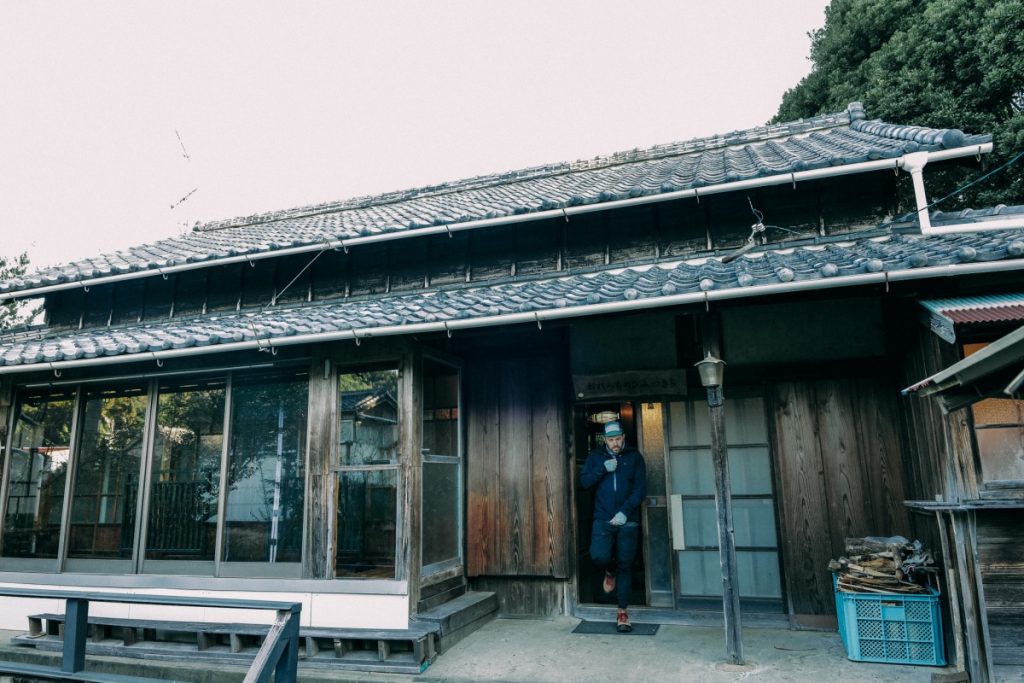
The second day of the “Ride Ōigawa” hot spring ride course concluded with a visit to Nakaya Sake Shop, a family-run establishment for six generations. In the cozy back corner, an old-fashioned sake cup bar hums with friendly chatter as regulars gather each evening. The regulars recommended “Kanaya Biyori,” an original sake from Nakaya Sake Shop. This carefully selected sake is brewed at a local sake brewery, where the process begins with rice cultivation, making it a must-try for visitors.
The next day, we descended from “Orecchi no Himitsukichi” toward Shin-Kanaya Station on the Ōigawa Railway, then embarked on the “Kawagoe Ride” through the Shimada/Kanaya area. The route is rich with stories from the history of the Ōigawa River, once feared as the most impassable section of the Tokaido Highway. This ride promises to satisfy your curiosity with its fascinating historical episodes.
First, we crossed the Ōigawa Bridge toward JR Shimada Station. After visiting Ōi Shrine, we stopped at Kiyomizu-ya, located just in front of the station, to try a local specialty—manjuu. These famous buns gained popularity along the Tōkaidō Highway after catching the eye of Matsudaira of the Matsumae Clan during his “alternate attendance” mission to Edo. Their small size makes them perfect for snacking, so it’s easy to grab a few more!
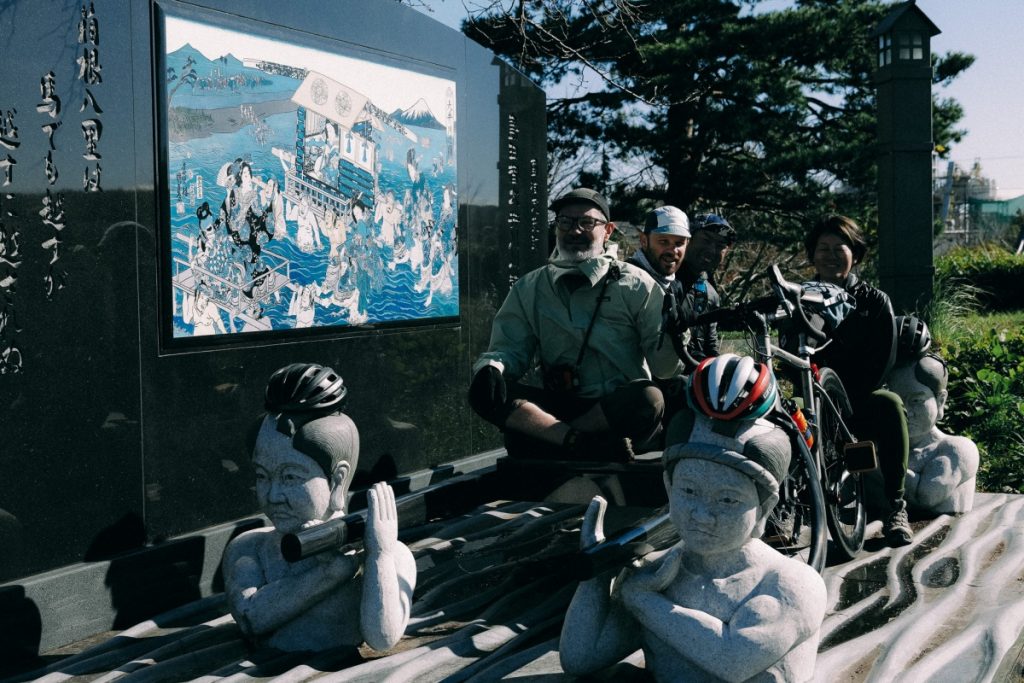
Next, we visited the Ōigawa Kawagoe Ruins, where “Kawagoe Hitosoku” once crossed the Ōigawa River, one of the toughest passages on the Tōkaidō Highway during the Edo period. Travelers could choose between being carried by an escort or riding in a wheeled palanquin. At its peak, over 1,000 escorts worked on both riverbanks, and the site features reproductions of the Kawakoshi toll booth and guardhouse.
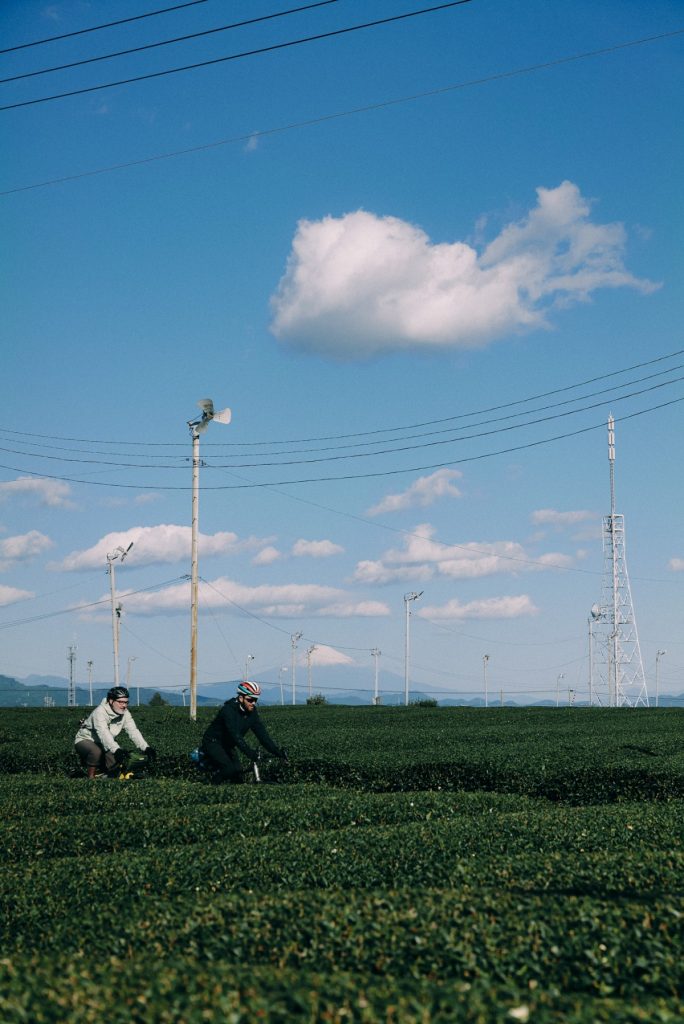
Crossing the Ōi River again, we climbed the hill to JR Kanaya Station and entered the Makinohara Plateau. The Makinohara Tea Plantation, Japan’s largest at 50 million square meters, was cultivated in the early Meiji period by 250 samurai who lost their jobs after the restoration of imperial rule. Led by Kageaki Chujo, the samurai team was joined by Kawagoe laborers, who had lost their jobs due to the abolition of the Kawagoe system, turning a neglected wasteland into a large tea plantation. The opening of the Tōkaidō Line in 1889 enabled nationwide shipping of tea, greatly boosting the promotion of Makinohara tea. Makinohara is famous for the statue of Kageaki Nakajo Kinnosuke, a samurai standing guard over the plateau. Located with a stunning view of the tea fields, Oigawa River, and Mt. Fuji, it’s a great spot to take a break.
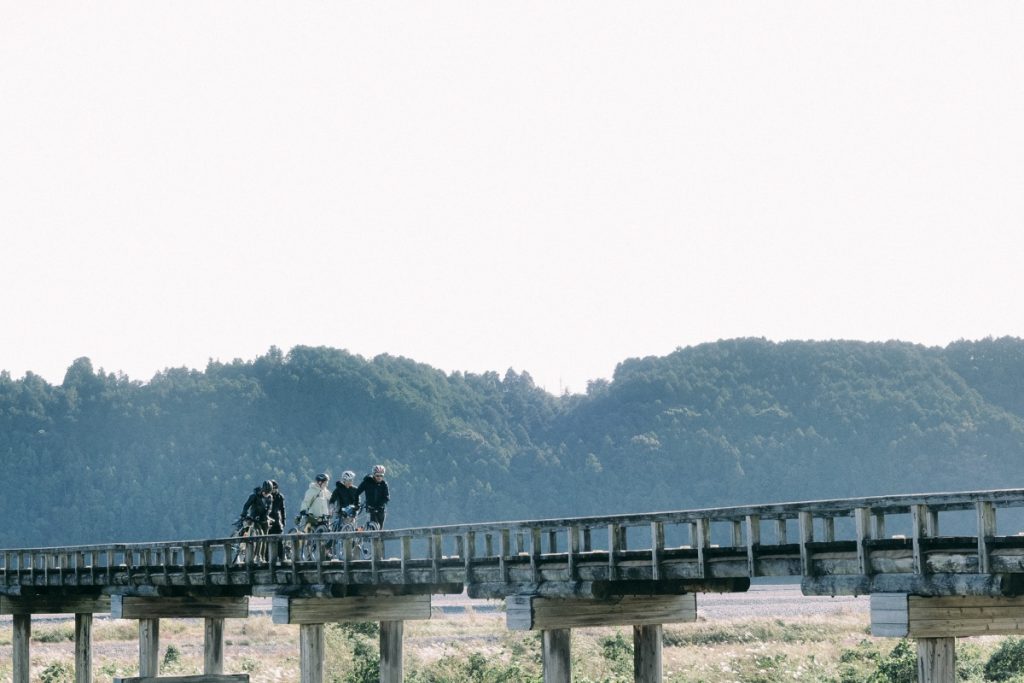
After a long descent from the Makinohara Grand Tea Garden, we reached the highlight of the three day tour – the Horai Bridge, the “world’s longest wooden pedestrian bridge.” While open to pedestrians, bicycles can be pushed along. At 897.4 meters, it still serves as a farm road and offers stunning views of Mt. Fuji. Just beyond the bridge lies the tour’s final destination, JR Shimada Station.
The Ōigawa River basin is brimming with attractions, from dammed lakes and hot springs to steam locomotives, inn towns, and Edo-period ruins—making it a treasure trove of experiences for cyclists.
【Travel Guide】
RIDE Oigawa
https://www.city.shimada.shizuoka.jp/fs/1/3/1/9/9/6/_/RIDE_Oigawa.pdf
Maeda Workshop
https://kawanechabako.jp
Sessokyo Onsen Kaikan
https://www.sessokyoonsen.com/
Kawane Honmachi Museum Yamabiko
https://www.town.kawanehon.shizuoka.jp/soshiki/shakaikyoiku/shiryokanyamabiko/index.html
Guesthouse Mikansei
https://www.guesthousemikansei.com
Oretchi no Himitsukichi (“My Secret Hideout)
https://ore.pepper.jp
KADODE OIGAWA
https://kadode-ooigawa.jp