







Playful Ant 12 – Hisako Nagashima(Former director of Shiseido, former director of Shiseido Beauty Academy)
More than 10 years ago now, I was looking for a summer home in the suburbs of San Francisco where I would work as an intern as a graduate student. I imagined searching for a house could be extremely difficult, wondering who would be willing to rent to a foreign student with no connections. When I contacted the landlord, however, I got a reaction contrary to my expectation. Once she realized I was Japanese, she was overjoyed saying: “Japanese will use my room cleanly and carefully, and I can trust them. If you are really Japanese, I would be happy to rent it to you.” For sure, this was not an evaluation toward me as an individual Japanese, but Japanese people as a whole. With surprise, I felt that the winds were changing though Japanese people have not always been welcomed abroad as we have witnessed racism and Japan bashing in the past.
In recent years, the number of tourists visiting Japan from overseas has increased dramatically. Coupled with the weak yen, the number has exceeded pre-COVID levels, exceeding 3 million people per month. Many people cite the delicious food, the beauty of nature, the richness of the lifestyle and culture, the safety of the city. Actually, my friend from the United States carelessly left his wallet and passport on the train and got off during his trip in Japan and was very impressed that they came back to him untouched. I’m proud of such Japan’s true strength.
Though the image of Japan associated with high quality and reliability has become established nowadays, it was not achieved overnight, but cultivated by our predecessors, one by one, through hardships and difficulties. On the other hand, deflation and the weakening of the yen have kept Japan’s relative value in the international community declining over the years. In this situation, we can’t necessarily be happy about the economic effects of inbound tourism. How should we protect and sophisticate Japan’s good reputation and image of high quality and reliability?
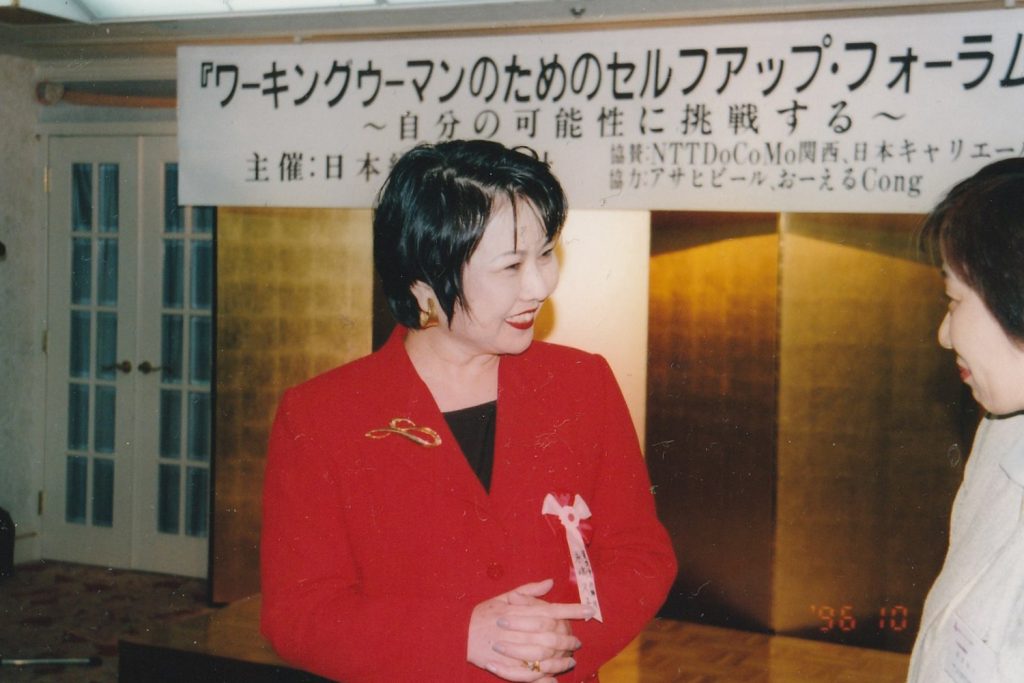
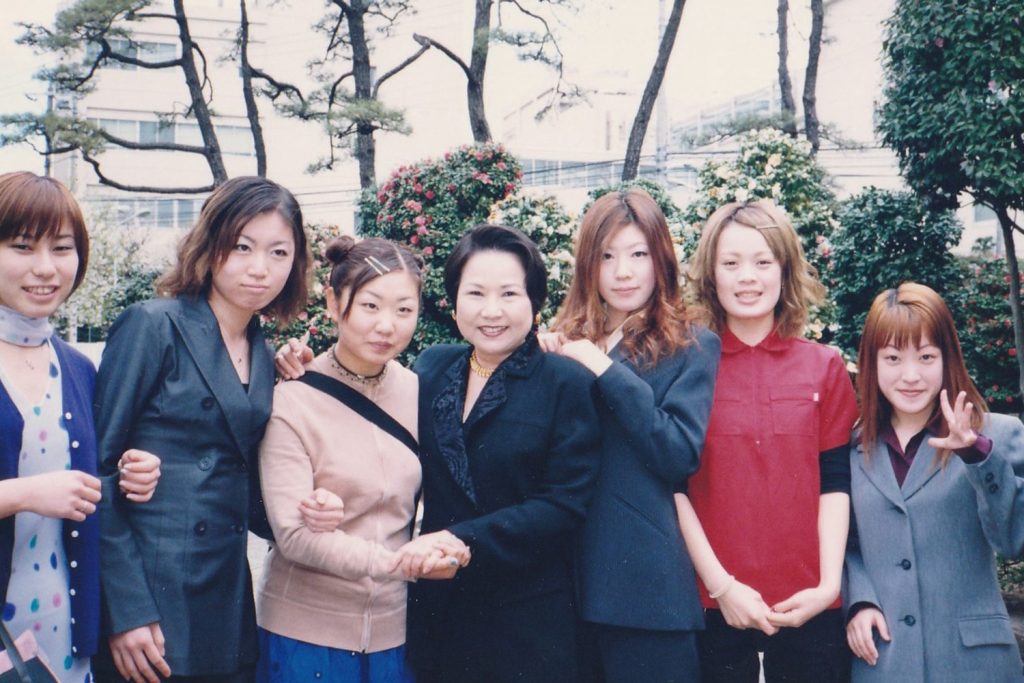
That question made me think that now is the time to hear and introduce the voices of such predecessors who paved the way. One of them is Ms. Hisako Nagashima who conveyed the value of Japanese culture as a Shiseido overseas beauty consultant in the 1960s, more than 60 years ago, when MADE IN JAPAN products were still considered to be cheap and poor quality. For about 30 yeas, Nagashima has built up trust through heartful contact with customers at stores in America, Europe, Southeast Asia, Oceania.

Touching customers’ hearts with love
Q:Ms. Nagashima, you were assigned to Hong Kong as Shiseido’s first beauty staff dispatched overseas, and for approximately 30 years, you’ve worked in various parts of the world selling cosmetics and instructing local beauty staff. What have you always kept in mind when providing services to customers and accumulating achievements step by step in your journey in which you went out into an unexplored world at a time when Japan was still undervalued?
Nagashima:I think it’s love after all.
When I first started serving customers at overseas department stores, there were many challenges. My English wasn’t very good, so I had a hard time, of course. One time, I was even asked seriously, “Does using Japanese cosmetics make your skin yellow?” I worked hard to make full use of my imagination and empathy, to put myself in the customer’s shoes, and understand what I could do to make them happy. In this way, I thought it would be important not only to face my own weaknesses, but also to know and hone my strengths. In order to strengthen my imagination, I was always conscious of going out and experiencing the outside world so that I was not limited to just Japanese values.
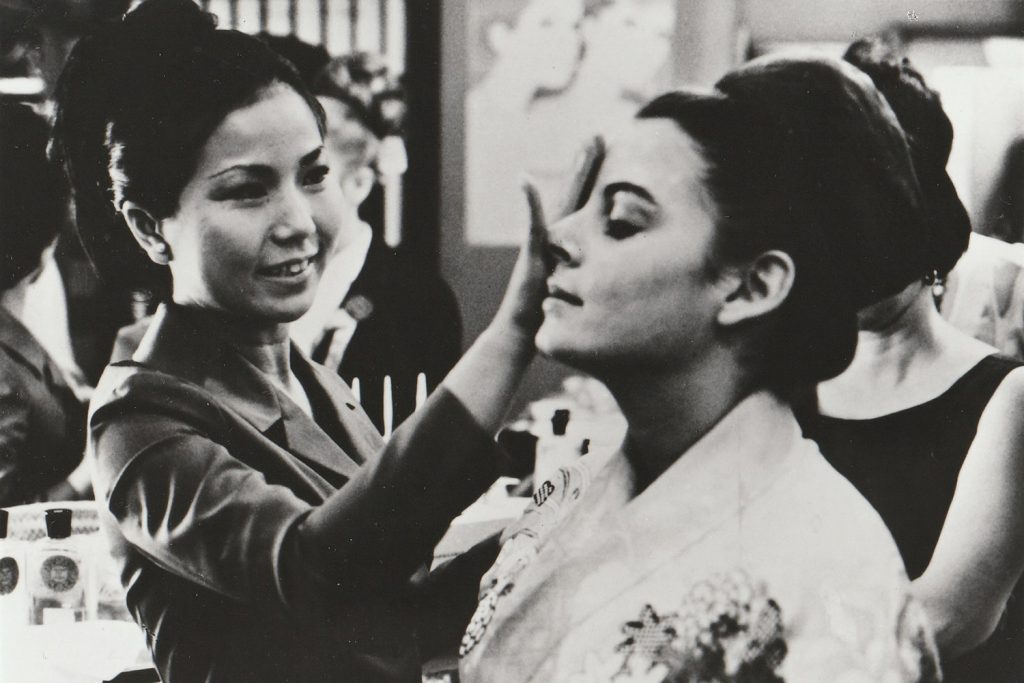
No matter what country you are in, trust is earned through the accumulation of heaftful care for each and every customer. Before selling a product or service to your customers, you carefully listen to their concerns and what they are looking for, and try to gain a deep understanding of them. If you approach with this attitude, you will naturally respond to your customers with love. It was my person belief that it was more important to have customers buy who I was as a person rather than have them buy goods or services.
Make every effort to overcome the language handicap. Rather than giving up or becoming defiant right away, think seriously about how you can be even a little better than you are now and start putting it into action. I believe that what is important is to have a spirit that puts love towards your customers first and forefront.
Let me introduce an episode that symbolizes Nagashima’s technique of using love to sell products. Around 1970, she went on a business trip to New Zealand. Shiseido decided to turn the local agency that sold Shiseido cosmetics into an independent subsidiary, and she was there to attend the commemorative promotion. Knowing that the business manager of the local agency, who has become president of the subsidiary, came to Japan to directly discuss selling Shiseido cosmetics in New Zealand, Nagashima asked a simple question why he was so eager to sell products from a small cosmetics company in the East. The president’s wife sitting next to him spoke:
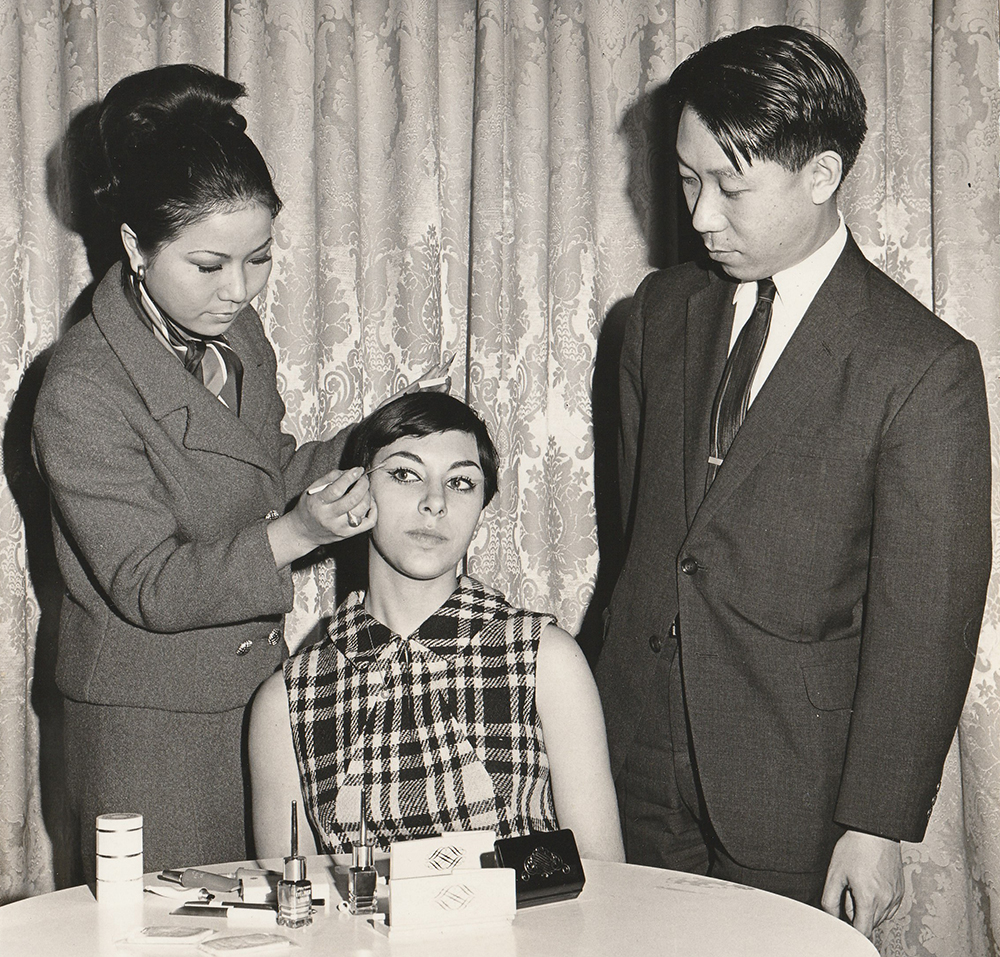
“It all started with me. About 10 years ago, when I went to a department store in Hong Kong by myself, I happened to see cosmetics that I had never seen before…. I had no intention of buying it. However, as I was passing by, a Japanese woman wearing a kimono casually talked to me. She said I didn’t have to buy anything, and since I had free time, I had my skin taken care of and my makeup done for about an hour. I was about to buy a lipstick as a way to say thank you, but she instead gave me some sample cared products with carefully written beauty plans as to how to apply them. When I got back to the hotel, both the door boy and my husband complimented me on how beautiful I looked. The next day, I bought a set of cosmetics written in the beauty plan and went back to New Zealand. Back at home, I loved using it every day so much that I ran out of it, so I suggested to my husband, who worked at a trading company, that he considers importing these cosmetics. That’s how it started.”
She didn’t remember the Japanese beauty staff’s name, but she still kept that beauty plan well preserved. When she looked at the old, yellowed piece of paper she had found in the back of the house, she found that the name signed on the paper was HISAKO NAGASHIMA.
Valuing your individuality
Q:Ms. Nagashima, you have lived in many different countries and experienced the unique lifestyles and cultures of each country. Can you share any memory that you still have about a particularly wonderful lifestyle or piece of culture? Also, what do you think we Japanese should keep in mind, or what role do you think we need to play in the coming age?
Nagashima:Each country and culture has its own good points, so although there are differences, it is difficult to say which is better. Therefore, when working in various cultures, I have always been conscious of the importance of “following the village when entering the village.” On top of that, I’ve been conscious of “being proud of my own culture.”

I still remember a scene vividly that triggered such my attitude. It happened when I went on a business trip to New York in the 1960s. When I went out for dinner at a sophisticated Indian restaurant, a woman in a sari who was sitting next to me was eating with her three fingers. I felt a culture shock when I saw her eating with her hand without using the silverware prepared at high-end restaurants. At the same time, however, I was also deeply moved thinking “How dignified this woman is.” On the other hand, I was trying too hard to adapt to the occasion, eating with a fork and knife that I was not used to. I looked back at myself and felt a bit embarrassed.
I think trying to adapt to their surroundings and working diligently on something is the goodness of Japanese people. But, trying to be too sensitive to the atmosphere or expecting others to understand each other via telepathy will not work on the global stage. We should be confident in ourselves. Being too concerned about both things can be the ugliest thing, sometimes. I think it is important to thoroughly discuss each other’s opinions while respecting each other’s diversity.
There is a fight currently going on everywhere, including in Ukraine and Palestine. The opposite of love is not hatred, but indifference. To become indifferent is the scariest thing. That’s why I think we Japanese should assert our own unique opinions while being confident in our own history and culture. I believe that the true global standard for Japan means living confidently on the global stage without losing our excellent Japanese sensitivity.
———————
I would like to introduce two memorable episodes on how Nagashima touched on the importance of understanding and respecting Japanese culture.
Both episodes happened when she invited the beauty department manager of a French subsidiary to Japan to provide training. As part of the training, Nagashima and the French manager stayed in two different locations. One was a company training facility, and the other was a first-class hot spring inn.
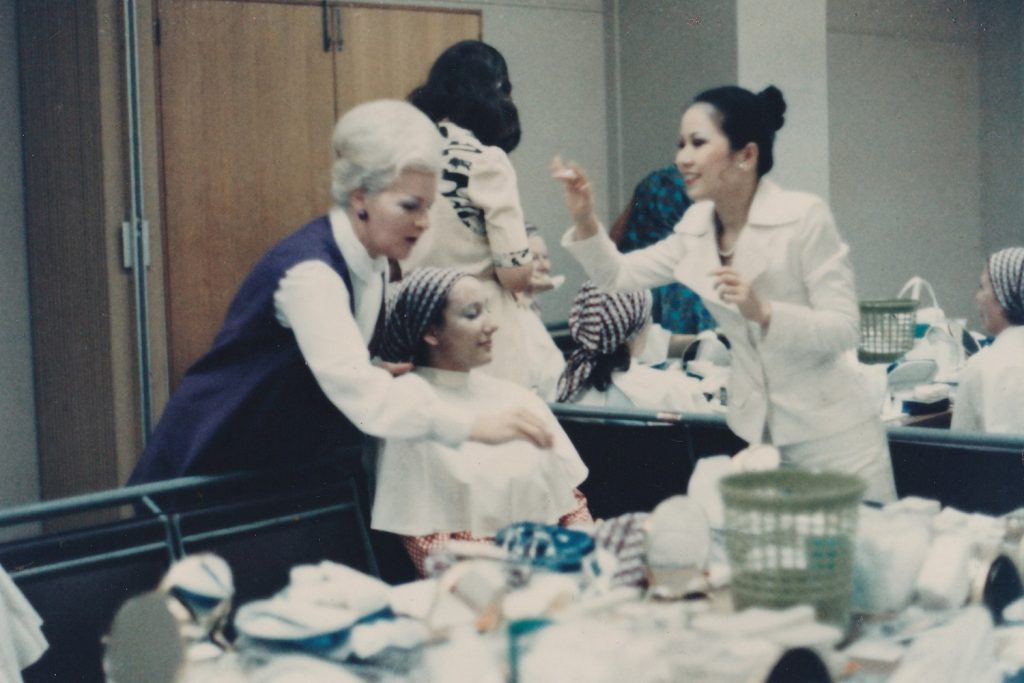
The training facility was a modern building located in a quiet area surrounded by forests. Equipped with functional teaching tools, it was highly evaluated among the many Japanese company training facilities. There, after eating, everybody carried their own dish and washed, separated and stacked dishes on their own. The beauty manager of a French subsidiary who saw this asked:
“Why don’t people use dishwashers in Japan, where home appliances are such advanced?”
“In Japan, we use various shapes of dishes to suit different foods, so they’re not suitable for dishwashers. Also, ceramics break easily.”
“If it’s so fragile, why don’t you use plastic plates?”
“This training center teaches you about beauty. It is not just about the superficial things like how you apply makeup but includes everything from how you behave and speak beautifully. If you change your tableware to plastic, it won’t break even if you throw it. As a result, you will begin to treat each item roughly and will not develop the habit of handling each item with care.”
Genuine attitudes and actions are essential to selling genuine, valuable products. Such attitudes and actions are not formed as temporary imitation, but are formed as habits throuugh the accumulation of all our daily actions – That is the message Nagashima was trying to convery in the training.
And then, when they were leaving the hot spring inn, the woman who was seeing them off put her hands on the tatami mat and greeted them.
“We apologize for any inadequate service, but please come again.”
After hearing the translated message, the French beauty manager asked Nagashima with a puzzled look on her face.
“Did she do something wrong with us? I didn’t even notice it. Her treatment was perfect. Nonetheless, why is she calling it inadequate?”
“Yes, this very phrase encapsulates the spirit of true Japanese service. You considered her service perfect. But from her point of view, even though she thought she was trying her best, there may have been mistakes that she didn’t notice, and she doesn’t know if the other person was truly 100% satisfied. That’s why she put herself in your shoes and used the word inadequate.”
It is a mistake to think that just because you are satisfied with the work, the other person is also satisfied; only when the other person is satisfied can you have provided 100% service.
“Putting herself in the other person’s shoes,” the spirit that Nagashima has been aiming for, is not an easy one to take. Because it is authentic and deeply rooted in Japanese culture, such spirit has captured the hearts of people all over the world.
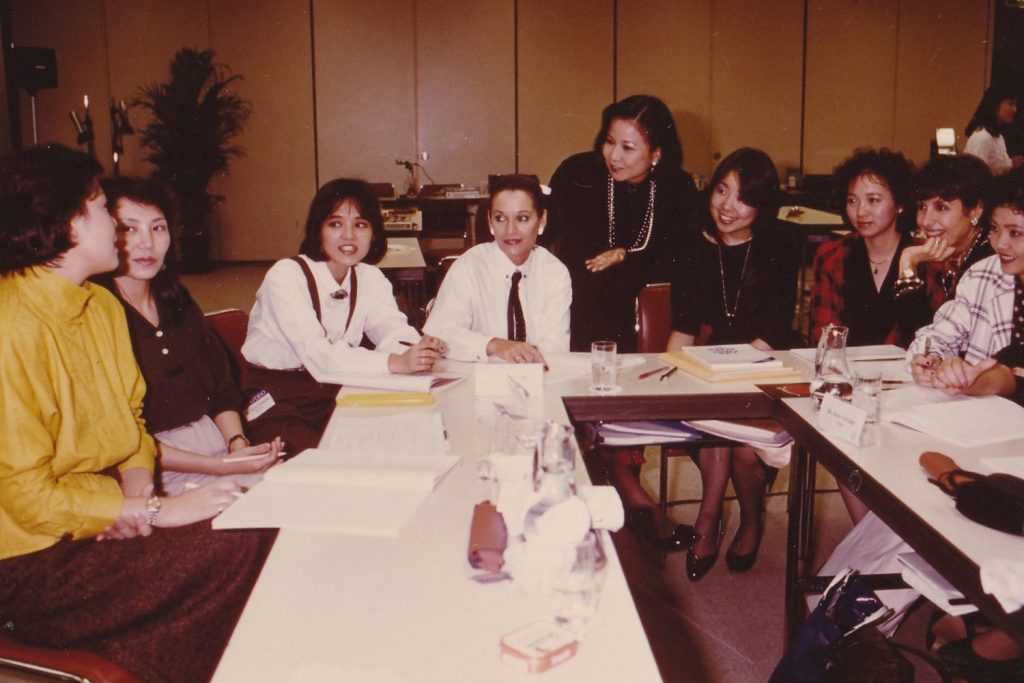
Going out to experience real and different cultures when you are young
Q:Advances in technology have made it easier to obtain a variety of knowledge through the Internet. Partly because of this, it is said that the number of young people who have the desire to go abroad to live and study has been decreasing. Please give a message to the young people who will live in the future.
Nagashima:Today, if you want to find out something, you can easily get detailed information on your smartphone. AI chat services can also provide a variety of answers. I think that utilizing this kind of technology is a good thing, but I would like young people to go beyond just learning something through technology and “thinking they understand it.” Information and knowledge that is easily obtained can easily be peeled off like a plating.
I would like you to experience the real thing and different cultures while you are still young. Even a sponge will absorb water with incredible speed and strength, especially when there is not a single drop of water on it. There’s no shame in not knowing something. In fact, it’s a shame to talk about something you don’t know as if you know it. Seeing is believing. Humans are not stupid enough to not learn new things. I want you to have a little sense of playfulness in things around you, to not be too introverted, and to take a step outside. This will broaden your horizons, deepen your knowledge, and enrich your life.
Post-Interview Reflection
I once again ponder Nagashima’s words. They are all deep. Taking advantage of technology, we easily get to think we understand it and we can do it ourselves. It’s frightening if we are drifting further and further away from our true selves, from our true nature, without even realizing it.
That’s why we should explore the world on our own feet. Like a playful ant, bump here and there and use our antennae to sense the world. That’s how we can come across something new and authentic.
Stay Playful.
『The Playful Ants that change the world』
In an ant society, you can easily identify the herd of “Worker Ants”—the textbook definition of ants, the ones who continuously carry the food. If you take a closer look, you may notice that there’s a different group of ants walking about playfully in their own world. These are “Playful Ants”—ants and thanks to their curiosity, they at times stumble across an unexpected feeding ground or detect sudden threats in advance allowing them to warn the colony of danger in advance.
In this interview series, I introduce interesting lifestyles and work styles of different “Playful Ants”, in order to help incubate them into this world.
Each human being is as small as an ant. However, if each ant pursues his or her own path purposefully and playfully, that path can connect to an opportunity to explore and create something new. That can turn into the power to change the world in its own way. I’ve come to believe so after spending many years on designing and leading practical innovation projects, and working with many global and Japanese corporations as a consultant.
Yasuhiro Karakawa (Playful Ants Incubator)
With a purpose of “incubating Playful Ants both in the corporations and the society” Yasu has been leading practical innovation projects with global corporations in more than 10 countries while also serving as a strategy advisor and a guest lecturer.