







About an hour and twenty minutes by car from central Tokyo, the landscape softens. Mountain cradled basins open onto rice fields and chestnut groves. We’re headed for Kasama in Ibaraki, known nationwide for its pottery. Nearing town, thin plumes of smoke drift up from the plentiful kiln chimneys
Joining PAPERSKY editor in chief Lucas on the trip is Hirotsugu Konno, who works in community development in Ibaraki. What kind of home, and way of living, have the Kawanuma couple built in the place where they were born and raised?
Visitor / Lucas B.B. (Editor in Chief, PAPERSKY)
Visitor / Hirotsugu Konno (Director, Kasumigaura FC, an Ibaraki based community development company)
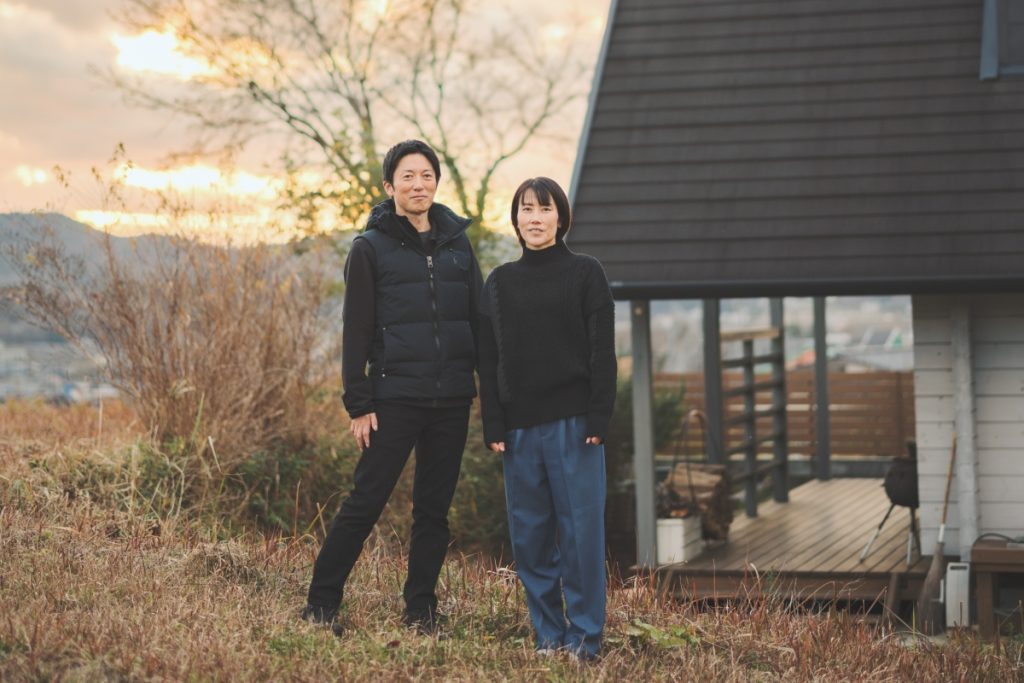
Host / Kenichi Kawanuma, Mitsuko Kawanuma (Kasama City, Ibaraki. Owners of a BESS home, G-LOG Natsu)

1. A BESS home that popped up in a casual search
Kasama, where the Kawanumas live, sits right in the heart of Ibaraki. It’s a gentle mix of farmland and satoyama hills, rural without feeling remote, urban without the rush. Known as the gateway town to Kasama Inari Shrine and a center of Kasama ware pottery, it draws plenty of visitors too.
Nature and history are close at hand, yet daily life is easy, with shopping centers and cultural facilities nearby. That balance has made Kasama an appealing place to settle in recent years. The Kawanumas’ BESS home fits neatly into this quiet landscape, present without standing out.
Lucas: As we drove in, I was wondering where the house might be, and then I spotted that distinctive triangular roof. I knew right away. There’s nothing built around it either. It’s such a great spot.
Kenichi Kawanuma (Kenichi): “Thanks! Yes, that triangular roof really sold us. That’s exactly why we chose the G-LOG Natsu.”
Hirotsugu Konno (Konno): “It really suits the landscape, doesn’t it?”
Lucas: “What made you opt for this model?”
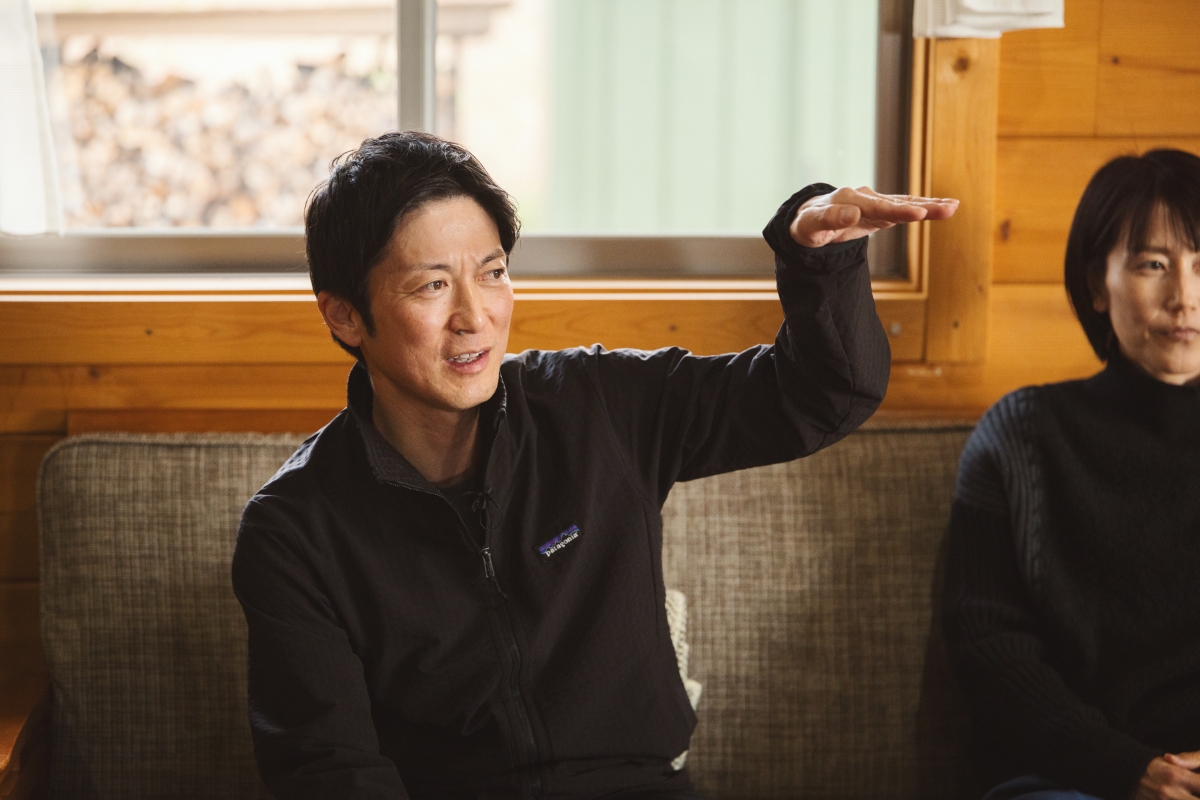
Kenichi: “The two of us once lived in a decidedly unremarkable house. But for retirement, we decided we wanted to move closer to the mountains and live in a place that feels more like a cabin.”
Lucas: “But you haven’t retired yet, right?” (laughs)
Kenichi: “That’s right” (laughs.) “I kept quietly thinking about what kind of house would suit us, and over time I realized that ‘good enough’ or ‘just right’ was what we wanted.”
Lucas: “That notion of ‘good enough’ is interesting. I totally get it.”
Kenichi: “So I searched online for ‘a good enough house,’ and BESS’s Hodohodo no Ie popped up by chance” (laughs.) “It literally means ‘moderate house,’ but in the promotion they added the reading sokosoko, which means ‘just enough.’
Konno: So that’s how you discovered BESS?
Kenichi: “Exactly. I didn’t really know the brand before, but when I looked at their website, I thought,‘BESS feels nice. Log houses look pretty great.’”
Mitsuko Kawanuma (hereafter, Mitsuko): “Around that time, there was a BESS LOGWAY near the house we were living in, and my husband suggested we go and take a look.”
Kenichi: “After that, we kept going back to LOGWAY and really learned what log houses are all about. At that point, choosing a BESS home was already decided. At first, we were set on the ‘Country Log,’ but it didn’t have a big window on the second floor. That’s when we started looking at the ‘G-LOG.’”
Lucas: “So the windows were the deciding factor.”
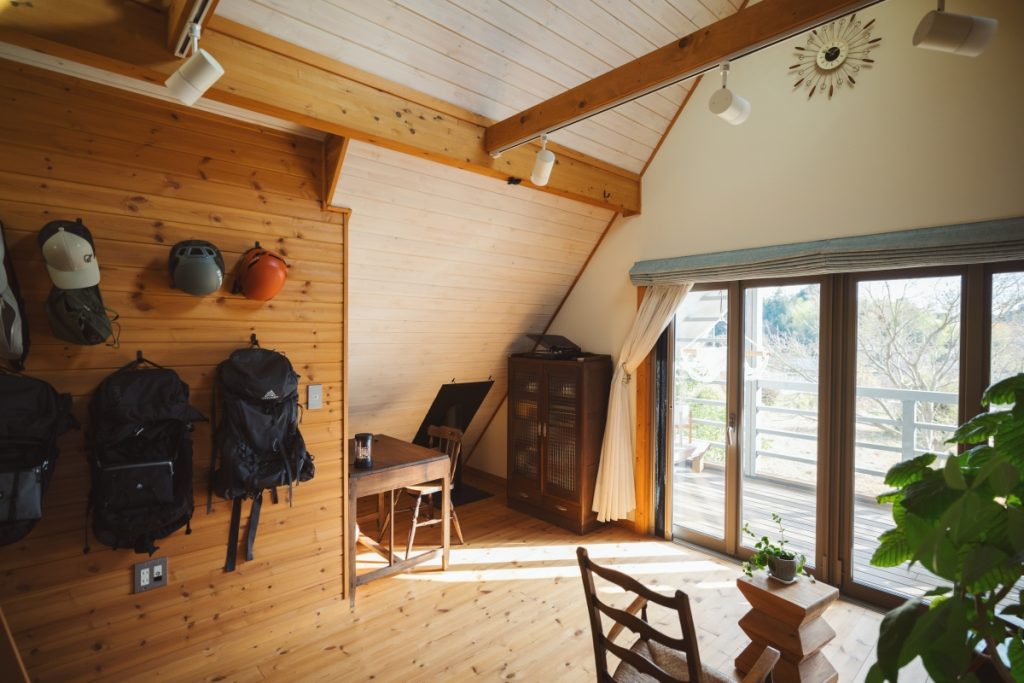
Kenichi: “Once we settled on this land, we realized we could see incredibly beautiful autumn foliage right from the house. That made us really want a big window to take in that view.”
Mitsuko: “I left most of it to my husband, but I loved the spacious, veranda-like area on the second floor called the NIDO. That’s why I felt G-LOG was the right choice.”

Konno: “But living in a mountain cabin was something you planned for after retirement, right?”
Mitsuko: “I’m the type who’s happy keeping things as they are, so I was perfectly content with our old house. But once my husband discovered BESS, he suddenly started showing me BESS videos on his phone. Over and over. I finally said, ‘Fine, we can at least visit LOGWAY,’ and before I knew it, we were having this house built.”
Kenichi: “It’s like we moved our plans up by about 30 years,” he laughs. “What really tipped things forward was watching BESS’s promotional videos.”
Lucas: “So what part of ‘about right’ was it that appealed to you?”

Kenichi: “We both love hiking, so we’re often staying in mountain huts. Japanese mountain huts feel ‘just enough,’ don’t they? They’re practical, but never fancy. Since this is a home we live in every day, we didn’t want anything overly convenient or excessive. We wanted something pared back, about right. But for a long time, we had no idea how to make that happen. Should we ask a carpenter directly? Would a regular home builder even do that? And that’s when we thought, okay, let’s take our search online.”
Konno: “So if you hadn’t stumbled across ‘Hodohodo no Ie,’ you probably wouldn’t be living in this house now.”
Kenichi: “Exactly. It was almost purely by chance.”」

2. Savoring the Beauty of Wood Every Day
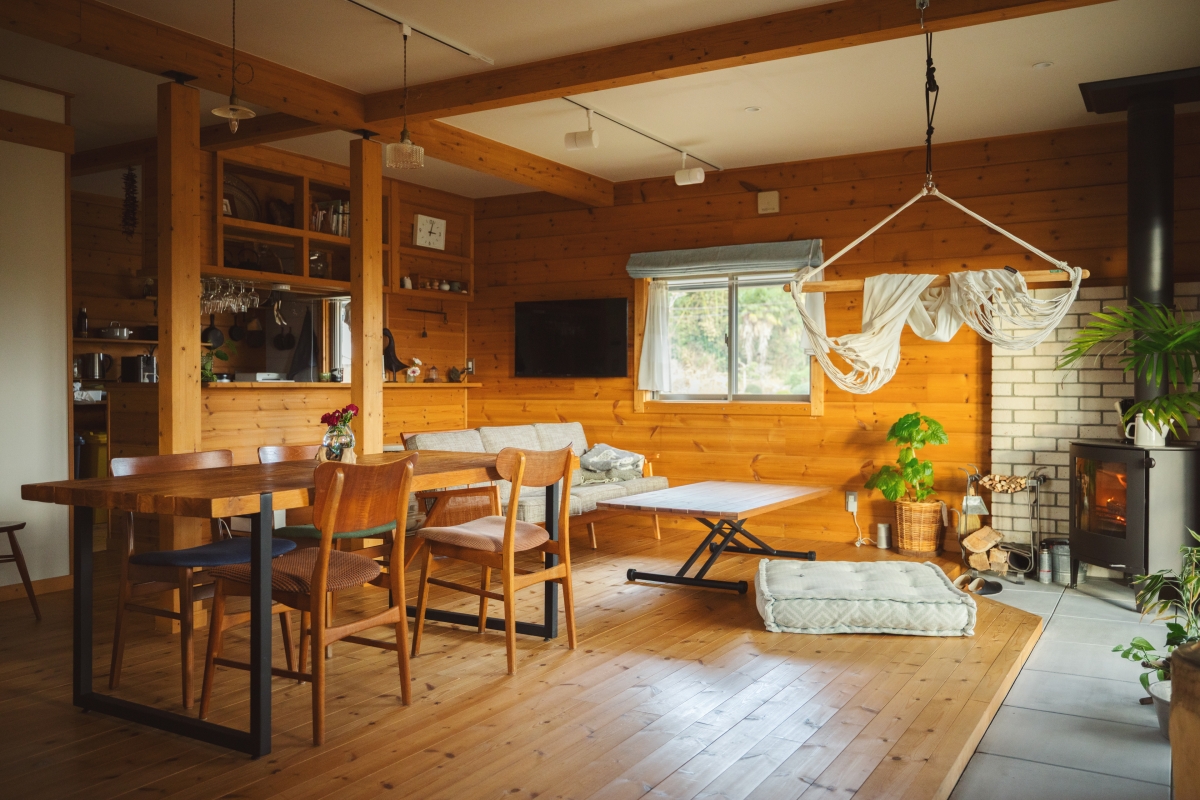
The Kawanumas stumbled across BESS almost by chance. Looking around their home, everything is neatly arranged, almost like a LOGWAY model. Are they just naturally tidy, or fans of minimalism? We asked the couple about the principles that guide their daily life.
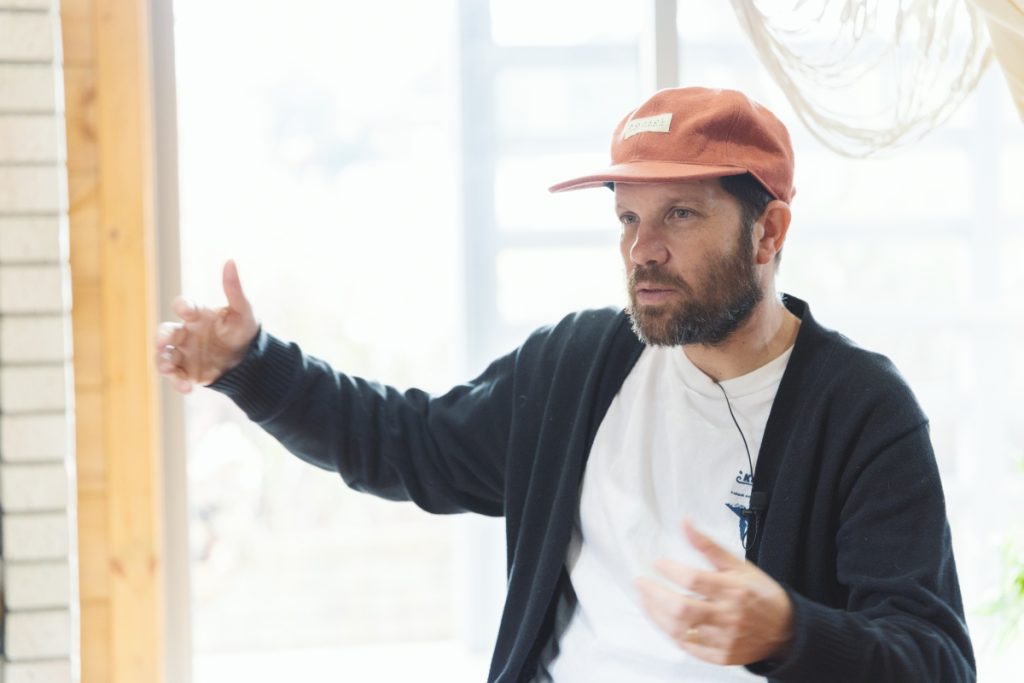
Lucas: “Mitsuko, did you have any strong feelings about wanting a log house or not?”
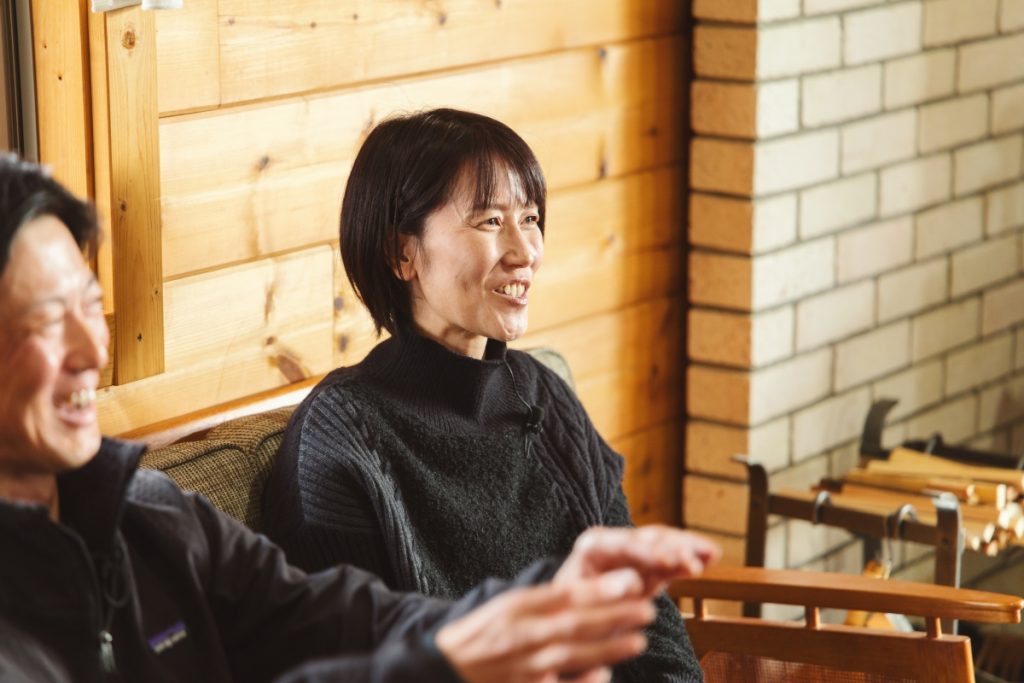
Mitsuko: “Yeah, my husband kind of jumped ahead, so I just decided to leave it to him.”
Kenichi: “Really? I actually had to put in a lot of effort to convince her. I’m into model kits, so I made a tiny BESS house out of things like chopsticks, almost like building a diorama. I used it to show her the kind of house and lifestyle we could have. It was a lot of work, I’ll tell you that (laughs).”
Mitsuko: “But after visiting all the different house types at LOGWAY, I was the one who made the final call. I loved how sunlight fills the house and creates such a bright, welcoming atmosphere.”
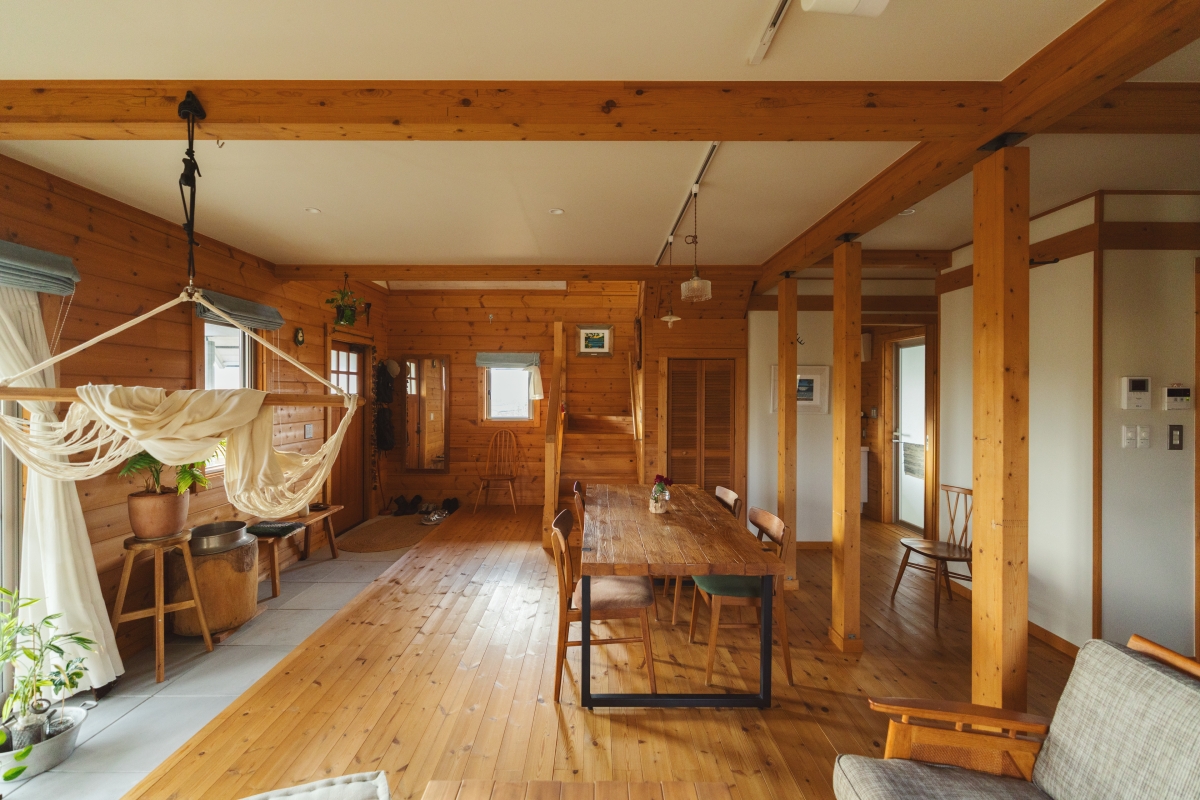
Kenichi: “You notice it once you live here, but wooden houses reflect light, so they feel really bright. That’s why we try to keep as few things inside as possible.”
Konno: “You mean you try not to clutter the place?”
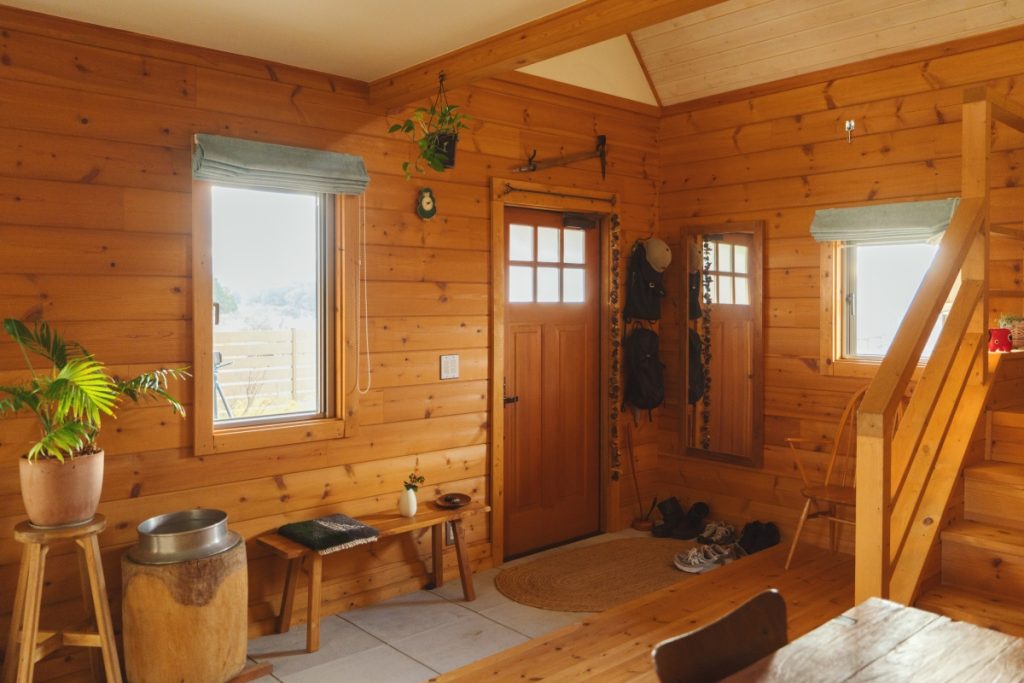
Kenichi: “Living here, the first thing I noticed is how strong a visual presence the wood grain has. It’s beautiful, but if you let too many things pile up, the patterns clash with your stuff and it starts to feel noisy. I want to enjoy the wood grain on its own, so keeping things minimal really lets it shine. Neither of us are the type to accumulate lots of stuff anyway, but now we think carefully about what goes in each room. That way, the space just feels really comfortable.”
Konno: “It’s great to see you really enjoying the wooden house to the fullest.”
Lucas: “Seriously, not only is there so little clutter, but the chairs and tables you do have are really well chosen.”
Kenichi: “We pay attention to the colors of the things we put in each room, trying to keep them as coordinated as possible. Also, if you already have a bunch of chairs, buying another one doesn’t really stand out. So we carefully choose items we really love and give them a special spot. Keeping that in mind naturally keeps the rooms simple and uncluttered.”
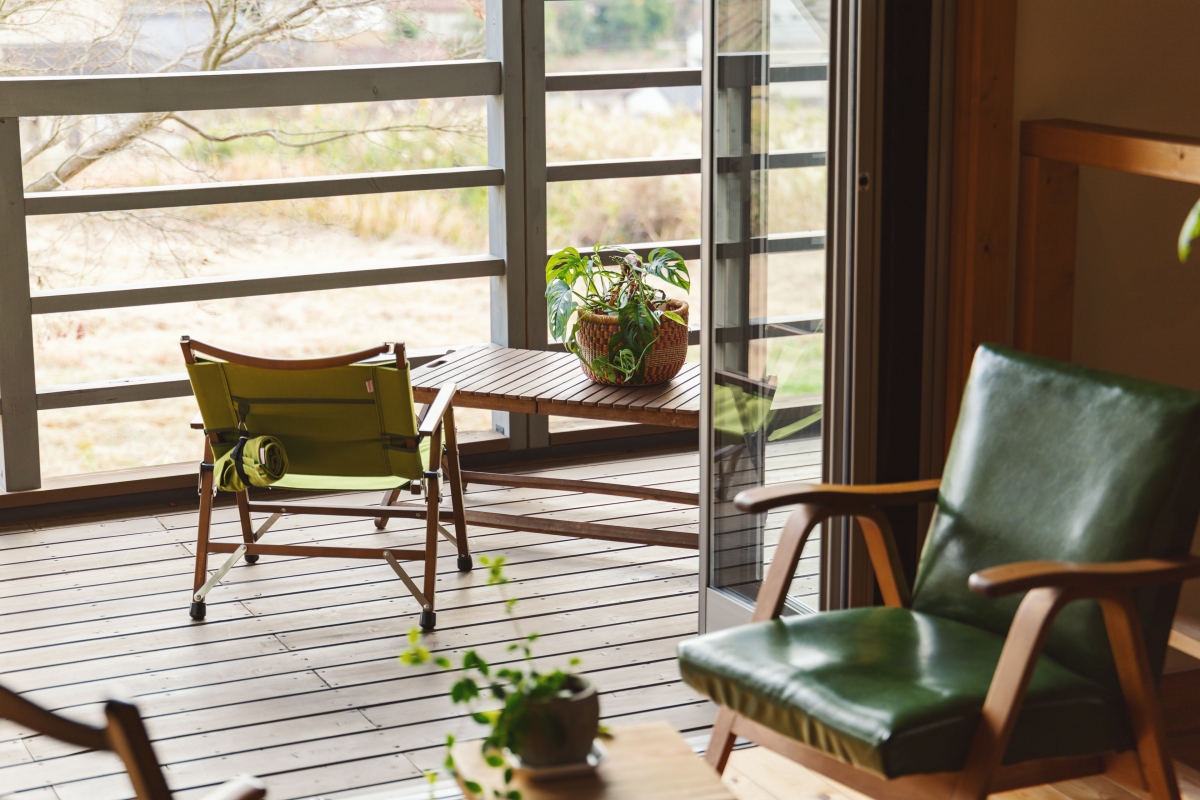
Konno: “Even so, wooden houses have such a warmth to them, and this one really lets you feel it.”
Kenichi: “It’s not so much physically warm as it just feels cozy and gentle. You don’t hurt yourself if you trip, and if you drop something, it might dent a little—which I actually like.”
Mitsuko: “Even scratches on the floor or honestly even a bit of dust don’t bother me. With perfectly polished flooring, even a little dust stands out, right? But in this house, it feels like we don’t have to clean obsessively every day (laughs).”

Kenichi: “Of course, we still clean!”
Lucas: “Everything in moderation (laughs).”
Konno: “Have you done any DIY around the house?”
Kenichi: “We moved just before COVID hit, so as soon as we started living here, we were working from home. That gave me the chance to make tables, hammer nails into the walls..basically find little projects I could enjoy entirely inside the house.”
Lucas: “Mitsuko, after moving here, did you start anything new?”
Mitsuko: “Yeah, I’ve started a bit of gardening, making plum wine, drying daikon. I guess I’m slowly trying things I never really did before.”
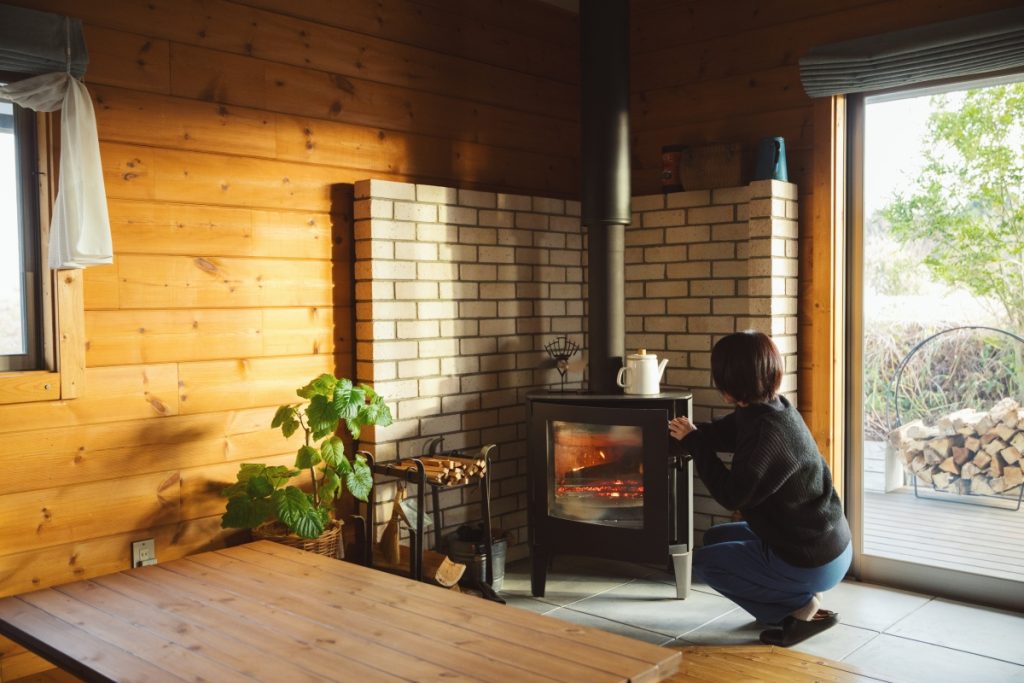
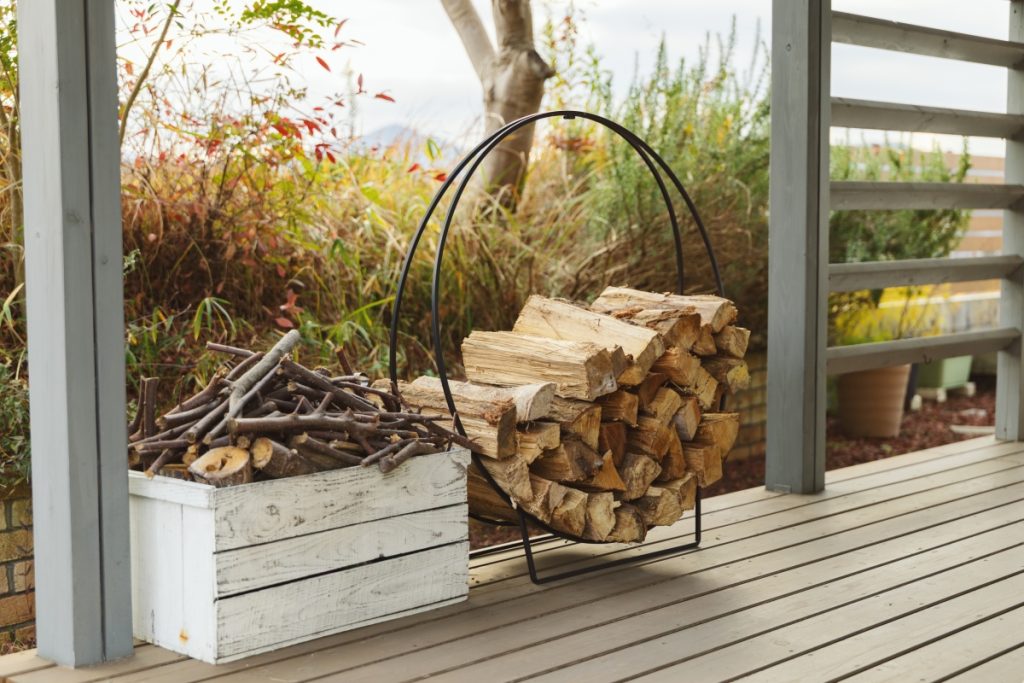
Lucas: “People who live in a BESS house seem to start turning their hands to all kinds of new things. Maybe the house inspires that. Collecting and chopping firewood for the stove is one of the new things you’ve taken up too, right?”
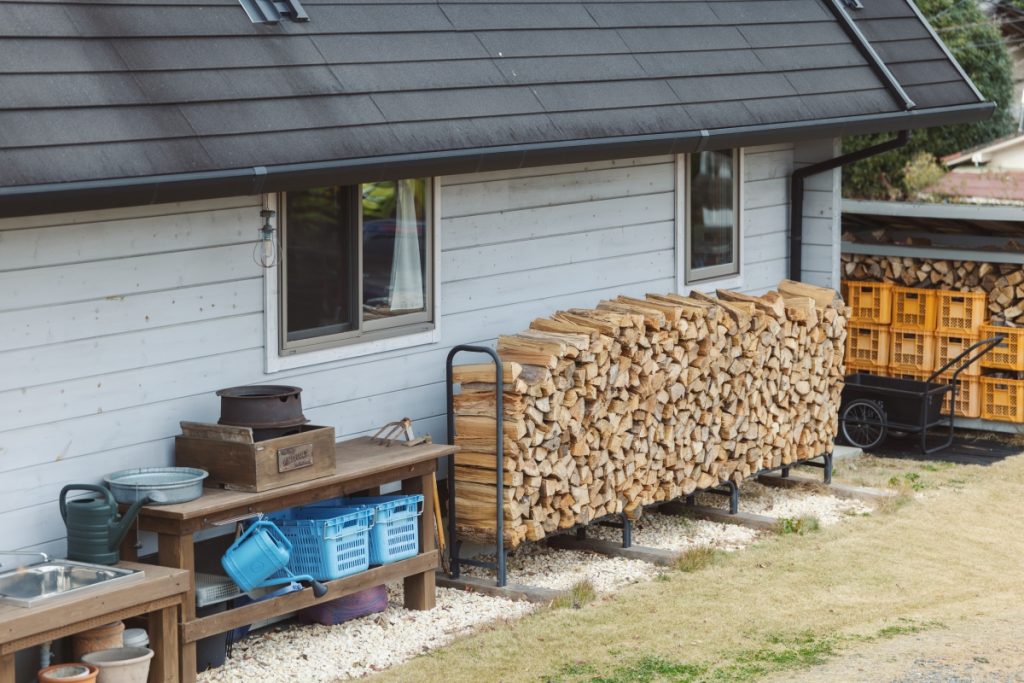
Kenichi: “We get firewood from neighbors and split some ourselves. But when we run low, we usually just buy more instead of pushing ourselves to collect it. I don’t like overdoing things.”
Lucas: “See, everything in moderation again.”
Kenichi: “Yeah, maybe so (laughs).”
3. “G-LOG” as Our Ideal Tool
Konno-san brought out some snacks to everyone’s delight. The baked lotus‑root treats, called “Hobiki Renkon Monogatari,” were inspired by the sails of Kasumigaura’s traditional sailboats, where his company is based. As we enjoyed these unique, almond-packed sablés, the conversation turned to life in Ibaraki and community development, where the Kawanumas live.
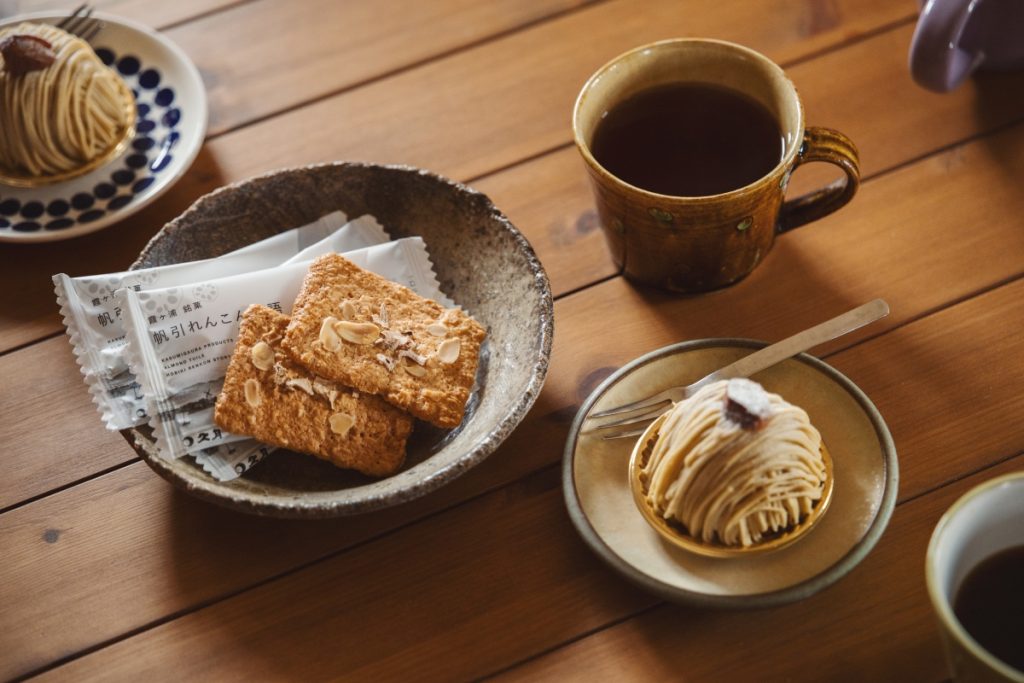
Lucas: “Konno-san, you do community development based around Kasumigaura in Ibaraki, but what kind of place do you think Kasama is?”
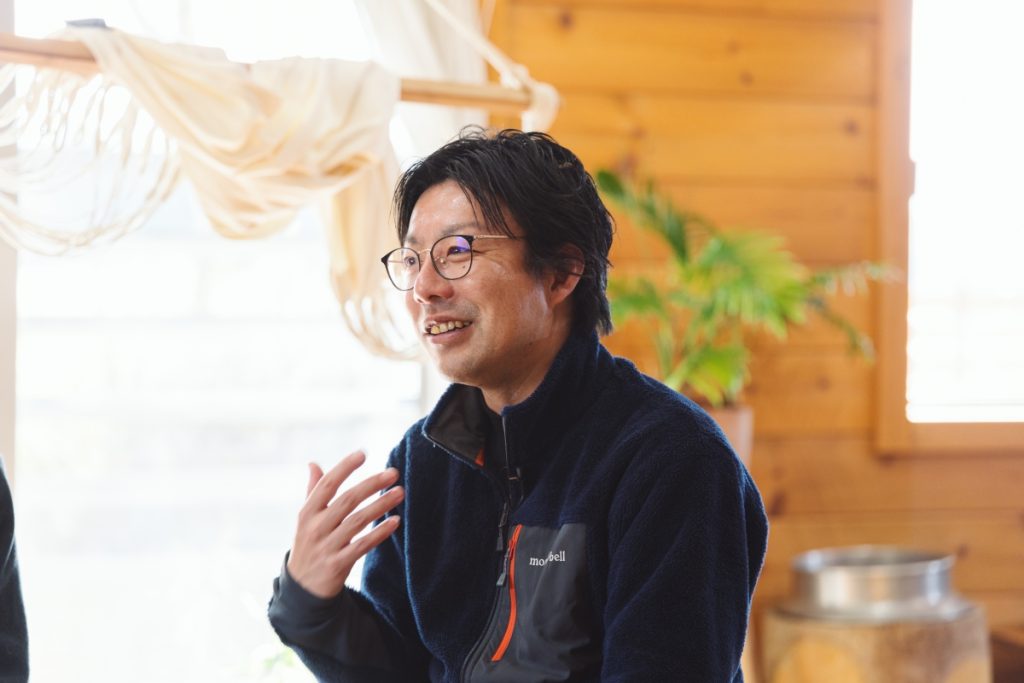
Konno: “Ibaraki is really a great place to live. I’m originally from Yamagata, so I had no prior connection to Ibaraki, but I was drawn here by the local landscape and atmosphere. That said, if you want to attract people through tourism, there aren’t many obvious draws. Kasama, on the other hand, has clear attractions. Like its nationally-known Kasama pottery and the fact that it’s the top producer of chestnuts in Japan.”
Lucas: “Delicious. And this lotus root?”
Konno: “Yes, Ibaraki Prefecture is also the top producer of lotus root in Japan.”
Lucas: “Those kinds of attractions are important, but really, what makes an area appealing is its streets and scenery, right?”
Kenichi: “I completely agree. Our neighborhood is on a popular walking route, so both locals and tourists pass by often. That means they’ll notice our house. With that in mind, I wanted a home that could, even in a small way, help bring some energy to the area.”
Lucas: “It’s very admirable to think about how it fits into the scenery and not just your own lives.”
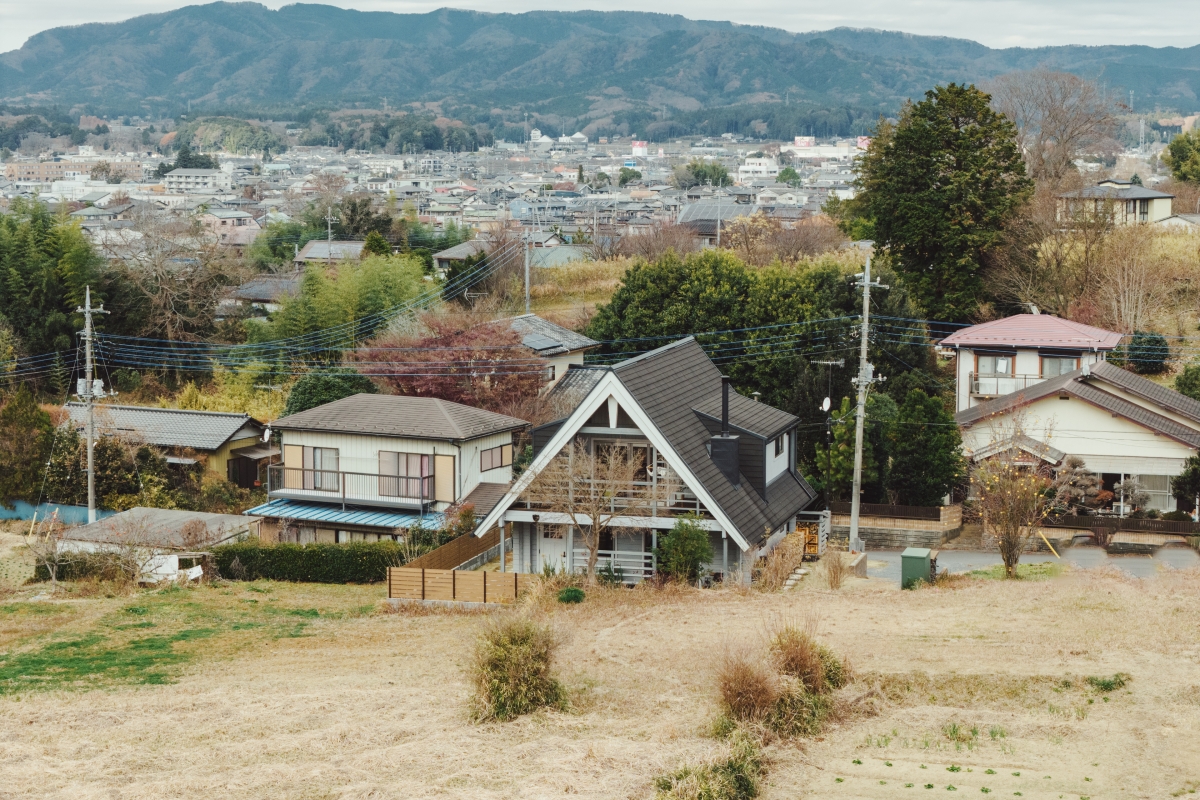
Kenichi: “I imagined this triangular roof brightening up the surroundings, giving the area a bit of energy. I feel like we’ve realized our goal of building a symbolic house.”
Konno: “If everyone building a new house keeps the scenery in mind like that, the whole area just becomes more pleasant.”
Kenichi: “I hope it becomes a place that makes people enjoy walking around. When someone does something like that, it often inspires the neighbors too, doesn’t it?”
Lucas: “So you’re 100% satisfied with everything, the interior, the exterior, and how it fits into the surroundings?”
Kenichi: “Yes, exactly.”
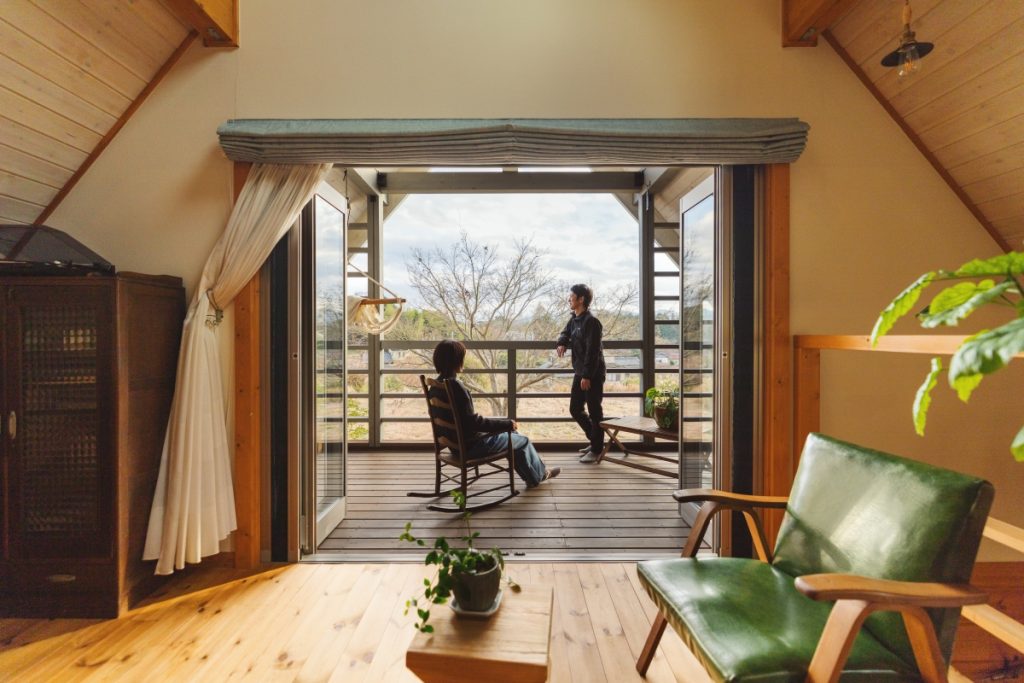
Konno: “And the view from the big windows is the best part?”
Kenichi: “Absolutely, it’s just how I imagined. Living here made me notice how amazing the mornings are. On days off, I get up early to do some gardening or cleaning, and the morning scenery is incredible. Overnight, the plants absorb water, and by morning it evaporates all at once, sometimes leaving the area almost white, and then the light hits it. Being able to see that view is just the best.”
Lucas: “One last question—we always ask, ‘What does home mean to you?’ I’ve answered this a few times myself: it’s a place where I can nap comfortably. How about you, Konno-san?”
Konno: “For me, it’s a place that makes me feel at ease. When my family is smiling, I feel secure. That’s what home means to me.”
Lucas: “And you, Kawanuma-san?”
Mitsuko: “It’s hard to put into words, but if I had to, I’d say it’s a ‘foundation.’ A place I can always return to. The base for resting, eating, all of it.”

Kenichi: “Hmm… the word that comes to mind is ‘tool.’ A house is a tool for living, and like any tool, it needs care. BESS homes leave just the right amount of blank canvas, so even someone amateur like can maintain it easily. As you make adjustments and put your own ideas into the house, your attachment grows and new ideas for it emerge. Yes, it really is a tool, and I love this one as my tool.”
Lucas: “I like that word, ‘tool.’ Keep treasuring it.”
Kenichi: “Yes, of course.”

BESS home
https://www.bess.jp