







Seto Inland Sea, gradation of the ordinary and the extraordinary
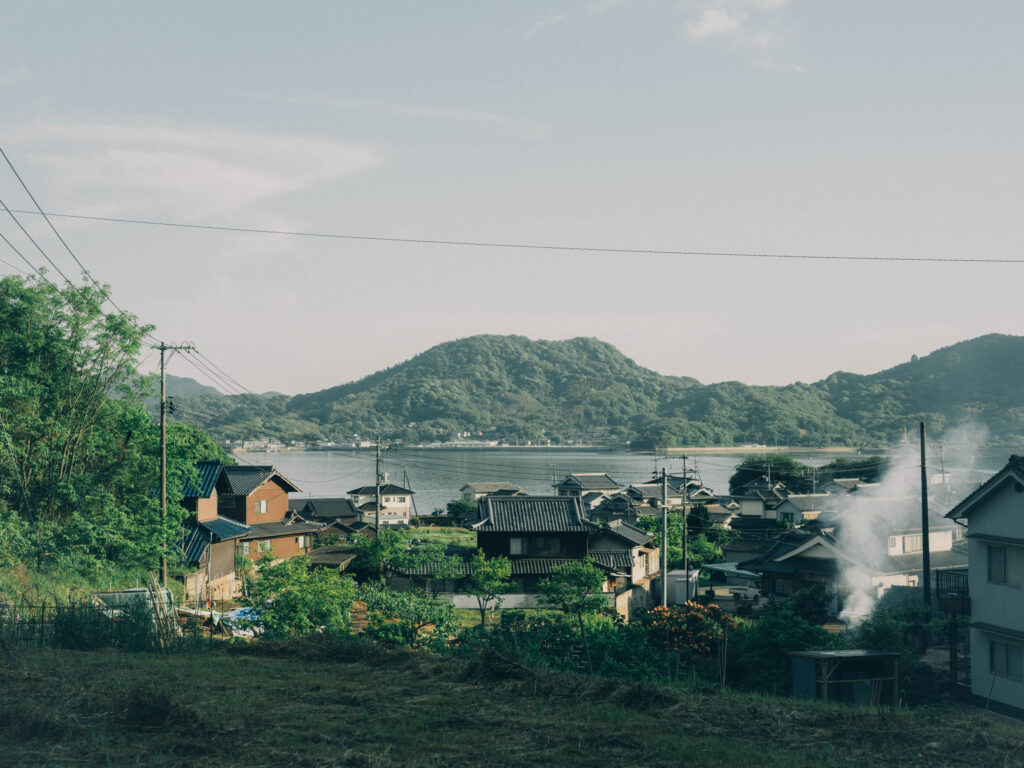
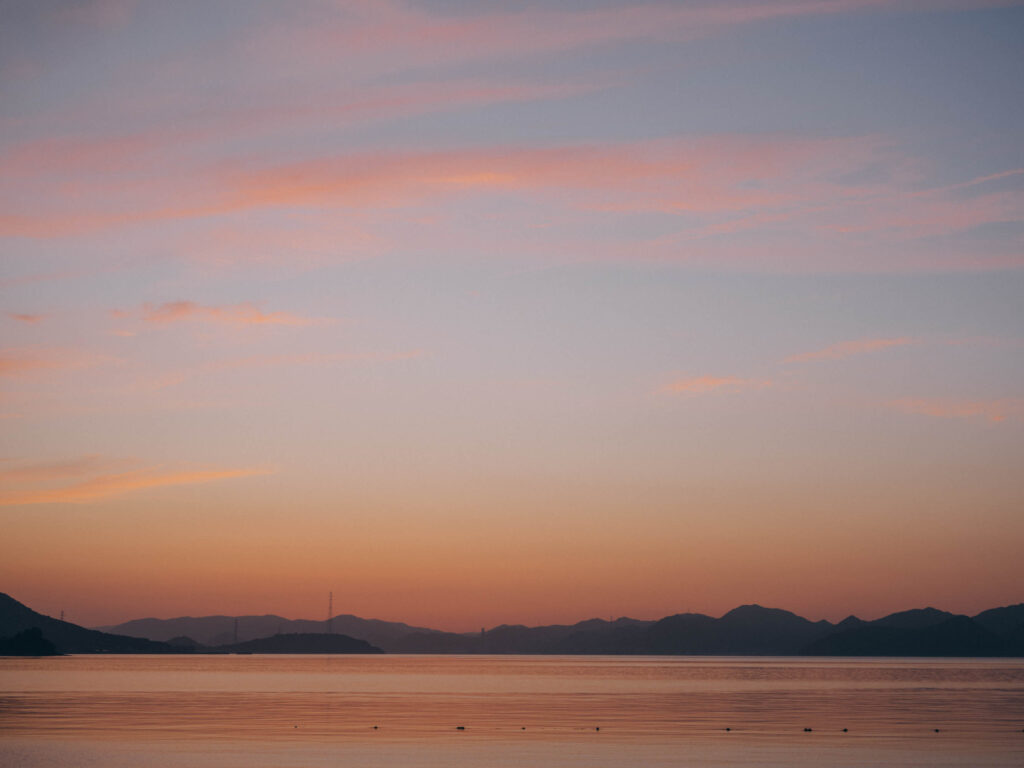
The calm waters of the Seto Inland Sea. The calm sound of lapping waves as we approach the shore. Boats which come and go incessantly, churning the sea and inevitably creating waves. The long low frequency sustain that hits the steel coming from the shipyard on the other side of the river, the birdsong, the noise of tires crossing the bridge.

We chose a cycling course highly recommended by PAPERSKY, taking a route that is hard to do by car, stopping to sketch at Tomonoura, Uchiumi Bridge, and Oki no Kannon. Along the way, I captured a landscape where everything is playing slowly, like a Ferris wheel that you can finally see moving if you look hard enough.

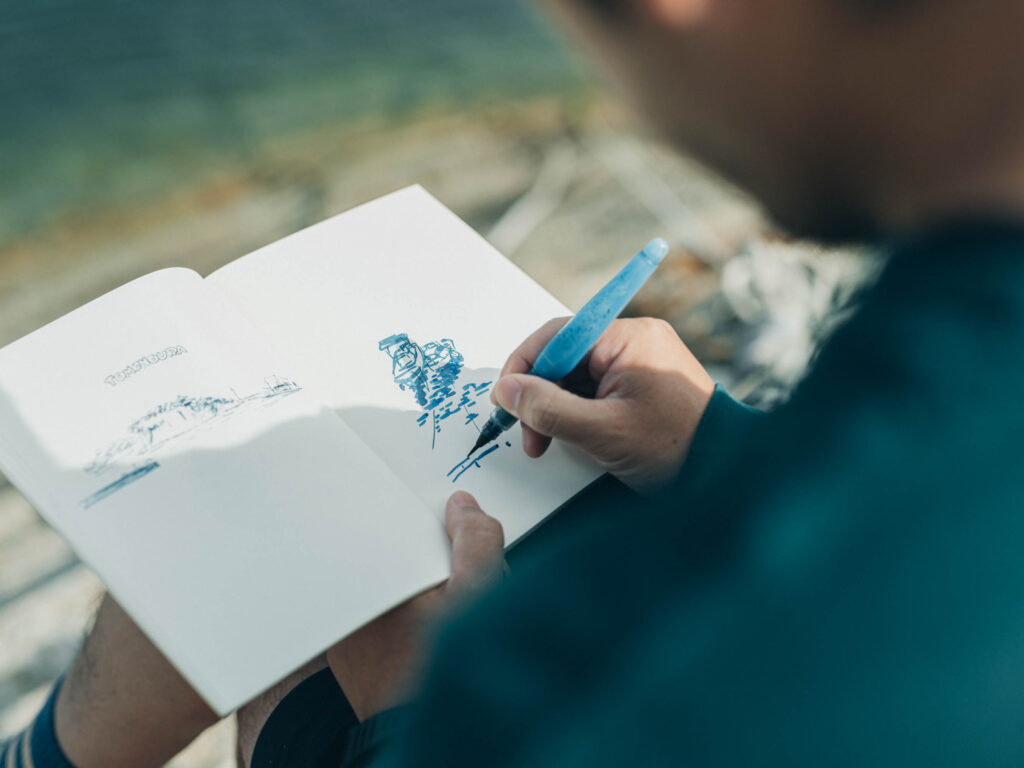
Yeah, I was feeling happy to be on a kind of trip I’d always dreamed off. As long as I ended up at my lodgings for the night I was free to go where I wanted. The mission at hand was to fully extend my antenna to take in the landscape through sketches and memories. My photographer and companion Nishiyama-san began taking footage, having brought along a drone in his massive luggage. In which case, I felt I should record not just the scenery but also the sounds. This trip would become video content which might require some good music.

Our route for this trip was the Shimanami Kaido, linking Onomichi in Hiroshima with Imabari in Ehime Prefecture. Our main aim was to create a poster for the “Setonaikai National Park.” Mind you, the main work for that would need to be done in the atelier after we got back. We thus aimed to sketch as much scenery as possible that would provide the materials for that poster, and to document the process of the journey in photographs and text, and in video and sound. A blissful journey of uninterrupted input.
Upon hearing that we would be going to Setonaikai National Park I basically assumed the areas around the Shimanami Kaido including Onomichi and Imabari. While not wrong geographically, the true answer is much more expansive, spanning 10 prefectures that face the Seto Inland Sea: Osaka, Hyogo, Wakayama, Okayama, Hiroshima, Tokushima, Kagawa, Ehime, Fukuoka, and Oita. Together with Unzen and Kirishima Kinkowan National Park, it was the first area in Japan to be designated as a national park in 1934, and is the largest national park in Japan. The official site did not clearly state why it was designated a national park, but characterized it as follows:
The Seto Inland Sea area is a region where culture flourished since early times and people and nature have coexisted in harmony; one of its main distinguishing features is its friendly landscape that combines nature and everyday life, such as terraced fields on the islands and port towns waiting for the tide.
That made sense. Culture cannot flourish without cross pollination of people from far and wide. I believe that the frictional heat of interaction between people and things is the spark that ignites a culture.


Full disclosure, there was a period when my family all moved down from Tokyo to Onomichi to live. I had a friend living there, and one visit was enough to make me want to move down. Upon relocating to Onomichi, I realized it was that kind of town; one after another, people upped sticks to move there. A place where so many folk are transplants from here, there and everywhere that it’s hard to find a local born in Onomichi. They then head off somewhere else, which keeps the population from swelling. My family being a typical example of such a clan that found ourselves gravitating to the area.


This friendly town and the soft sheet-like waters cause people to put down their bags and stop in their tracks. And so the boundary between travel and life begins to blur – here is a town with plenty of openings to start something, as well as the perfect opportunities to give something a rest.
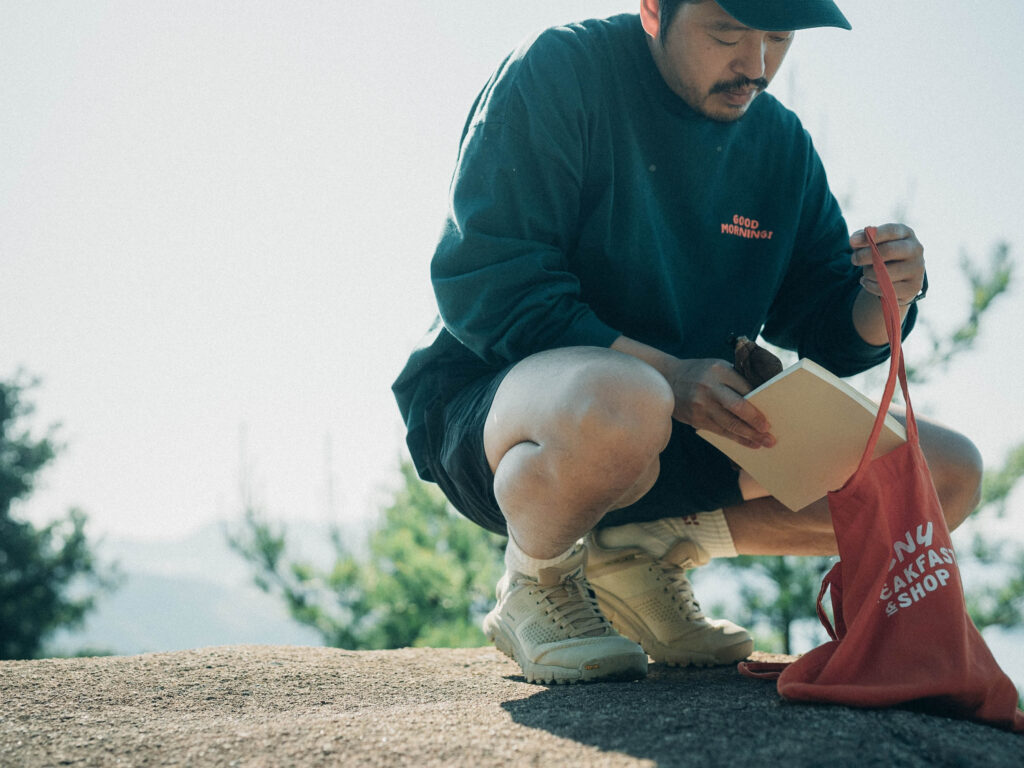
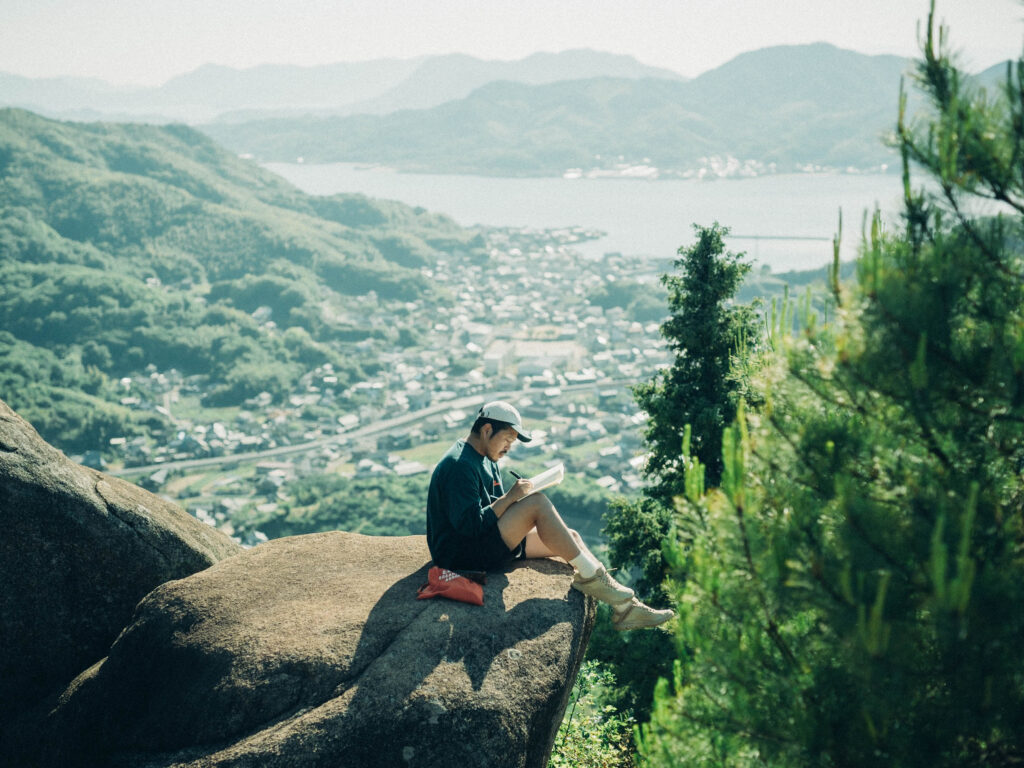
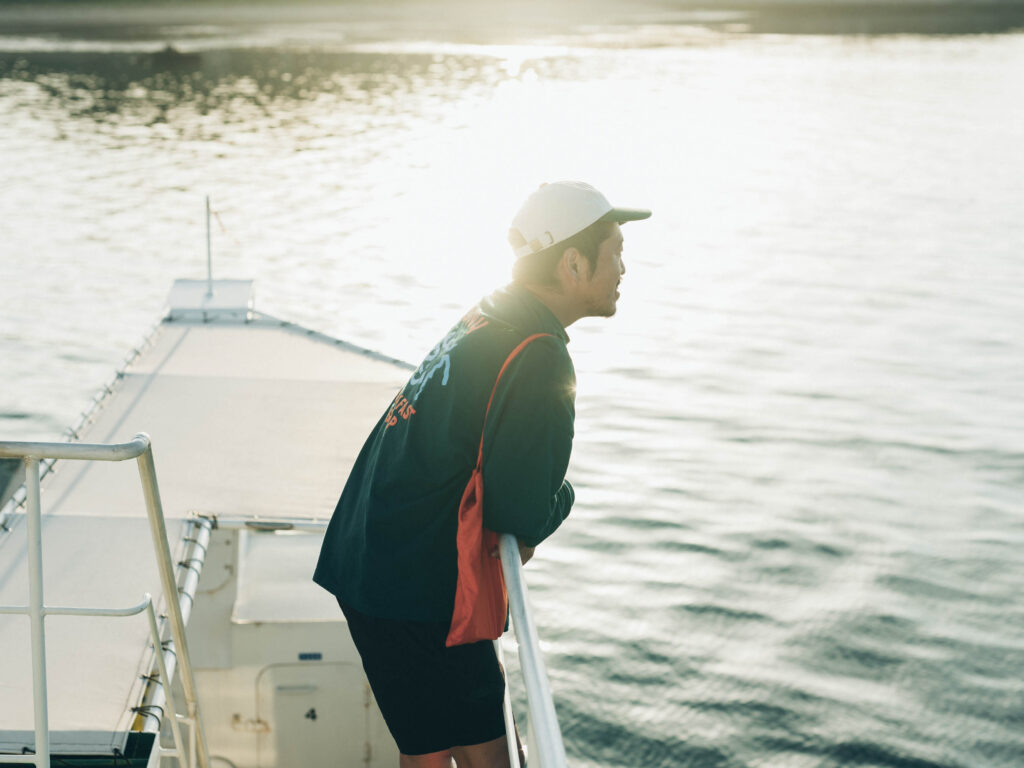
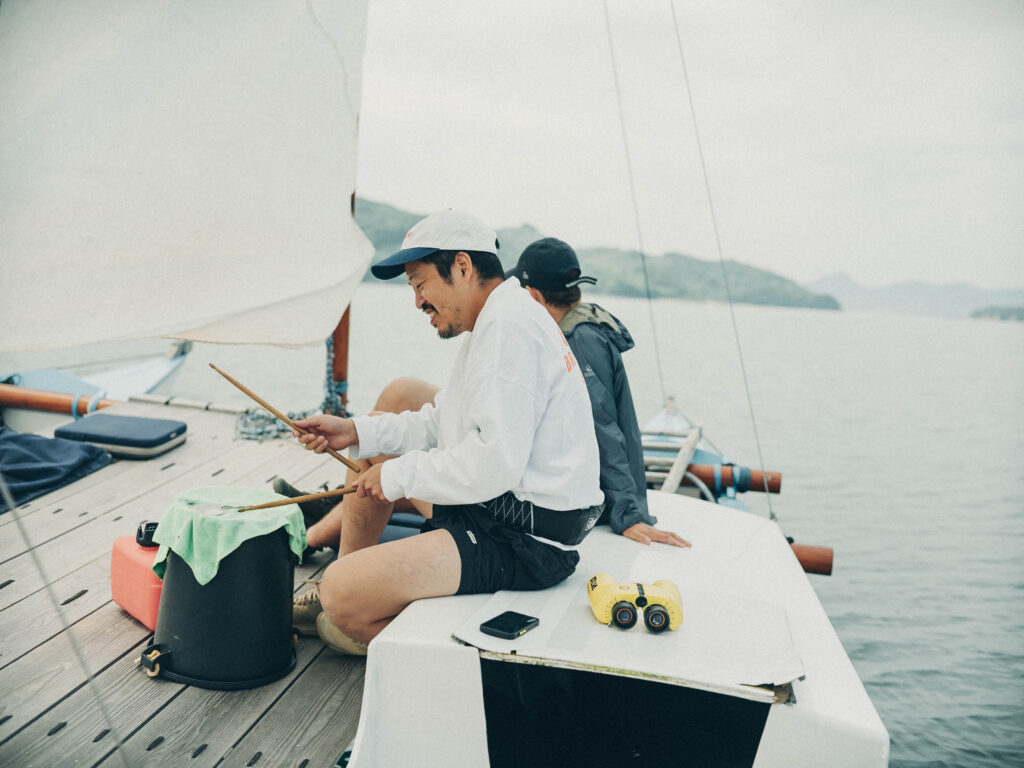
Just two nights and three days, it all went in a flash. On the last day, we hopped on a boat to see the view of the Seto Inland Sea from the sea side, having seen it from the land side all along. We took a boat under the bridge we had driven over earlier and looked up at the underside of the bridge. Our handmade vessel was a gorgeous sailboat, but apparently it also needs an engine from time to time in the calm seas. Sam, the boat owner, saw that I had drumsticks and pulled out his guitar and started singing. The key of the engine is E with a BPM of about 80. What could be better than the sound of the boat, Sam on vocals and guitar, and the beat of the overturned buckets blending with the wind. The boat then landed on a small uninhabited island somewhere. This day was the definition of an out-of-the-ordinary experience. Something from a long-ago movie or a novel. Strangely enough though, I had an inkling somewhere in my mind that I could appropriate this sense of the extraordinary into my own daily life. If I went back home, it would never be possible. But if you lived by the sea here, on an island somewhere in the Seto Inland Sea, you would be sure to live miraculous, spontaneous, dreamy days. And I thought the same thing back then and acted on it.



I know I am not the only one susceptible to the allure of the Inland Sea. Since time immemorial, it has lured travelers, made them put down roots, stirred them up, and created a whirlwind of culture. That will surely continue to be the case. The beauty of the sea made this trip really special. Of course, this time we traveled only a small part of the expansive Seto Inland Sea National Park. However, it was a rare trip in which I was able to witness first hand the true joy of “experiencing history and culture in a scenic area where nature and human life are interwoven” (a characteristic of Japan’s national parks). This took place as my own memories as a resident of the area flitted back and forth between the past and present, between the perspectives of a traveler and those of a visitor.
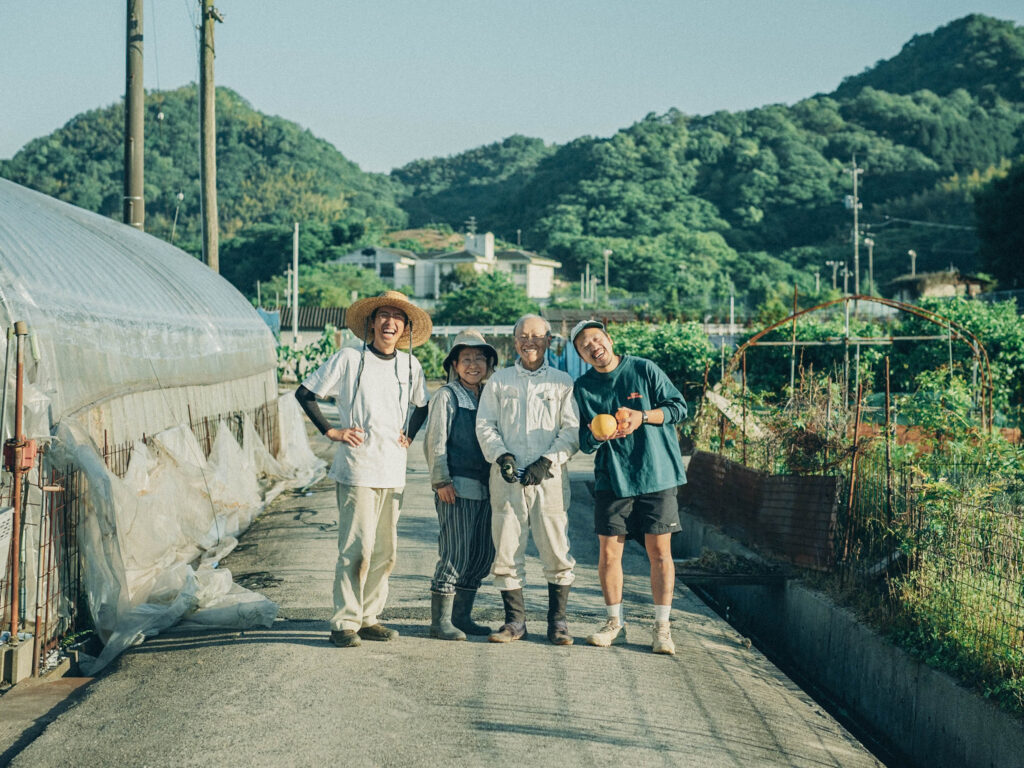


CHALKBOY
His first foray into the world of chalk art came when he was in charge of menu blackboards at a part-time job in a café. In addition to providing his works to restaurants, companies, and media in Japan and abroad, he also conducts events and workshops. Also active as a leader of a hand-drawing group, “WHW!”
www.chalkboy.me
National Park Poster Project
PAPERSKY, artist CHALKBOY, and outdoor boot brand Danner are collaborating on a project to create original posters for each of Japan’s national parks. The posters, drawn by CHALKBOY on travels around Japan with PAPERSKY, are now being sold as original goods.
https://store.papersky.jp/collections/national-parks-of-japan-postcard