







A Longing for Southern Islands Turned to Impulse
“All I knew was that I wanted to go to Iriomote Island. So I grabbed all the money I had and headed straight there from Tokyo. I was in my early twenties at the time.”
Kunioka tells her story with an infectious energy. Back then, she studied woodworking in the design department of an art university. Though she began in a furniture design course, her interests were gradually kindled not by product design, but by wood carving, using chisels to shape solid blocks of timber by hand.
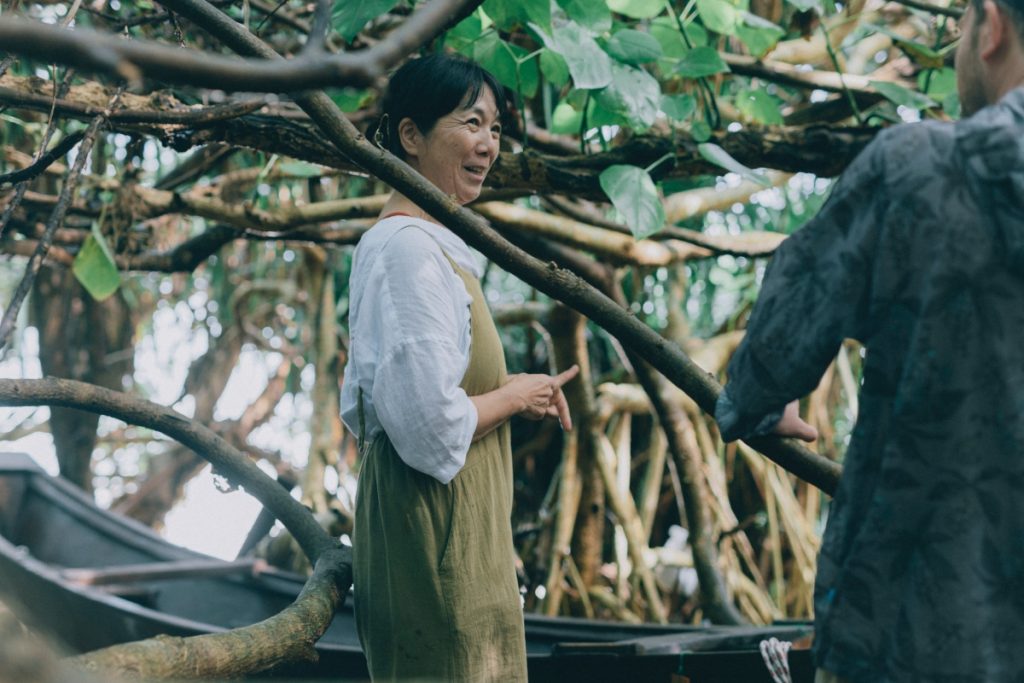
After university, she dreamed of one day becoming a sculptor, though she had little idea how to get there. She spent her days drifting between part-time jobs, trying to figure things out. Then one of her pieces finally sold. She used the money to buy a plane ticket and, almost on impulse, headed for Iriomote.
“After living on Iriomote for a while, I started craving a bit of ‘city’ life, so I moved to neighbouring Ishigaki Island. There, I joined the WWF Coral Reef Conservation and Research Center, known locally as Shiraho Coral Village, where I worked on interview-based research exploring the relationship between people and the sea. That was where I first encountered a sabani. I remember thinking, ‘What a strange, beautiful shape.’”
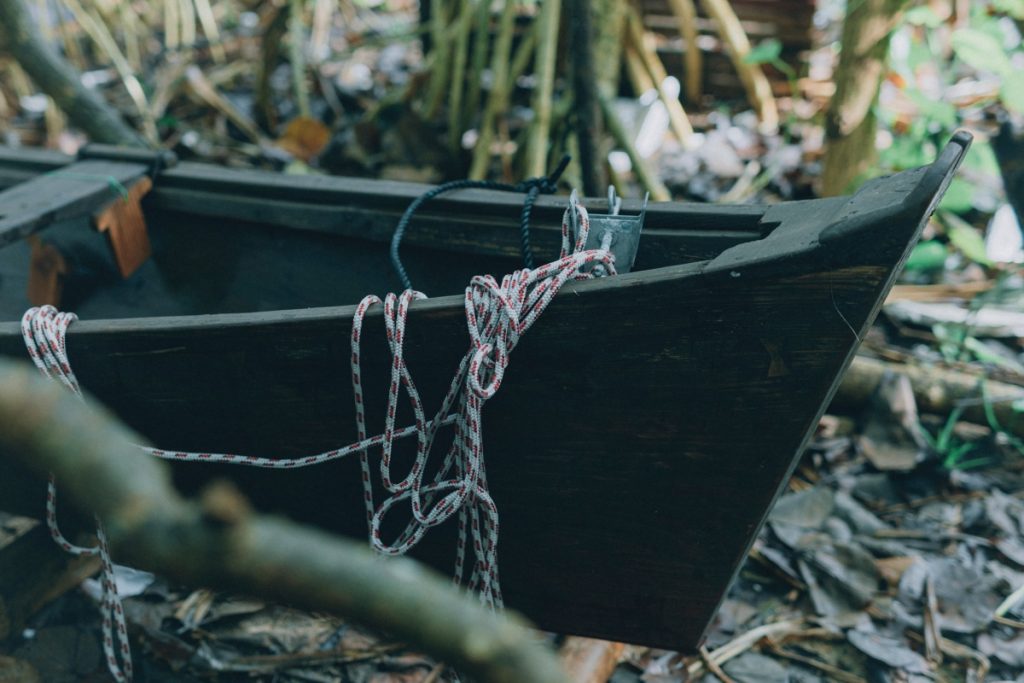
Kunioka says she first came across a sabani still being built at a small workshop, and fell for it instantly. The curves formed by its wooden planks were simple and without excess, yet carried an organic beauty that felt almost natural, as though shaped by the sea itself.
“At first, I never imagined that an outsider like me could build one of these boats. I just wanted to document the craft and share it with others, so I started visiting the workshop of Yasuhiro Arashiro, who later became my teacher. He was the kind of person who never cared about gender or where you came from. He simply said, ‘If you want to build one, then build one,’ and before long had me helping with the work.”

Kunioka had originally studied wood carving at university, so she was already comfortable with a chisel in hand. Little by little she was trusted with more of the process, and before long she began thinking about building a sabani of her own.
How Does a Sabani Differ from a Dugout Canoe?
Unlike a dugout canoe, which is hollowed out from a single massive log, a sabani is shaped by processing, bending, and joining together wooden planks. This technique reportedly developed during the Ryukyu Kingdom era, after a rule was put in place to restrict the making of dugout canoes due to the over-logging of the island’s large pine and Akagi trees for shipbuilding.
“The most interesting part is bending the wood. No two pieces are ever the same, and even boards cut from the same tree will bend differently from left to right. You soak them, pour over hot water, and slowly bend them as if you’re in conversation with the wood itself. That’s the part I love most.”

Kunioka says she never set out with grand ambitions of carrying on a tradition. She simply enjoyed helping her teacher, and took pleasure in gradually learning the ropes herself. More than anything, though, boatbuilding offered glimpses into the ingenuity of the people who have long lived by the sea, and the many ways they learned to navigate it.

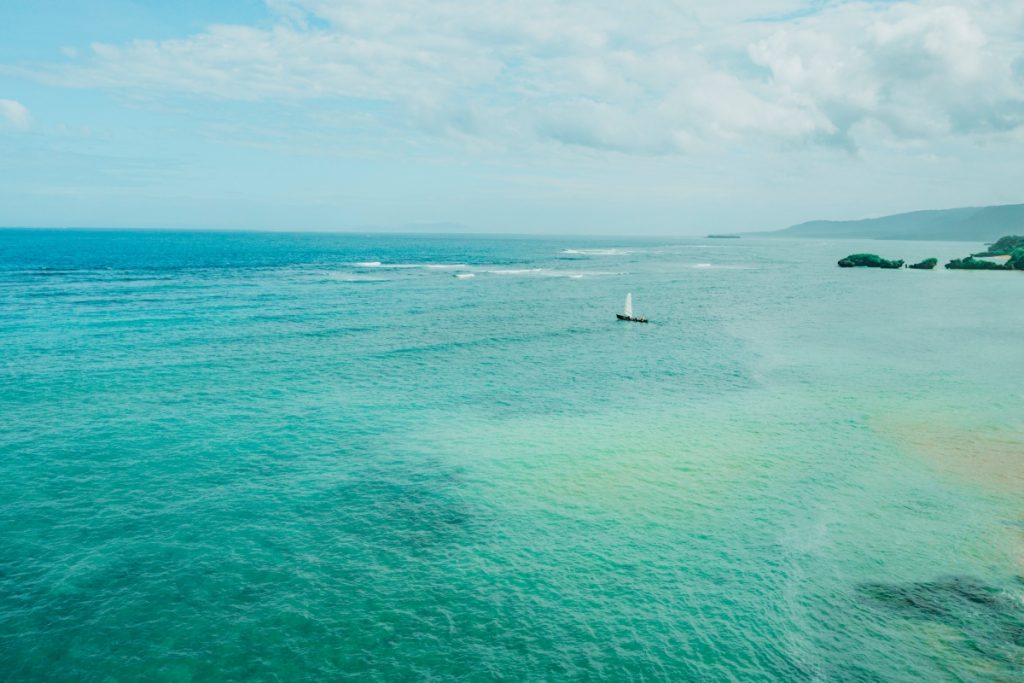
“Since I started sailing boats I built myself, the sea, the wind, even Iriomote itself feels closer somehow. Even on days when I’m not out on the water, I find myself wondering what the waves will be like with the wind that day. The sea can spook me sometimes; but the time I spend out there, looking back at the island from the water, has become part of how I move through life.”

Kyoko Kunioka
After graduating from the Department of Crafts and Industrial Design at Musashino Art University, Kyoko Kunioka moved to Iriomote Island in 1993. She relocated to Ishigaki Island in 1998, where work documenting Yaeyama culture led her to the sabani. She went on to apprentice under Yasuhiro Arashiro. Her works include the interactive sound picture book SUNIU (2023, Yarada Publishing). Kunioka’s hands-on sabani tours can be experienced through “Iriomote Nature Play Shop Hanauta” and “Karmy Walk.”
“Iriomote Nature Play Shop Hanauta”
Website : https://www.hugging-nature.com/
“Karmy Walk”
Email: iriomote@karmy-walk.com