


The Two Facets of a Mask
The Noto Peninsula Earthquake that struck in the evening of New Year’s Day 2024 still remains fresh in memory. Now April, as we hear the news that the residents have only just begun moving into temporary housing, our hearts ache with worry about the future of Noto. I have been to Noto four or five times before, my most recent trip being last September. I was in the midst of planning another visit to a festival this spring when the disaster hit.
The purpose of my trip last autumn was to get a second look at the clay mask unearthed at the Mawaki Site in Noto Town, Hosu County, Ishikawa Prefecture (featured in Jomon Fieldwork Vol. 5, Papersky #41). The weather was fine and clear when I arrived, inviting me to stroll around the site during the day, and once again at night to stand in the center of the circle of wooden pillars and gaze up at the star-studded sky. The site of the ancient settlement had a distinct look from day to night, that much is for sure. But most of all, the fact that people had lived there constantly for four millennia, from the Early to Final Jomon periods
(about 6,000–2,000 years ago), enveloped me in a sense of relief beyond description.
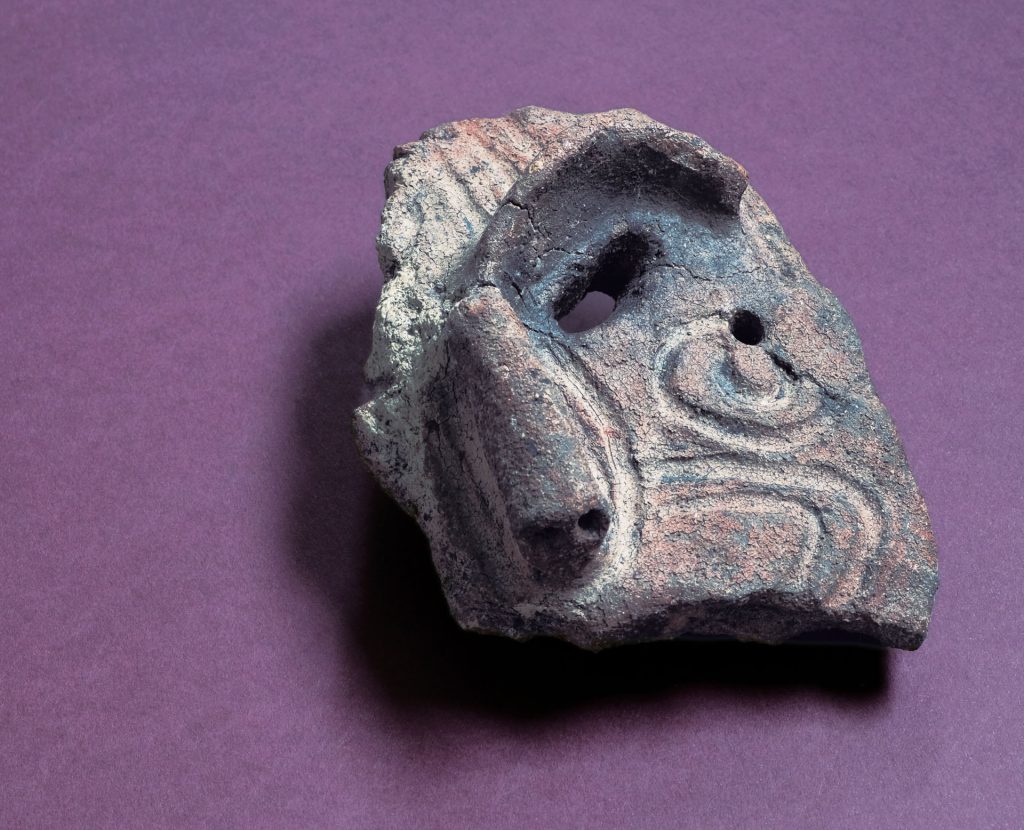
The next day, with cooperation from the Mawaki Archaeology Museum, I got a close-up view of the clay mask. The undulations were more pronounced than I had remembered and powerful enough to spark my imagination and help form a picture of the mask in full, including the missing chin and right side of the face. The narrow slanted single remaining eye had a piercing gaze, the area below it decorated with incised lines resembling tattoos or makeup. According to the notes, the mask was 16 centimeters long and 13 centimeters wide—roughly the same size as a Noh mask—and had tiny holes that may have been used to secure the mask on the face.
Many masks found from the Jomon period were made of clay, I recalled, but since wooden masks were not likely to survive in the soil, the unearthed relics alone hardly represent the full extent of Jomon masks. As far as clay masks go, however, a relatively large number of those excavated have been dated to the Late and Final Jomon periods, and many were found in Eastern Japan.
How did people come to wear masks in the first place? Was it to fulfill a desire to disguise oneself and transform into another identity? At times, masks were a means to mimic animals, or an accessory to portray gods and spirits, to help mediate with and protect from supernatural forces. In the Noh theater, originally with medieval roots, the shite, or main performer, wears a mask often representing a god or ghost. A typical story features a phantasm appearing amid humans, which is pacified and then delivered safely to the afterworld. I wondered when this classical storyline was first developed, and what changes it went through before becoming established in present-day Noh plays.
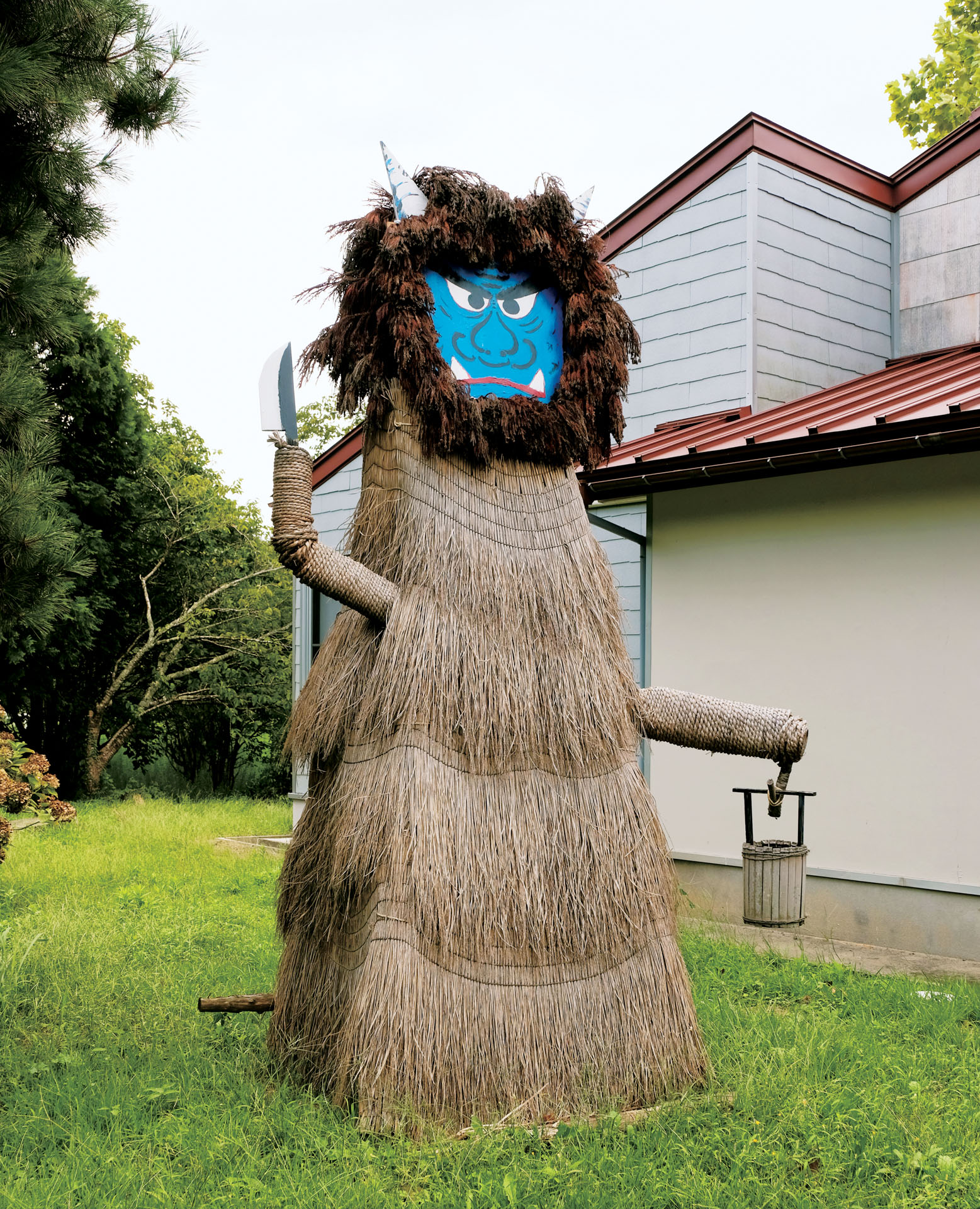
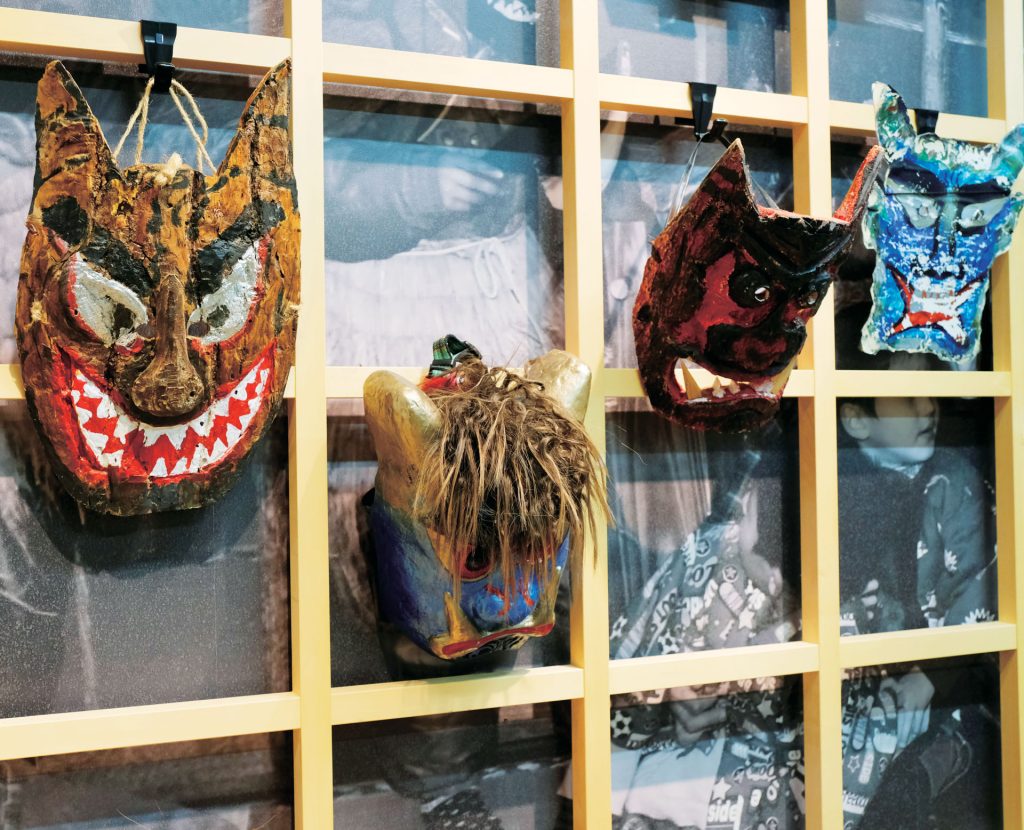
An old mask festival survives in the Noto Peninsula, called Amamehagi, held in the evening of the still snowy Setsubun, falling on the day before spring. District children clad in demon masks visit the homes of farmers and shout, “Hurry up, go out, and get to work!” The custom began as a way to admonish farmers who have been sitting around the hearth throughout the long winter and deter them from being lazy before the cultivation of the fields in spring.
Another thought crossed my mind while admiring the Jomon mask. Every mask has two facets. One is the quiet unworn mask, the still life, the expression one sees when the mask is placed in a glass display case in a museum. The other is the dynamic moving mask, the expression that comes to life only when the mask is held in the hand or positioned on the face. The Amamehagi masks rise from the shadows and acquire definition amid the waves of people gathered for the festival. Their rich expressions appear only when the wearers enter the picture, and then vanish again. Perhaps once upon a time, moments like that also came to the clay mask of Mawaki.
<PAPERSKY no.70(2024)>
Jomon Fieldwork | Nao Tsuda × Lucas B.B. Interview
A conversation between ‘Jomon Fieldwork’ Photographer and writer Nao Tsuda and Papersky’s Editor-in-chief Lucas B.B. The two discuss the ways Jomon culture continues to play an important role in modern day Japan. The video was filmed at Papersky’s office in Shibuya in conjunction with Tsuda’s exhibition “Eyes of the Lake and Mother Mountain Plate” held at the Yatsugatake Museum in Nagano.
Nao Tsuda
His latest publication, Hasu no Utena (Dojima River Forum), juxtaposes the Koyasan landscape with photographs of the fusuma (sliding door) paintings produced by Nihonga artist Hiroshi Senju for Kongobuji Temple, Koyasan.
tsudanao.com