







A Journey of Lacquered Jugs and Water
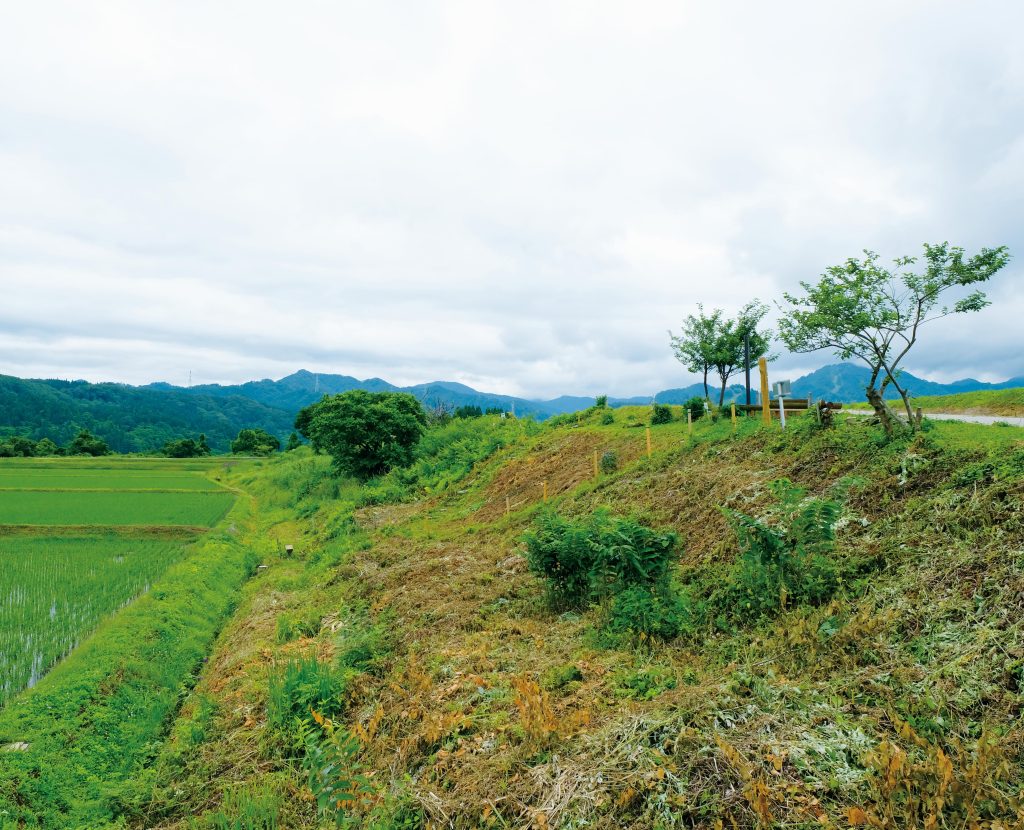
The rich meltwater of the Iide Mountain Range nourishes the mountains, seeps into the beech forest covering the Tainai Plateau, and is filtered of impurities while permeating deeply underground over time. On the banks of the terraced rice fields of Atsutazaka Wakeyachi, in the Tainai River basin, is a spring known among the locals as Tainai’s Jomon spring water. It continues to quench the thirst of the people living nearby today.
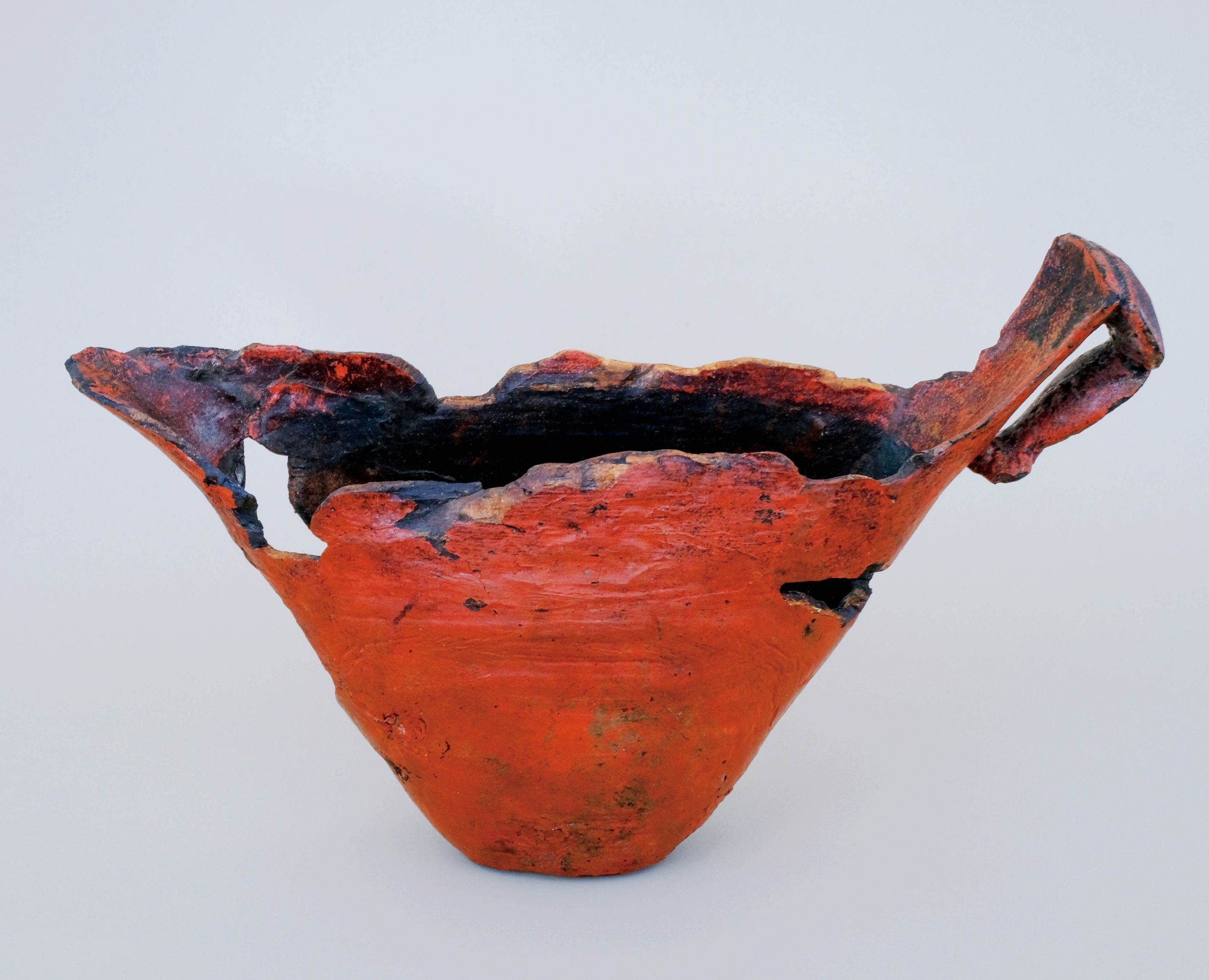
I’ve encountered a few incredible blessings of nature in the course of my Jomon fieldwork up and down Japan, but this site has turned up, along with the spring water believed to have originated in the Jomon period, red and black lacquered receptacles resembling water jugs. Normally, wooden articles rarely survive in Japanese soil intact. But when these water jugs were found during excavation work in 2000, they had no major breakage and only a slight loss of coloring, even after a time span of 4,000 years, thanks to the slow flow of the water through the soil. The water, I dare say, has worked a miracle.
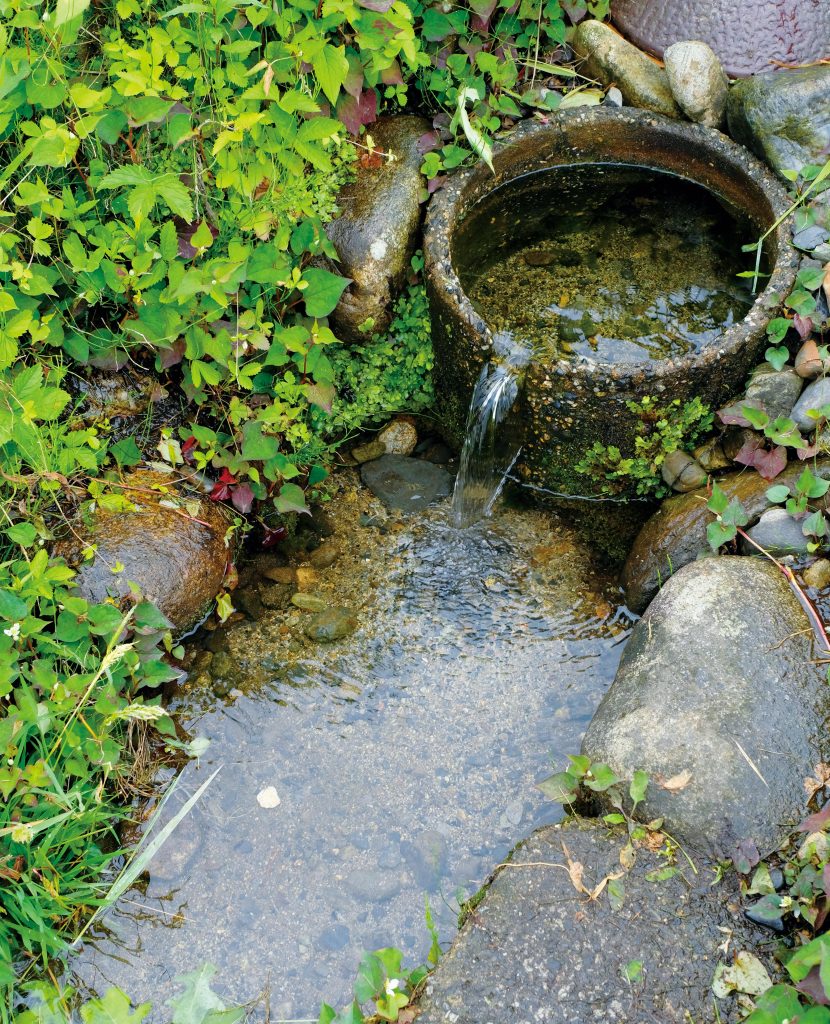
I visited the site with my guide, Takashi Ito from the Lifelong Learning Division of the Tainai City Board of Education. First stop: a sip of the Jomon spring water. The water spouted out, stirring up the sand, and it felt far chillier than I had expected. The water temperature, Ito-san told me, was around 11ºC and remained steady year round. I scooped the soft water in my hands, tasted it, and felt it sink in and cleanse my body.
According to Ito-san, there was no need to carry a water bottle during the excavation work, even in the midsummer. The water must have tasted extra special after a good sweat. This area also sees heavy snowfall in the winter, with snow depths reaching some 2 meters, but the spring water does not freeze even in the midwinter.
That is, anyone walking in a pair of snowshoes would recognize a spring from the cavity in the cover of deep snow. An old custom is observed in this region called kanku no mizukumi, where water is drawn on the ninth day after Xiaohan, or the onset of cold weather according to the Chinese solar term, falling on January 6 each year. Legend has it that the water is clearest on that day and thus resistant to spoilage. That water is then used to brew sake the traditional way, relying only on the naturally low winter temperature, without incorporating modern technology.
According to Ito-san, there are research results that suggest the red and black lacquered receptacles may have contained fruit wine. He says studies of the jugs’ inner walls found the seeds of 16 plants including the Japanese red elder, hardy kiwi, Chinese mulberry, and Japanese angelica tree, indicating the contents may have been a wine-based drink.

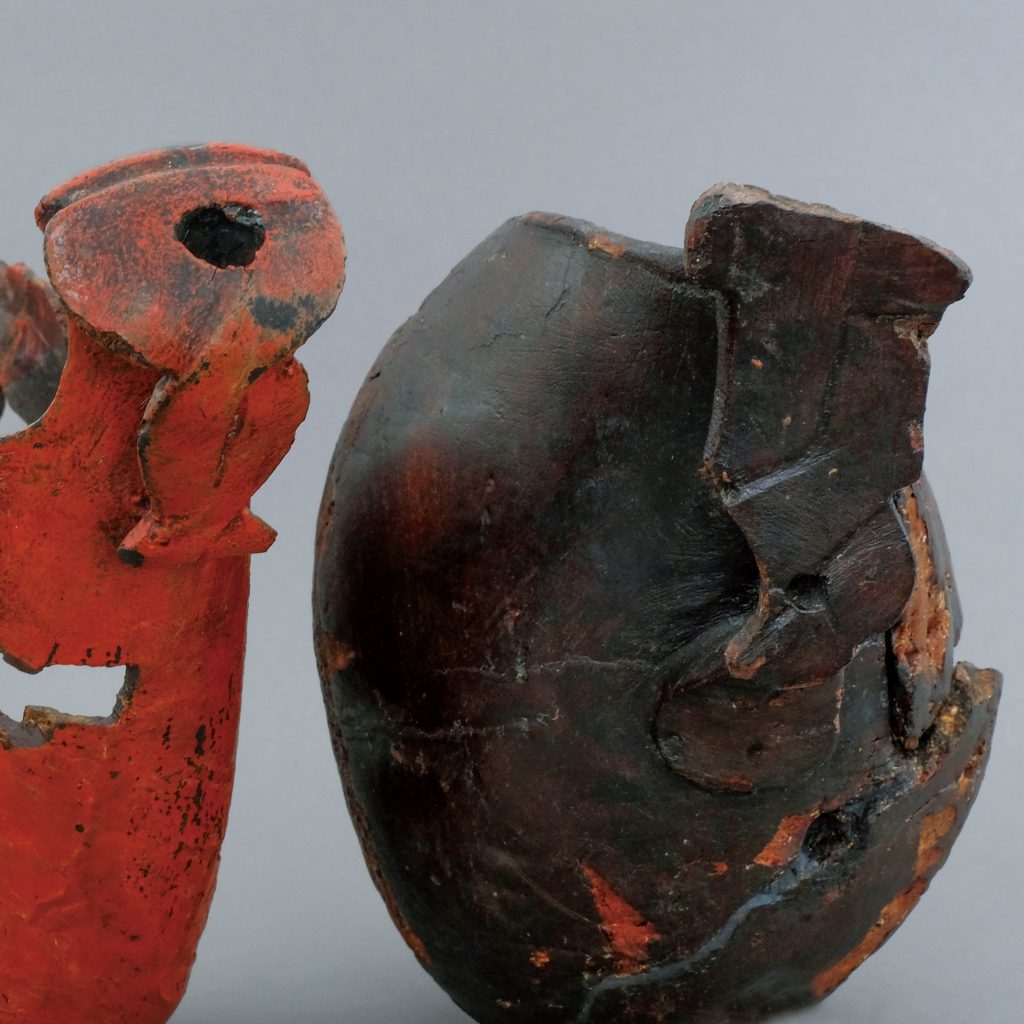
Having left the site, I headed to the Kurokawa Local Culture Museum, where I realized my yearslong dream and obtained permission to handle the lacquered artifacts. Made from a hollowed-out Japanese mountain cherry tree, the jugs had thin walls and were very lightweight. The site had also produced lacquered pots and plates, lacquered earthenware, yarn articles, and accessories, clearly showing evidence of not only outstanding craftsmanship but also advanced culture in the Jomon period. The best example of all is the carvings on the lacquered jugs’ handles.
When the red and black articles are placed side by side and looked at from behind, an 8-shaped motif can be seen on each of the handles. I am tempted to say the Jomon people had already established their concept of design. The origins of the word design, as well as the French dessin for “drawing,” go far back to the Latin designare meaning “express a scheme with signs.” How did the Jomon people go about envisioning and giving shape to the beautiful curves of the black lacquered jug? As I held it in my hands in the afternoon sunlight and lent my ears to its story, I thought I felt the artifact grow gradually heavier.
I did not get around to visiting the farmers making wine in the highland of Tainai City this time, but promised myself that I would plan another Jomon trip to follow the journey from spring water to fruit wine someday.
<PAPERSKY no.69(2023)>
Jomon Fieldwork | Nao Tsuda × Lucas B.B. Interview
A conversation between ‘Jomon Fieldwork’ Photographer and writer Nao Tsuda and Papersky’s Editor-in-chief Lucas B.B. The two discuss the ways Jomon culture continues to play an important role in modern day Japan. The video was filmed at Papersky’s office in Shibuya in conjunction with Tsuda’s exhibition “Eyes of the Lake and Mother Mountain Plate” held at the Yatsugatake Museum in Nagano.
Nao Tsuda
His latest publication, Hasu no Utena (Dojima River Forum), juxtaposes the Koyasan landscape with photographs of the fusuma (sliding door) paintings produced by Nihonga artist Hiroshi Senju for Kongobuji Temple, Koyasan.
tsudanao.com