







Dressing in the Warmth of Nature
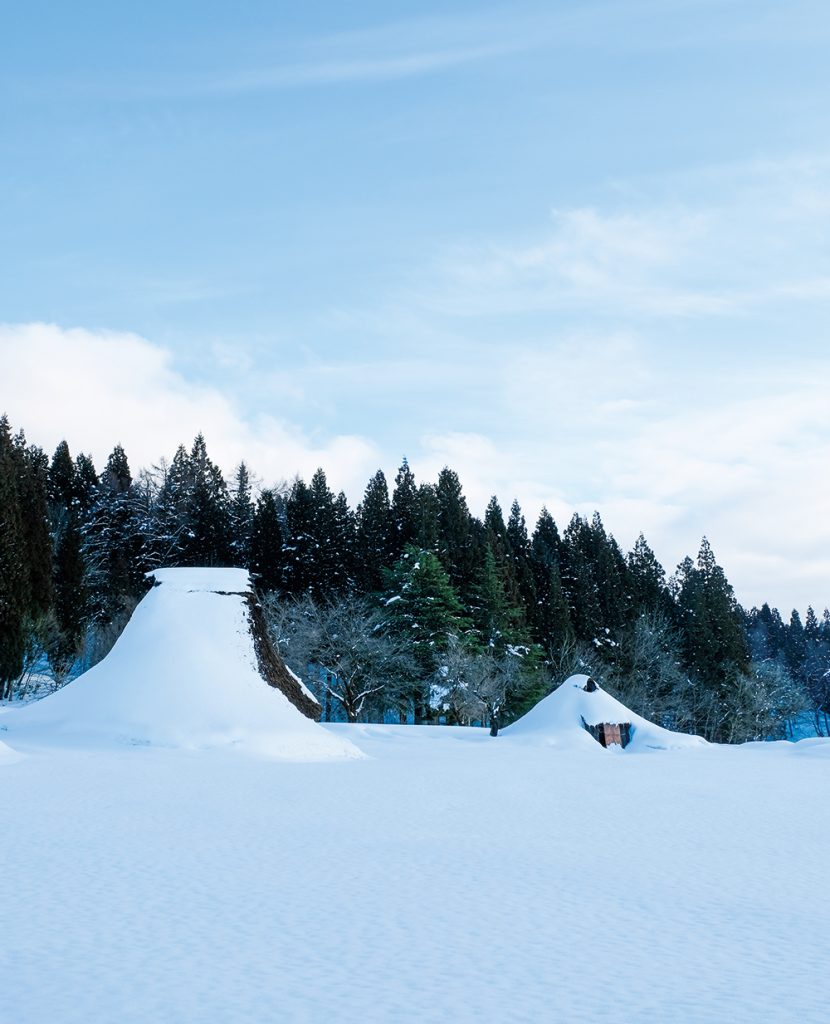
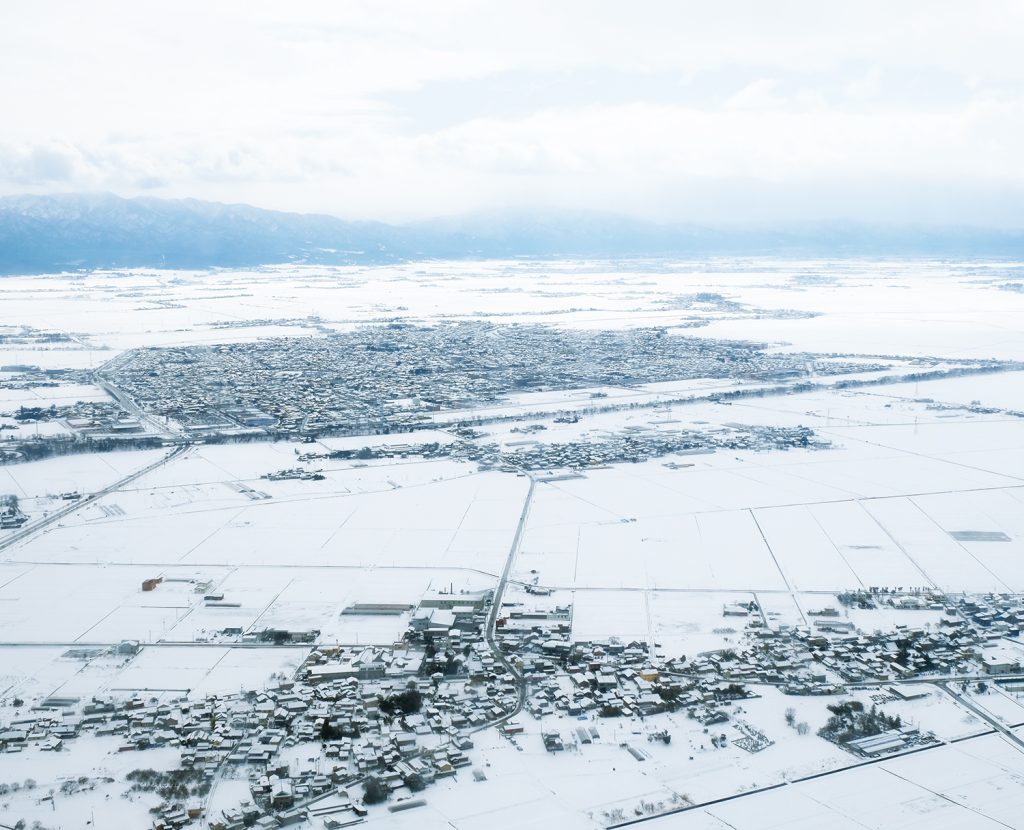
The advent of the snow season spurred me to set off for the Chuetsu region of Niigata and the Okitama region of Yamagata. True to Niigata Prefecture’s reputation as Japan’s snow country, areas such as Yuzawa, Tsunan, Tokamachi, and Uonuma see homes blanketed in the deep winter snow. For someone like me who hasn’t had much experience living with snow, a couple of days of the intense weather may be a handful. But this snow is the mother of rich local cultures, traditions, and wisdoms.
Along the way from Yamagata City, the roadside in Yonezawa was dotted with snowcapped stone monuments. I stopped at one and pushed the snow away with my hands until a set of deep carved letters appeared: Somoku kuyoto—plants and trees memorial. The story goes that spirits dwell in plants and trees, and the monuments were erected to thank the spirits for the fortune they bring and as an offering for those whose plants and trees were cut down. The oldest memorial I saw bore the inscription 1807, but I believe the affection for plants and trees may be traced much further back to the Jomon period. Why? The neighboring Niigata has produced pieces of workwear made from a material closely resembling angin—a cloth or simple vest knitted from the fibers of plants like ramie, false nettle, and Japanese nettle that was worn by the Jomon people. In other words, the history of the Echigo angin (Echigo is an old province corresponding to today’s Niigata Prefecture) may go back some 6,000 years.
This column has featured other examples of plant use by the Jomon people, namely the Jomon pochette from the Sannai Maruyama Site and the woven baskets from the Higashimyo Site. There is no single layer of innovation from ancient Jomon to the present; some techniques were surely lost in the course of history. But the path of development from hand knitting to advanced weaving, unbroken all the way into the present is, to say the least, amazing.
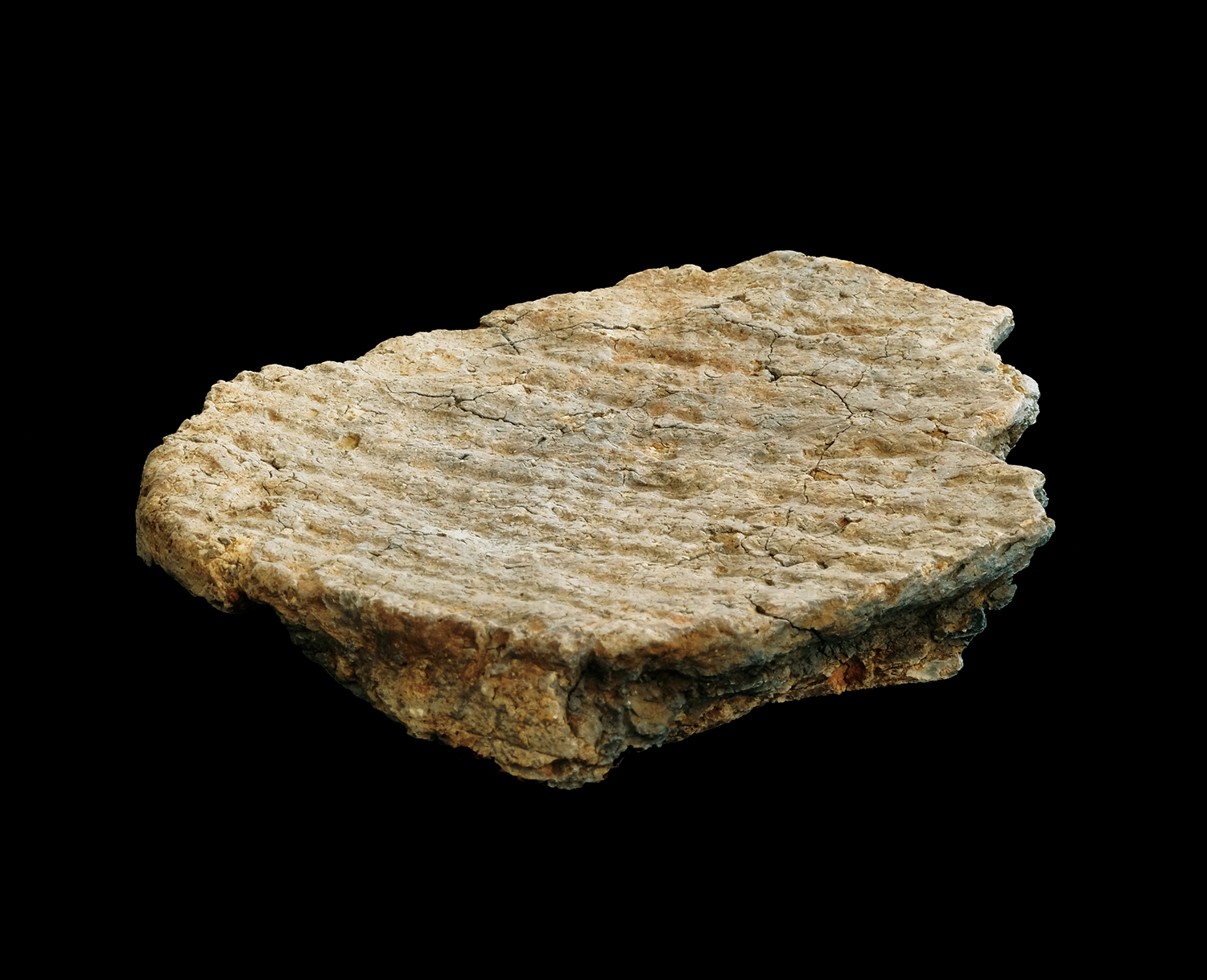
I went on through the mountains, pausing at various areas to see textiles such as Echigo chijimi crepe, and visited the Tokamachi City Museum. Thinking it must be rare for a Jomon knitted fabric to survive for thousands of years in the soil, I asked a curator if any pots were found with impressions of a mat on the bottom, and sure enough, he showed me this beauty (excavated from the Habagami Site and dated to the Middle Jomon [5,500–4,400 years ago]). I picked up the small potsherd, took a close look, and there it was: a textile pattern in clear relief.
I had visited this museum before, but it was renovated three years ago and now had galleries called “Jomon period and the area of flame-style pottery” including a display of national treasures, “Textile history,” and “Snow and the Shinano River,” inviting visitors to glimpse life in the snow country, explore the history of Tokamachi and its vicinity, and study the origins of woven hemp fabrics leading up to modern kimono gowns. In the Jomon period, people are said to have worn knitted garments such as angin—I knew that much, but on this visit, I learned that weaving was originally brought in from mainland China in the Yayoi period (2,500–300 years ago) and later evolved into more complex techniques.

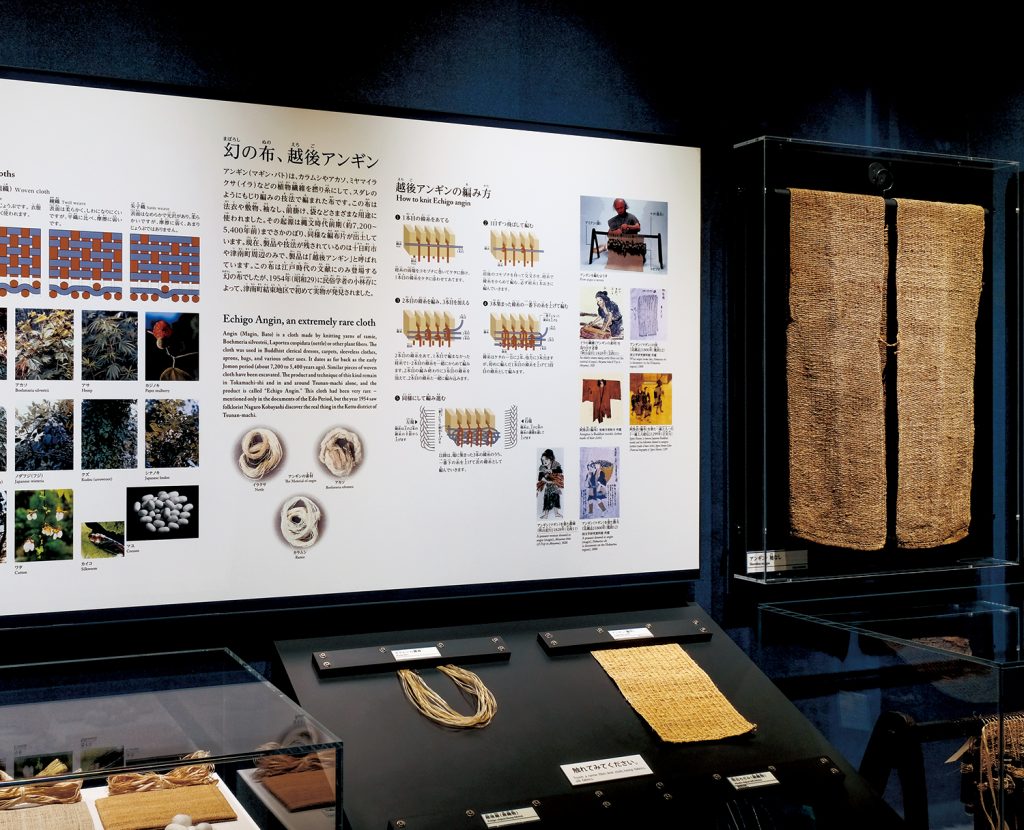
The winter snowscape created the need to craft tools from the materials collected during the warm seasons and make winter attire—I could picture this long-established lifestyle, where the locals gathered around fires and set about the diligent task of hand knitting. How dramatically times have changed. When we get dressed today, do we cast even half an eye on plants and trees and nature? I feel myself blushing from shame. In exchange for our convenient lifestyle, we in contemporary society have lost not only the techniques for processing natural materials but perhaps also the skills to converse with nature, and through it, to feel that we are in fact part of nature.
Garments knitted from natural materials have a unique warmth. Wearing those garments must be far more comfortable than we can imagine, maybe as comforting as sitting on the earth and being enveloped by its softness. The smell must bring us closer to nature too. I hope to continue my journey until I rediscover that warmth of nature.
<PAPERSKY no.68(2023)>
Jomon Fieldwork | Nao Tsuda × Lucas B.B. Interview
A conversation between ‘Jomon Fieldwork’ Photographer and writer Nao Tsuda and Papersky’s Editor-in-chief Lucas B.B. The two discuss the ways Jomon culture continues to play an important role in modern day Japan. The video was filmed at Papersky’s office in Shibuya in conjunction with Tsuda’s exhibition “Eyes of the Lake and Mother Mountain Plate” held at the Yatsugatake Museum in Nagano.
Nao Tsuda | photographer
Through his world travels he has been pointing his lens both into the ancient past and towards the future to translate the story of people and their natural world.
tsudanao.com