Ingredients (serves 2)
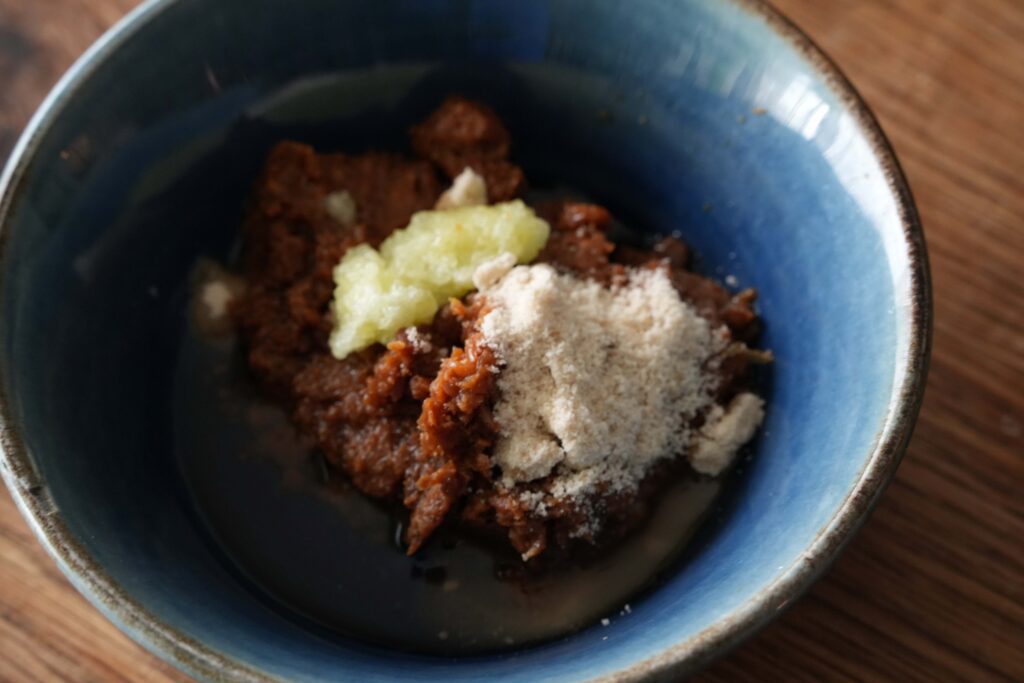
Garlic miso sauce (combine in advance)
・4 tbsp miso
・1 clove garlic, grated
・1 tbsp sugar
・1 tbsp mirin
10 cm daikon
1/2 block tofu
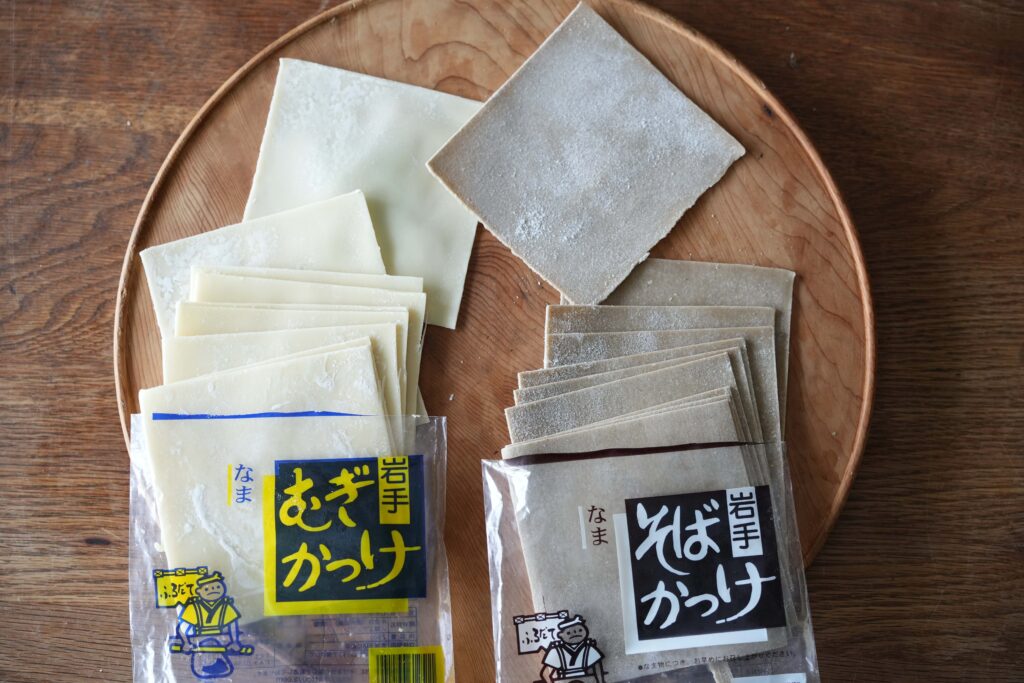
10 sheets kakke (mugi or soba)
1,500 cc water

How to make
1. Cut the kakke crosswise into four triangles. If preferred, cut further into eight triangles.
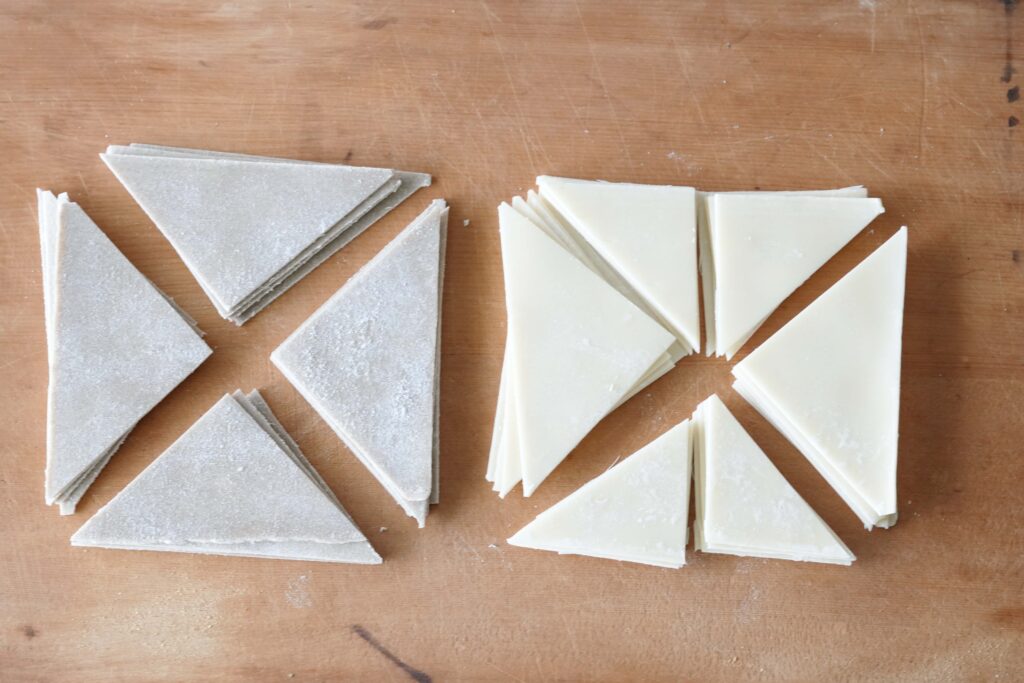
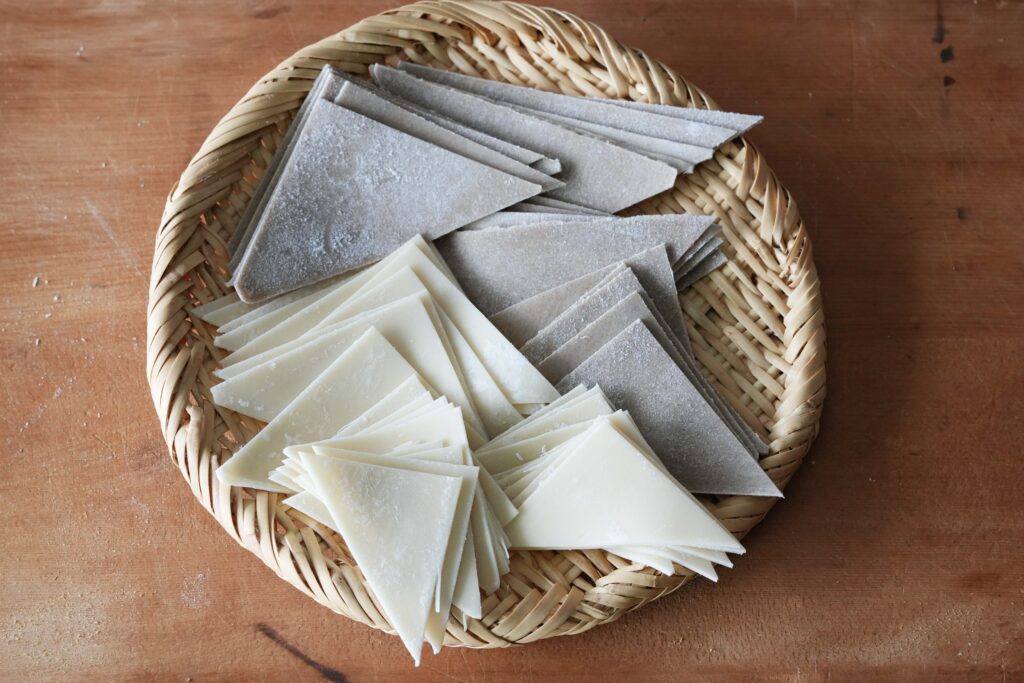
2. Cut the daikon into 1 cm thick quarter slices, and the tofu into bite size pieces. Heat the water and daikon in a pot. When half cooked, add the tofu, and then the kakke little by little, stirring occasionally. (When too many sheets are added at once, the kakke will stick to one another.)


3. When the kakke is cooked, serve with garlic miso sauce.
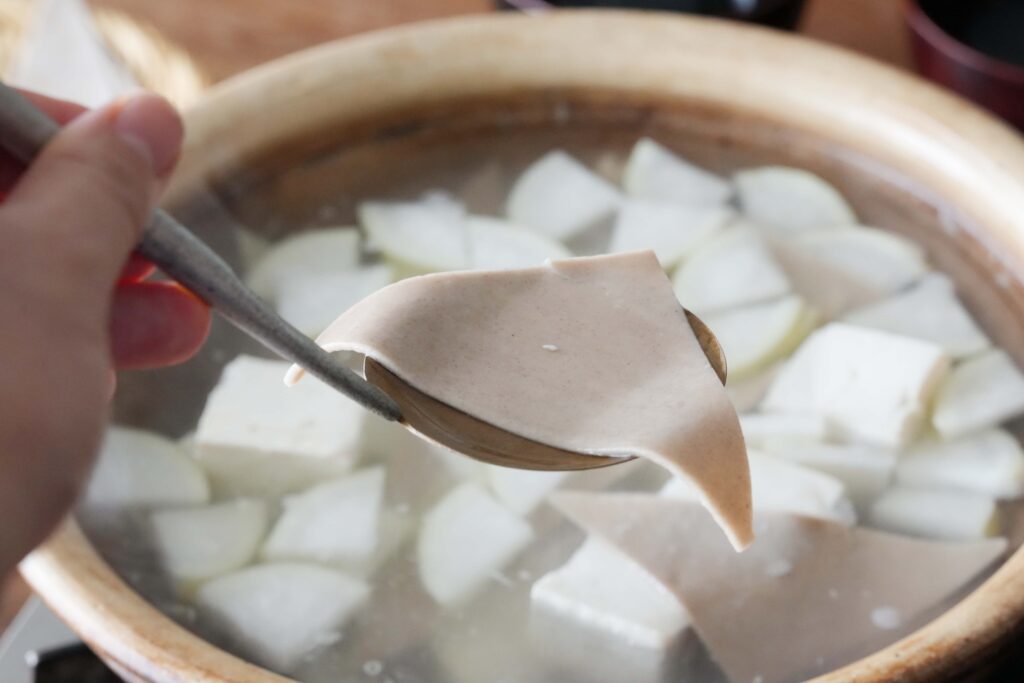

I discovered these thin square sheets of dough called kakke, made from either wheat flour (mugi) or buckwheat flour (soba), in a grocery store in Iwate Prefecture. The Ninohe and Kunohe areas of northern Iwate, close to the prefectural border with Aomori, are extremely cold in the winter. Being unsuitable for growing rice, a culture flourished of consuming grains like buckwheat and wheat. Kakke was created against this backdrop. The buckwheat or wheat flour dough is rolled thin and cut into triangles, then boiled and enjoyed with garlic miso. There are various theories about the origin of the name. One common story says kakke comes from kakera, referring to the shreds or scraps of buckwheat dough left over from making soba noodles. Another says it comes from kah-keh, the dialect for “enjoy your meal.”
The kakke can be boiled alone, or with other ingredients like tofu and daikon; it can be added to the pot little by little, or one sheet at a time as when cooking shabu-shabu at the table. Packs of square kakke are very difficult to find outside Iwate, but you can cut jiaozi dough wrappers crosswise into four triangles for a thinner substitute of mugi kakke. Soba kakke has a firm texture, and mugi kakke a smooth texture.

minokamo | Cookery expert / Photographer
Gifu Prefecture native minokamo’s culinary adventures were inspired by her fond childhood memories of cooking with her grandmother. She researches, writes about, and arranges regional dishes that capture, through their preparation and presentation, sensory enjoyments inspired by local climate, history, and lifestyles. Ryori tabi kara tadaima(Back from a Cooking Journey; Fudosha), published in September 2020, is a collection of recipes from minokamo’s visits to homes up and down Japan.