







Located in Maniwa City in north central Okayama Prefecture, GREENable HIRUZEN provides a base for disseminating the appeal of a lifestyle that coexists with nature to a wide range of people. The city, formed by the merger of nine towns and villages in 2005, has long been active in the forestry industry and has vast, deep forests.
In the northern part of Maniwa is the Hiruzen Plateau (part of the Daisen-Oki National Park,) and it is here that GREENable HIRUZEN conveys to visitors the joys of living in harmony with nature.
What kind of insights can be gleaned here? We went on a short mission to find out, beginning at GREENable HIRUZEN.
Time to experience
life in harmony with nature

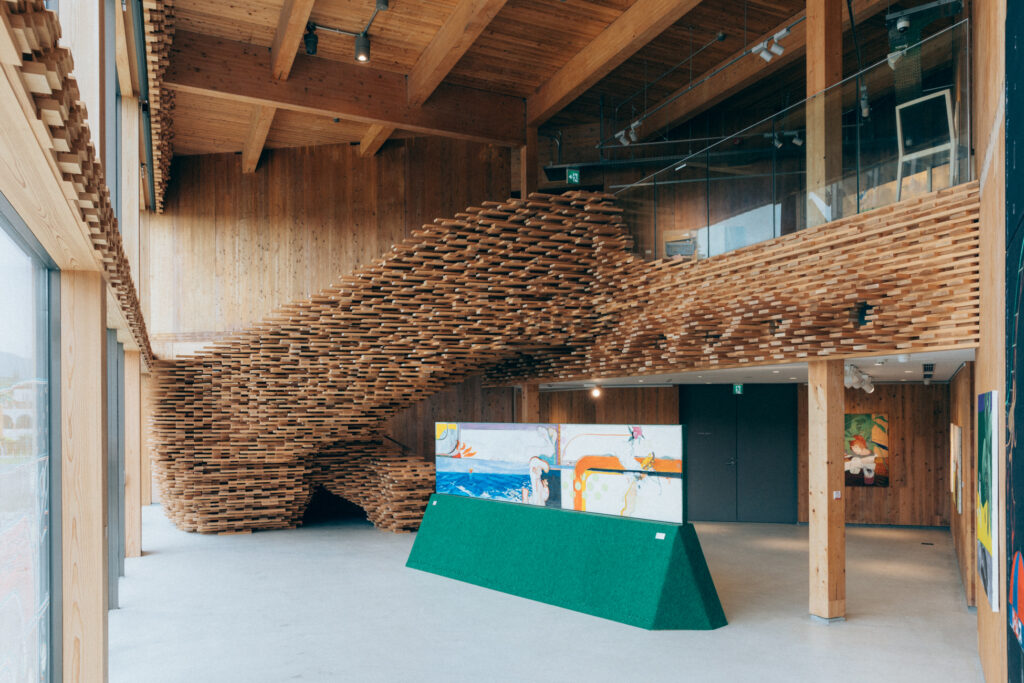
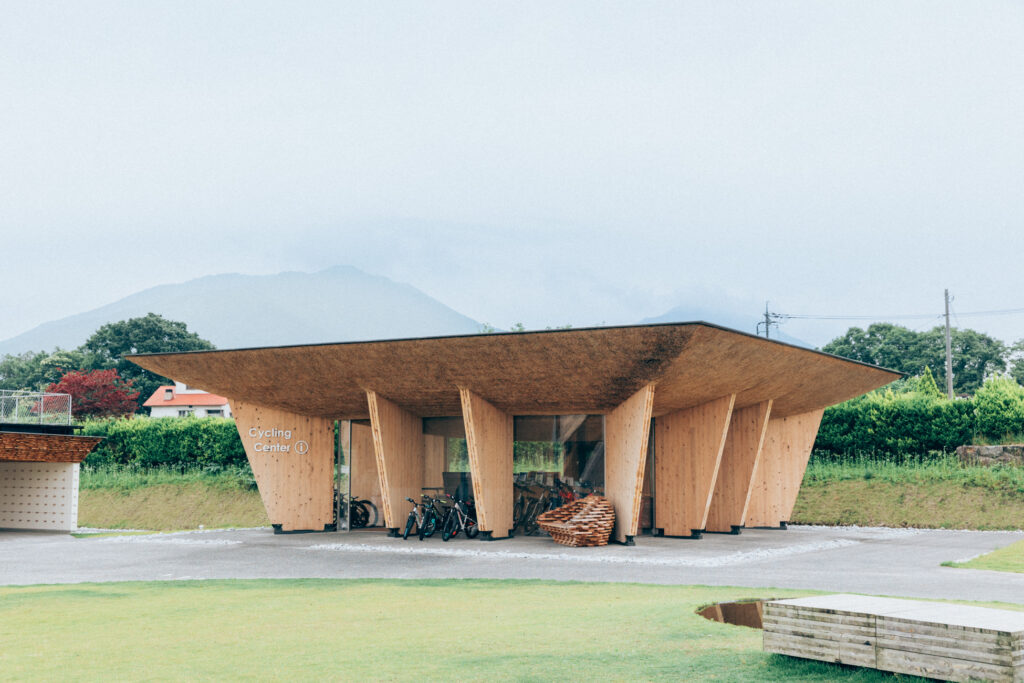
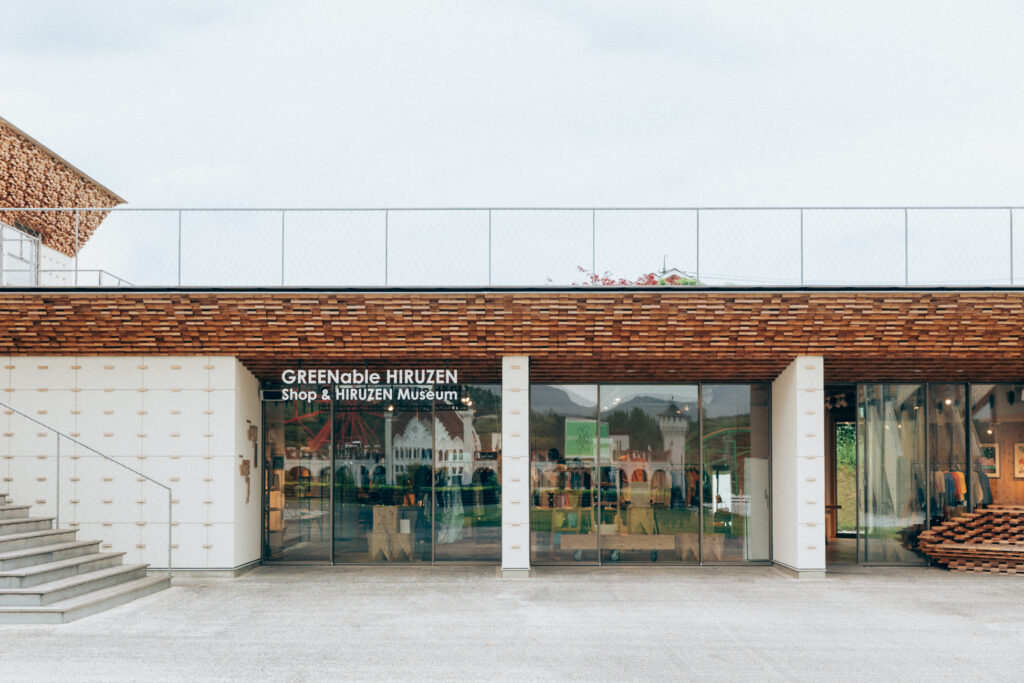
On July 15, 2021, GREENable HIRUZEN opened as a “visitor center and store” that promotes a lifestyle of living in harmony with nature while providing tourist information. The hub encompasses “Hiruzen Museum” curating art inspiring the coexistence of people and nature, and a cycling center for visitors to dive into nature.
The core of the facility is a pavilion called “Kaze no Ha,” constructed using CLT, a building material pioneered by Maniwa City. It was erected in Harumi, Tokyo, for a limited time to coincide with the Tokyo Olympics, and was designed by Kengo Kuma with the idea of “expanding the possibilities of CLT.”
An actual visit revealed that this facility has a strong presence, yet blended in with the surrounding landscape. There are no tall buildings around, and visitors can enjoy the sense of openness and comfort unique to the highlands.
Although not easy to reach (about 1 hour and 30 minutes from Okayama Station and about 1 hour and 15 minutes from Okayama Airport) upon arrival it was soon evident why so many people have flocked there since it first opened.



Nature in harmony with human life
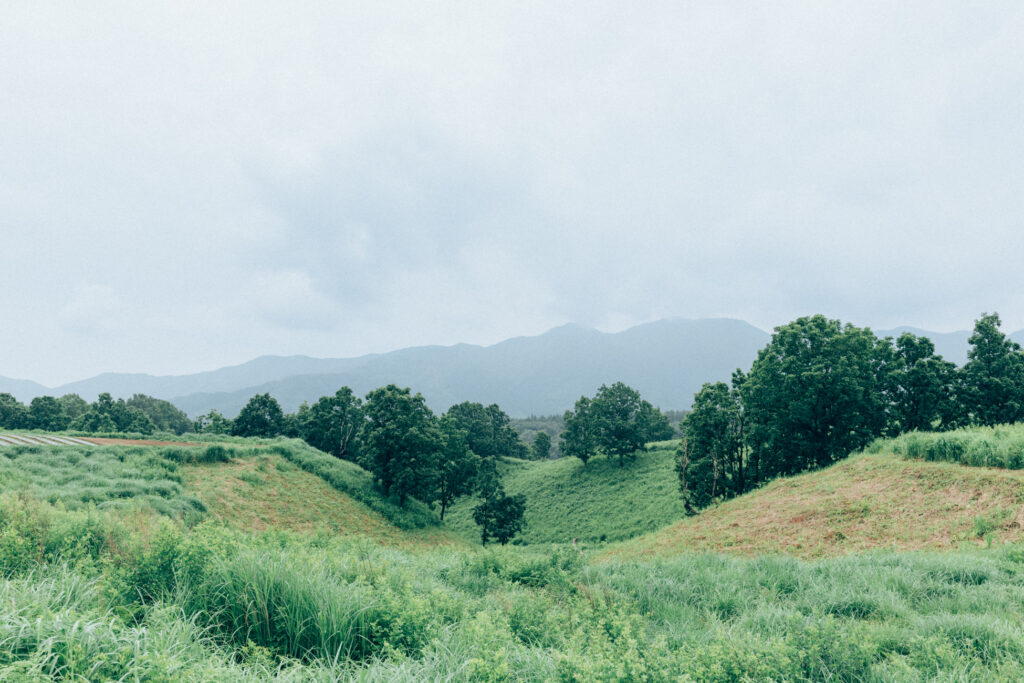
After renting an electrically assisted bicycle at the cycling center, we headed to Hatogahara. This is where one of the symbols of Hiruzen, the culture of the burning of the mountains, is still practiced.
In the past, thatch served to support people’s lives in this area, used for roofing houses, improving the soil of fields, and feeding cattle and horses. In parallel, a culture of mountain burning has developed in order to continue harvesting thatch while maintaining a rich ecosystem.
Mountain burning can deter plants and insects that interfere with the growth of thatch, and ash produced by burning is one of the richest sources of nutrients for the soil. This means that the locals can continue to harvest thatch without squeezing the natural resources.
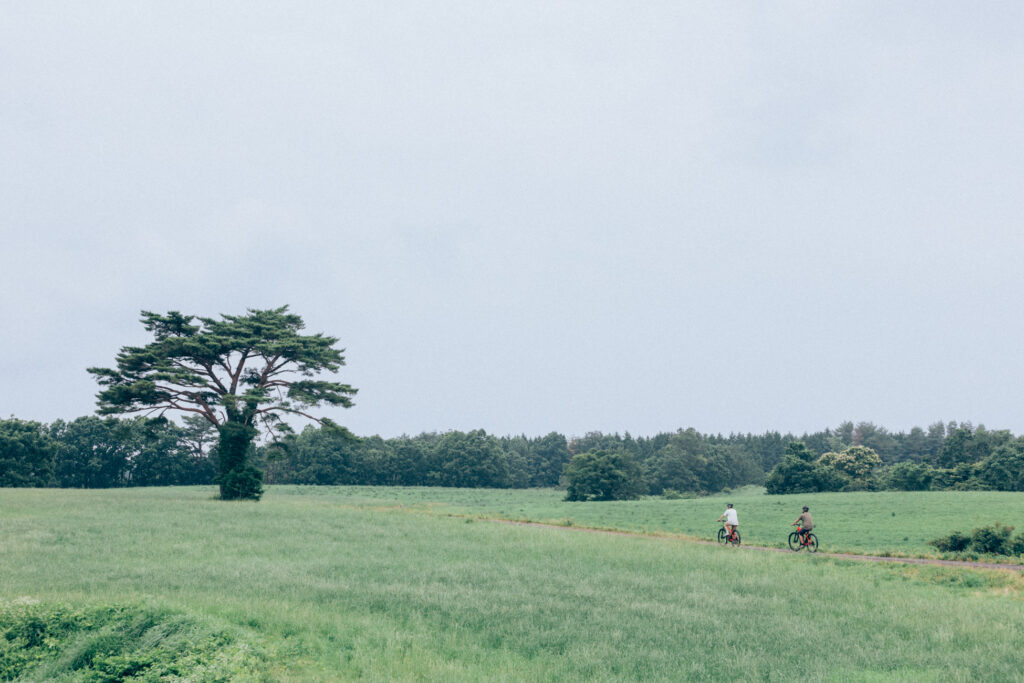
The native culture, steeped in the wisdom of ancestors, is now on the verge of disappearing as people’s lifestyles have changed throughout the period of rapid economic growth. Nevertheless, the culture has been perpetuated by a few individuals, and even today, the Yamayaki (burning of mountains) is still held every April in a limited number of areas.
The land where Yamayaki mountain burning was conducted exudes a sacred atmosphere akin to a shrine, somewhere between the stirring creatures that a virgin forest releases and the clean and tidy environment created by human hands.

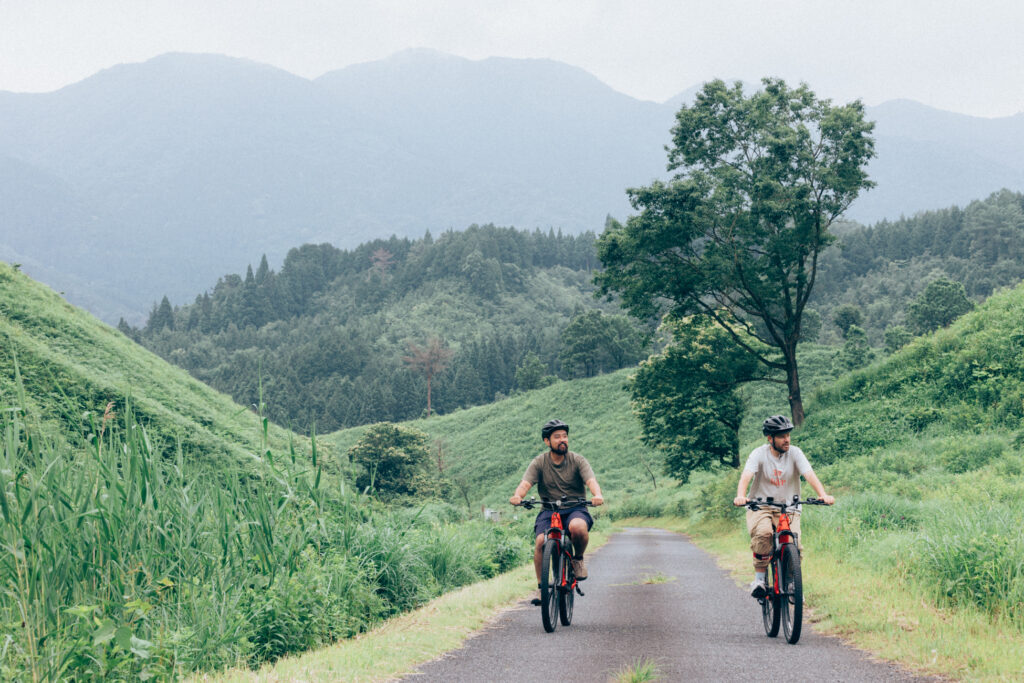
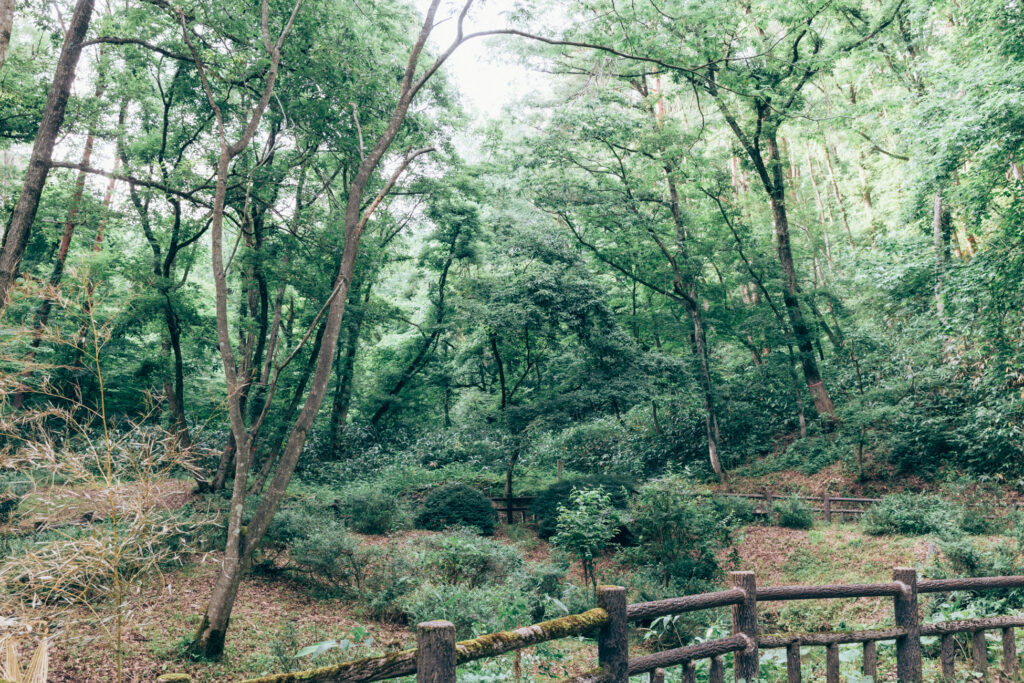
After Hatogahara, a 30-km-long cycling path took us to the cold springs of Shiogama. This is one of the headwaters of the Asahikawa River, a major river in Okayama Prefecture that feeds into the Seto Inland Sea.
With 300 liters of water flowing every second, it has been selected by the Ministry of the Environment as one of the “100 freshest waters” in Japan. The water temperature stays around 11°C even in summer, keeping the area around it nice and cool. There is a water hole nearby, from which you can drink directly.
It is the perfect place to relax, and the sound of running water took our minds off fatigue.



A town renewed by noren
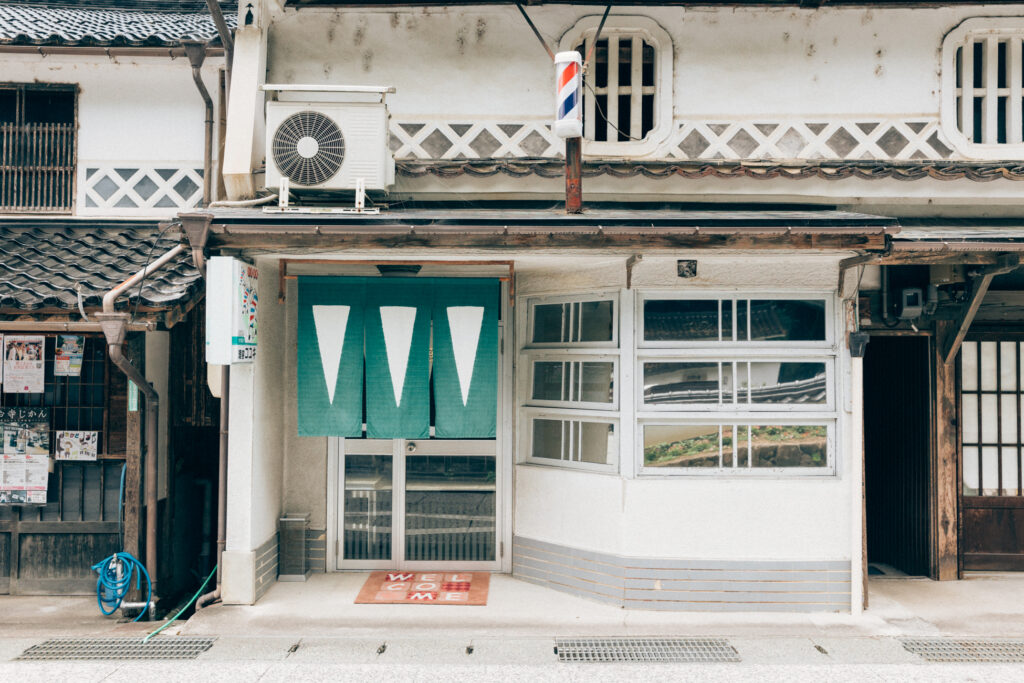
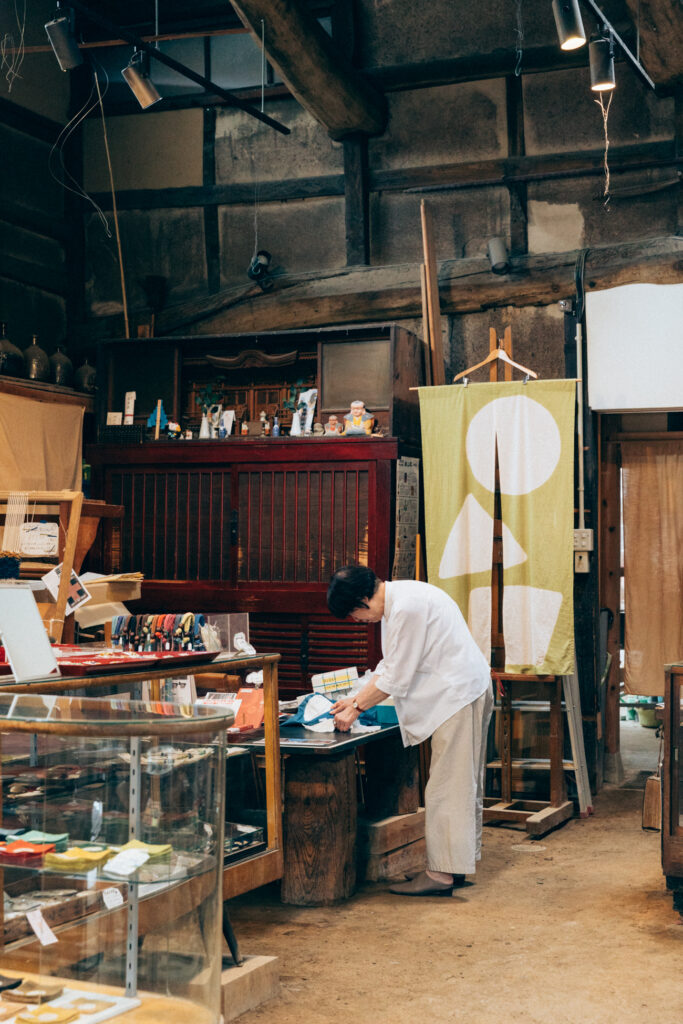
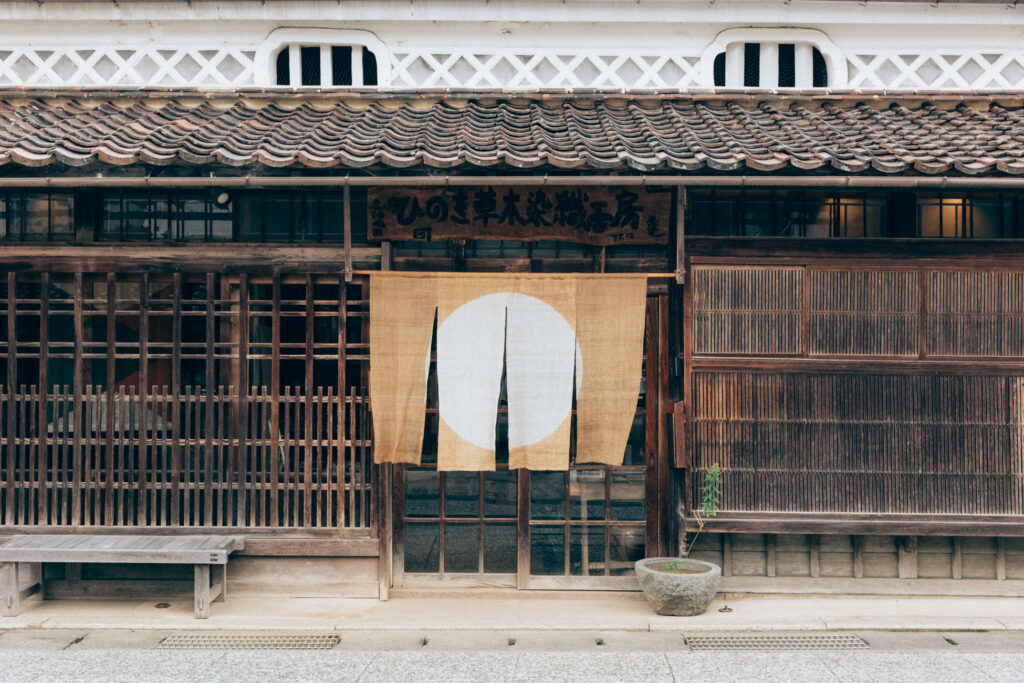
After some fun cycling in the Hiruzen Kogen Plateau, we headed to the Katsuyama Machinami Preservation District, located about 45 minutes south by car. Here, we first visited Yoko Kano, a dyeing and weaving artist.
The Katsuyama area is known as the uppermost landing place of the Takase-bune water transportation system linking the mountains and coastal areas of Okayama Prefecture, via the Asahikawa River, which flows from the Hiruzen Plateau. It had a prosperous past both as a castle town of the Mimasaka Katsuyama clan and as an inn town along the Izumo Highway connecting Himeji City, Hyogo Prefecture and Matsue City, Shimane Prefecture, although it has become less vibrant in recent years.
In response, Kano-san organized the “Association to Support the Katsuyama Machinami Preservation Project” in 1996, and has since been producing originally designed curtains (noren) for stores in the shopping district.
I started making noren when a local plumber asked me to do it for them. At the time, I thought that would be the end of it, but started to work with others in the area after the plumber encouraged me to do the same for other local establishments. The folks in the downtown shopping district were very supportive and rolled up their sleeves to join me, which got the ball rolling. Thanks to that, the program has now become an official Maniwa City initiative.
While the people around here aren’t the sort to blow their own trumpet about things, when it comes to noren they aren’t afraid to do so. In fact, they are always heaping praise on each other’s creations, which seems to puzzle the tourists who wonder why the local shopkeepers seem more preoccupied with noren than actually plying their wares!”


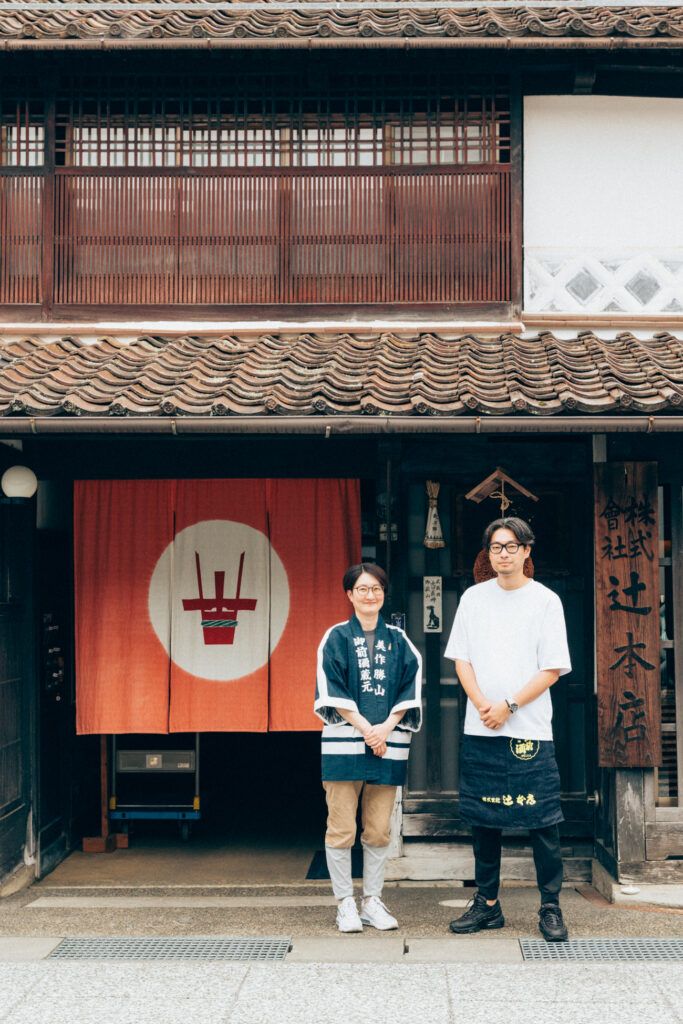
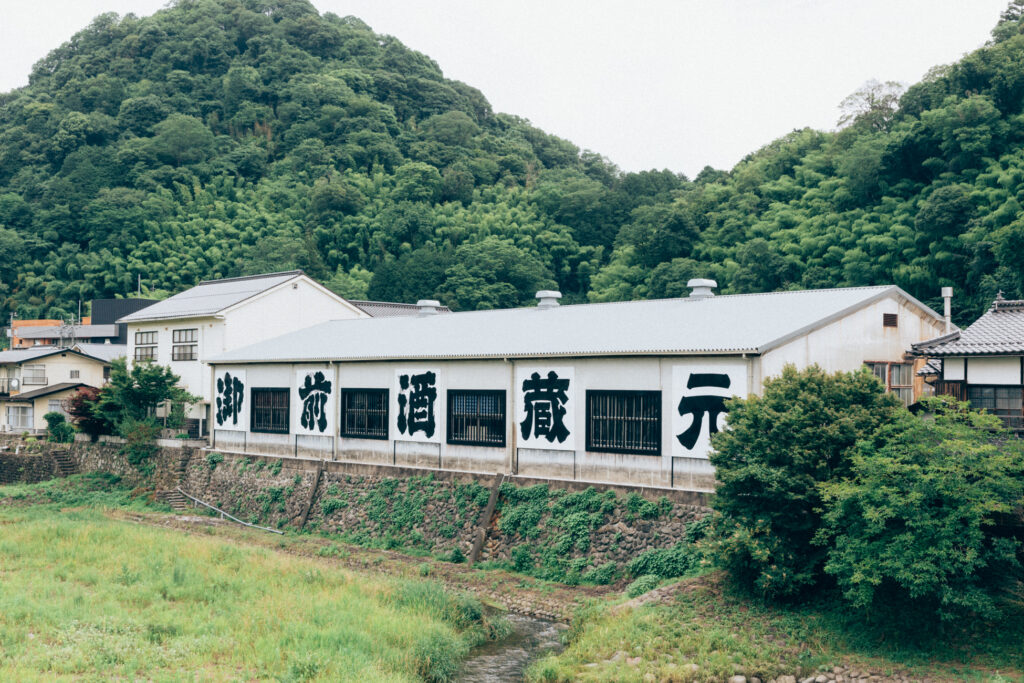
A five-minute walk from Kano’s atelier is Tsuji Honten, a sake brewery that produces a sake called “Gozenshu.” Maiko Tsuji and Soichiro Tsuji, the siblings and heirs of this brewery, once left Katsuyama. However, upon witnessing how the town was once again revitalized by noren, they devoted themselves to making sake in the hope that Gozenshu would similarly appeal to many people.
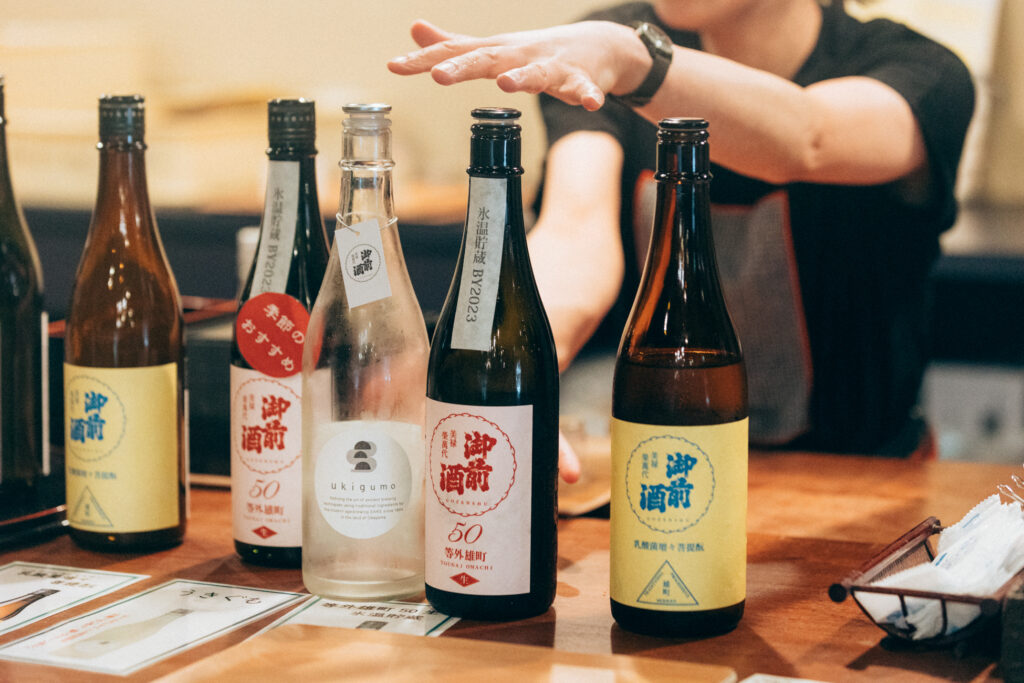
As toji (master brewer), Maiko is constantly experimenting with ways to make Japanese sake that everyone can enjoy, that goes well with any meal, and that is refreshing and drinkable. She is also working with a sake brewery in Maniwa City to produce sake by interchanging the water used for brewing among both breweries.
Soichiro is always thinking about the direction he should take as a sake brewery, referencing classical liquor branding in Europe and elsewhere. Now, they have set a goal to switch all sake rice to “Omachi,” a native variety of Okayama Prefecture, and to unify the sake brewing process with their own “Bodai-moto” method, which uses lactic acid bacteria from the brewery, to spread the appeal of Gozenshu far and wide.
Kano-san’s zeal will help the shopping district thrive, and the next generation, including Tsuji-san and her siblings, will spread the charms of Katsuyama. No doubt, the culture here will be passed on in a different form from that of Hiruzen.
This is probably what makes Gozenshu so appealing.
Enjoy a short trip based around
GREENable HIRUZEN
From GREENable HIRUZEN, visitors can travel to Hiruzen Kogen and Katsuyama to discover different vibes and cultures. The fact that they are so different, despite being only a short distance apart, is perhaps due to geographical conditions. The fact that it was by no means accessible led to the formation of a unique culture.
This allowed us to experience, even on a short getaway, how nature and people live in harmony at Hiruzen Kogen, and how life in Katsuyama could be changed by a simple idea. Perhaps it is this kind of lifestyle that prompted GREENable HIRUZEN to convey to society the message that “if each one of us takes action, we can restore the abundance of nature.”
It is an exceptional and unique experience, so by all means, make the time to visit GREENable HIRUZEN and use it as a starting point to visit a myriad of other places.
Travel Guide
GREENable HIRUZEN
1205-220 Hiruzen Kamifukuda, Maniwa City, Okayama
0867-45-0750
Studio Hinoki
193 Katsuyama, Maniwa City, Okayama
0867-44-2013
Gozenshu sake brewery
116 Katsuyama, Maniwa City, Okayama
0867-44-3155
Momo-tane
185 Tane, Maniwa City, Okayama
080-1640-2552

Qkamura Hiruzen Kogen
1205-281 Hiruzen Kamifukuda, Maniwa City, Okayama Prefecture
0867-66-2501
Upcoming Pop-up Event

From October 10 (Thu.) to 16 (Wed.), 2024, pop-up event “GREENable HIRUZEN – the Starting Point to Connect with Nature -” will be held at SCRAMBLE books& on the 9th floor of Shibuya Scramble Square, Tokyo. Traditional fermented foods made from local ingredients and unique curtains made by dye and weave artists will be on sale, and workshops by straw craft artists will be held .A lifestyle where people and goods circulate sustainably will be showcased from Maniwa, Okayama, Japan.
Title:GREENable HIRUZEN – A starting point for connecting with nature
Date/Time:Thursday, October 10 – Wednesday, October 16, 10:00 – 21:00
Venue:Shibuya Scramble Square 9th floor SCRAMBLE books&.
URL:https://greenable-hiruzen.co.jp/data/202/news_detail/