







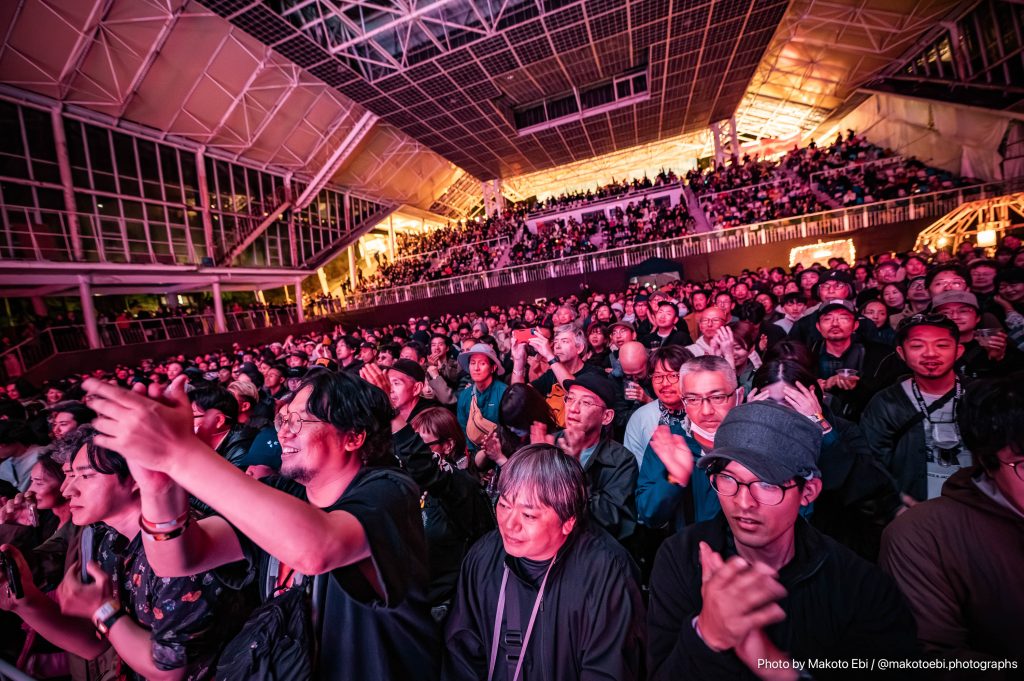
The venue, Tsumagoi Resort – Sai no Sato-, is about a 10-minute drive from Kakegawa Station in Shizuoka Prefecture. It is a place rich with musical history, from the debut of major Showa-era pop stars to an early Japan performance by Queen before they became world famous. The hall itself carries the mood of another era, but during Festival de FRUE, it becomes something entirely different.
Musicians come from Japan and abroad. This means the lineup is not limited to well-known names in Japan. Instead, the organisers invite artists they personally want to see and hear live at that moment. Another major draw is the one-off sessions between musicians that can’t be experienced anywhere else. Two programs run side by side over two days: performances on the covered stage inside The Hall, and a DJ-centred outdoor program at the Grass stage set up on the resort’s lawn.

At The Hall, people can enjoy the show right next to the stage, settle into a seat a little further back in full listening mode, chat and laugh with friends, enjoy a wide range of drinks, or take their time choosing from the festival’s many cuisine options.
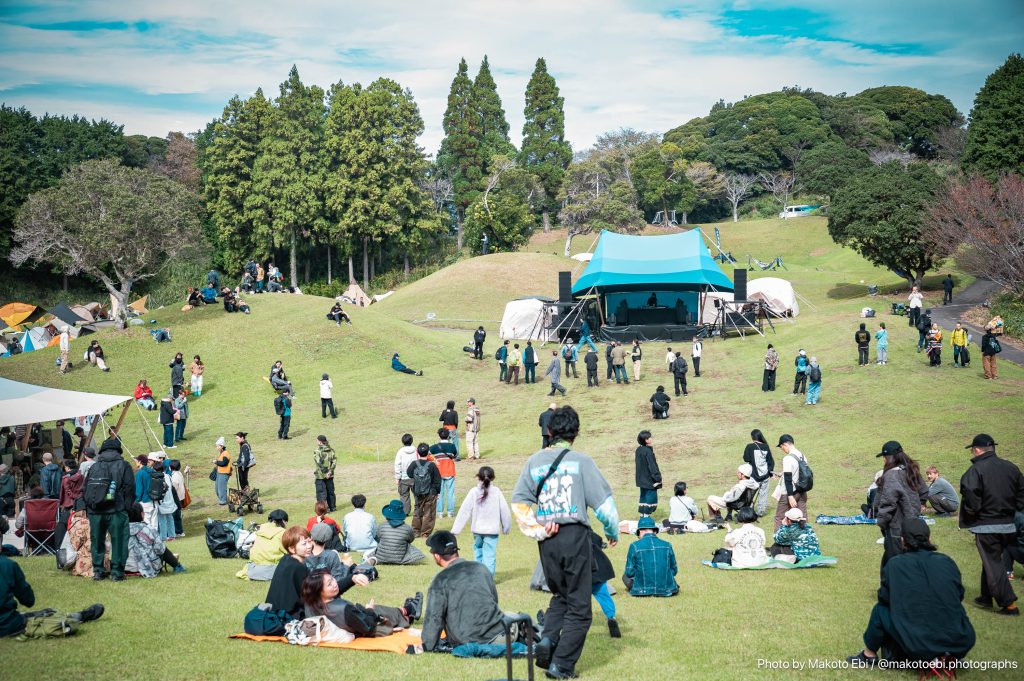
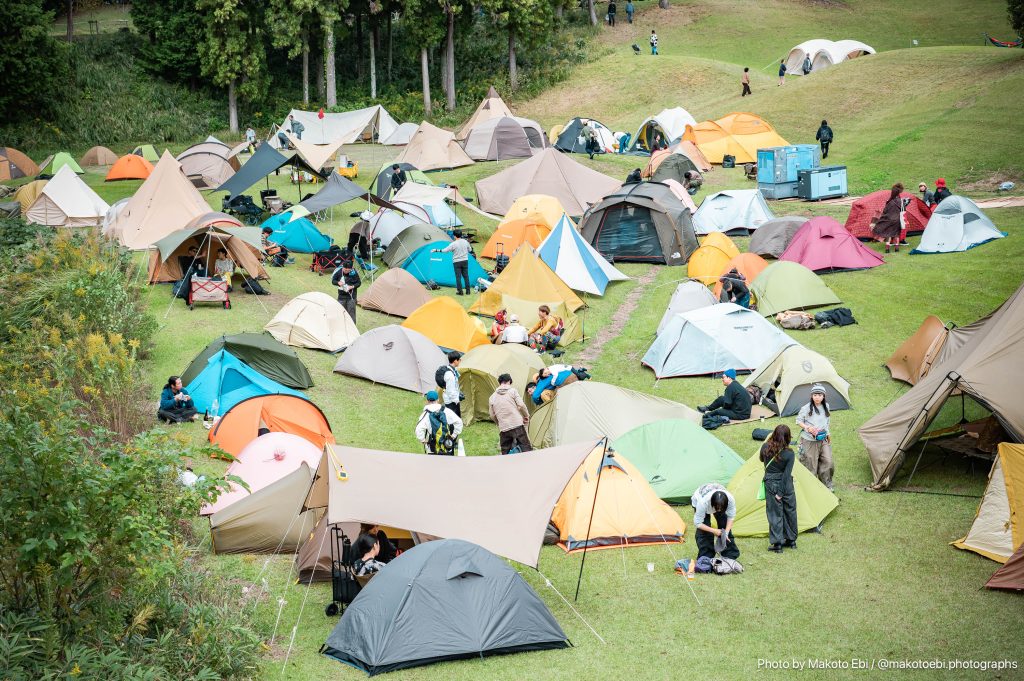
Grass has a freer atmosphere, with some people swaying to the music and others simply sprawled out on the lawn. There is no designated family area, but the venue has plenty of places to relax, and many visitors come with children. Whether alone or in groups, everyone finds their own way to enjoy the festivities.
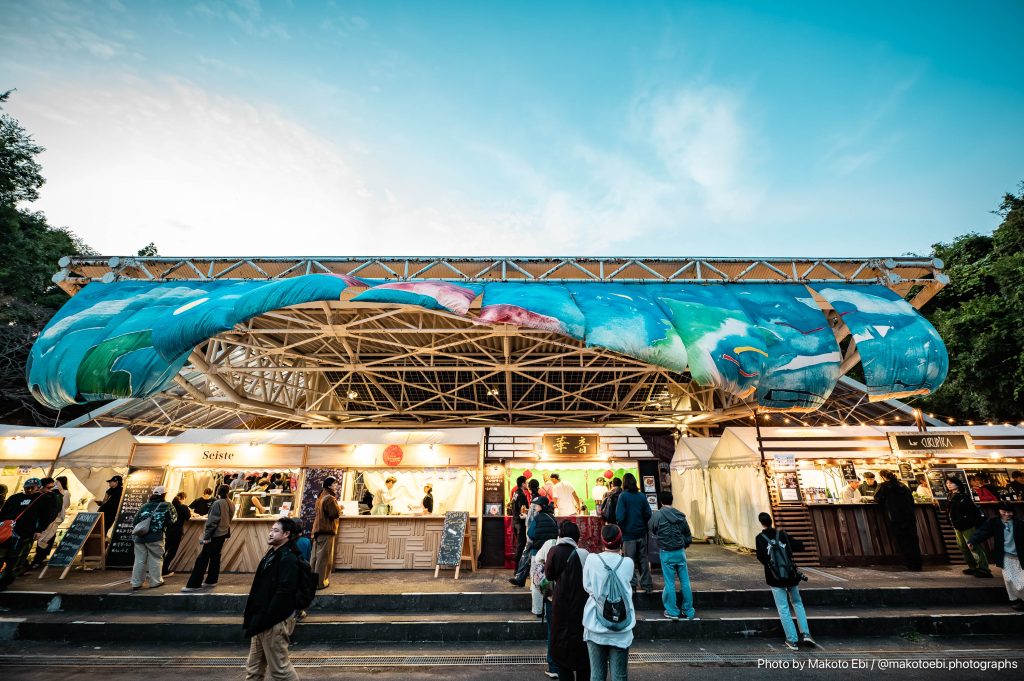
The food stalls are nothing like what you would usually find at music festivals or even outdoor food events. Alongside vendors from Shizuoka and Tokyo, the 2025 edition featured participants from as far north as Aomori and as far south as Nagasaki.
Simples, which has joined the festival every year since the first run in 2016, has come to be the signature restaurant, representing the festival’s food culture. An innovative restaurant based in Mariko, Shizuoka, Simples draws long lines at the venue for plates prepared by Chef Inoue using seafood from Suruga Bay, along with generous portions of locally procured meat and vegetables. Fresh, fine-dining level fish is also sold in limited quantities at market price.
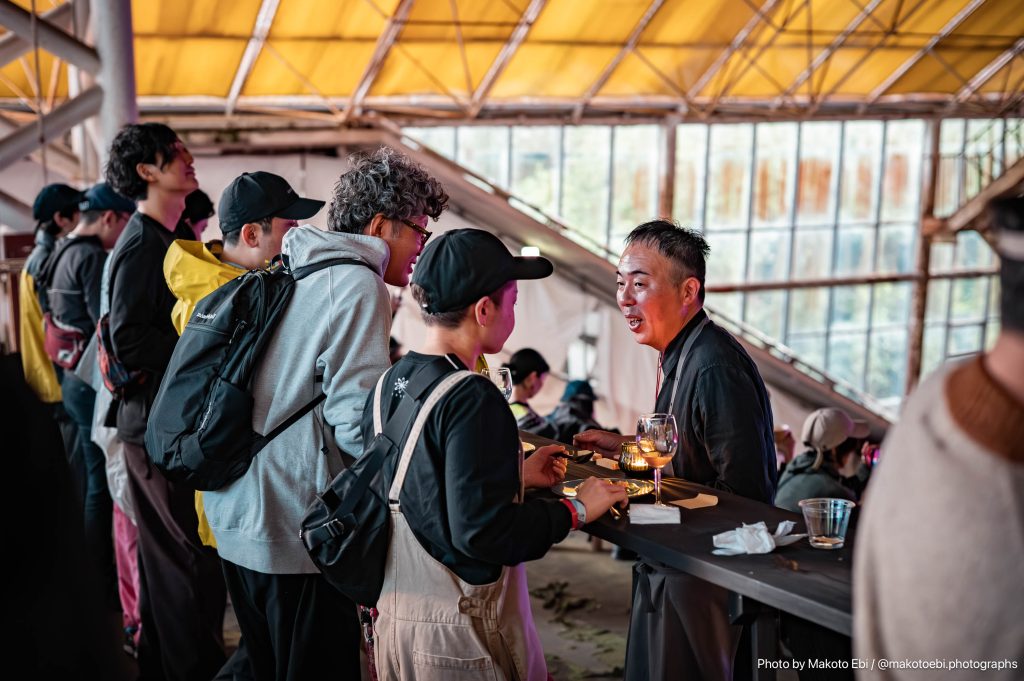
One of the defining features of the Simples menu is that it changes each year in response to the program. When the Ugandan percussion group Nakibembe performed, Simples served a plate featuring posho, an everyday Ugandan staple made by kneading corn flour with hot water, with a texture somewhat like a “mochi-er” mashed potato. It was served with goat meat from Yagy’s Farm in Fujieda and a stew.
Making its first appearance this year was L’OASI, an Italian restaurant from Mishima. For years, the restaurant was unable to participate, insisting that they couldn’t without a wood-fired pizza oven. In 2025, it finally happened. A marble oven was brought in from Kobe and installed with a forklift, allowing visitors to enjoy freshly baked pizza on the day of the event.
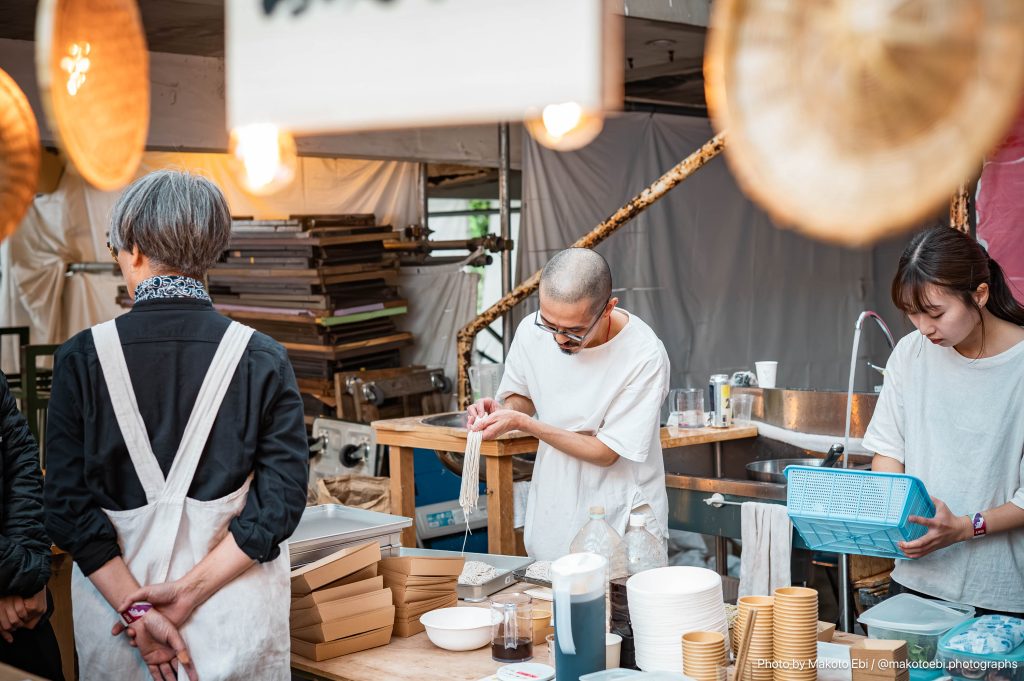
Meguri-an, a soba restaurant from Fujieda, makes its noodles on-site from flour ground with a stone mill brought to the festival each year. When it first participated in 2022, the restaurant appeared for just one day.
The following year, it introduced the stone mill, gradually building its presence until it became one of the key names in FRUE’s food lineup. Meguri-an’s regular spot is close to the stage among the food booths, and owner Kubota says he enjoys the music while making soba. Last year, he also took on the challenge of creating vegan soba, using kombu and shiitake for the broth instead of bonito.
FRUE takes the ambitions of its vendors seriously. Even ideas that seem impossible at first can take shape through years of dialogue. This alone is a testament to the skill, commitment, and intensity of FRUE’s small, highly focused team.
One new challenge in 2025 was the installation of high tables facing the stage, where they served a short course created through collaborations between vendors. The project, named shokutone (a play on “food and sound”), was an event series held at Simples and other booths that fuses meals and music. Led by Chef Inoue, this long-nurtured idea between Simples and the festival team put the icing on the cake of FRUE 2025.
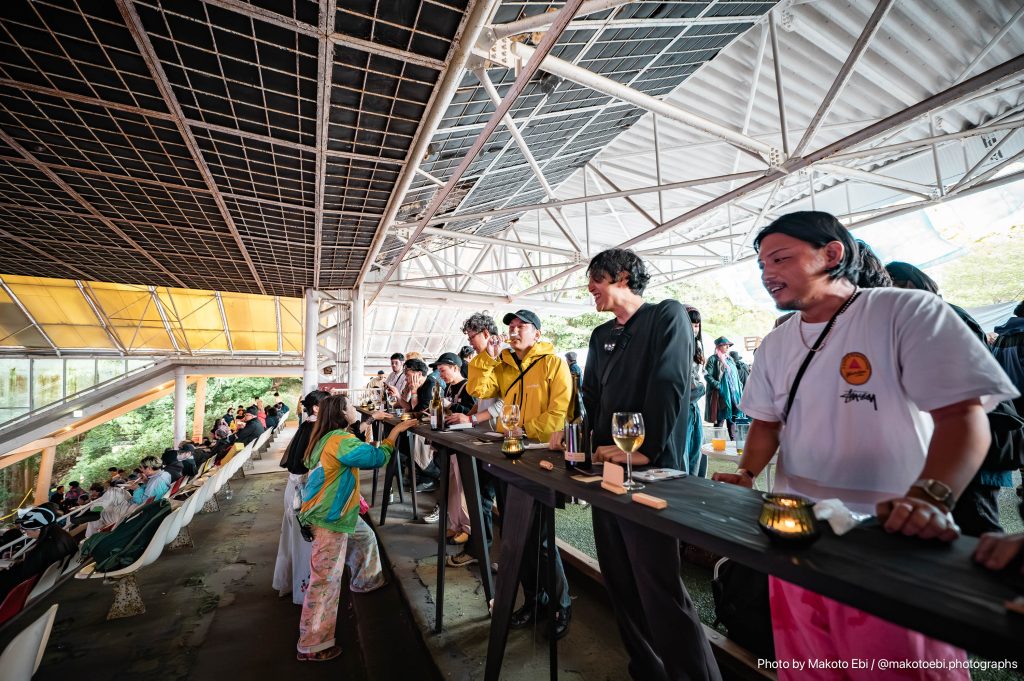
On the first day, it was held between stage performances under the title YOIN, meaning “afterglow.” On the second day, it took place during a performance under the title TOMONI, meaning “together.” Each day featured three sessions, limited to 10 seats each.
Tickets went on sale the day before the festival and sold out within hours. Some dishes were prepared especially for this food-and-sound experience, making those who were able to join this two-day-only restaurant exceptionally lucky.
In 2025, the festival took a slightly different direction from previous years. After all the regular stages had ended, Nakibembe gave a special performance open only to holders of “Category 0” premium tickets. For this performance, heavy machinery was used to dig a hole in the festival grounds, roughly large enough for a person to lie down in.
An authentic xylophone was then installed above the hole according to tradition, and as the five members of Nakibembe performed, the crowd gathered around them on the grassy hill, giving form to a powerful and unforgettable experience. Chefs collaborated and served a free soup for the special performance as well. The food at Festival de FRUE is not there to fill the stomach. It is offered as part of the experience. After two dense days of music and food, the festival came to an end with everyone dancing to sounds resonating through the earth, literally.

Festival de FRUE will celebrate its 10th anniversary in 2026. Special plans are surely in the works, and it would be wise to secure a ticket even before the details are announced. Vivid, unexpected encounters curated by chords and cuisines are guaranteed.

Festival de FRUE 2026 ~10th Anniversary~
DATE:Saturday, October 31 and Sunday, November 1
VENUE: Tsumagoi Resort – Sai no Sato –
LINEUP:The Master Musicians of Joujouka
… and more