


“Fly fishing, and the natural environments in which it takes place, are both profoundly deep. No matter how much passion one brings, they can never be fully exhausted. In fact, the deeper the passion becomes, the more one begins to realise just how vast and endless that depth truly is.”
To be honest, I was hesitant to write a story about fly fishing. As a child growing up by the coast, fishing was never far away, but after that first catch, I thought, never again! Still, I sensed there was something different about fly fishing. It captivated many of my closest friends and inspired Norman Maclean’s wonderful A River Runs Through It.
So when Lucas B.B. asked me to join his Katsuo Trail Fishdom trip, I could’ve easily declined, saying, “Fishing’s not my thing.” Instead, I said yes. This is my journey to Shizuoka’s Oi River with Foxfire’s Yohei Matsushita and an opportunity to look below the surface of fly fishing.

I’d never worn waders before, or any other fishing gear. After struggling into my camouflage outfit of greyish, bluish, greenish tones, I was almost indistinguishable from the river rocks we were now clambering over.
Like walking grey pebbles, we slowly made our way upstream, crisscrossing the tributary, lines casting here and there. With every step, the stresses of the outside world disappeared a little further behind us.
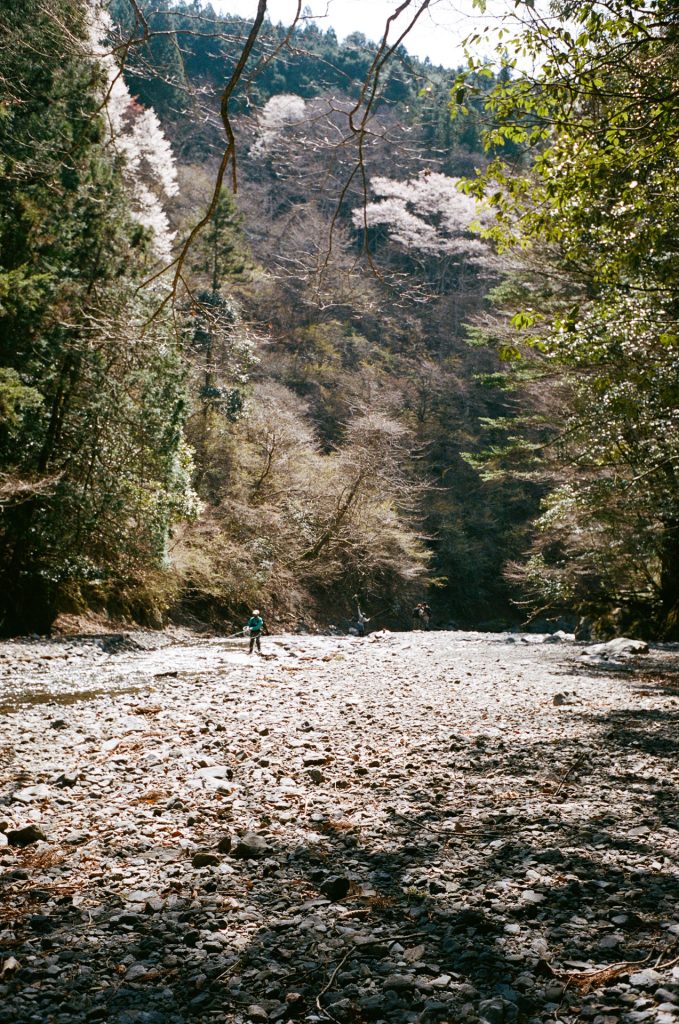
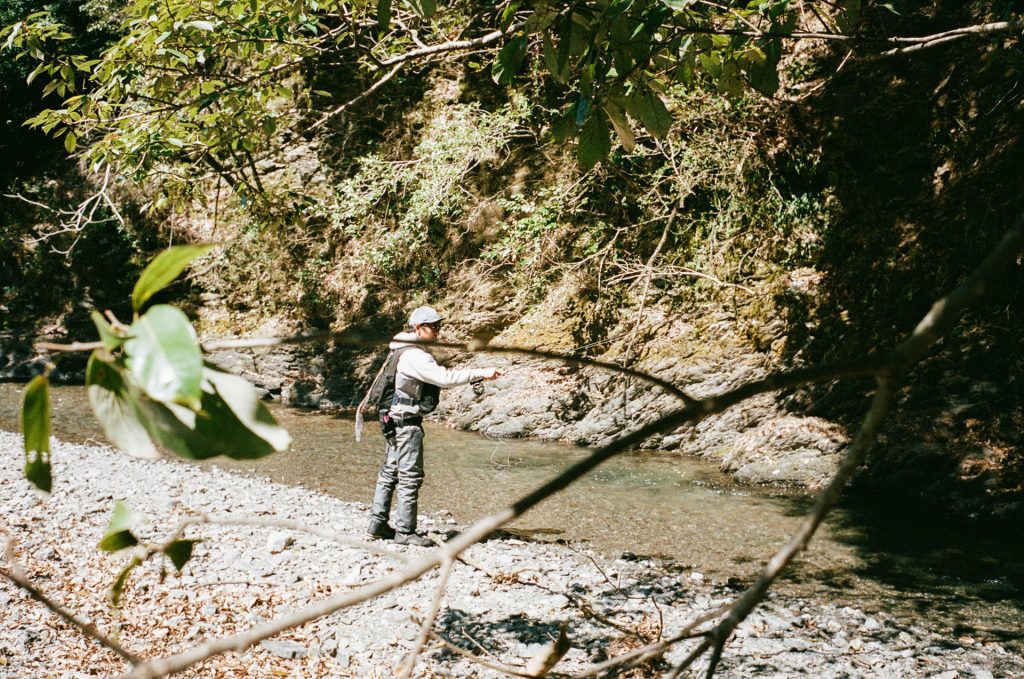
Like many young boys, Yohei started fishing in elementary school. Even then he was fascinated by fly fishing, but couldn’t afford the equipment so he mostly fished with bait, telling himself “when I grew up, I would definitely take up fly fishing.”
At the age of 30 he found himself working at Yakushizawa Hut, located along the headwaters of the Kurobe River in the Northern Japanese Alps. Finally he was fly fishing every day, honing his skills and discovering who he himself was. Soon enough, his passion for fishing became his profession, leading him to A&F and eventually TIMECO, where he now is in charge of marketing for both fly fishing and the Foxfire brand.
“I practice fly casting every day during my lunch break on the rooftop of my office. It helps me relieve the stress of work and that of not being able to fish during the week, while also steadily improving my skills.”
I was fishing for photographs with my camera, observing the different approaches to the same act and the subtle qualities in each person’s style. Not so much about skill, skill can be learned through daily practice, but intent.
Yohei didn’t seem to be trying to catch fish at all. His focus was on casting. Reading the water and with what looked like effortless accuracy, placing the fly exactly where he wanted it to land in quiet satisfaction. In this manner he caught a series of small. beautiful amago trout, each released after the obligatory photographs.
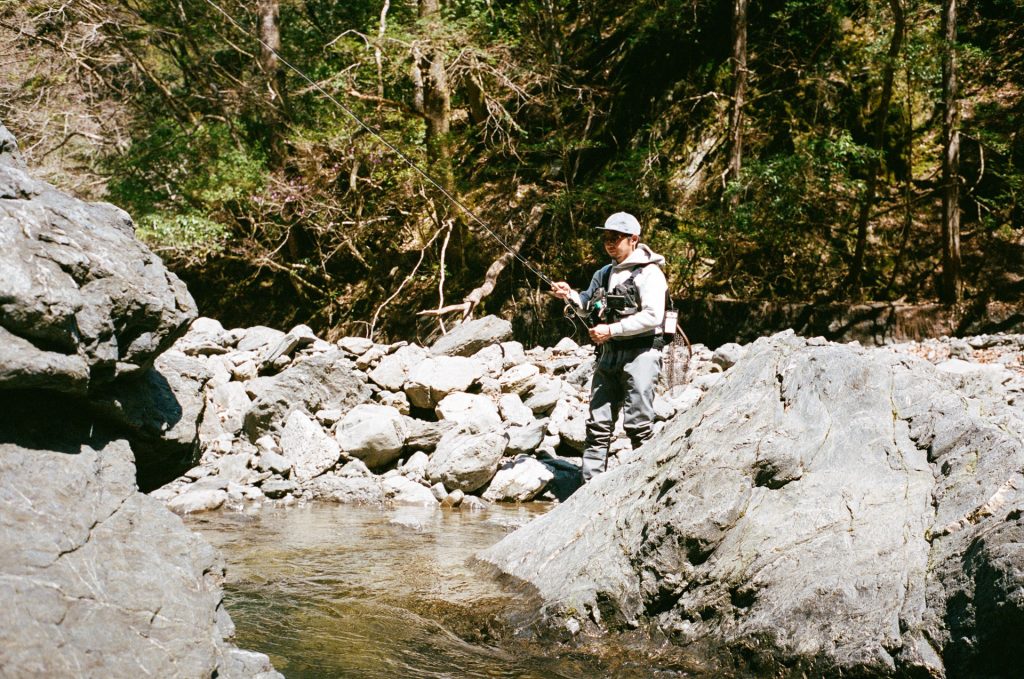

By now all signs of the world outside were far behind us, with only the sounds of water flowing over feet and rocks, birdsong in the trees above, and fly lines casting through the air.
Yohei and I quietly talked about the ways being in nature inspires us. “Nature has had a profound impact on the way I live and work, it’s a positive presence in my life in two distinct ways: Home Nature / Away Nature.”
I’d never heard anyone talk about nature quite like this. By Home and Away, he means something both geographical and emotional.
Home Nature refers to the mountains and rivers familiar to him since childhood. They calm and ground him, dissolving the stress that accumulates through daily life and work.
Away Nature, on the other hand, means unfamiliar landscapes and distant regions, perhaps even tropical places. New environments bring new challenges, stimulating his senses and sharpening his mind. Here, there is adventure.
Home helps him find his drift again, noticing changes in his physical condition, testing new gear and techniques, while strengthening the foundations that support both a stable life and consistent work.
Away allows him to follow new currents, discovering what he might otherwise have missed, broadening his perspective and inspiring new goals in life and work.
Creativity emerges from the balance between these two types of nature; the grounding familiarity of home and the stimulating challenge of away.

We had reached the furthest point upstream. Now we would allow the current to take us back downstream, giving me an opportunity to ask a few difficult questions that had been playing on my mind. I was curious what insight Yohei might have into the health of Japan’s rivers. His answer surprised me.
“I feel that the natural environment is clearly changing for the worse. This is true for both mountains and rivers, but I especially sense that rivers are deteriorating at a faster pace.”
In Yohei’s experience, rivers of the past had their own distinct character, each supporting an equally distinct ecosystem. It was this diversity that created the richness in nature we all seek.
Now, wherever he goes, many rivers seem to share the same lifeless appearance — flat, uniform channels filled with sediment. Such environments can no longer sustain the diversity and richness they once did.
Even stocked fish can lack the individuality of wild fish shaped by a particular river and its environment.
“If every river and every fish feels the same, the very appeal of traveling to different places begins to fade.“
Truly wild rivers are becoming harder to find, yet our desire to seek them out remains strong. Their increasing scarcity only places them in greater danger as the more we discover these places, the more we want to share them; yet in doing so, we risk changing the very thing that drew us there in the first place.
“I believe we are moving beyond a time when we could simply enjoy nature without much thought. Now, we are entering an era where each individual must consciously balance recreation with conservation.”
What can we do about our rivers?
We can start by doing exactly this. Sharing their stories and involving as many people as possible.
Yohei told me about a new project he is leading called “River of Dreams,” which aspires to restore rivers and pursue their unique ideal state. There is still a long way to go, he explains, but by connecting people through their shared love of fishing and rivers, they can begin moving forward together.
This isn’t as easy as it might sound. Even within fly fishing there are many different groups and perspectives: young and old, beginners and experts, traditionalists and progressives, those who value style and those who prioritise results and status.
River of Dreams strives to move beyond these differences and competitiveness through a shared passion. For Yohei, communication and cooperation are key. It is a responsibility he takes seriously, and work he intends to continue into the future.
We had returned to the point where our small tributary connected to the larger Oi River. Yohei had taken me upstream and downstream, through the river and through his eyes.
It had been a journey of discovery, disappointment and, finally, hope. Discovery that fly fishing is about far more than catching fish, and that different types of nature can inspire different kinds of creativity. Disappointment in our past shortsightedness and attempts to control the natural world. And hope in knowing that people like Yohei are working to restore the health of our rivers.
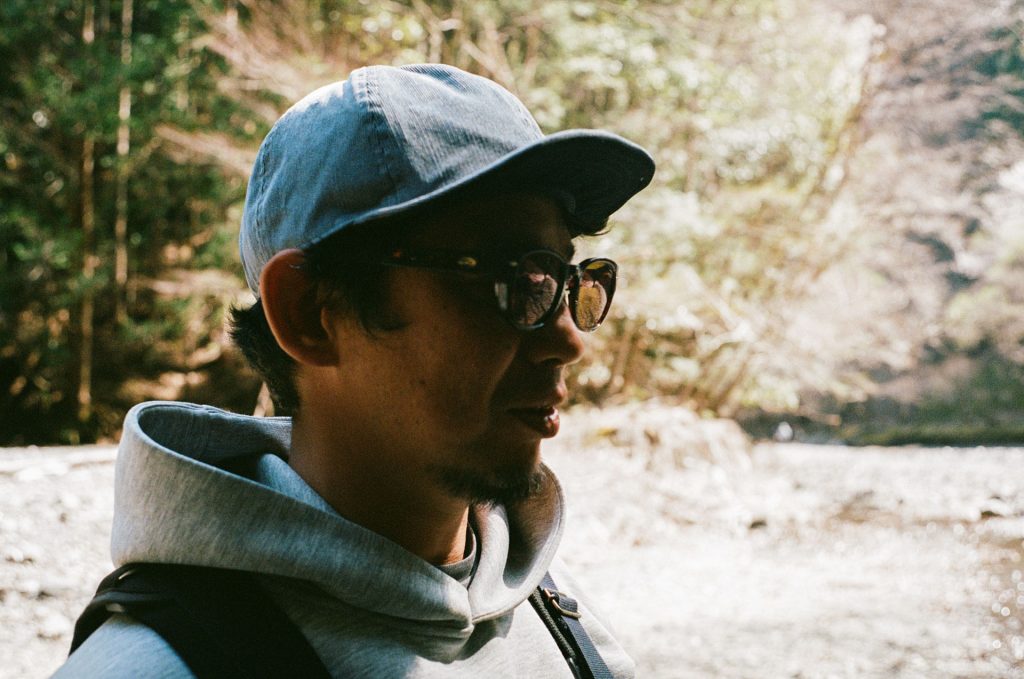
As a craftsperson observes and adapts to the material at hand, so does the fly fisher to the river — constantly reading and responding to the natural environment.
Craft and mindfulness in one uncomplicated activity. Of course, we humans have a habit of making things complicated, convinced we know best and somehow stand apart from nature. But a fly fisher like Yohei knows there is little to control and nothing to win. We are part of the same nature we seek to control. Perhaps all we can really do is observe, adapt and learn how to rejoin it.
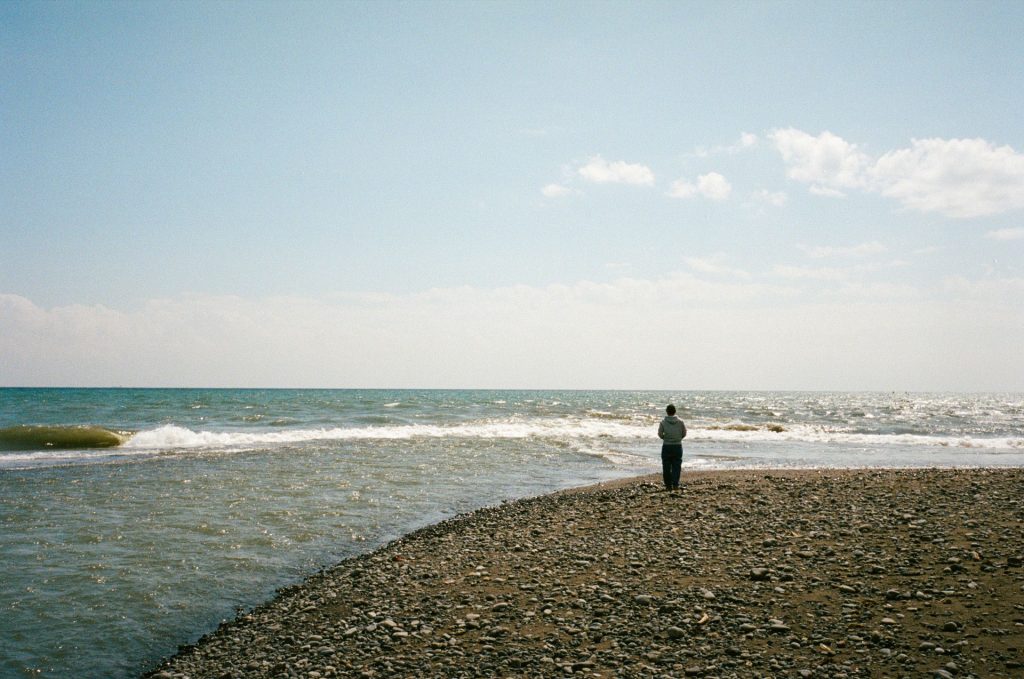
The slower you go and the more observant you are, the better your chances of catching something. Sometimes a fish, sometimes simply peace of mind, and sometimes both, if you are willing to accept what nature has to offer. Either way, you return to the fast-paced river of society a little calmer than before.
And success, what does that look like to you? I asked.
“To be honest, I don’t really know. I feel that my life is already enjoyable as it is, but I’ve also made many mistakes, so I wouldn’t say I’ve achieved success.”
…and so it goes,
James
If you liked this story you might like to read & subscribe James’s newsletter.