







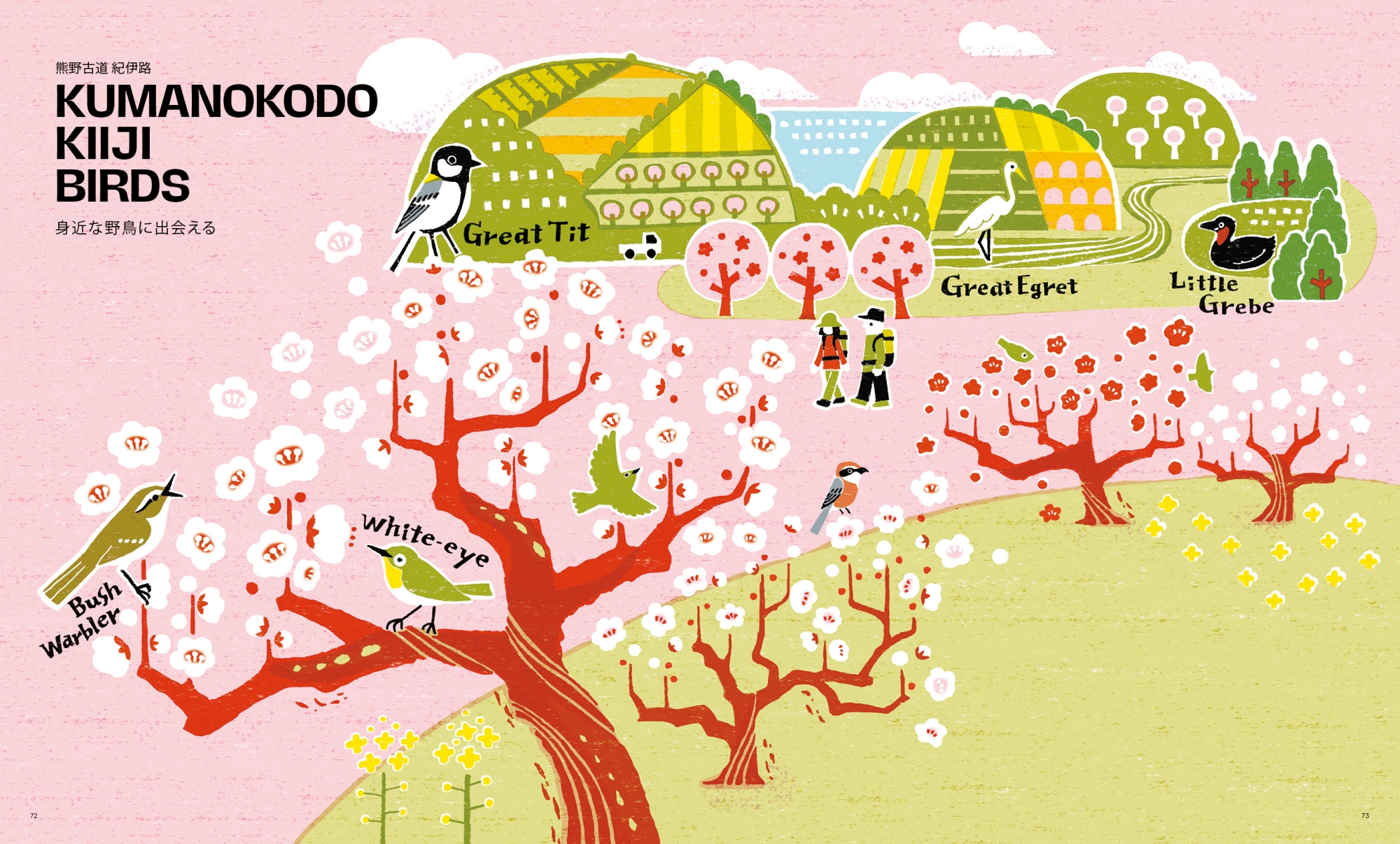
– We understand that, before creating these new images of Wakayama, you went birdwatching there yourself?
I’m originally from Wakayama Prefecture, but since I live in another prefecture, I haven’t had many opportunities to go birdwatching in Wakayama. This time, I went out to look for wild birds at the Nanbu Plum Grove, Wakaura, Mount Gomadan, and Mount Koya. It was my first time birdwatching by the sea, and I was truly charmed by the cuteness of the Little Ringed Plover I encountered at Wakaura.
Also, since you can drive almost all the way to the summit of Mount Gomadan, I was pleasantly surprised to be able to easily encounter birds deep in the mountains. I was delighted to see a Great Spotted Woodpecker for the first time in a long while.
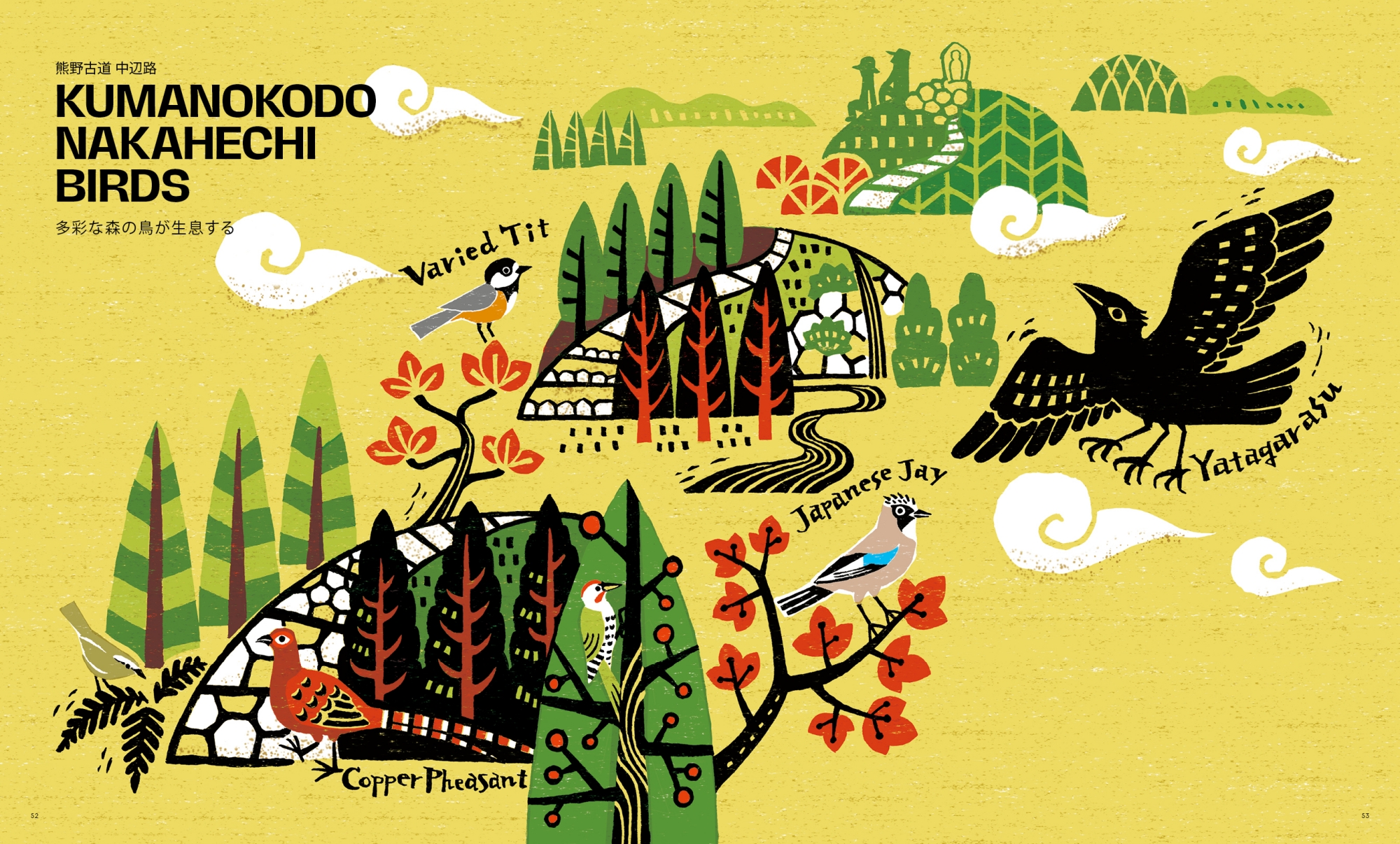

– You began teaching yourself printmaking in 2000. What first drew you to it?
In my twenties, I worked in graphic design at an advertising production company. Spending all day working on a computer made me want to start creating something with my own hands, so I left my job and decided to spend some time doing what I liked.
One day I simply decided to try making a woodblock print, and that was how it began. I jumped straight in without researching anything, so my first prints didn’t come out well. But I was completely captivated by the beauty of color in multicolor printing.

I had studied woodcraft at university, so I knew how to carve, but it took time to learn how to print the way I wanted with a
baren (a traditional Japanese disk-like hand tool used in woodblock printing to press paper onto an inked block). Still, I loved discovering little by little new forms of expression, and I couldn’t stop. The kind of colors you get on a multicolor woodblock print made using a baren on washi, you can’t reproduce them through commercial printing, or any other medium, really.
Before I knew it, I was holding solo exhibitions and had missed my timing to go back to being a designer.
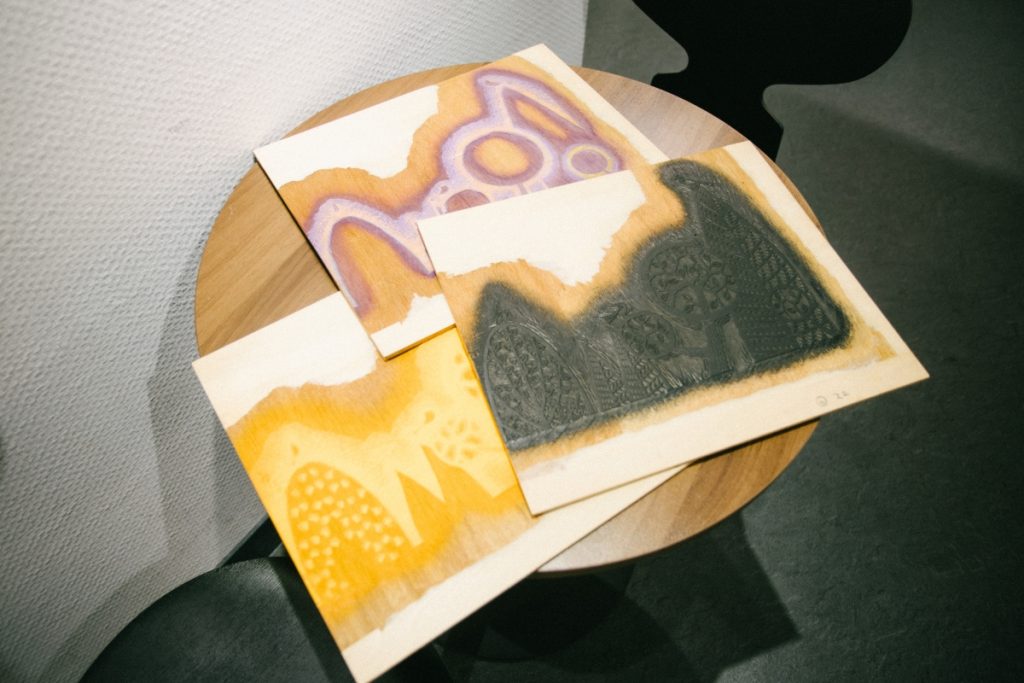
– We hear you also climb mountains. How did you get started?
I began hiking at twenty-six, when my husband invited me along. I wasn’t athletic and didn’t really want to go, but somehow, by the time we came down, we were already discussing where to climb next. We started with low mountains near home. Six months later we were climbing peaks around 2,000 meters, and within a year we were taking a tent into mountains about 3,000 meters tall.
– Does walking in the mountains influence your work?
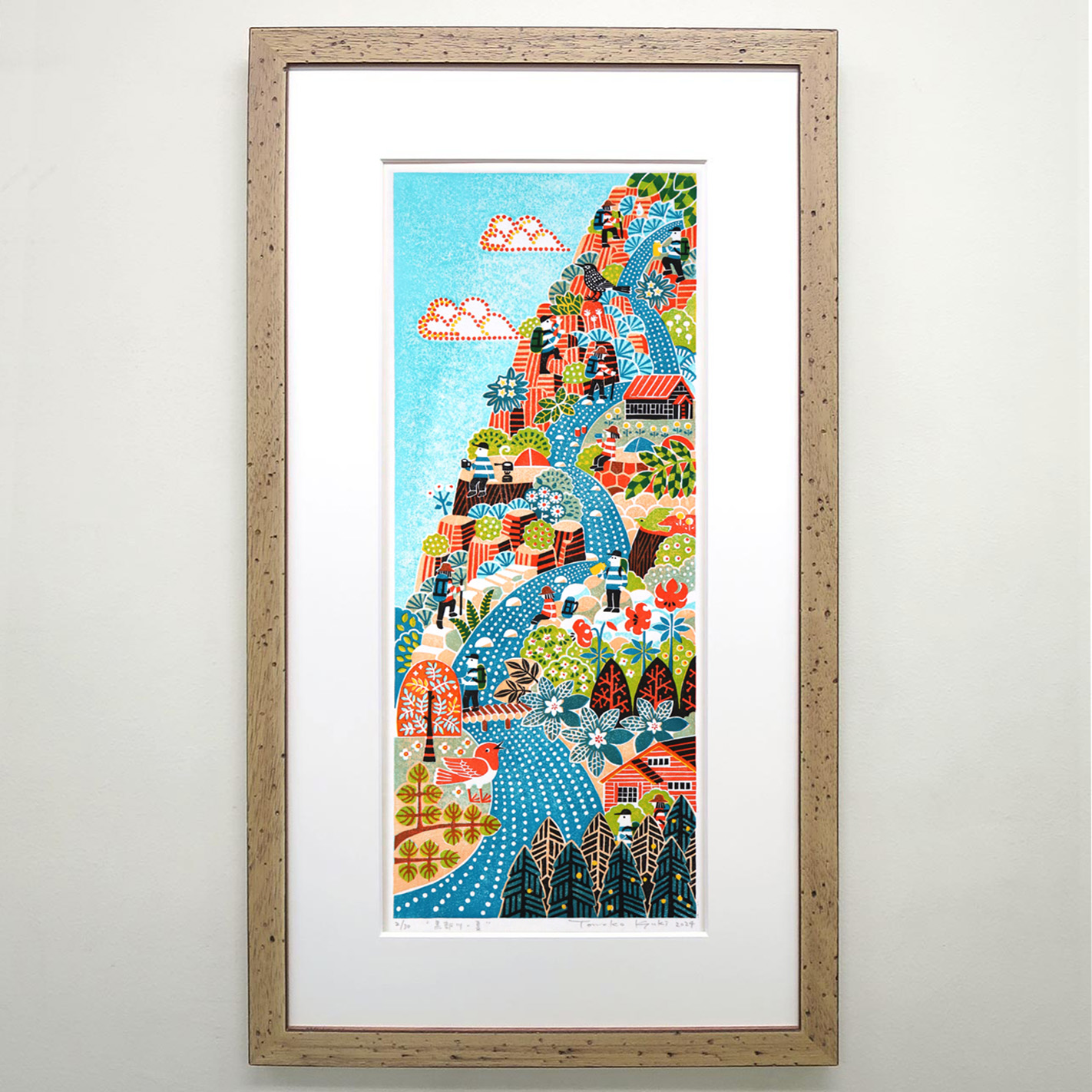
Almost everything I depict in my work comes from experiences I’ve had and the views I’ve seen in the mountains. Ideas and images start coming to mind when I climb.
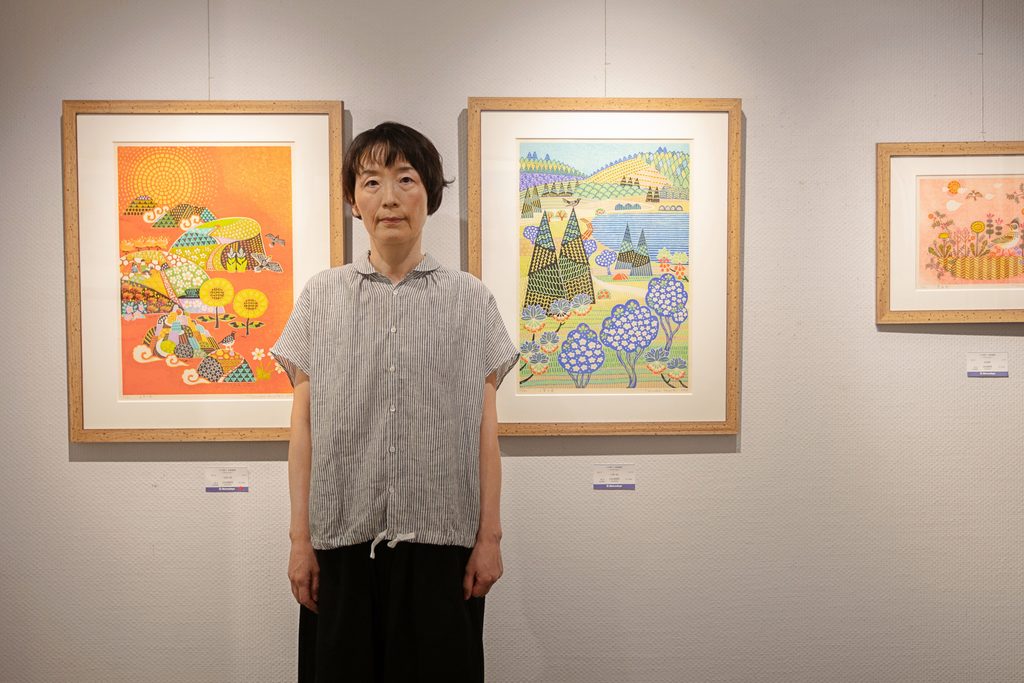
– Is there a landscape or experience in the mountains or forest that has stayed with you?
I’ve forgotten which one it was, but when I had just started climbing, there was a moment at the summit of some mountain when I looked back down over the path I had taken and thought, “This is the kind of work I want to make.”
That was the beginning of my work as an artist, and I still remember the view. But the “kind of work” I wanted to make wasn’t that actual view itself. It was something much more vague. I’m still searching for a way to express it.

– Birds have long appeared in your work. Any reason?
When I first started climbing, I happened to see a male Japanese tit feeding a female as part of courtship. At the time, I knew neither the bird’s name nor what it was doing. I looked it up when I got home and found it fascinating, and began learning the names and calls of other birds as well.
Then I began noticing all kinds of birds and realized just how many there were. It also made me see that even a single word like “mountain” contains so much. All of the trees, the flowers in bloom, the birds. I began thinking about all the life that makes up a mountain.
I would like to depict everything, but of course I can’t, so I often find myself choosing wild birds. They started the whole thing anyway. Plus, they’re so cute.
– When observing birds, are there particular moments or gestures that draw you in?
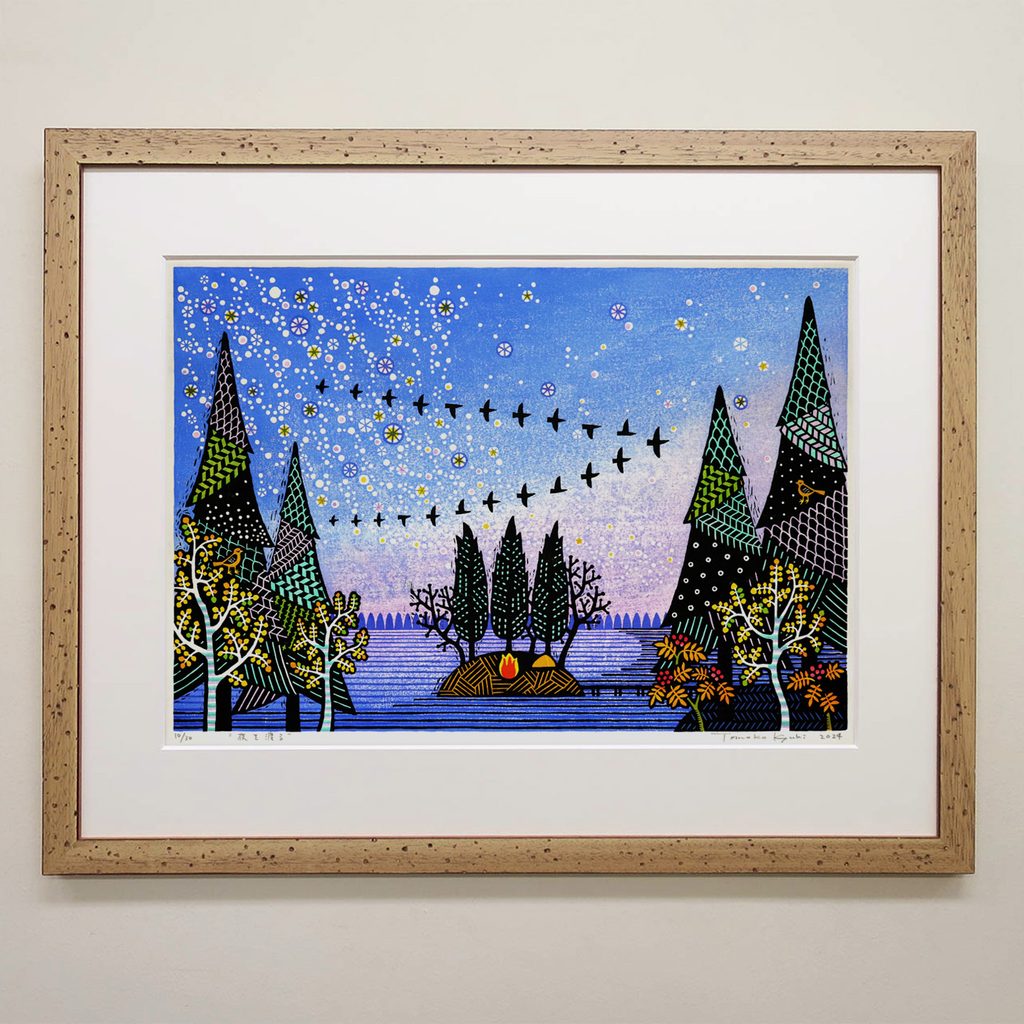
Nothing excites me more than spending the night in the mountains and listening from inside my tent as the birds begin to sing at dawn. As for gestures, you have a parent feeding its young, a bird singing, oh, and when they’re bathing. The list is endless.
– Are there any birds you feel especially attached to, or that appear repeatedly in your work?
Varied tits, blue-and-white flycatchers, narcissus flycatchers, Japanese green woodpeckers, Japanese pygmy woodpeckers, lesser cuckoos, long-tailed tits, and Daurian redstarts. They all visit our garden, so they appear often. In my alpine works, rock ptarmigans, spotted nutcrackers, and alpine accentors are recurring subjects.
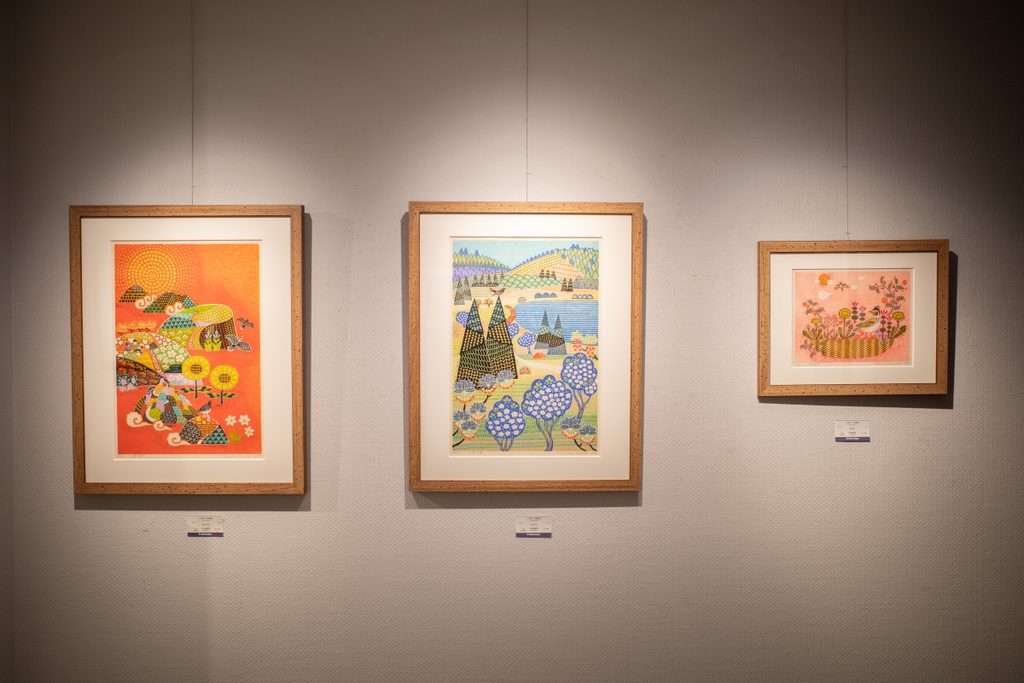
When I encounter a beautiful, uncommon bird such as a Japanese paradise flycatcher, Japanese robin, or Japanese thrush, I want to make it the subject of a work. Once, while drawing a copper pheasant, a bird I had only seen perhaps once before, I happened to glance out the window and found one, just standing there in the garden.
– What is the area around your studio in Hyogo like?
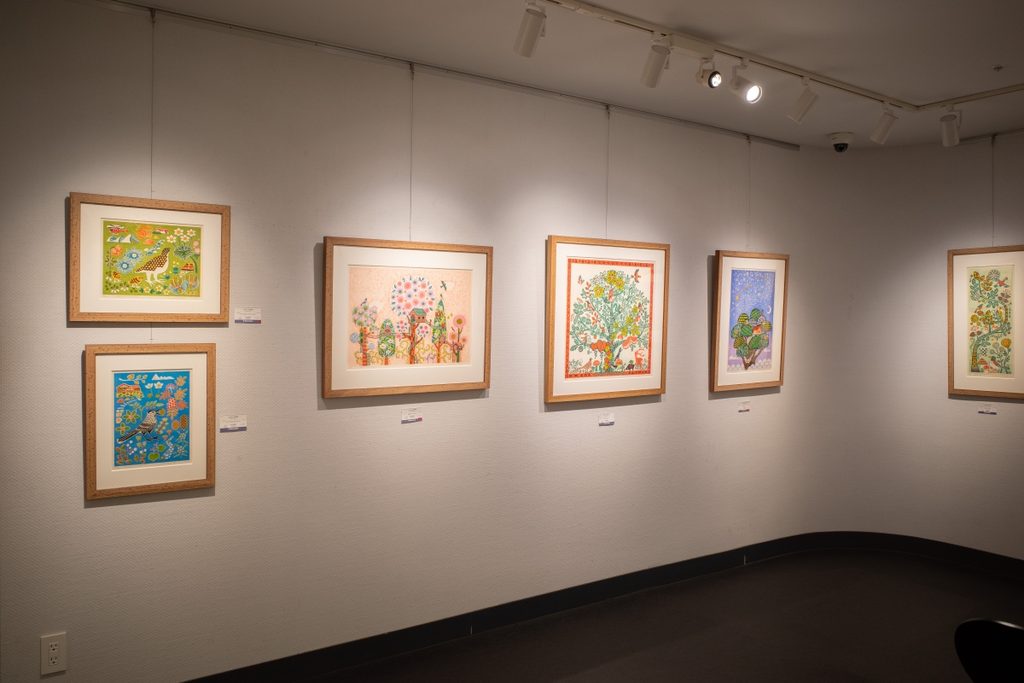
The studio is surrounded by mixed woodland filled with azaleas and other trees of the heath family, konara oaks, and pines. Besides wild birds, we have wild boar, deer, squirrels, Japanese hares, and badgers. A large Chinese cork oak grows in the garden and produces an abundance of acorns in autumn. Jays and squirrels come to feed on them, and in spring, varied tits and other wild birds start leaving their nests nearby.
I can observe the changing seasons and the changes in the creatures that live here. I’d love to be able to make something that represents their connections and cycles.
– Are there any places or mountains on your mind now, or somewhere you plan to visit next?
I’m curious about the mountains of Kyushu. It’s a mountain region I haven’t experienced, and I’ve heard that many of its peaks are connected to mythology. I hope it leads to new work, like nothing I’ve made before. I’d like to visit soon.
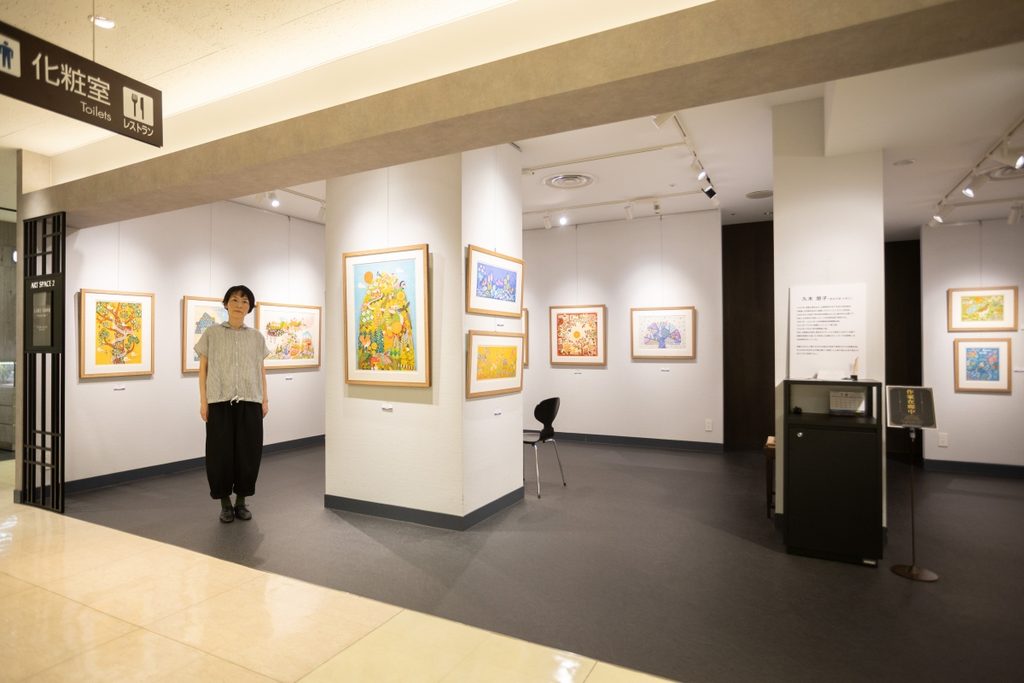
Tomoko Kyuki @tomoko_kyuki
Born in Wakayama Prefecture in 1970. She studied woodcraft at Kyoto University of Education, then joined an advertising production company after graduation, working in design and illustration. In 2000, she began teaching herself multicolor woodblock printing, carving and printing her own works from images inspired by nature encountered while climbing mountains in Japan and overseas. Since 2011, she has worked from a studio surrounded by nature in Hyogo Prefecture, attuned each day to the birds that visit with the changing seasons. Today, she holds solo exhibitions around Japan and participates in shows including the CWAJ Print Show. She also provides artwork for corporate calendars and publications.
The exhibition is scheduled to be held in various locations according to the following schedule.
【2026】
9/16〜22 Mitsukoshi Sendai/10/14〜20 Nagoya Sakae Mitsukoshi/11/12〜18 Keihan Moriguchi/12月3日〜9日 Tokyu Kitijoji
【2027年】
1/31~2/10 Fuku-ya Hatchobori Main Store(Hiroshima)/3/10〜16 Daimaru Sapporo/5/5〜11 Kintetsu Wakayama/6/16〜22 Daimaru Kyoto/7/28〜8/3 Isetan Urawa
Click here for details
