







The local people and handicrafts of Tottori
I had the feeling I was being looked at, and I turned around to find a small rabbit mask. As I returned its gaze, I began to develop an affection for the simple, unpretentious design. I picked it up. The logo on the back read Yanagiya Reproduct.
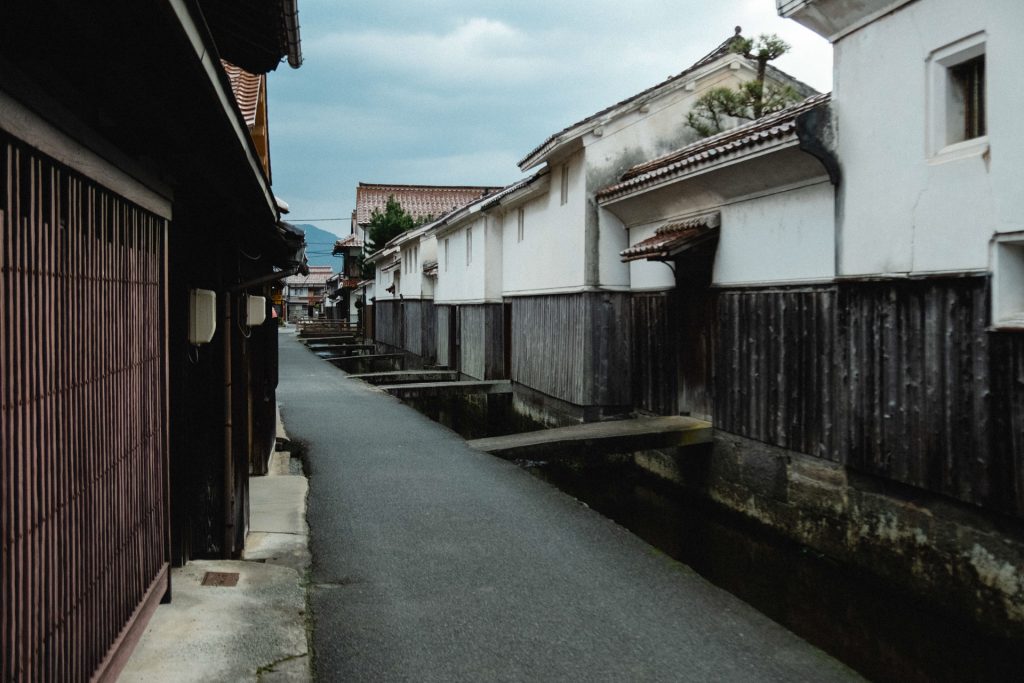
I had discovered the mask in a shop in Kurayoshi City, Tottori Prefecture, in the Kurayoshi Shirakabe Storehouses preservation district. The tourist spot lined with traditional buildings with white mortar walls is home to Cocorostore, selling pottery, textiles, and other handicrafts mainly from the San’in region, in which Tottori is located.
The owner, Nobuhiro Tanaka, was born and raised in Kurayoshi. He moved to Matsumoto City, Nagano Prefecture, in the hope of becoming a furniture maker before making a U-turn and opening shop.

“I wanted to be able to make things myself, but realized early on that I wasn’t cut out to be a creator. Back then, I felt I couldn’t devote the time it takes to pursue a craft,” says Nobuhiro.
“In those early days when I was working in furniture sales, I had a customer who said he had been searching for a wooden table lamp from Tottori, but never seemed to find one, so he wanted a table lamp from Matsumoto instead. From that day on, I started thinking about moving back to Tottori and opening my own shop. My idea was to first set up a place to present the handicrafts of the San’in region to local residents and young people, and then make more opportunities to introduce the folk crafts of Tottori to people in other prefectures.”

Traditional folk toys have lined the shelves of Cocorostore since its opening in 2012. That is rather unusual, because folk toys were not considered a top priority in the Mingei movement founded by Soetsu Yanagi and brought to Tottori by Shoya Yoshida.
“Actually, I wasn’t all that concerned about the Mingei movement. I was interested in the creative heritage of Tottori, period. I was attracted to folk toys also from the perspective of environmental conservation, which I had studied as a student. Many toys are made from natural and recycled materials, meaning even if they are discarded, they can be returned to nature. Some folk toys were made by farmers for fun or during the off season. I liked that the products told a story,” says Nobuhiro.

“Above all, I loved the folk toys created by Yanagiya. They always took inspiration from elements of local history and tradition. And they worked with all kinds of materials, from washi [traditional Japanese handmade paper] to clay, bamboo, and wood. That really set them apart and made them special.”
This Yanagiya is the name on that mask. Yanagiya was a folk toy studio founded by Tatsunosuke Tanaka in Tottori City in 1928. It created 50, or maybe even 100, designs of folk toys. The business was passed on to Tatsunosuke’s daughter Miyako and her husband, Kinji.
“That’s why I was really sorry to see Yanagiya close its doors in 2014. In the hope of reviving the products, even in a different form, I visited Yanagiya to ask for permission to make folk toy brooches. That was when I received an unexpected offer. Kinji asked if I was interested in making the toys,” says Nobuhiro.

“That wasn’t something I could do lightly. I couldn’t say yes right there on the spot.”
Given an encouraging push on the back by his wife, Aya, Nobuhiro launched Yanagiya Reproduct in 2020 with the aim of reviving Yanagiya folk toys. The first product, the papier-mâché Inaba White Rabbit Mask, took three years to complete.
Today, the creative group has expanded to eight members including local ceramic artists, woodworkers, and a sculptor of Buddhist statues. They receive orders from up and down Japan, and sell wholesale to France and the United States.
“The Inaba Rabbit Mask gave us a really hard time. It’s a wonderful design inspired by a tale in the ancient Kojiki chronicle set in the San’in region [Inaba is a former province that is today the eastern half of Tottori Prefecture], but with a design so simple, even the slightest wrinkle stands out. It’s quite charming to look at it now though. Papier-mâché has a different kind of beauty from pottery or textile, the kind that makes you feel safe and smile. This is a child’s toy after all. It’s peaceful to make, and it makes a peaceful gift. That’s the wonderful thing about folk toys.”
The happiness of making papier-mâché

“I don’t know that I gave him an encouraging push on the back,” Aya says with a smile. “It was simpler. I wanted to make the toys myself.”
Aya is from Yurihama Town, next to Kurayoshi. Having studied at Bunka Fashion College in Tokyo, she is the type to pursue a craft (unlike Nobuhiro, she says). Aya currently works as a papier-mâché artist.
She invited me to her home studio to watch her make the Inaba White Rabbit. I admired her collection of folk toys from Japan and around the world, including Mexico’s Oaxacan wood carvings.
“I love to collect things. As a child, though, I didn’t like the wooden dolls in my father’s kokeshi collection. I thought they were scary,” says Aya.

“Each mask has a unique wooden mold, onto which I glue layers of washi paper, taking care to smooth out the creases. After drying, I remove the mold, apply a coating of white shell powder called gofun, let it dry again, and finally do the painting. The difficult part? In the beginning, it was gluing the washi. Next, it was the gofun. Then, it was the painting. Every time I clear one stage, there’s another new challenge,” says Aya.
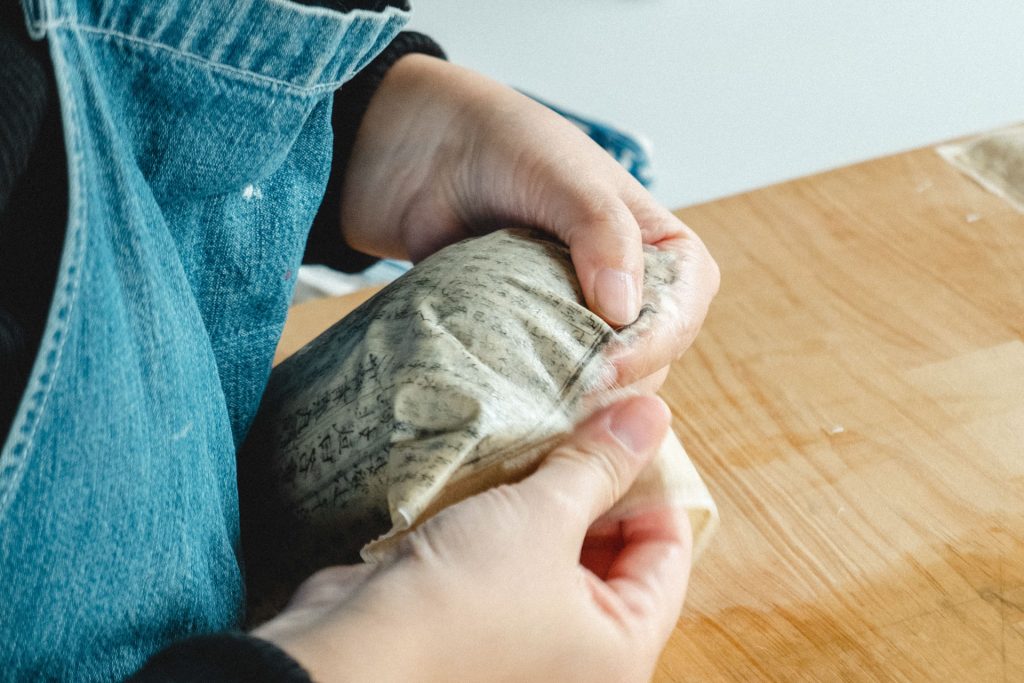
“Both Nobuhiro and I love Miyako and Kinji. We are happy to have taken over the work that we love, to make the toys we love, that were created by the people we love.”
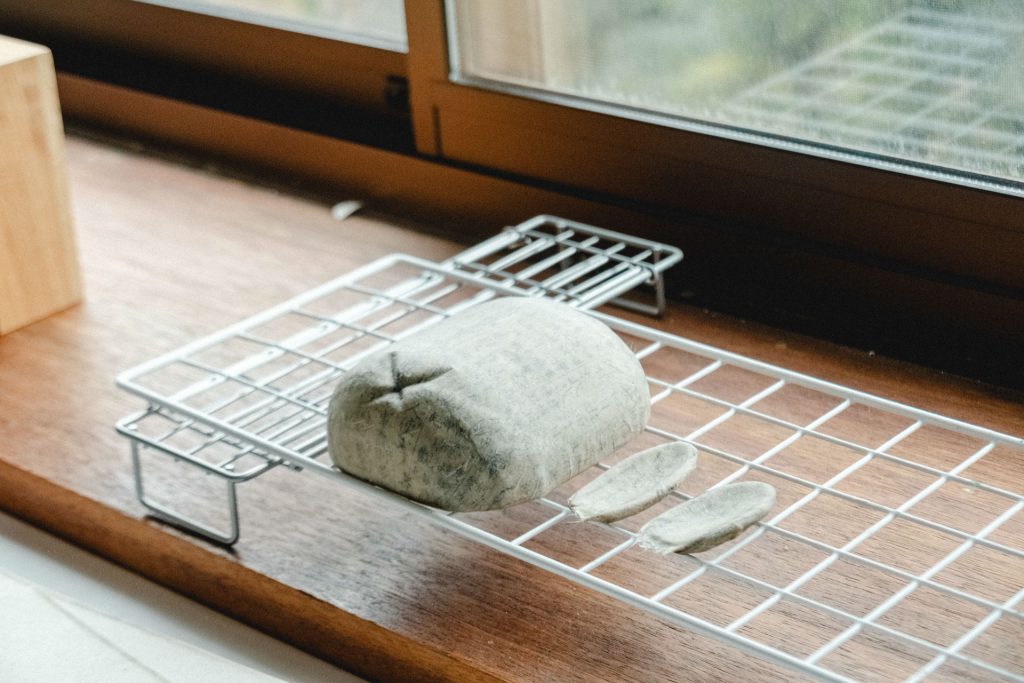
The happiness Aya feels while working is embodied in the Inaba White Rabbit Mask, making it adorable and peaceful.
“Unfortunately, Kinji passed away in 2024. Miyako is getting on in age too—she will celebrate her 88th birthday in 2025. I continue to visit Miyako every month so that I can revive as many of her folk toys as possible. Also, mainly, I just enjoy seeing my friend.”

YANAGIYA REPRODUCT
Yanagiya Reproduct was launched in 2020 to revive the traditional folk toys made by Yanagiya from 1928 to 2014. Having learned the techniques of Yanagiya founder Tatsunosuke Tanaka, his daughter Miyako, and her husband, Kinji, it reproduces some 20 designs of folk toys including papier-mâché masks and dolls, ceramic bells and figurines, and wood carvings. The products are available at Cocorostore, run by Yanagiya Reproduct representative Nobuhiro Tanaka, online, and via wholesale stockists.
https://cocorostore.com