







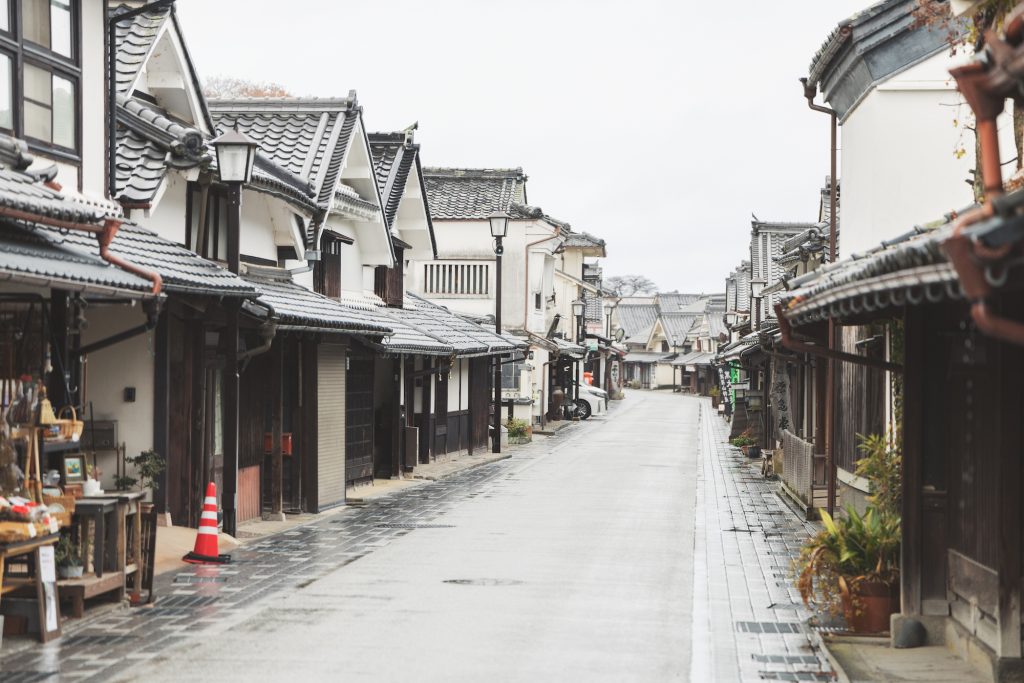

Just over an hour by car from bustling downtown Osaka. This time, we ventured into the mountainous region of Tamba Sasayama City, Hyogo Prefecture. The land where Shota Yamanokuchi, Kanafu, and their children live spans an impressive 2,640 square meters. For this family, the backwoods serve as a gathering place, a sanctuary for relaxation, and a symbol of the stunning landscape. The couple explained that moving from the city to the countryside has not only transformed their lifestyle but also shifted their perspective and way of thinking. PAPERSKY editor-in-chief Lucas, along with Nobuyuki Kosuge, who also runs a select store in Tanba Sasayama City, visited the house. Together, they engaged in a lively conversation about the distinctive lifestyle found only in the mountainous region of Sasayama.
Guest/Lucas B.B. (PAPERSKY Editor)
Guest/Nobuyuki Kosuge (Owner of select store ‘archipelago‘ / Resident of Tamba Sasayama City, Hyogo Prefecture)
Host/Shouta & Kanafu Yamanokuchi (Resident of Tamba Sasayama City, Hyogo Prefecture, owner of a BESS home)
1. Love at first sight upon discovering a BESS house.
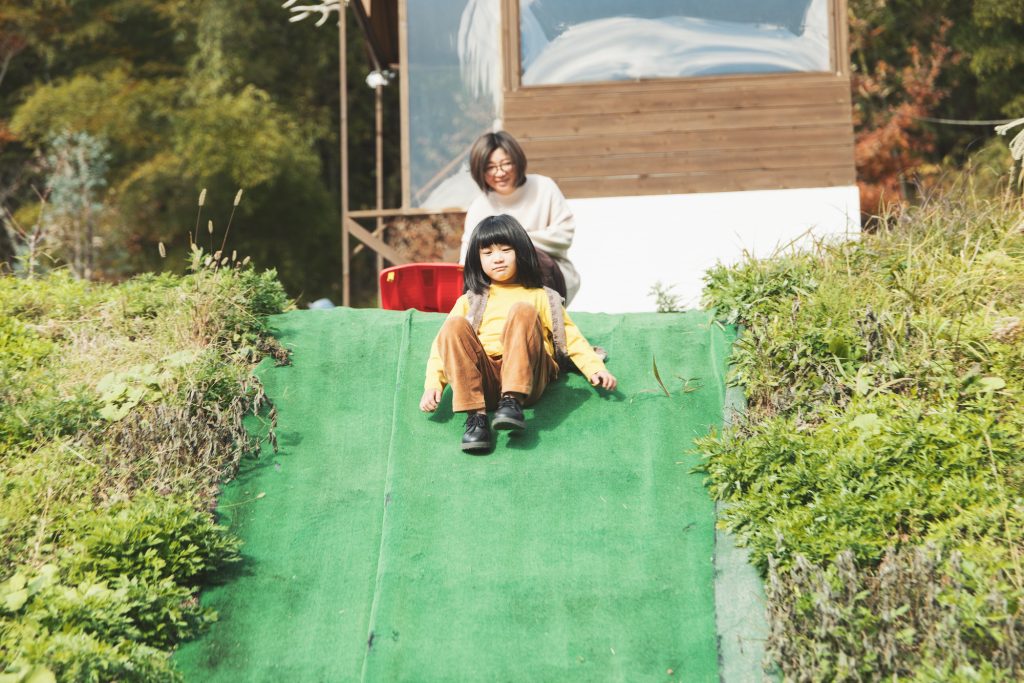
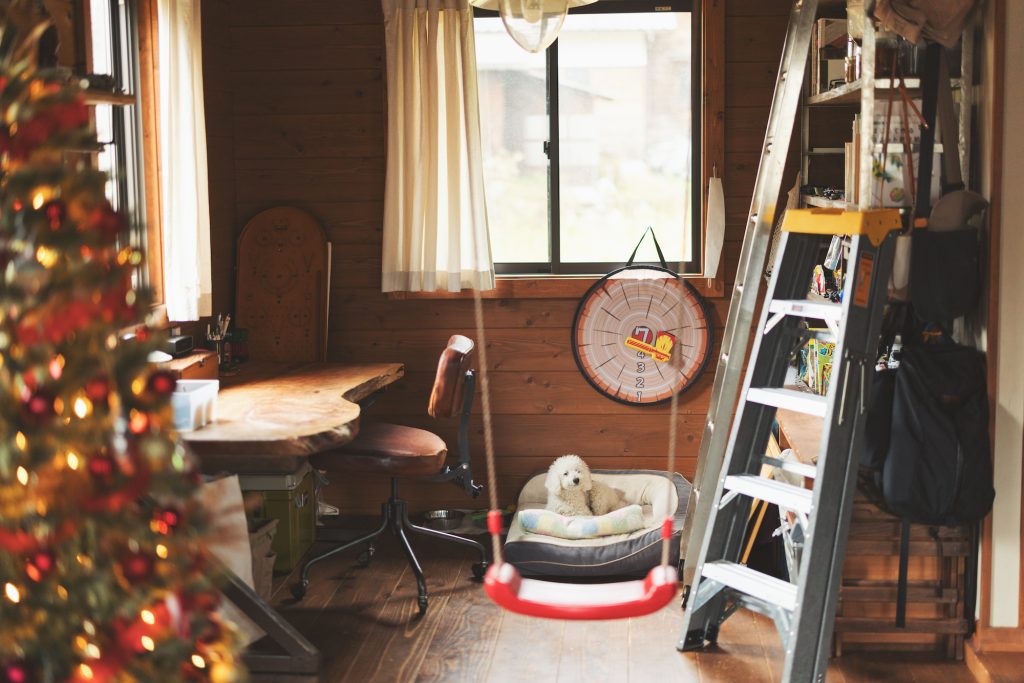
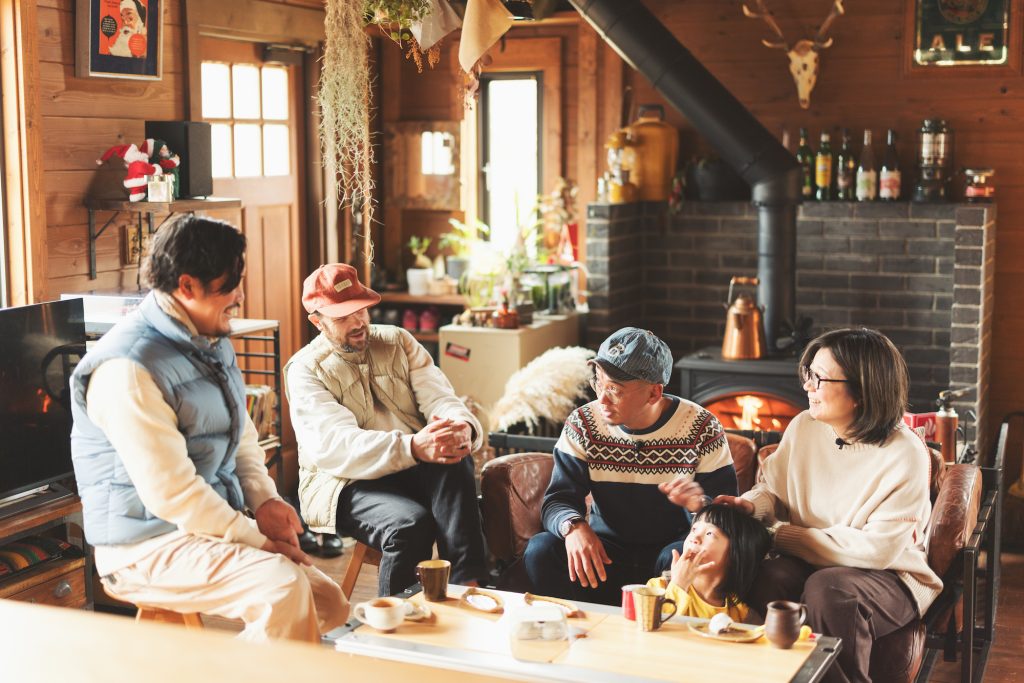
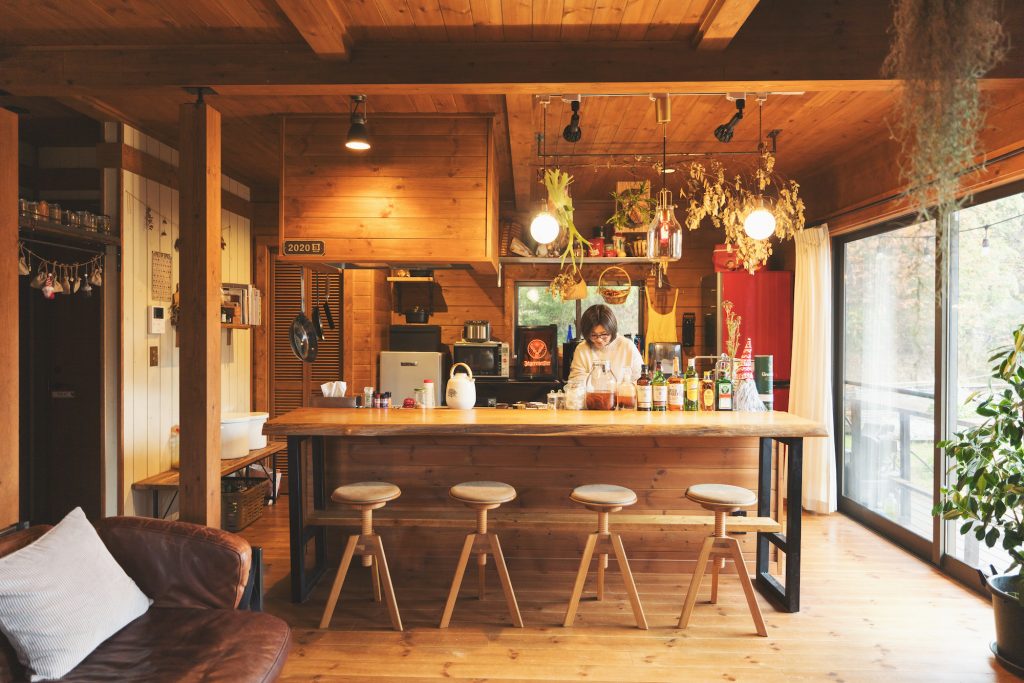
A BESS house sits on a gently sloping hill, where the children delight in playing on a slide that takes advantage of the land’s incline. As we were welcomed into the home, the subtle scent of wood greeted us, adding to the warmth of the space. We quickly settled in to hear the story of the couple who made the bold decision to move here from Osaka City.
Lucas B.B. (Lucas): ”So tell me, are you content with your current lifestyle?”
Shota Yamanokuchi (Shota): ”It’s the best. Before we built the house, I envisioned this kind of life, and it turned out exactly as I hoped.”
Kanafu Yamanokuchi (Kanafu): ”But you weren’t initially keen on it, were you?”
Shota: ”Yes, I was working in Osaka City and thought living in the countryside would be unrealistic. But my wife had always wanted to live in the countryside, so we decided to visit a house. We went to the BESS Logway (exhibition hall), and it was love at first sight. I had known about BESS for a long time, but once I saw the house in person, I realized it was the perfect way to live in the countryside (laughs).”
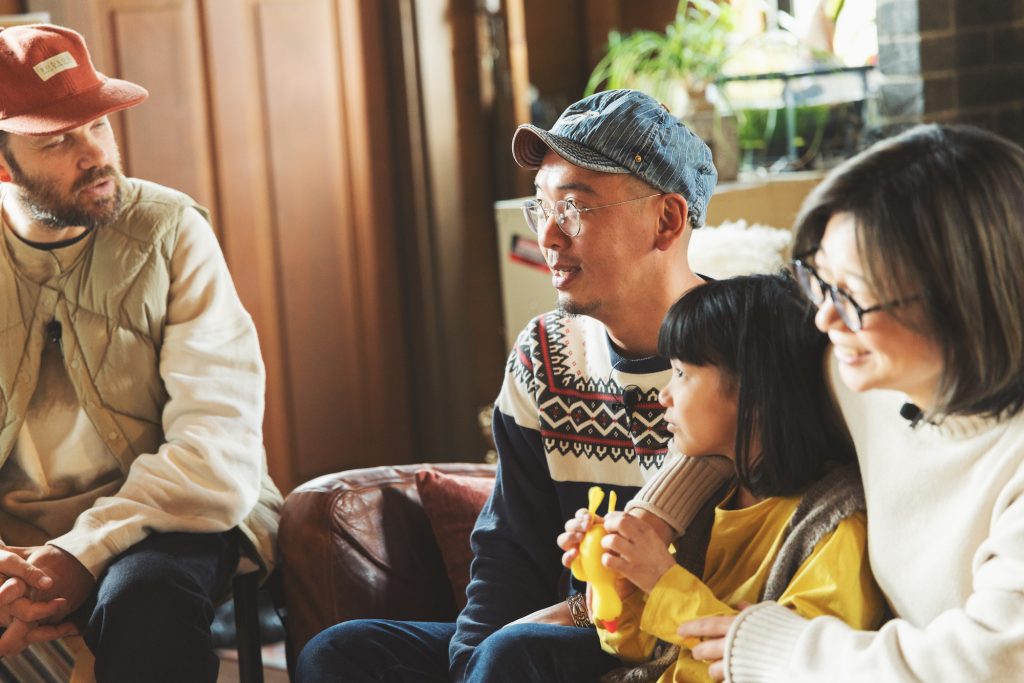
Kanafu: ”There was an ad in a magazine I used to read that featured a BESS house.”
Shota: ”When you showed me that, I thought, ‘I didn’t know a house like this existed. I never imagined I would live in such a place.’ But the moment I visited Logway and saw the Country Log model house, I was smitten.”
Kanafu: ”Same for me.”
Shota: ”No exaggeration, I already thought I’d want to die in this house (laughs). I could picture myself as an old man in the future, sitting in the living room of this country log house and simply passing away there (laughs). I knew I had to buy it.”
Kanafu: ”After that, we looked at several houses from other house builders, but we felt that BESS was the only choice for us.”

Shota: ”Each BESS house model has a different theme, like ‘build small, live large.’ Those words really resonated with me, and that was a big part of our decision. The first floor is essentially one open space—there are no partitions—and it was perfect for me to be able to turn the entire floor into a living room.”
Lucas: ”A large living room is great; it has such a relaxing, comfortable feel to it.”
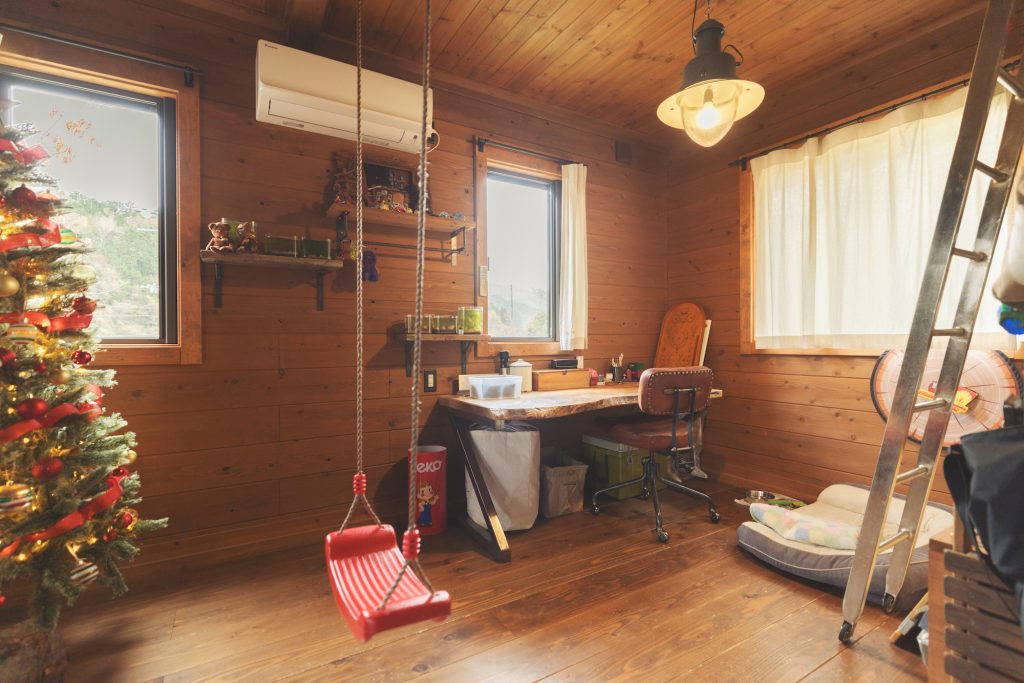
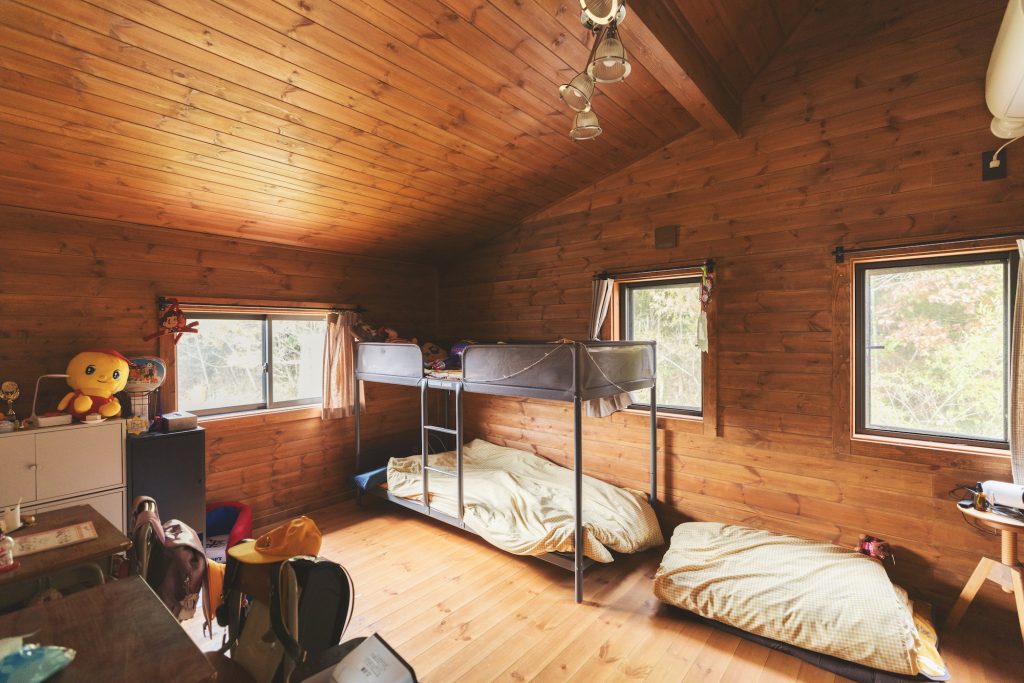
Shota: ”Yes, it has that warm, woody feel unique to log houses. I preferred the dark interior and soft lighting over bright white walls, so I chose a color tone called ‘warm taste.”
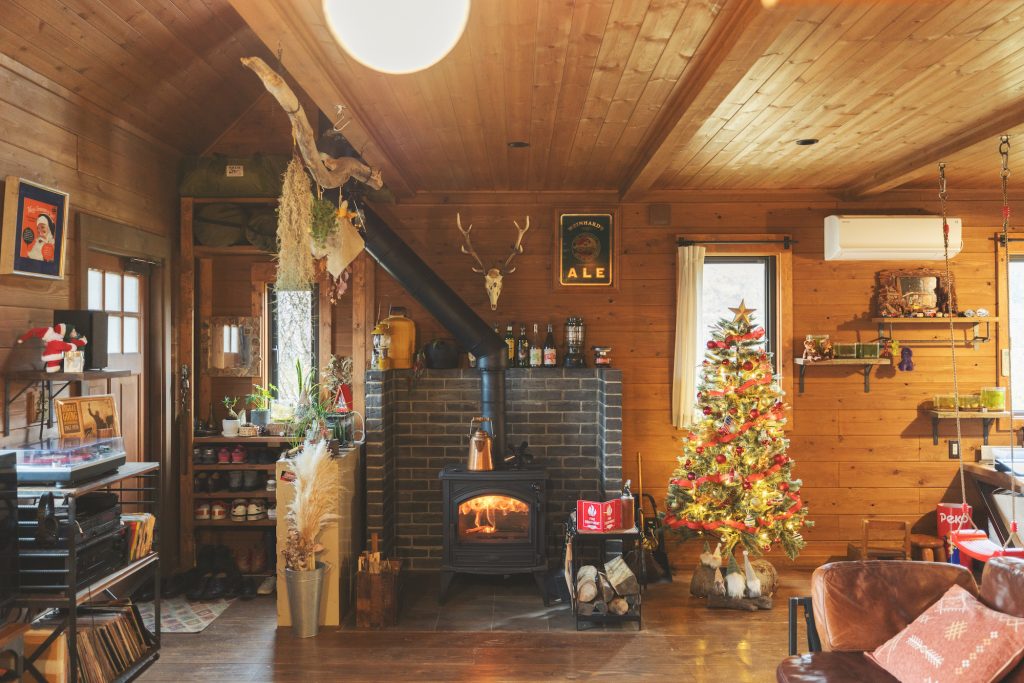

Kanafu: ”I also really love the soothing ambiance here. Living here, I’ve come to realize how much I enjoy the nighttime. There aren’t many lights around the house, so it’s completely pitch black at night. But in the winter, the only light comes from the wood-burning stove, and it flickers softly. I really like that kind of atmosphere.”
Nobuyuki Kosuge (Kosuge): ”The house has so many windows that you can really feel the outside atmosphere even when you’re indoors. The way the sunlight pools by the windows is also very pleasant.”
Shota: ”That’s right. It’s like the house and the outside are discreetly connected.”
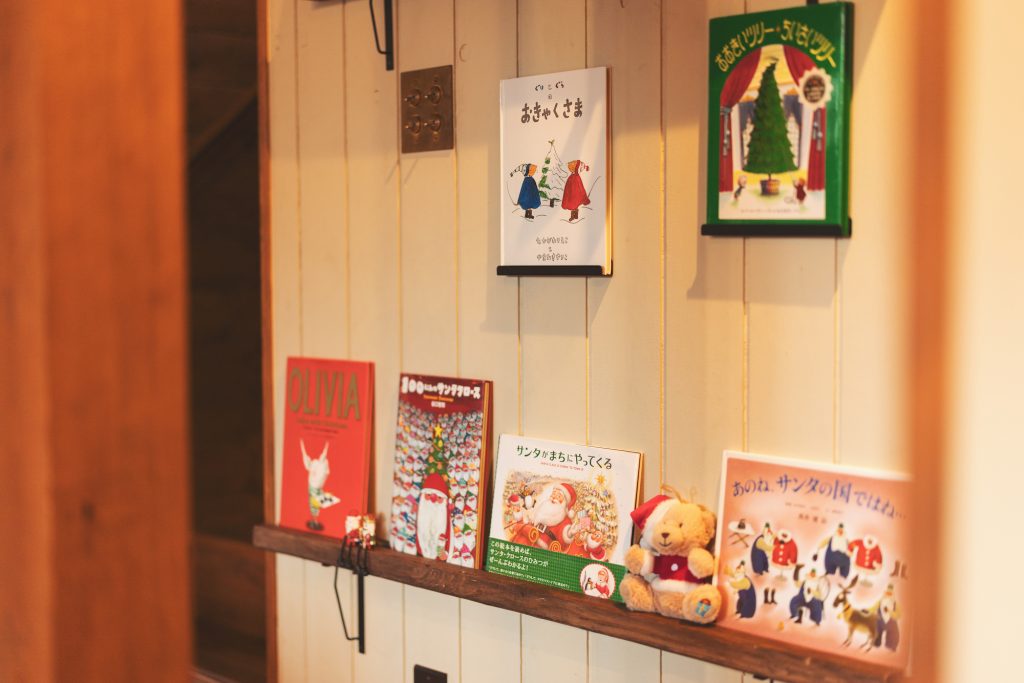
Lucas: ”You have several Christmas books on display; they’re lovely. Did you make the shelves yourself?”
Shota ”That’s right. Since we started living in this house, we’ve been doing a lot of DIY.”
Kosuge: ”I also relocated to Sasayama, but what brought you here?”

Shota: ”I work in Osaka, so at first, I thought it would be better to live closer to the city and considered building in the neighboring town of Sanda. However, finding suitable land in Sanda for a new house proved difficult. So, I gradually expanded my search and eventually settled on Sasayama.”
Lucas: ”What made you decide this land was the right choice?”
Shota: ”When I evaluate land, I always begin by standing in the center of the site. The moment I stood there, I had an almost intuitive sense that this was the place. The gentle rise from the road to the property felt just right, and with a grand mountain behind, I immediately sensed there was ample space for farming. The location was also ideal—our children can be quite boisterous, and here, we had the freedom to let them be without troubling any neighbors. Moreover, it’s only about an hour and ten minutes to commute to Osaka, so it really ticked all the boxes.”
Kosuge: ”I moved to Sasayama about 10 years ago, drawn to the idea of living in an old house within an ancient settlement. I had originally lived in the city, but once I began life in the countryside, I was surprised by how busy I became. There’s always something to tend to—the house, the garden, and so on. Have you experienced that as well?”
Shota: ”Yes, absolutely. I’m constantly busy (laughs). The crops are delicious each season, so I feel like I’m always racing against time, and the weeds just keep growing, so I’m always out there trimming them. The countryside might give the impression of a slower pace of life, but it’s anything but slow (laughs).”
Kosuge: ”But that’s the rewarding part.”
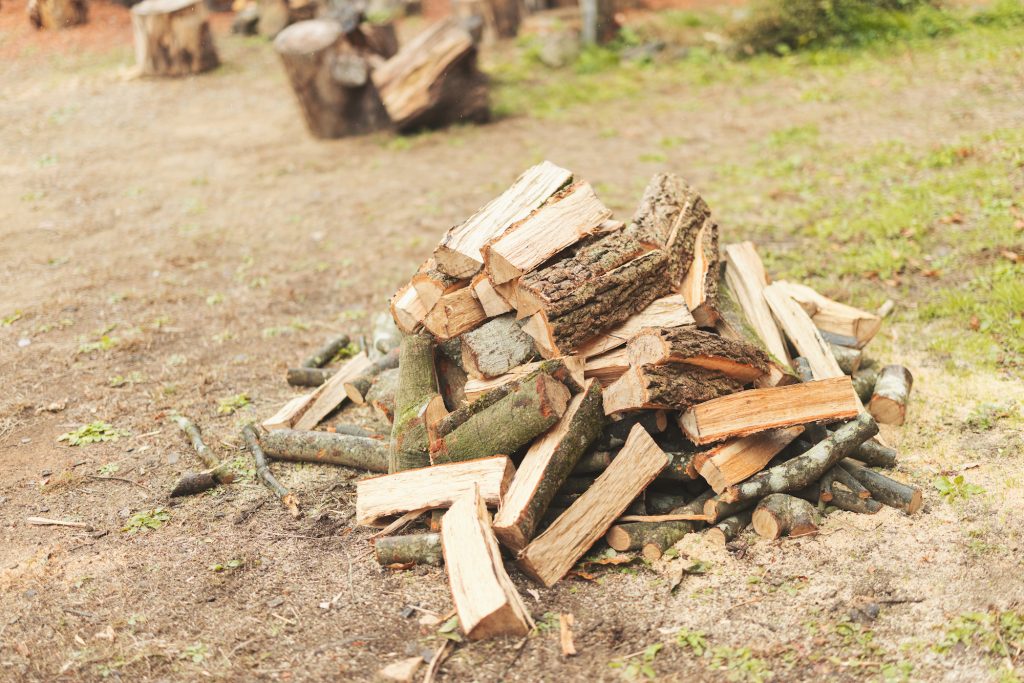
Shota: ”The kind of ‘busyness’ I experienced living in the city is completely different. When I lived in Osaka, I was often busy with errands on weekends, like shopping at the mall. But now, there’s always something to do around the house—whether it’s mowing the lawn or chopping wood. My lifestyle has shifted 180 degrees. I find myself engaged in all sorts of tasks at home, and after a long day covered in dirt, I can unwind in a hot spring and watch the sunset. I truly feel that I’m living an active life now, rather than just working to consume.”
2. Living in Harmony with Nature: Embracing a Rich, Eco-Focused Lifestyle
Tanba Sasayama is renowned for its Tanba-yaki pottery, making it one of Japan’s foremost pottery production regions. The Yamanokuchi family is surrounded by numerous kilns that have been in operation for generations, and the area’s charm lies in its deep historical roots. Another local specialty is Tanba Sasayama black soybeans, famous across Japan for their use in boiled beans and confectionery. On this occasion, the snack was, of course, black beans. Everyone took a break to enjoy the treats Kosuge-san had brought as souvenirs.
Lucas: ”Let’s try the sweets that Kosuge-san brought for us.”
Kosuge: ”When I think of Sasayama, I immediately think of the black beans from Tanba. I got these from a historic shop that has been in business since the Meiji era.”

Shota: ”The bean season is here already.”
Lucas: ”Tanba’s black beans are famous, aren’t they?”
Shota: ”It’s so packed with black beans, you could call it a black bean town (laughs).”

Kosuge: ”Do you have snack time like this with your family?”
Shota: ”Yes, we do. My wife loves to make drinks.”
Kanafu: ”I often make fruit syrups. I pour them over shaved ice, put them in yogurt, or mix them with cider.”
Kosuge: ”Do you add enzyme syrups and other things like vegetables from your garden?”
Shota: ”I have some from my garden, and I buy pesticide-free fruit from a farmer I know. And we make candy, right?”
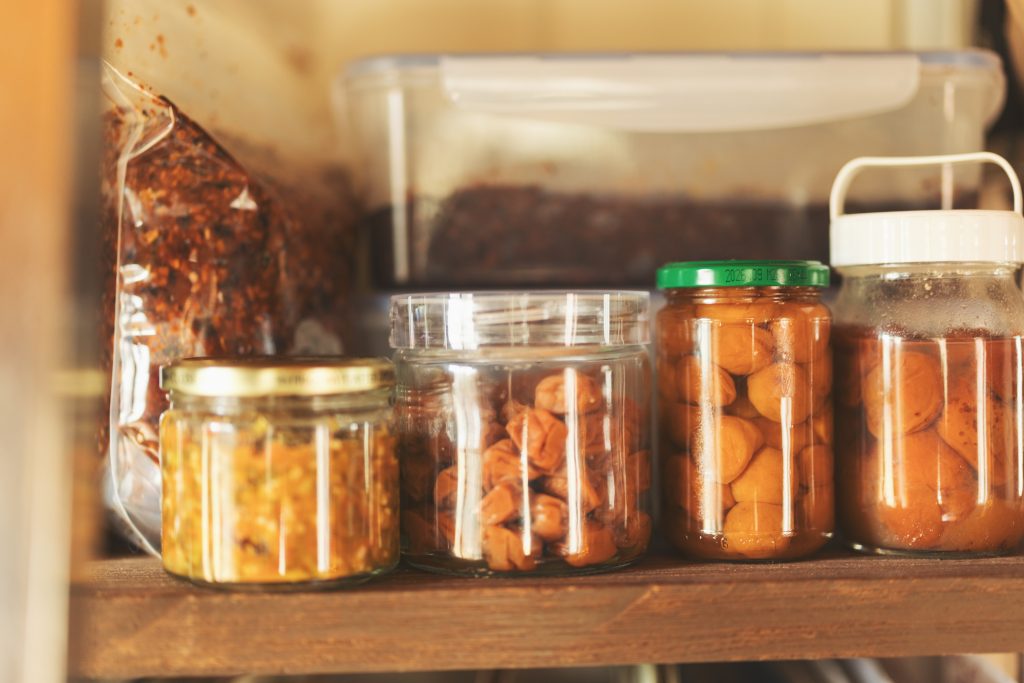
Kanafu: ”That’s right. My child is allergic to wheat, so I bake bread using rice flour. Living in the countryside really inspires you to try making everything yourself. I’ve learned how to pickle plums, and I even make my own miso.”

Shota: ”And unrefined sake, too.”
Lucas: ”Unrefined sake?”
Kanafu: ”That’s right. My mother also moved to Sasayama, and together we make unrefined sake, which we sell in small batches.”
Kosuge: ”Amazing!”
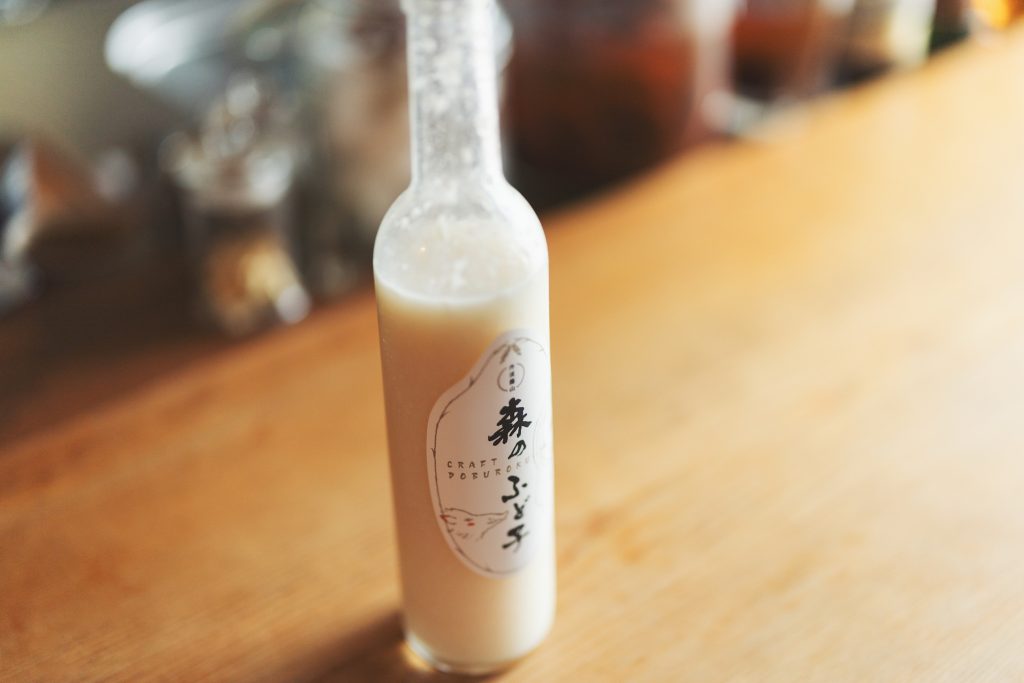
Shota: ”My wife and I have developed a growing interest in crafting things by hand. We once believed it was easier to simply purchase everything we needed, be it food or furniture. But now, we find ourselves considering whether we can create it ourselves first. As a result, we’ve significantly reduced our shopping habits. We’ve even started eating wild plants now (laughs).”
Kanafu: ”Yes, exactly.’ (chuckles) ‘I’ve begun collecting books and studying the plants that surround me, observing how they change with the seasons. There are actually quite a few edible weeds.”
Shota: ”We make tempura out of them or something like that. It’s fun to try things I never would have done before.”
Kanafu: ”We make kakiage with the weeds and just sprinkle some salt on them. They’re surprisingly delicious—kind of like potato chips!”
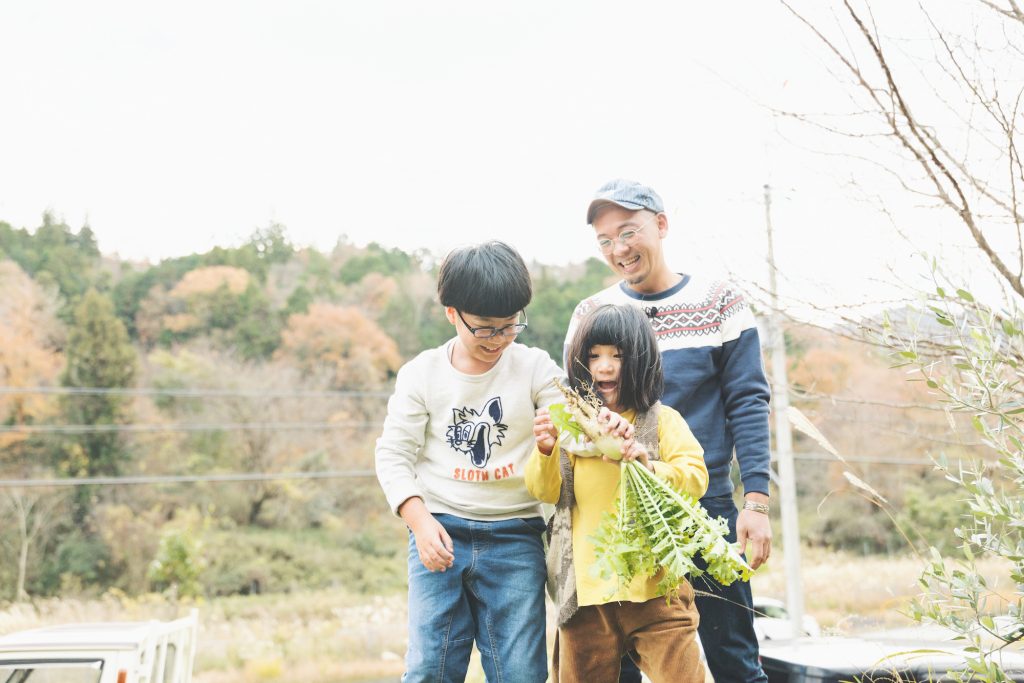
Shota: ”Before, I wasn’t the type to be moved by beautiful scenery, and I didn’t really care much about nature. I loved the city. But now that I live here, I can look at a flower and think, ‘Wow, that’s a beautiful flower.’ It’s like I’ve finally gone from being a monster to a human being (laughs).”
Kosuge: ”Living in the countryside, you really notice the shifts in nature, that’s for sure. It’s often said that Japan has four distinct seasons, but when you actually live close to nature, you experience the changing seasons every day. You can truly feel the subtle transitions between spring and summer, autumn and winter, and even the in-between moments that connect them all.”
Shota: ”It’s a small change, but it’s those little discoveries that make everyday life more enjoyable.”

Lucas: ”It’s a great environment to raise kids in, above all.”
Kanafu: ”It’s not the most convenient place, so I feel like it’s better to let them figure things out on their own.”
Shota: ”It’s nice to have something in common as a family. When I used to talk about work, no one could really relate. But now that we’re living in the countryside, there’s so much more to talk about—like the house or nature. We can actually share things as a family, and our conversations have definitely picked up.”
3. Joyful Connections in a Wooden Home
Lucas: ”Don’t you think BESS homeowners all give off a similar vibe?”
Shota: ”Yeah, maybe. There’s this system called ‘coachers’—basically, senior owners help out people who are new to living in a BESS house, teaching them about the houses and the lifestyle. It’s pretty fun making friends through those connections. I think people who like BESS houses tend to have a lot in common.”
Lucas: ”Do you do any such coaching?”
Shota: ”Indeed I do. We’ve even become friends with other coachers and started a team called ‘Tetsu & Moku’ (Steel and Wood). We make furniture by combining wood and steel, and I teach others how it’s done. We share tips and skills both online and in person with people who love BESS houses or are thinking about becoming BESS owners.”

Kosuge: ”You don’t usually hear about house builders having this much fun and doing these kinds of activities.”
Shota: ”Thanks to BESS, I’ve met so many like-minded people. We hang out, have meals together, go camping—you know, stuff like that. BESS houses have this magic about them that brings people together. For example, if you see a BESS owner doing something cool in another area on social media, you can just reach out and meet up. Since so many of us share similar interests and vibes, things like that just happen naturally.”
Lucas: ”That’s such a cute connection.”
Shota: ”I guess so (laughs). In its own way, BESS is a house, but it’s still cute.”
Kosuge: ”What do you mean by that?”
Shota: ”Unlike modern condos, wooden houses can be affected by insects and wind. But these little things aren’t stressful—actually, they turn into fun discoveries, and you end up thinking of the house itself as cute. The floors and walls change over time, and a log house has a settling (sinking of log walls due to wood drying) until about 1 or 2 years after construction, so adjustments are necessary in maintenance timing*. It takes a lot of work, but it’s kind of like having a child. You care for it, watch it change and grow, and you get attached to it. Or rather, you get attached and think it’s cute. A wooden house feels alive.’
*Adjustments will be made during periodic inspections by BESS staff each 6 months, 1 year, 2 years, 5 years…
Lucas: ”Interesting. I like wooden houses too.”
Shota: ”Even if you’re not out shopping or doing anything special, you can still have a blast just living an everyday life. That’s the beauty of country living, and I don’t think you truly get how fun it is until you experience it. A BESS house is perfect for that kind of lifestyle.”


BESS House
https://www.bess.jp