







I have gone places in the mountains that 99 percent of people will never ever go to, viewpoints that are mind-expanding in situations that can change your life in an instant.
Changing media is changing culture, local economies and natural environments; not always in directions we expected. How to come to terms with the mainstreaming popularity and sometimes over commercialisation of scenes we were once so excited to share?
This is my journey to Jozankei Onsen, Hokkaido to slide down mountains, sit in hot springs and not sleep in our cars with snowboarding Car Danchi filmmaker Neil Hartmann to talk about the future of localised creative communities.

Blue skies, 7am, the roadside thermometer reading -19˚C on our way to Sapporo Kokusai Ski Resort. Neil and I reminisced about our younger snowboarding days, early snowboard design and winter seasons camping in cars.
There were no snowboard boots. I got a pair of winter boots and squeezed ski-boot liners inside. I think I stuffed some foam I found in the back and I would duct tape my ankles for some support each day I went riding.
I can’t lie, Neils film series Car Danchi (Danchi meaning affordable public housing) changed my life. It opened my eyes to a whole new way of living, permanently transforming my relationship with the natural environment. Inspired, I moved out of my apartment into a newly purchased used car — a Voxy TransX— and freely camped at trailheads and Michi-no-Eki for a few years.
Who knew that a low budget film about a group of local snowboarders sleeping in vans in the search for powder snow would have such an impact. The budget may have been low, but the energy was high. Neil and his friends were capturing and sharing something very real long before the popularity of smartphones and social media. The mainstream snowboard scene at the time didn’t understand it, but it would only be a matter of time before —literally— the whole world caught on.
Here in Hokkaido we were all riding powder and discovering and falling in love with natural terrain. That was the reason to pick up a video camera and press record.
I helped Neil load the first Gondola of the day with daily supplies for his cafe SKS International, sited at the top of the resort. Neils morning routine starts at 5am with an hour of breathing & meditation exercises, followed by an ice-cold shower. After breakfast and final preparation for the cafe, it’s time to shovel snow before the beautiful drive to Kokusai.

As we rode the Gondola we talked more about our snowboard beginnings. The Japanese scene was just getting started and Neil happened to meet the right people in the right place at the right time. It was 1985, a Burton Performer Elite 145cm was the board of choice and the Rusutsu Ski Resort was the place. Here the snowboard teachers took teenage Neil under their wing, in particular the legendary Takeda Hideki, who became a lifelong friend appearing in several of Neils films.
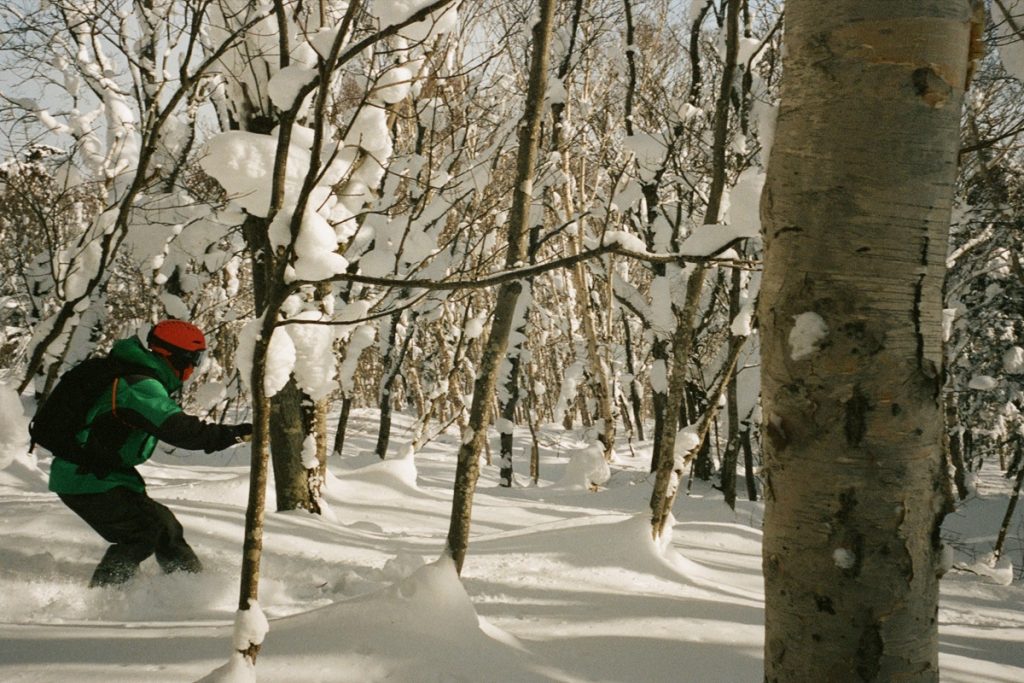
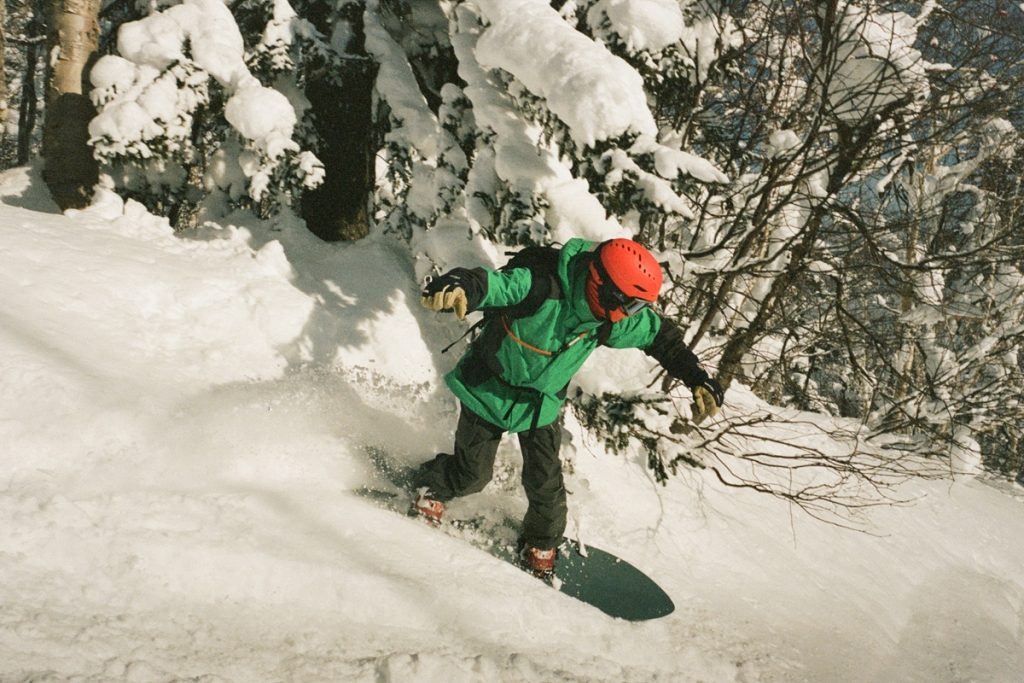
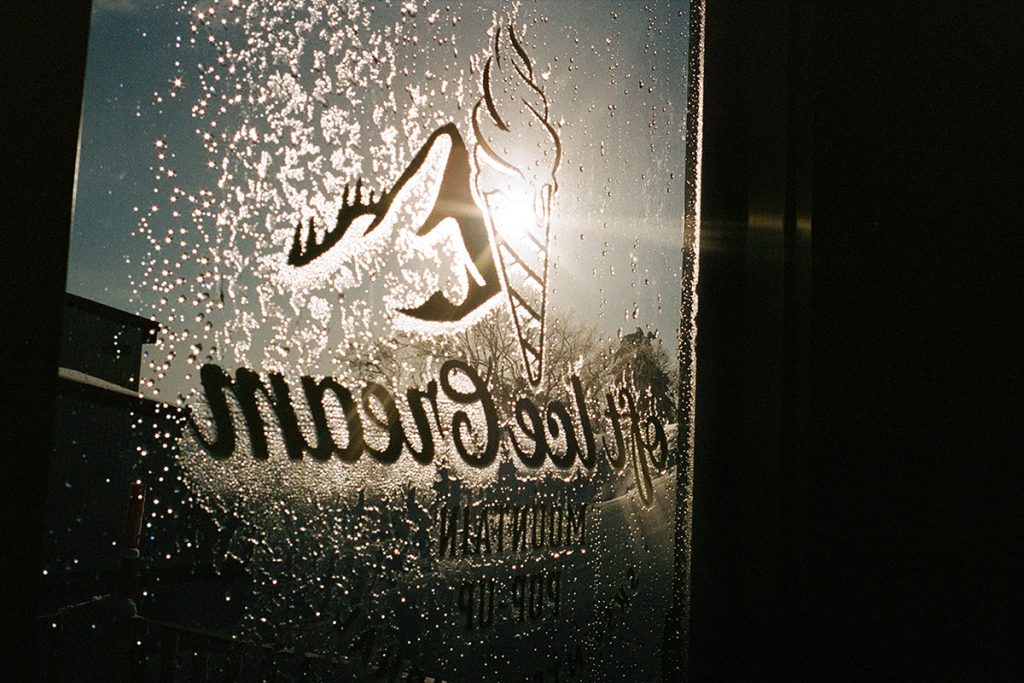
The last item to check on the morning to-do’s is snowboard. The cold air was full of diamond dust as we carved lines between the trees before returning to SKS International for well deserved coffee. Looking at views of Ishikari Bay and the distant Mount Tomuraushi and Asahidake beyond, we discussed our changing culture.
From the locals with their dark earth tones to the tourists with their wild metallic silver and fur-lined hoods, it all exists at the same time. Everyone just does whatever they want.
A Skier goes by wearing Supreme and I recall stories of time spent in New York just after the flagship store on Lafayette opened. How “Supreme” used to be so meaningful for us —skateboarders— and so meaningless to everyone else. That’s how we liked it, that’s why it was meaningful. Later I would design for Supreme —a dream come true— and that younger me would never imagine I’d be sitting here watching such a scene of culture ambiguity.
Neil too recalled stories of filming with brands at the same time, traveling the world, filled with a boundless sense of shared meaningful creativity. We know now that small scenes, brand and the wider culture changes on a whim, often in surprising ways. We Compared ‘selling out’ with ‘chasing in’ like a couple of old guys sitting on their stoop reminiscing about the good-old-days —figments of our subjective memories.

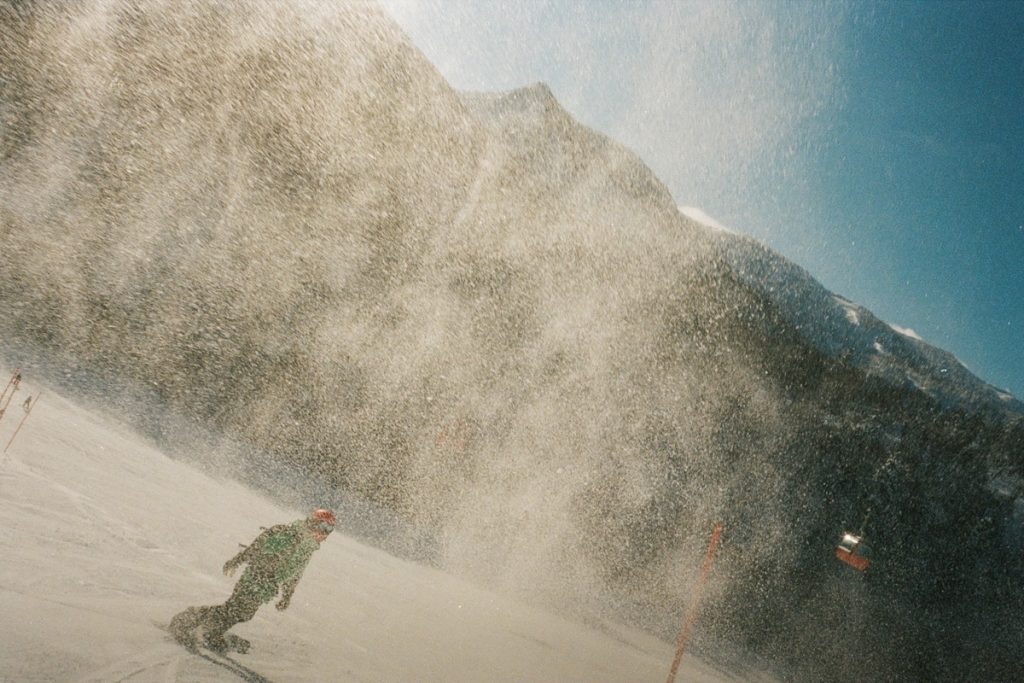
I’m nostalgically rewatching the Car Danchi film series again. Ten in total from 2001 to 2016 following the antics of a close group of friends exploring the mountains in search of powder snow. It not only depicts the changing snowboard scene, but each member’s growing appreciation for the natural environment and for some, a spiritual transformation.
The early films were shot on an innovative Sony VX-1000 MiniDV light enough to carry and film in challenging mountain conditions. Several years later Car Danchi 6 – D.I.Y combines multiple point-of-view camera footage along with Neil’s expert shots. As camera and snowboard technology improved, so did their riding and filming skills, nevertheless it still took time and the collaboration of several people to capture, edit and package each shared moment. I’m reminded that nowadays, everyone is capturing a personal scene of their own, as I watch a solo tourist filming himself strip to the waist while dancing excitedly in the snow. I remind you, it was -19˚C.
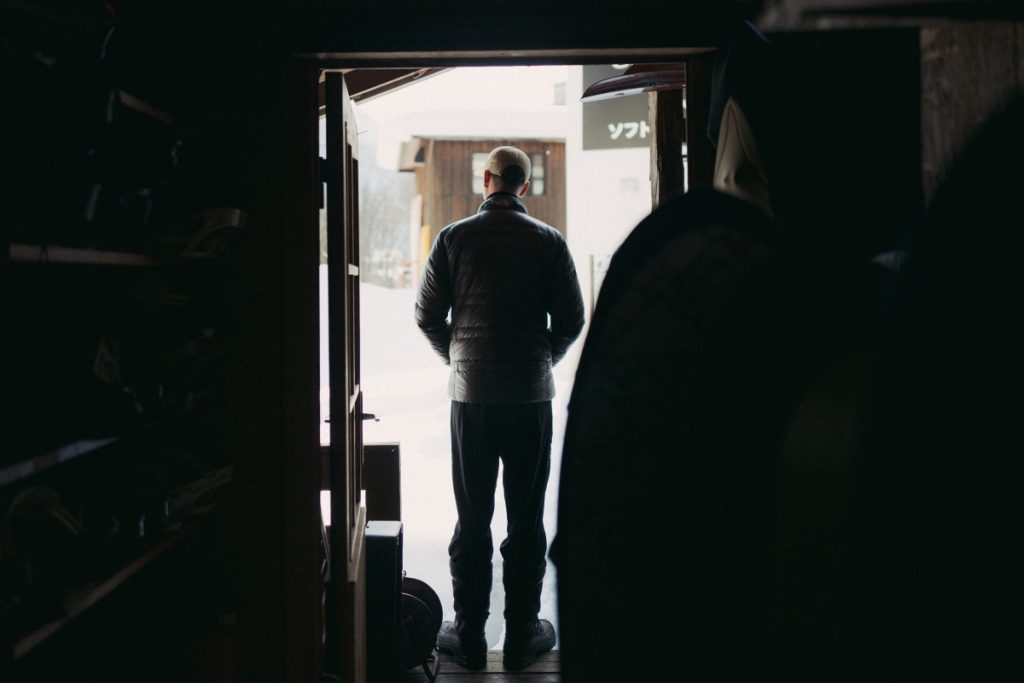
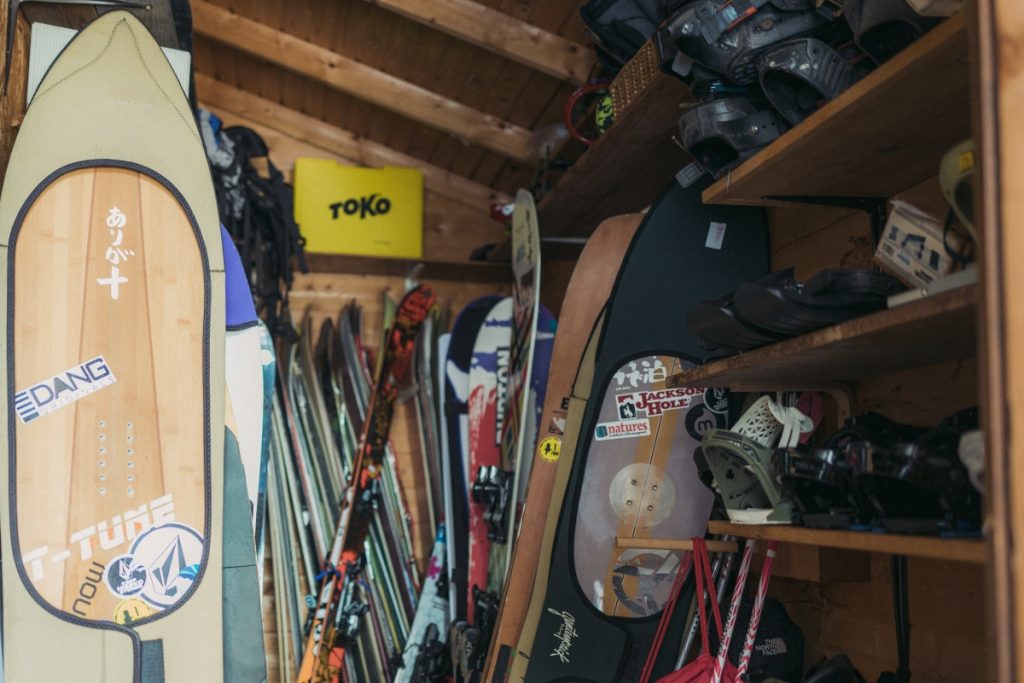
The next morning back at Jozankei Onsen, Neil shows me around his first cafe Locale JKZ serving additive free soft ice cream from grass-fed cows during snowless months. I admire the snowboards hanging on the walls, a classic Burton Backhill, signed by Jake Burton himself. Another Burton board designed for Neils good friend and Car Danchi Crew member Yoshinari Uemura. The difference in design is once again a reminder of the changing snowboard scene.
We move to a small outhouse, the home to Neil’s not so secret snowboard collection. We pulled out boards spanning thirty years or more and discussed the designs, each with a unique story —memories of winters spent with friends. Concluding that snowboard design is better than ever, although we question some of the board graphics, “what were they thinking?”
This season Neil is riding a X2FA CUSTOM from Field Earth, a company pushing the possibility of snowboard design in new and exciting three dimensional directions. I rode an Artride 3D by the same company and I have to admit it was fantastic.
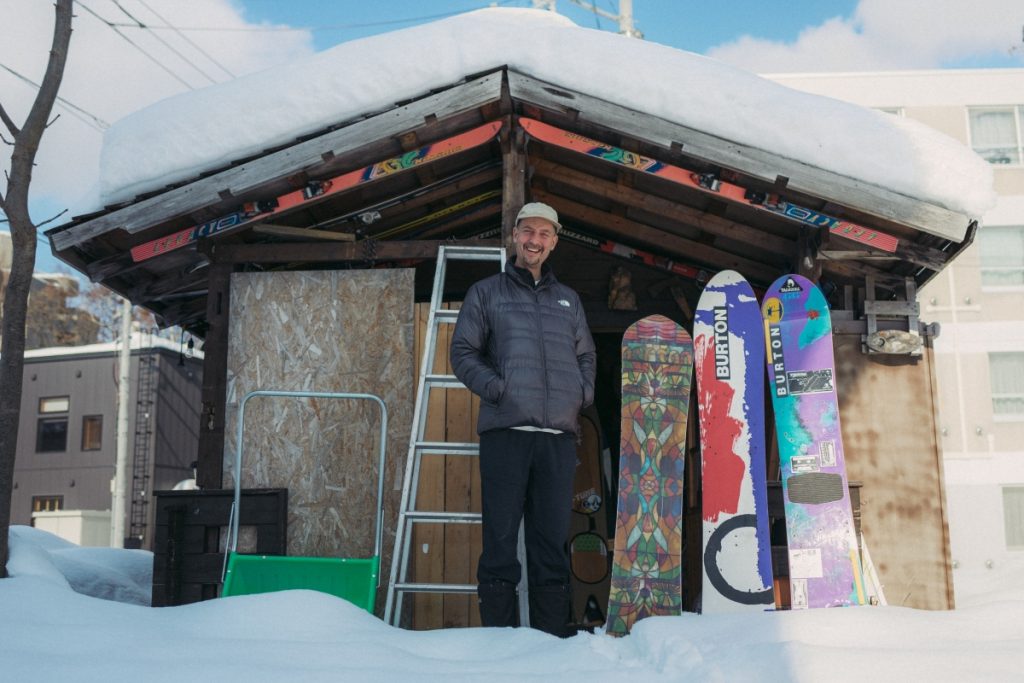
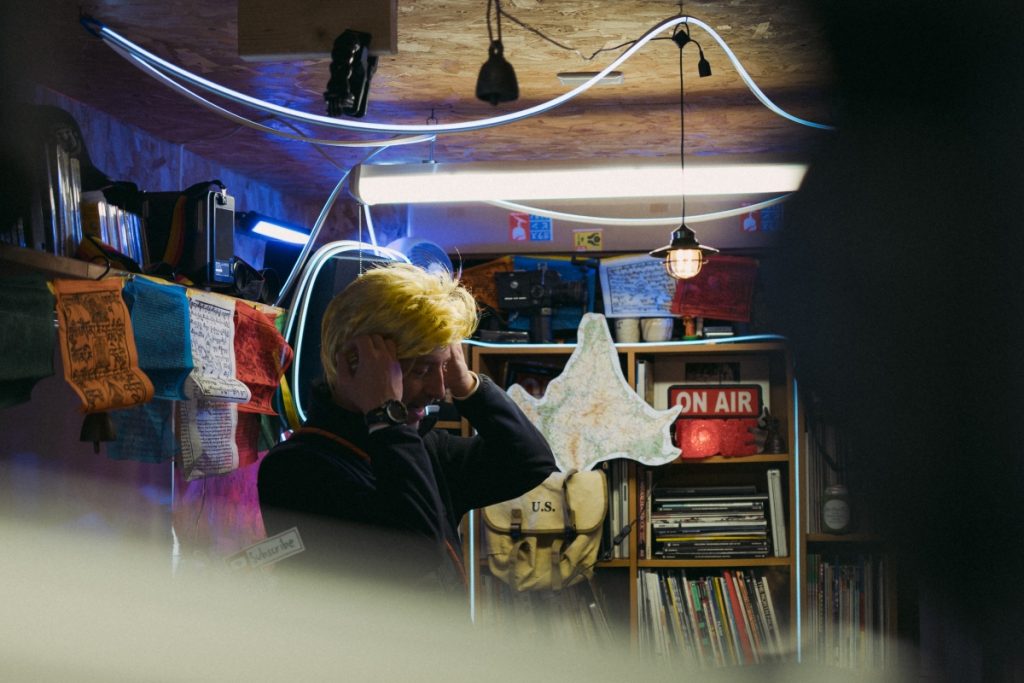
In Neil’s YouTube studio, the question arises “are we partly responsible for the —not always positive— changes we see, through the dissemination of fringe cultures, and outdoor environments?” The impact on local communities can be a positive thing, but such popularity also has the power to irrevocably change an environment in unforeseen ways. All artists share the responsibility that comes along with our eagerness to showcase the places we love through our creative endeavours. Evermore so if we are not a member of the local community ourselves.
Before the ubiquitous smart phone and the instantaneous ease of creating and sharing ‘content’, this may not have been so disruptive. Impacting not only the natural environment, but the creative environment too, where everyone is a photographer, filmmaker and artist fuelled with ever more powerful technology. We question further “Is it even possible for a scene, culture, or community to sustain a quiet living without someone cashing in and commodifying it?“
Neil and I positively believe it is. We discuss ways of creatively connecting intimate audiences in reciprocal responsible ways. Willing audiences who pay full attention and fair price for valued enduring creativity, not swipeable replicated content.
With each changing season it feels like our camera bags grow a little heavier, but actually it is us who grow a little older with knees who complain a little more. We humans can get stuck subjectively reminiscing about the past, when there was more snow, less people, cheaper lift passes and gasoline.
The truth is, if we take a moment to breathe and put things into perspective; now is always the best season with more opportunities than ever before. Not getting stuck in a mindset of negativity and nostalgia, but using the positivity of past shared experiences to fuel our creative imagination today.
Yes, new snowboards are expensive, but the designs are so incredibly good, enhancing the experiences of floating through the natural environment. If spending $1000-$2000 isn’t your thing, the choices out there are virtually unlimited; with second hand, handmade or homemade boards for all types of riding style —for all types of creativity.
You can walk anywhere, go anywhere and then leave your creative mark on nature without damaging or removing anything. The feeling of floating on snow above the ground is also very addictive. It is a little like anti-gravity as we walk or ride a few feet off the ground.
For me, my arc of riding went from ski resorts to biggish mountains to slowly exploring my local foothills on boards nearly 10 years old. We are free to snowboard exactly the way we want, as we are free to design, photograph and be creative too —without damaging or removing anything.

For Neil, snowboarding fits in somewhere in his busy daily routine along with running two cafe’s, filming for local resorts, ice baths, daily YouTube channel “America Today“ and spending time with his loving family.
I was truly amazed how much Neil fits into each day so I was curious how someone so instrumental thinks about success? “Definitely measured on a self defined gauge. Having kids will always be my biggest success. Everything else is temporary. To be at peace is to be truly successful.”
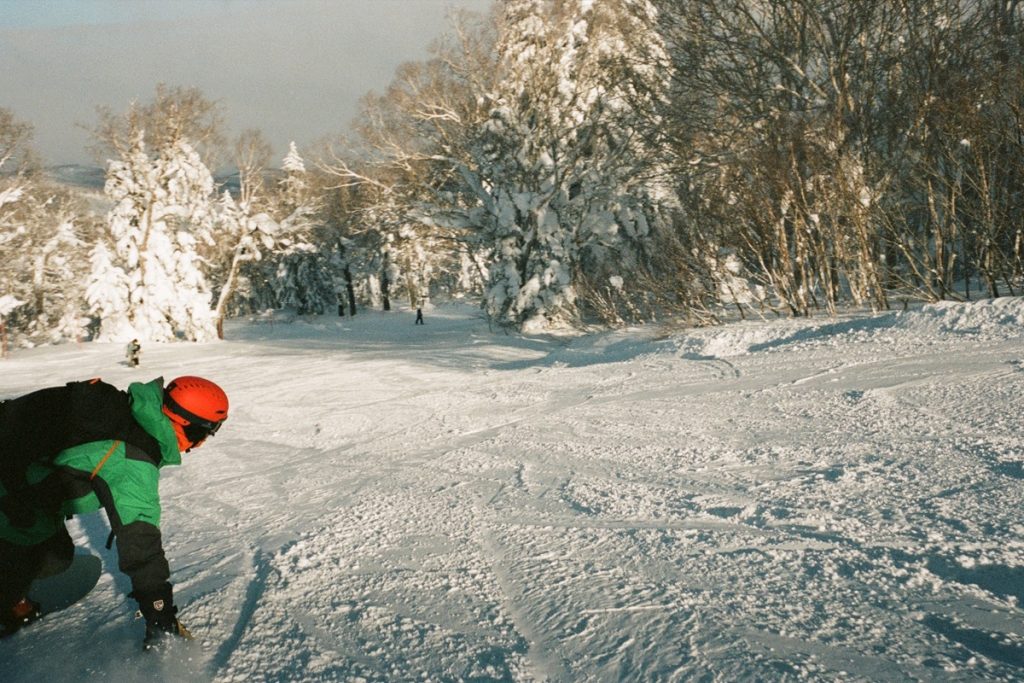
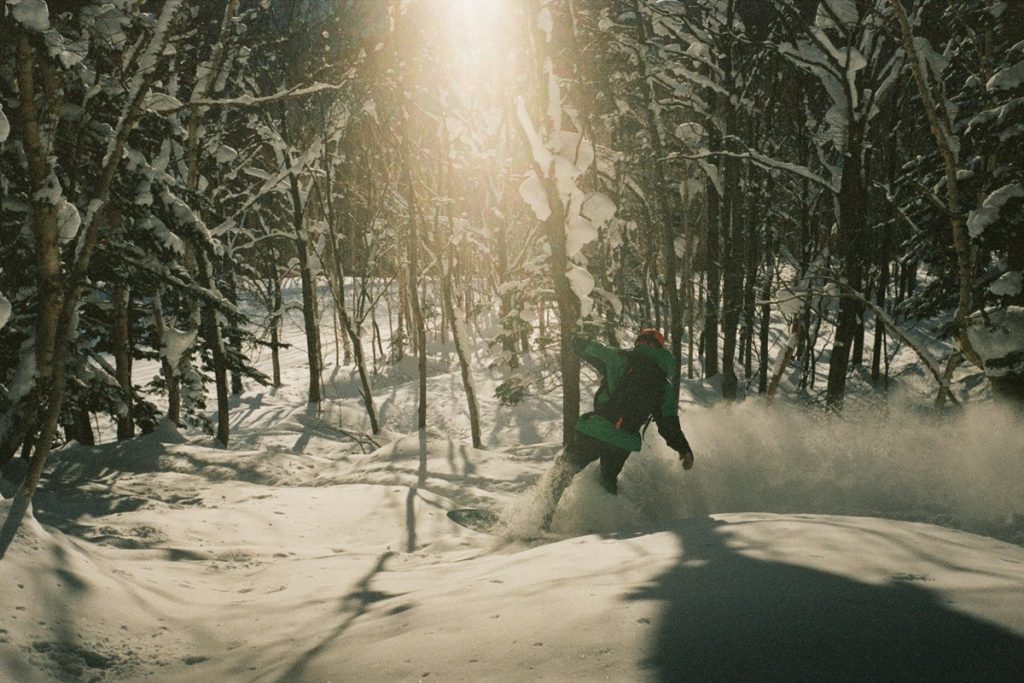
As we rode through the trees we paused listening to the silence of deep snow and meditated on how peaceful it feels to be outdoors, gently floating above the ground with friends.
Maybe our younger self-conscious selves would’ve worried about having the right gear, finding the best snow and sharing the perfect photograph. Now with enough turns under our feet to understand the ephemerality of such things, I remember the words from Car Danchi 2 – The Day. “It’s not about the conditions any more; who you are with and the mood is everything”.
And so it goes…
If you liked this story you might like to read & subscribe James’s newsletter.