


“The food I want to make grows out of everyday life.”
Since graduating from university, chef Sora Murakami has traveled from one producer to another across Japan. He lived and worked with a farmer in Unzen dedicated to preserving native crop varieties, then practiced natural farming in Ibaraki while working at a craft brewery. As soil and agriculture became part of his daily life, he began to recognize the unease and fragility he had felt growing up in a major city. The voice inside him grew louder: “I want to build a life of my own.”
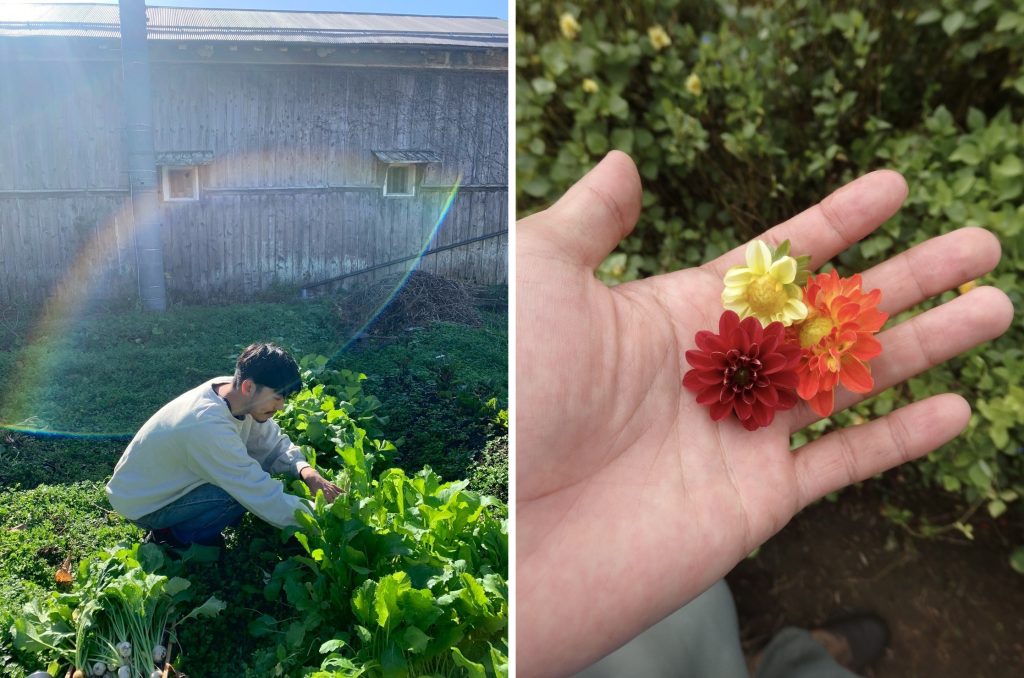
“Something was reassuring about building a life with my own hands,” recalls Murakami. “Something about cultivating the fields and growing what I ate, and making a fire and cooking over it. I knew I couldn’t do everything myself yet, but I began to think about how I might bring at least some of those elements into my life.”
Murakami then moved to Mimasaka, Okayama, intending to become a farmer. Through an unexpected turn of events, however, he found himself opening the restaurant ohayo. It brought him joy, but he was young, relatively inexperienced, and faced the constant uncertainty of running the place alone. Recently, though, something has shifted, he says. He has begun venturing beyond Japan, cooking for local communities and testing his abilities as a kind of roving chef. These experiences have nourished him, bringing new depth to what “cooking” means.
“Learning that my food is part of a special moment in someone’s life made me incredibly happy. I’ve come to see cooking as one small part of creating a good time for something bigger than myself.”
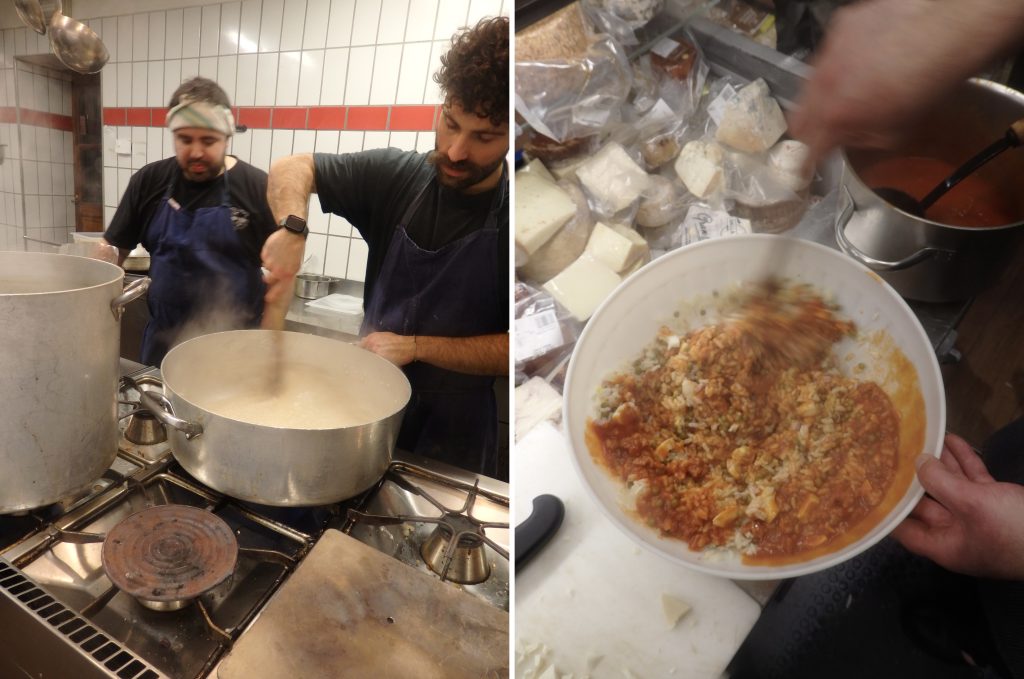
One story from Naples, Italy, which Murakami visited in 2025, reveals how deeply he values the shared joy that rises from the table. On Christmas Day, he joined the local farming host family through WWOOF* to prepare a hefty Christmas dinner. Starting at noon, they made stock from locally caught mussels and shrimp, rolled fresh pasta by hand with the grandmother, and cooked enough dishes to cover the whole table. They ate late into the night, finishing with panettone and espresso. Looking back on that day, Murakami realized something new.
That what truly moves him is seeing everyone gathered together, openly and genuinely happy.
*WWOOF is a volunteer network that connects hosts at organic farms and similar places around the world with travelers, known as WWOOFers, who help with daily work in exchange for hands-on experience and cultural exchange.
“I love cooking, and it brings me a lot of joy,” he elaborates. “But sometimes I wonder whether the food I make is something anyone could make. I’m not doing anything particularly elaborate. It all starts with the rich local ingredients. If I happen to be with someone who really has an understanding of the ingredients, or has respect for the people who produce them, or similar principles or values, I could see myself leaving the kitchen in their hands and spending a little more time working in the fields or something.”
The ingredients are always the true protagonists of a meal. For Murakami, a cook is simply an intermediary connecting the ingredients with the people who eat them.
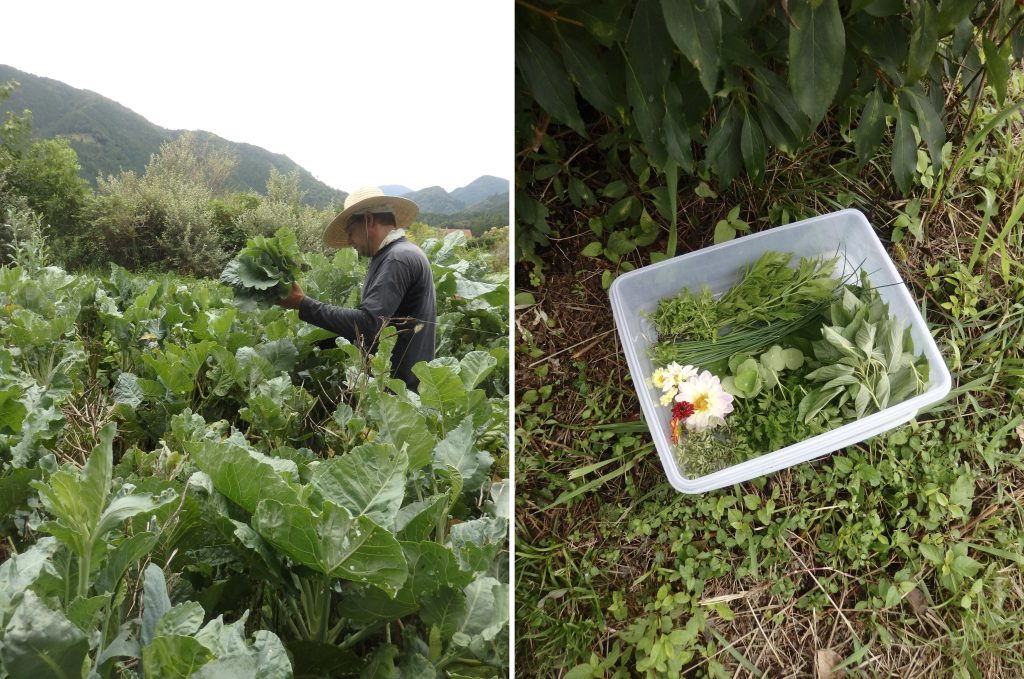
“Who I receive my ingredients from matters enormously to me. I feel that the meaning of my cooking lies in creating those relationships. For as long as I can remember, I’ve often wondered whether human beings are really necessary. The more I witness beautiful nature and scenery, the more I question our reason for being here. But human hands can, say, turn grapes into a beautiful liquid, and the world is filled with wonderful things that exist because people stepped in. That made me think that perhaps our purpose lies in coming between things and bringing them together. If that’s true, I’d like to fulfill that role as best I can.”
“I don’t manage it all the time, and I’m really not that admirable a person,” Murakami adds with a laugh.
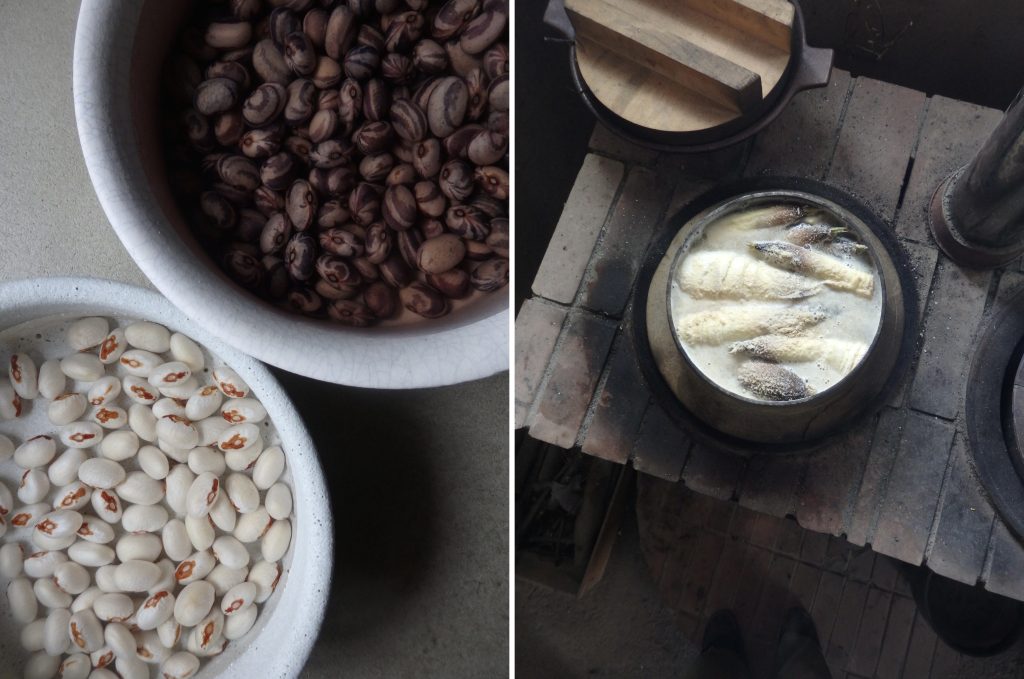
“But to me, a livelihood means sharing joy with someone through something I know I can do with confidence. That applies equally to the farmers I work with and the guests I cook for. If something I have in me can become something meaningful to another person, that would make me very happy.”
Murakami learned that what he trusted himself to do simply happened to take the form of cooking. In the past, he sometimes questioned whether he should continue running a restaurant. Now, there is a new brightness about him.
“I’m having so much fun cooking for people,” he says. “Lately, people have started asking me, ‘Are you from Okayama?’ And that makes me really happy for some reason. Living here and eating what’s grown on this land, I’ve started to feel like I am of this land.”

The life Murakami has found may differ slightly from the one he once imagined. Yet it has led him here, to a life of creating tables and spaces filled with a sense of celebration. He can now bring such a place to life wherever he goes in the world.
Each gathering becomes a feast that nourishes the hearts of those who sit around it. Through the vessel that is Sora Murakami, and the compassionate gaze he extends equally to people, plants, and animals, eating becomes a gentle act of peace.
Sora Murakami
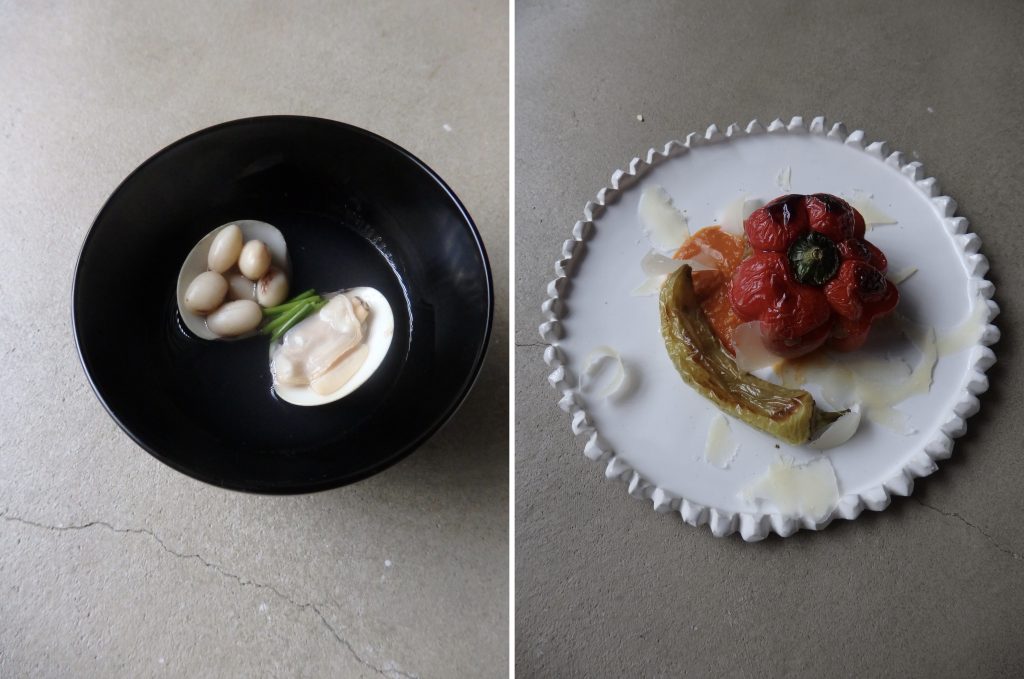
Born in Osaka Prefecture. Owner-chef of ohayo, a restaurant in Mimasaka, Okayama. Murakami regularly visits the local farmers and producers who sustain the region’s food culture, taking part in the growing and tending of crops. He prepares the ingredients they harvest simply, allowing their natural flavors to come through.