







Poetic brilliance fostered in a port town
“Are you looking for Misuzu’s grave? See that car over there? Turn left there.”
As we walk through the port town of Senzaki, an elderly woman suddenly calls out to us. She speaks the poet’s name with such warmth, as if talking about a friend, though Misuzu passed away nearly a century ago. On the house next door, one of her poems hangs under the eaves.
Poet Setsuo Yazaki also refers to Kaneko Misuzu simply as “Misuzu-san.”
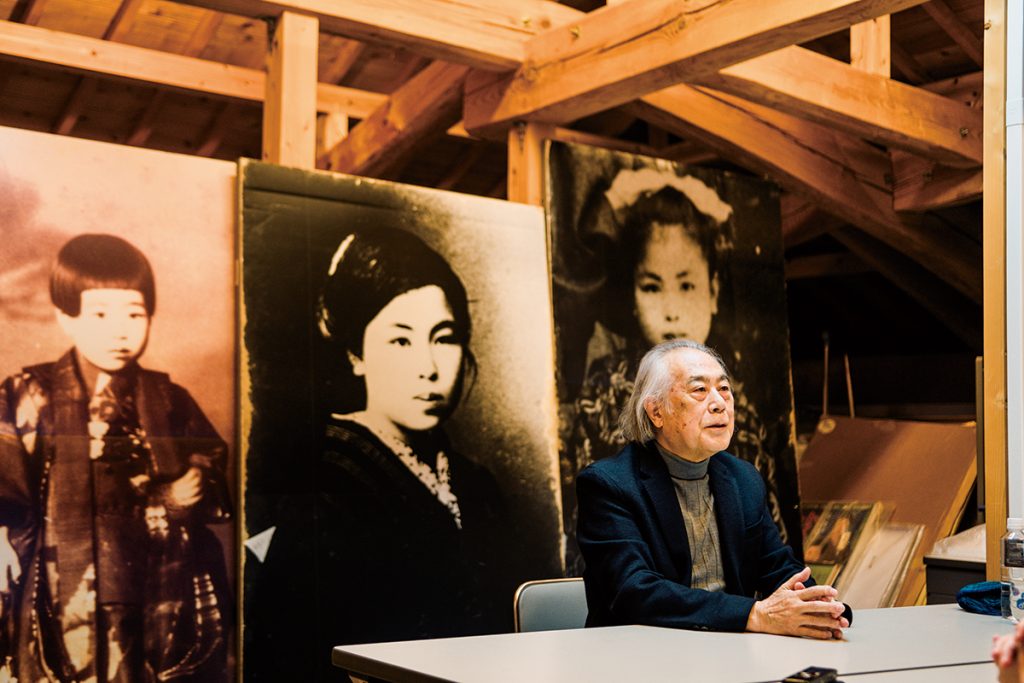
“Misuzu-san is a poet we can’t afford to forget. Her words carry such power. I believe everyone carries a little piece of her in their hearts. If you can meet the Misuzu inside you, that’s more than enough.”
Hard to believe, but Misuzu, a poet now featured in school textbooks, was almost completely forgotten until the 1980s. Poet Setsuo Yazaki first encountered her poem Tairyo [Big Catch] as a student, and the impact stayed with him. He then spent 16 years searching for her unpublished manuscripts. When he finally discovered three notebooks containing 512 handwritten poems, more than fifty years had already passed since her death.
“Misuzu had the ability to stand still in the joy or sorrow of others,” Yazaki-san says. “When I first read Big Catch, it shocked me. Truly. It was a children’s poem, but it made me realize that all life is sustained by other life. Senzaki has a long history of whaling, you know. There’s even a whale grave on Omi Island, just close by. I’m sure she saw whales and humans as equals. That gentle gaze she cast toward life. It feels deeply rooted in the seascape and spirit of Senzaki, the town that raised her.”
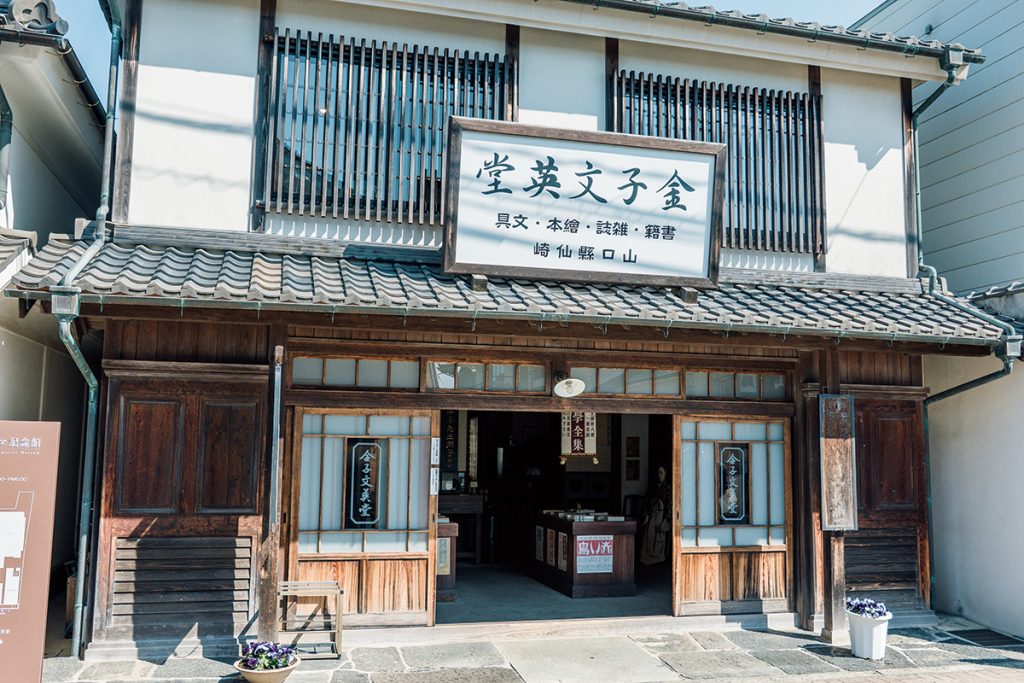
Misuzu’s childhood home in Senzaki has been restored as the Kaneko Misuzu Memorial Museum, where Yazaki now serves as director. Inside, we reconnect with the poet herself before setting out to visit the shrines and temples that appear in her work. At the end of the day, we climb Mt. Ōji, where the port town she once loved comes into view, glowing in the fading light. Borrowing her own words from the poem Ōjiyama, Senzaki appears to be “floating, like a dragon palace.”

Misuzu Kaneko
Born Teru Kaneko in 1903, in the village of Senzaki (now part of Nagato City), Yamaguchi Prefecture, Misuzu Kaneko was a poet known for her gentle, deeply empathetic children’s verse. She began submitting her work to literary magazines under the pen name Misuzu Kaneko and was soon hailed as “a giant among young poets.” Tragically, she passed away in 1930 at the age of just 26. Decades later, thanks to the tireless efforts of fellow poet Setsuo Yazaki, her collected works were published by JULA Publishing. In 2003, the Misuzu Kaneko Memorial Museum opened in her hometown. Her best-known poems include Watashi to kotori to suzu to [Me and Little Bird and the Bell] and Kodama deshouka [Are You an Echo?].
