










Editor’s Letter
No.74|WAKAYAMA(2026)


I’d Rather be BIRDING.
By LUCAS B.B.
At some point, I realized birding was less about seeing birds and more about awakening perception. At first, not everything draws you in—a crow, a pigeon, a little scruffy, sometimes unwelcome, with all the squawking and the occasional risk of getting bombed. But when you begin to listen—really listen—the world starts to shift. What you thought you knew bends, and the road you walk opens in new ways.
A trail changes when you walk with birds in mind. You still move forward, but not in the same way. A sound stops you. You look up. You wait. Then you walk again. In this rhythm—walking, pausing, listening—the trail unfolds differently. What was once a continuous path becomes a series of small moments. A hike becomes less about reaching a destination and more about being there, moving through it at a different pace.
In Wakayama, this feeling comes naturally. Walking the Kumano Kodo, Koya-san, and along the coast, we noticed small shifts: a bush warbler calling from somewhere unseen, the clear note of a varied tit echoing through cedar, a blue-and-white flycatcher crossing the path in a flash of color. Less like finding something, more like being quietly invited into a conversation.
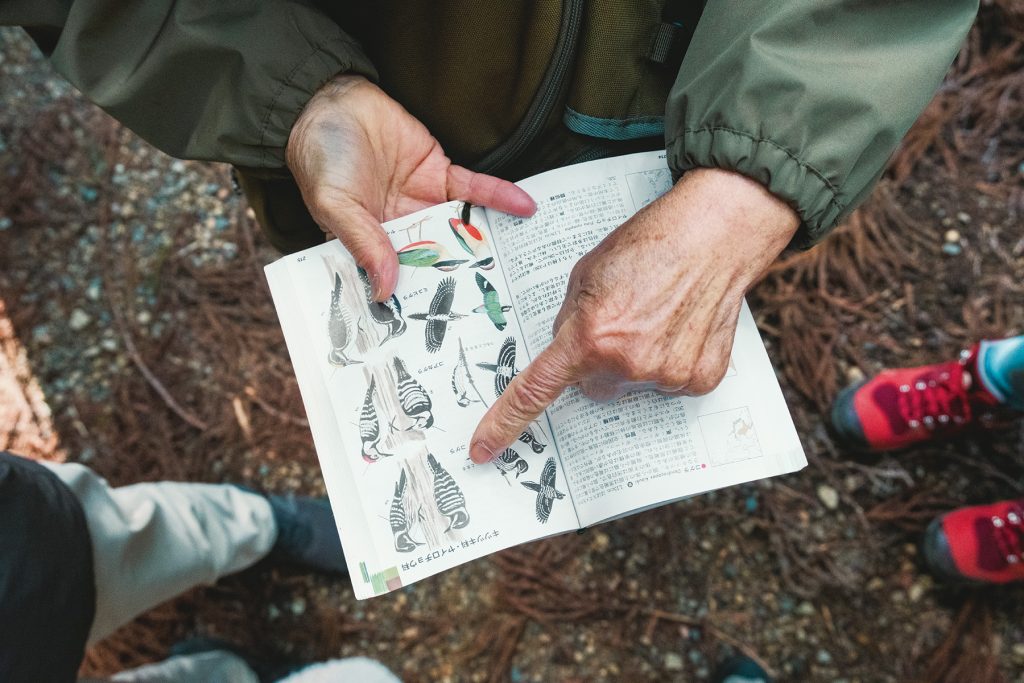
As we begin to recognize more—sounds, patterns, small movements—the forest comes alive. A call once unnoticed stands out, a flicker becomes something you follow. With that awareness comes a quiet excitement, a kind of creative energy. One guide said the more birds he recognized, the more the forest opened—and that it even changed the way he played guitar. Little by little, you begin to notice more.
In Wakayama, this way of seeing has a long history. The naturalist Minakata Kumagusu observed the smallest forms of life—mushrooms, slime molds, unseen networks—believing entire worlds existed within them. The writer Ed Yong reminds us that every creature experiences the world in its own way—and that most of it escapes us.
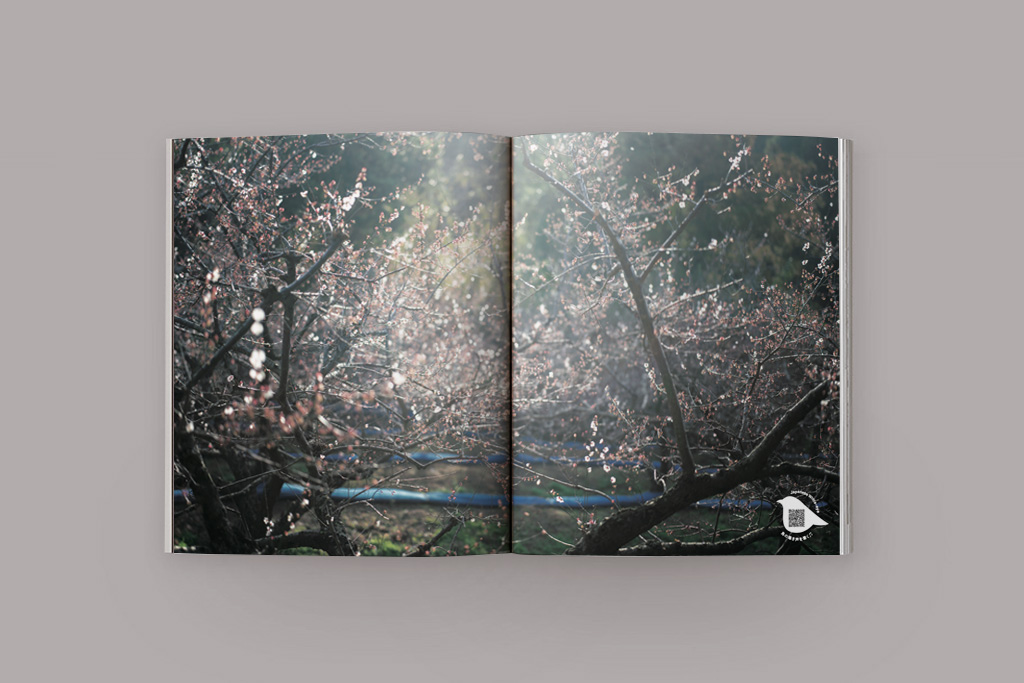
Along the way, other rhythms appear—plum blossoms, umeboshi, fresh water, an onsen along the trail. A place to reset, to let the day settle into the body—like a human bird bath.
At a certain point, as your attention deepens, a bird is no longer just a bird, but something older—like a small dinosaur moving through the present. Colors and patterns stand out, like clothing worn lightly by nature. Observation begins to feel like play. And in that play—listening, focusing, following—the mind sharpens, the body relaxes, and a quiet clarity appears.
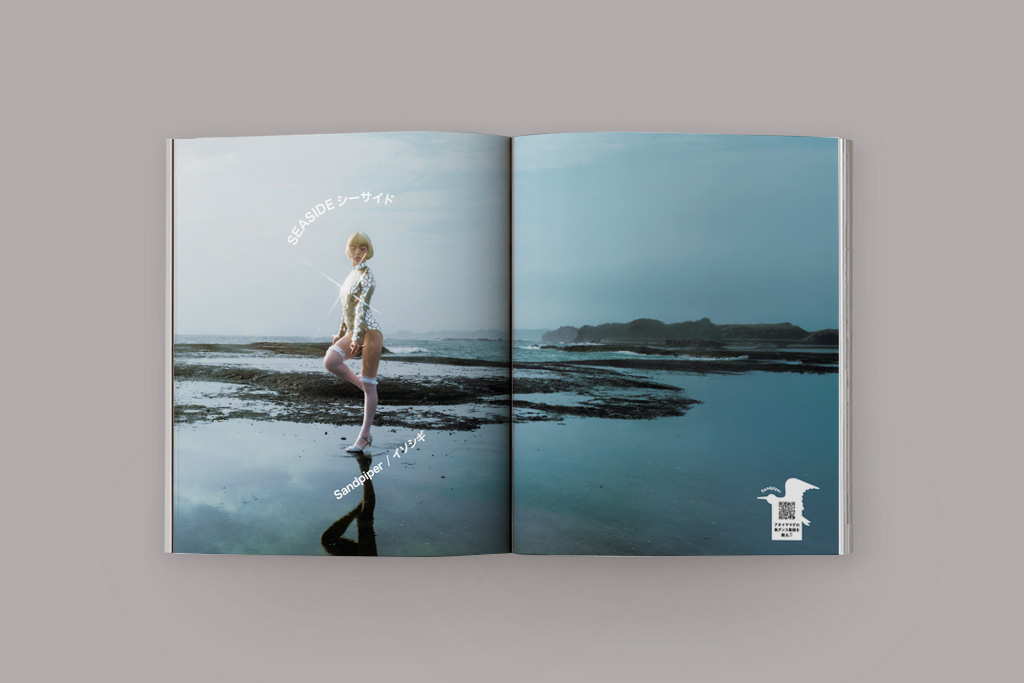
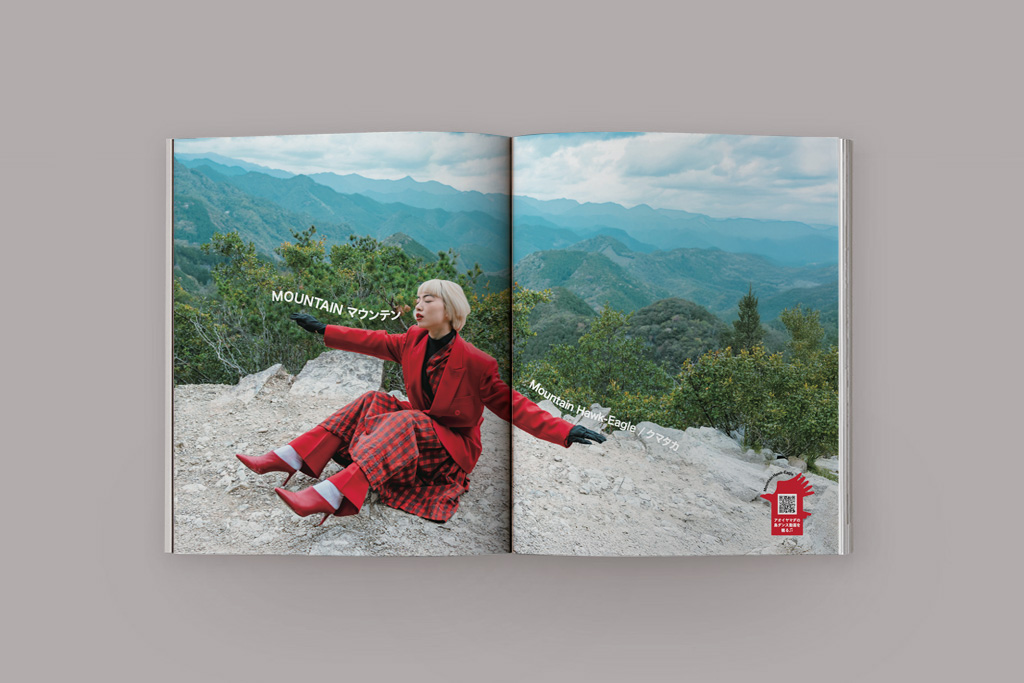
In this issue, we explore how creativity and nature come together—using birds as a bridge. Watching performing artist Aoi Yamada move, the line between human and bird softens—gesture, rhythm, presence—translating something we cannot quite see into something we can feel. In Mayuko Sannomiya’s essay, we’re reminded that to see is not always to look, and that birdsong can become a map of the landscape—even a way of feeling the sky. Tomoki Kyuki’s delicate hanga offers another way of seeing—through line, memory, and time.
All of these expressions—movement, sound, and art—begin with paying attention to nature. Maybe this is where birding begins—not in searching for birds, but in slowing down, becoming aware, and allowing ourselves to be found by the world around us. A small shift in attention—and suddenly, everything is alive.
Soundtrack
WAKAYAMA
PAPERSKY Soundtrack For Travelers
WAKAYAMA Edition
A list of Songs to enjoy over a cup of coffee, while driving, and of course while flipping through the pages of the WAKAYAMA edition of Papersky.
Selected by:
GOOD NEIGHBORS’ MUSIC VENDER
Kenji Hatogai(studio ninebirds / BAGN)
- KUMANO / Aurora Acoustic
- BIRD DANCE / Gen Tanabe
- BIRD WATCHING AT INNER FOREST / Cornelius
- ANGEL ECHOES / Four Tet
- ROTATION / Herb Alpert
- THE WHISTLE SONG / Reggae Disco Rockers
- WILD BIRD / Maria Muldaur
- BIRDS OF A FEATHER, WE ROCK TOGETHER / Vulfpeck, Antwaun Stanley
- THE BIRD / Anderson Paak
- BIRD OF BEAUTY / Kurena Ishikawa