







My dream is to have my bells displayed in museums in the distant future a few hundred years from now; with a label that says “Creator unknown”.
This is a simple story about a calm person, calmly making simple bells in a complex world.
For this story I journey to the quiet castle town of Sasayama, Hyogo to hear Kumiko Isogawa’s story of listening to the sound of bells and her heart.

There are islands in Melanesia (Southwest Pacific Ocean) where shell money is still commonly used. Kumiko talks about a particular island where hand shaped shells are threaded like beads into long necklaces over a span of a lifetime; representing a long fruitful life. When that life ends the symbolic shells are offered to friends and family who attended the funeral. The notion of this inspired Kumiko to start making something meaningful and beautifully enduring of her own.
We were in Kumiko’s small workshop talking about her bells and the numerous collected objects filling almost every surface and corner of the room. In and among her own creations were artefacts made by friends and others treasures found when travelling: Bell themed wood carvings, bells threaded like shell necklaces, small silver whistles and of course bells and more bells in varying shapes and sizes.
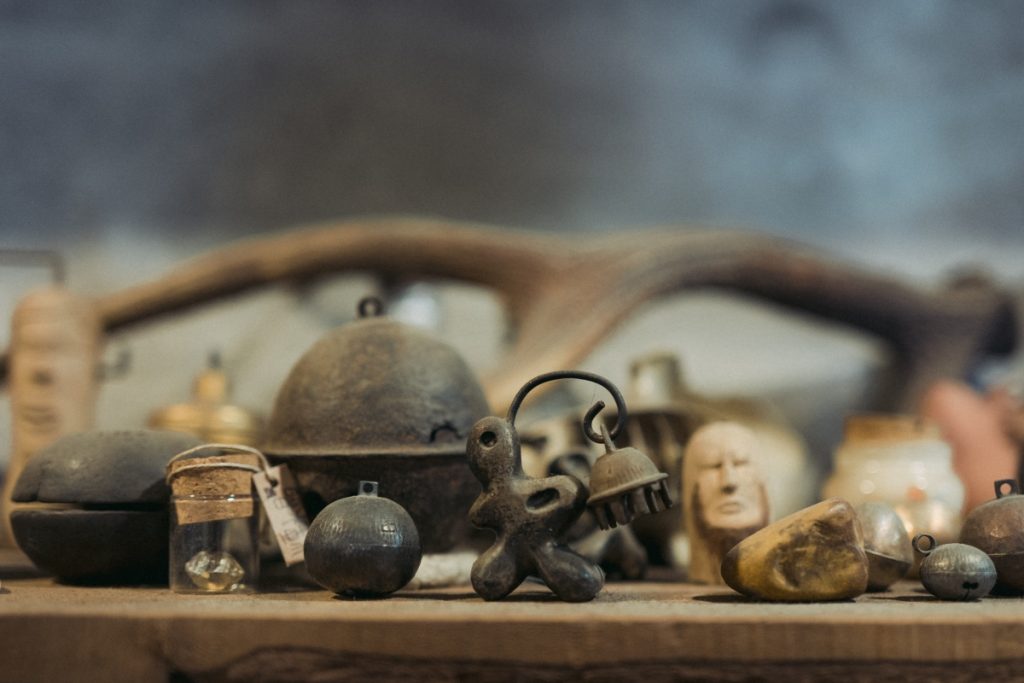
“Bells were one of the earliest musical instruments,” she said, showing us a bell instrument she had started, but hadn’t finished. Many of the objects were in varying states of incompletion, like sketches in a physical form — ideas in a state of transformation. One sketch leading to another in perpetual motions of creation. Completed or not is beside the point.

Kumiko is shy, an artist of few words, but happily honest and direct. As I took photos of her mystical workshop I listened to her story of becoming a bell maker.
Wanting to work with her hands she studied silver metalworking at Hiko Mizuno College of Jewellery in Shibuya, Tokyo. It was the late 1990’s and silver jewellery was the current trend. We reminisced about Tokyo at that time and the popularity of brands such as Chrome Hearts. Silver was cheap and profits were high for those who could fashion accessories out of metal. In 1999 she made her first bells for friends.
When I was younger I wanted to create something that was unique to me, but now I want to create as many different things as possible.
Nowadays the cost of silver is more expensive and Kumiko’s motivation has matured. On her workbench were several bells in production. Circles cut from sheets of silver had been hammered into hollow hemispheres later to be joined into bells. We watch as she heats one half until it turns pink before dropping it into water to cool with a fizz. A process of activating or relaxing the molecules making it easier to mould
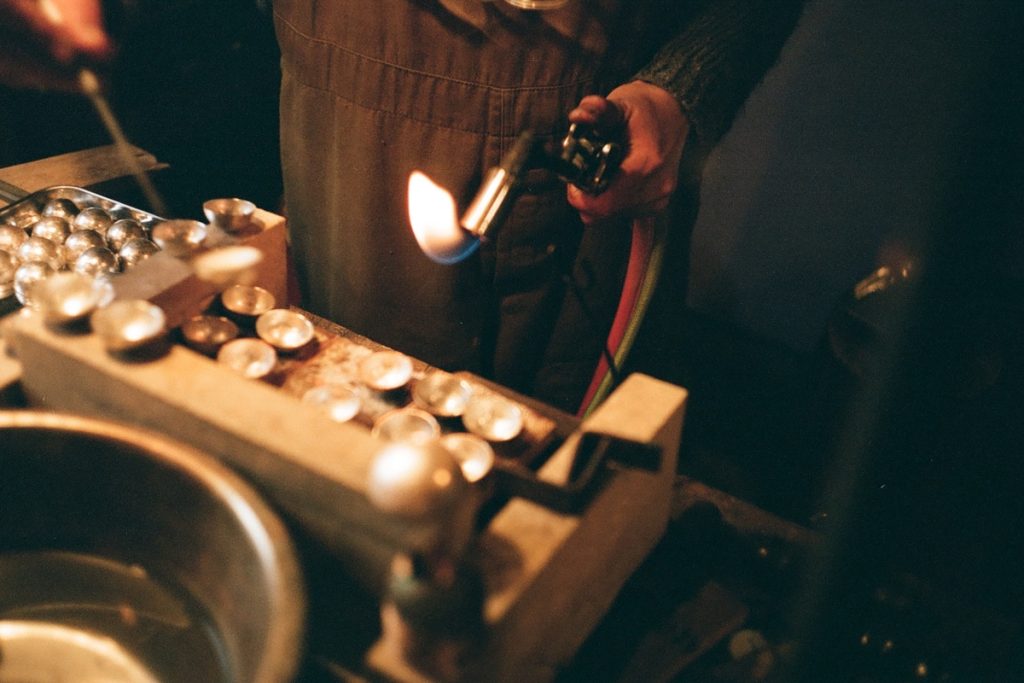
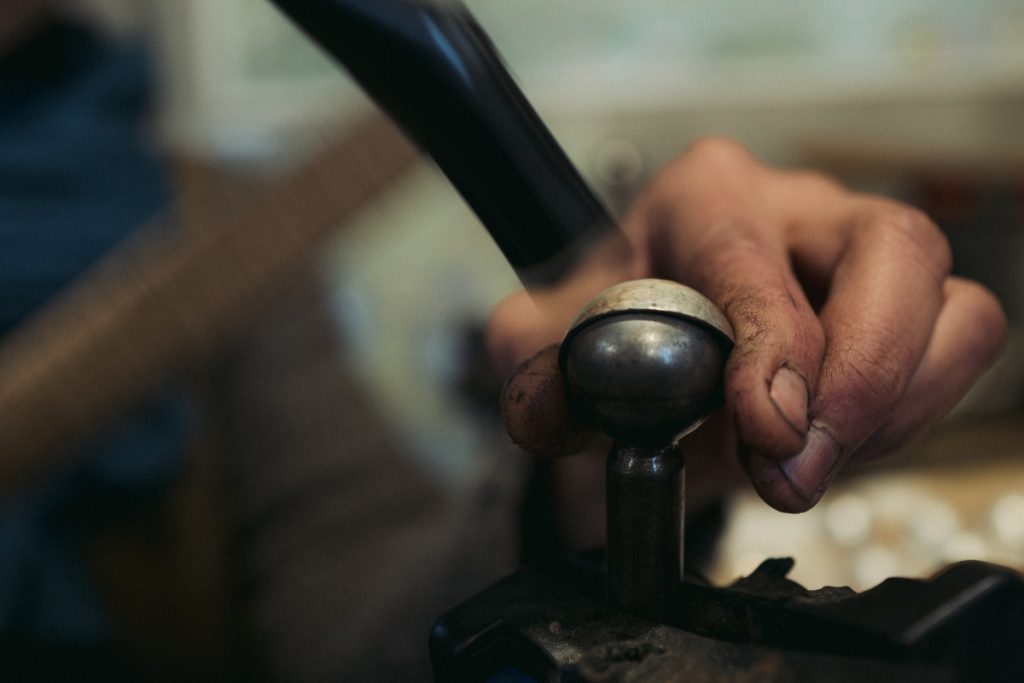
At the time of my visit, Kumiko was in the middle of a project to make 1000 silver bells. Collaborating with a recycling factory who supplies her with recycled silver. Together they want to show how something beautiful can come from the waste and unwanted spoils of today’s complex materialistic society.
“My work is sometimes troubling because often I feel it is not important to nature.” she frets.
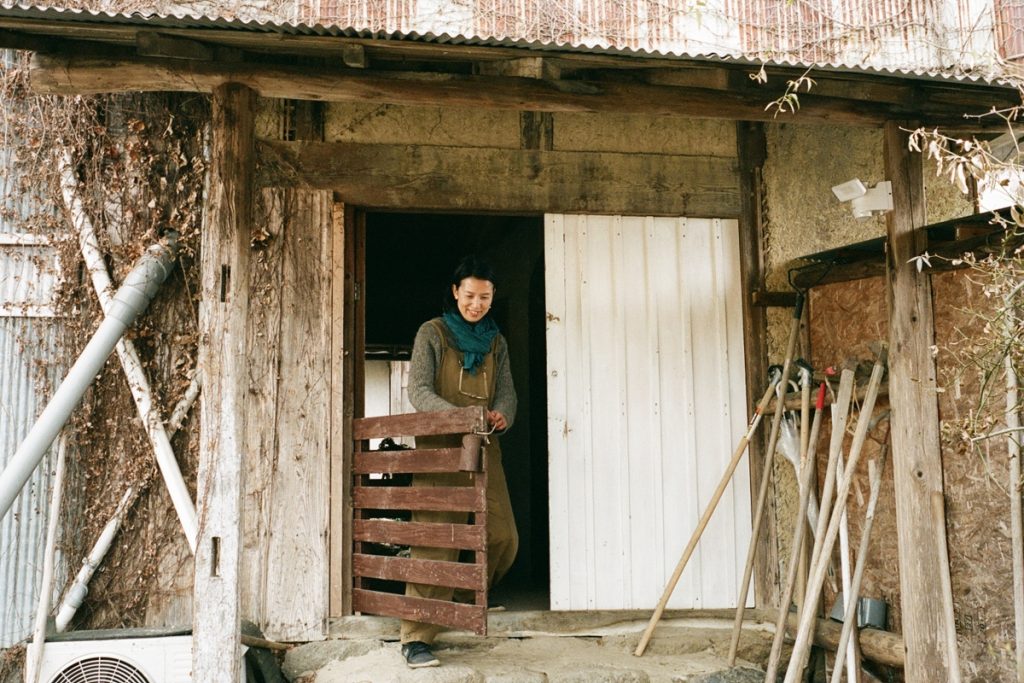
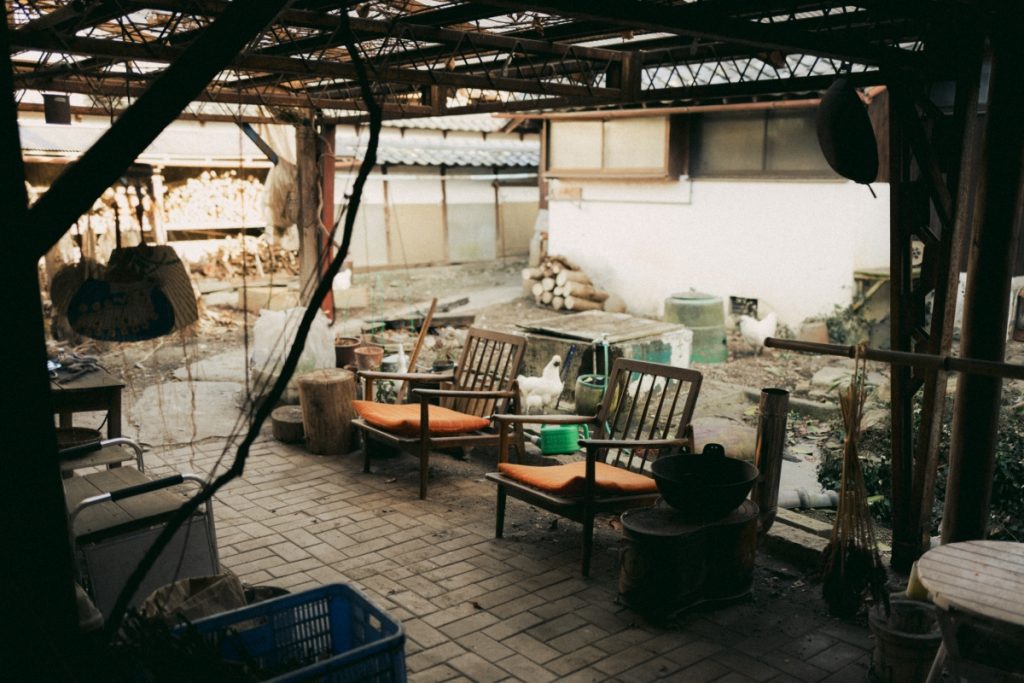
Kumiko lives and works in her grandmother’s house; a typical farmhouse of the area built more than a hundred years ago. The workshop occupies one of the outhouses, opposite another is for guests, both forming an entrance into the internal courtyard.
The main house sits on the other side of the courtyard surrounded by a wall. It’s the first time I’ve been in a Japanese farmhouse with an enclosed space like this. The atmosphere reminds me more of Thailand or Taiwan where outside spaces are more regularly used.
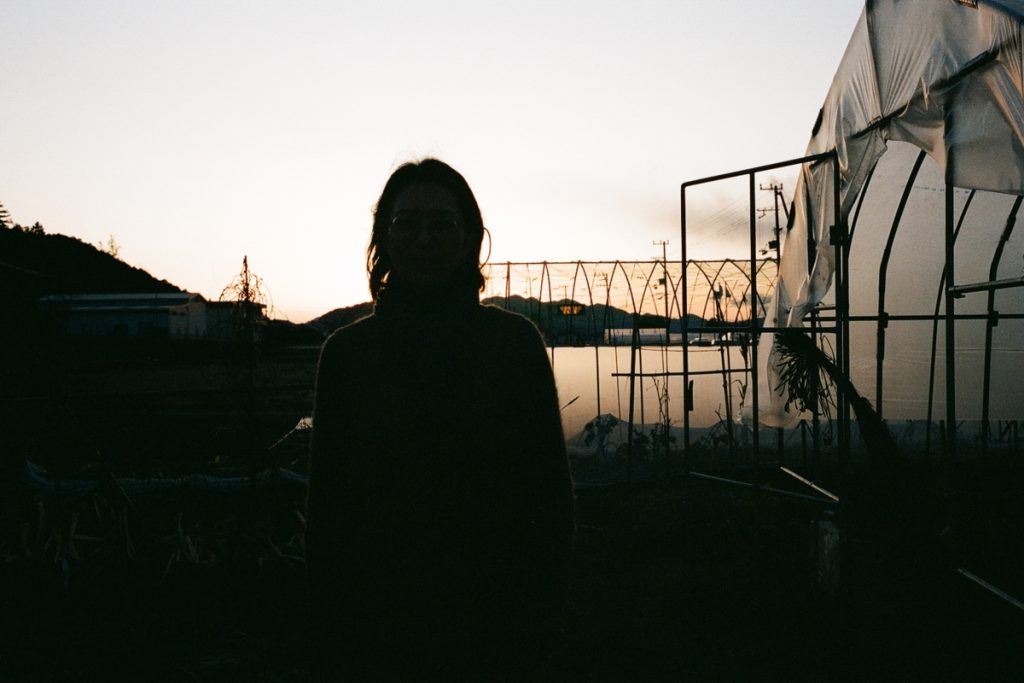
There were chairs for sitting during warmer seasons, a well supplying water to a small stream and chicken running freely around. Eggs had been collected and daikon hung drying on a bamboo inagi. “We use this space like a living room during summer.” Kumiko said as I took her photo for the first time.
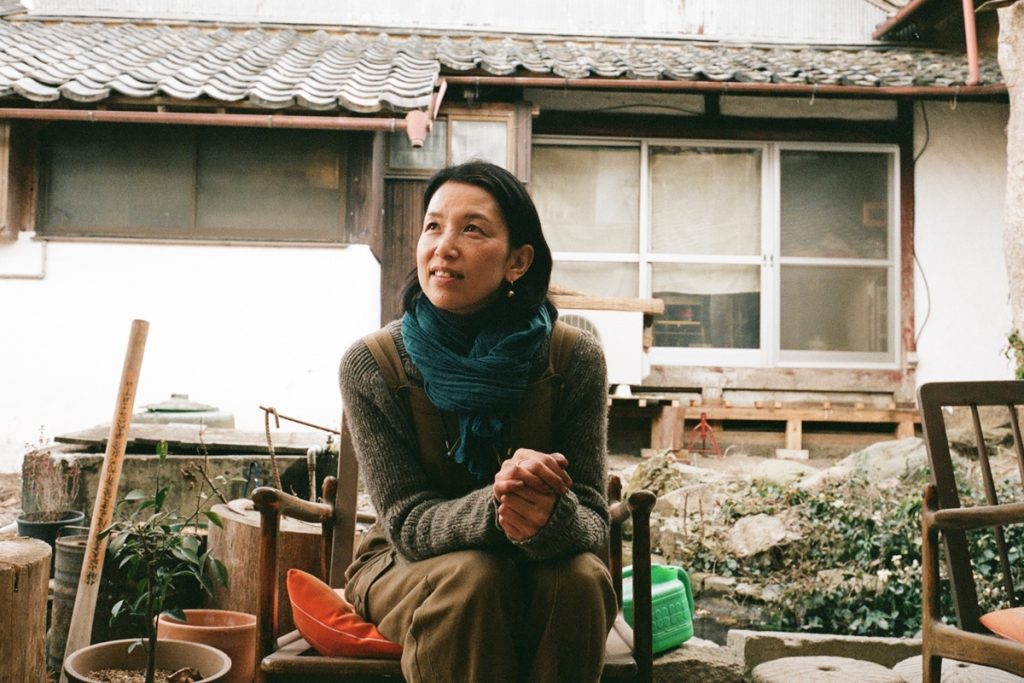
I asked how being outdoors in nature influences her creativity?
“It is very good for my body and mind. I prioritise my vegetable garden over economic activities depending on the season.” We shared stories of our aching bodies and how working in our fields is a welcome break from sitting at the workbench for too long.
I only walk if I have time. I don’t insist on going to bed early and getting up early, but go to bed when I feel sleepy and wake up naturally.
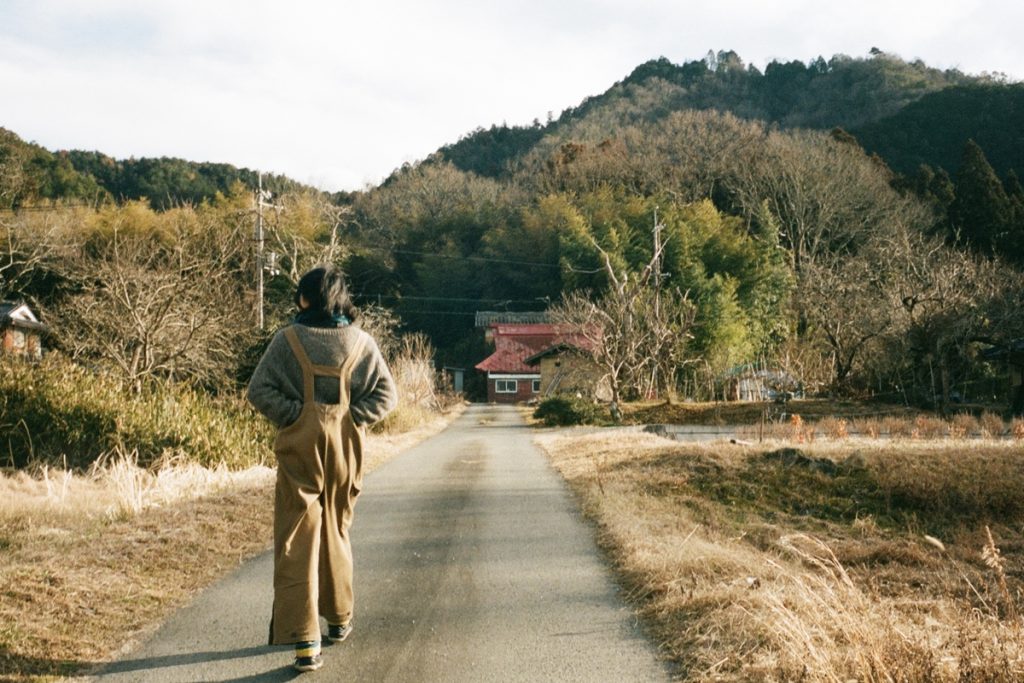
When Kumiko finds time to walk she hikes the nearby hills, through the Yakami Castle ruins. The Sasayama Kaido passed her house, connecting the region Kyoto and connecting Kumiko to her rice fields; now empty for winter. We walked down the road, talking about natural farming and growing daikon under fruit trees; before returning to the workshop with sniffling noses from the icy whistling wind.

I was curious if she attempted to control the sound of her bells “Do you ever make bells starting from the sound?” I asked. I was surprised that she didn’t, but understood the reason why she wasn’t overly concerned about controlling the sound.
She quickly gathered several bells of about the same size and we listened to each one by one, then to combinations of two or three at the same time. Each had a distinct chime, all beautiful; the choice would be difficult if I had to choose a favourite.
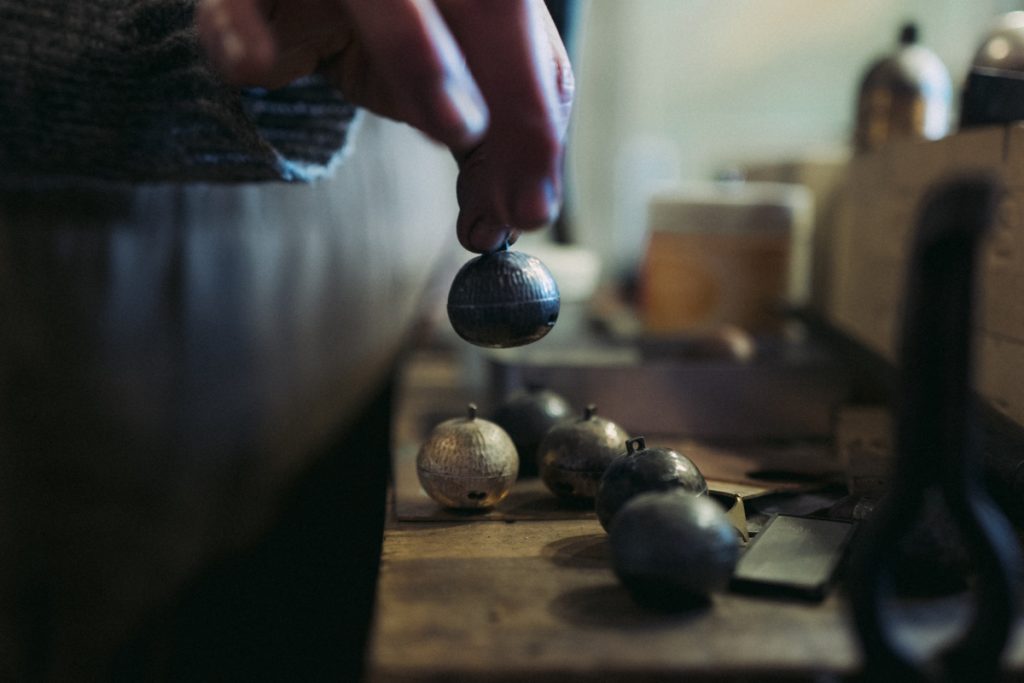
Each bell is made in a similar way and each one is the same in the fact that they are all uniquely different. It makes perfect sense that they are different each time as Kumiko herself is different. Every hammer stroke, the number of strokes; almost everything is different down to the excited molecules we talked about. As with natural framing, instead of trying to control nature it’s healthier to work with and accept the nature of things. We questioned if the design age of mass production and globalisation has fooled us into believing everything should be the same every time —from houses to coffee?
“Curiosity first” Kumiko proclaimed, “I make things from a sense of curiosity, what will it look like, feel like, and what will it sound like —how will it make me feel?” In this way one bell leads to another which in turn leads to the unimaginable in the endless artist pursuit of creative curiosity —this is reward enough.
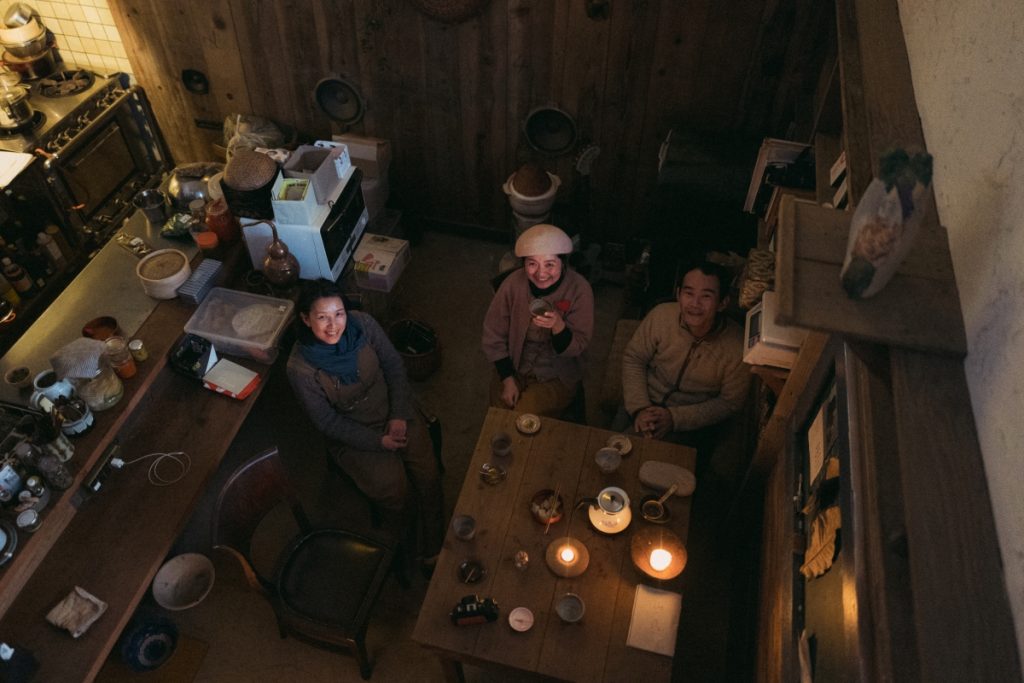
It was time for a break so we joined two friends and their Buddha-like dog for angelica tea, strawberries and homemade pickled cabbage. Here we sat talking more about farming, cooking and life in the Japanese countryside until it was time to walk the dog.

Before saying goodbye, I hesitantly asked my final question about success as I do each story.
It felt superfluous as having spent the afternoon in the company of such a calm kind person so peacefully living and working in a house where a small piece of the outdoors sits indoors. As is her way, she concisely answered “When results are beyond expectations.”
Before leaving Sasayama the next morning I happened upon an antique store, where I found a large round metal bell. I bought it and hung it in my car; listening to it chime as I drove home thinking about Kimiko’s fulfilling modest life in Sasayama and how I might make an outdoor living room of my own.
And so it goes…
James
If you liked this story you might like to read & subscribe James’s newsletter.