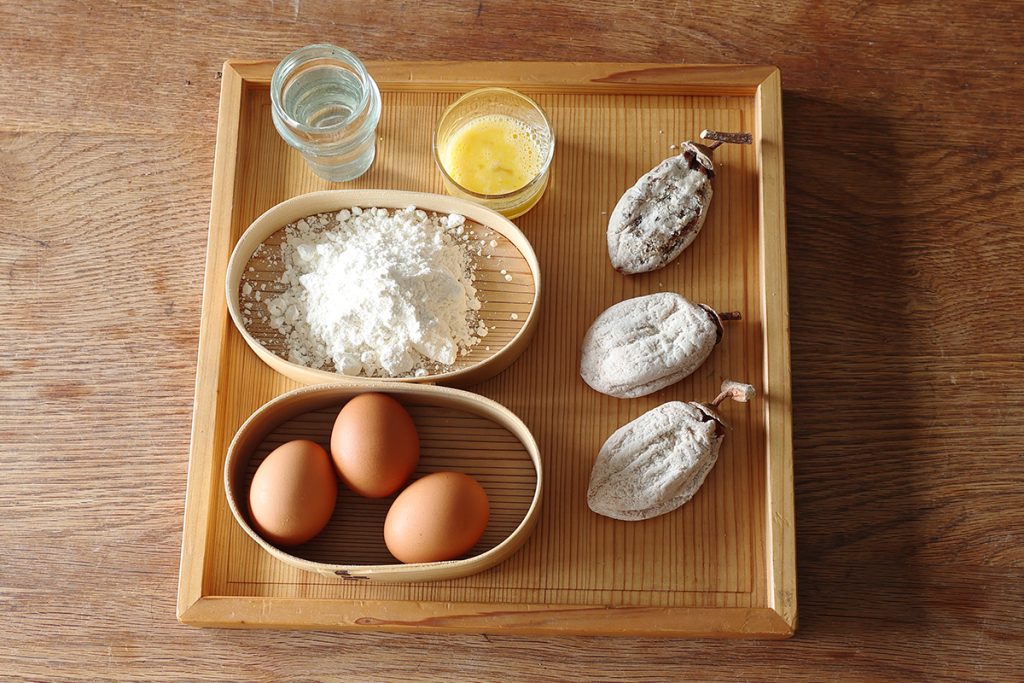
Ingredients (makes 3 pieces)
3 dried persimmons (large)
3 eggs (small)
100 g hakurikiko / “soft” wheat flour
A
・90 g water
・1/3 beaten egg
・Moderate amount of rice flour
How to Make
1. Place the eggs in a pot, cover with water, and bring to a boil. Reduce to low-medium heat and cook for 11 minutes. Drain, transfer to a bowl of cold water, and peel the eggs.


2. Cut off the stems from the dried persimmons. Slit each vertically, open the fruit, and remove the seeds.
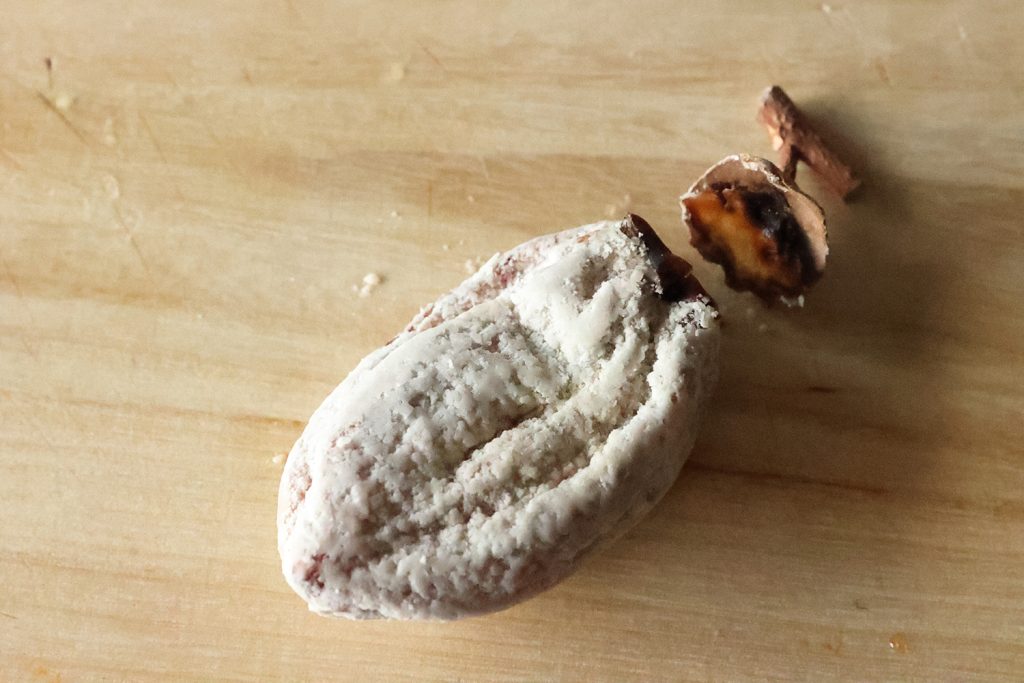
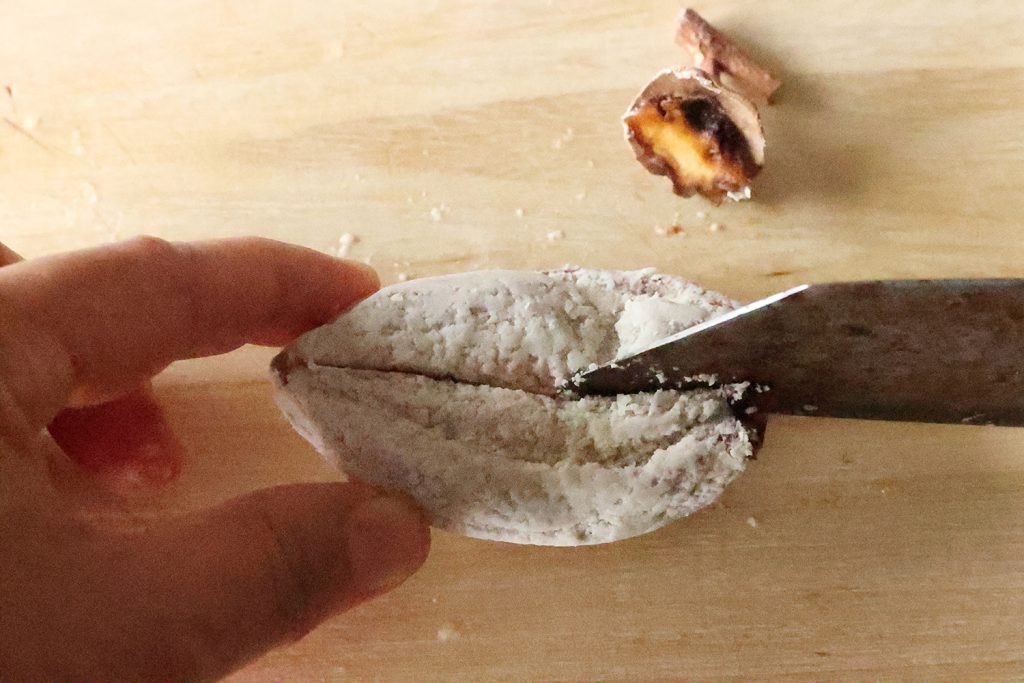
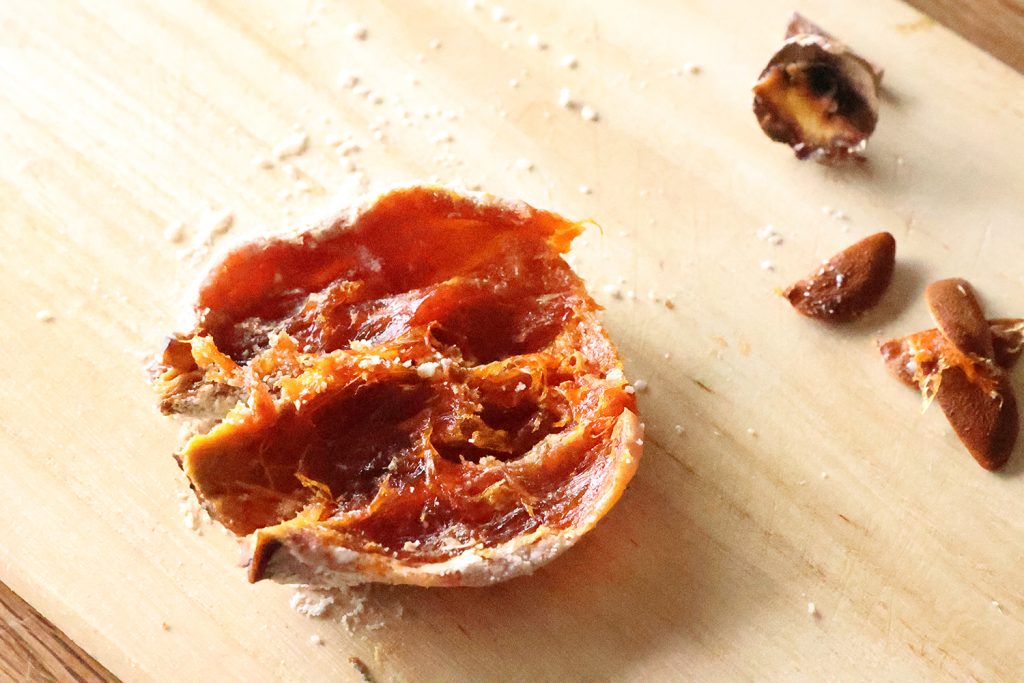
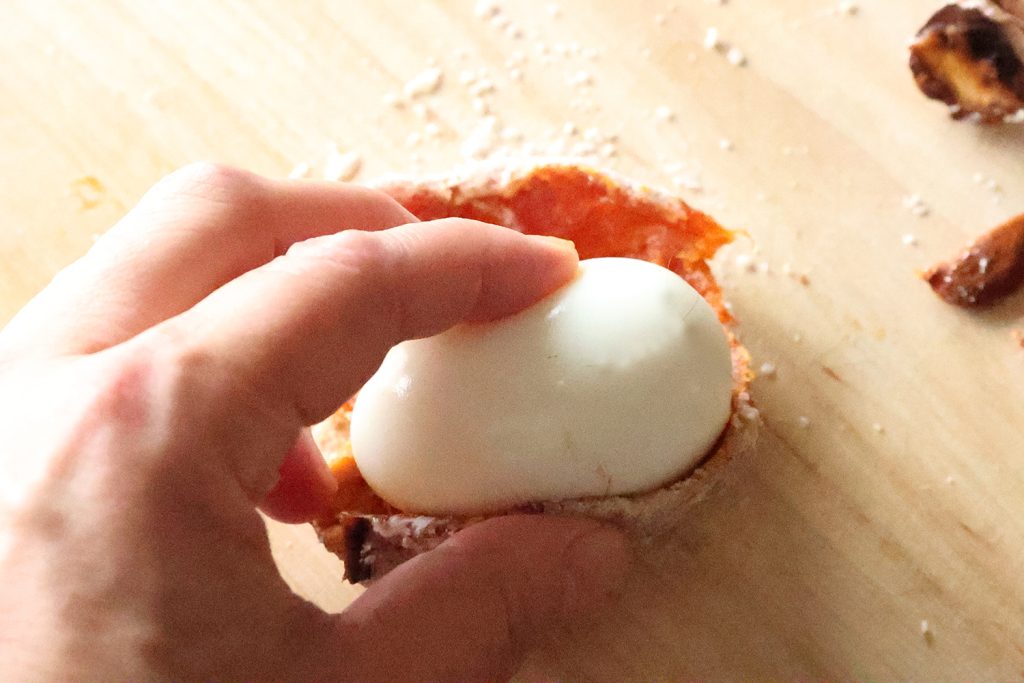
3. Coat the boiled eggs with rice flour. Place each inside a persimmon on one slit edge and wrap firmly.
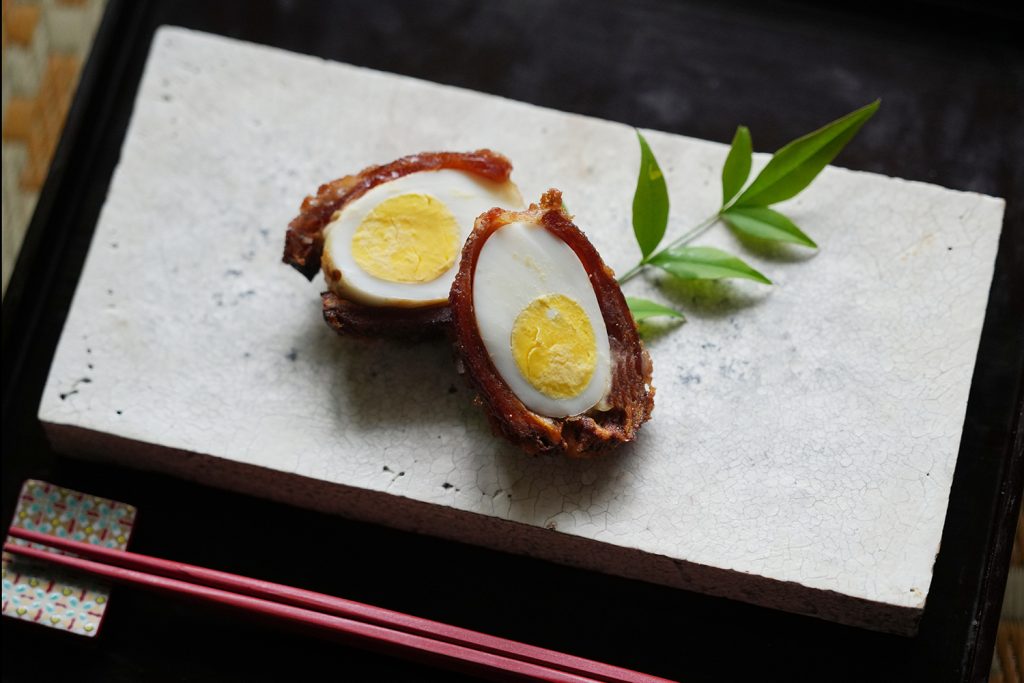
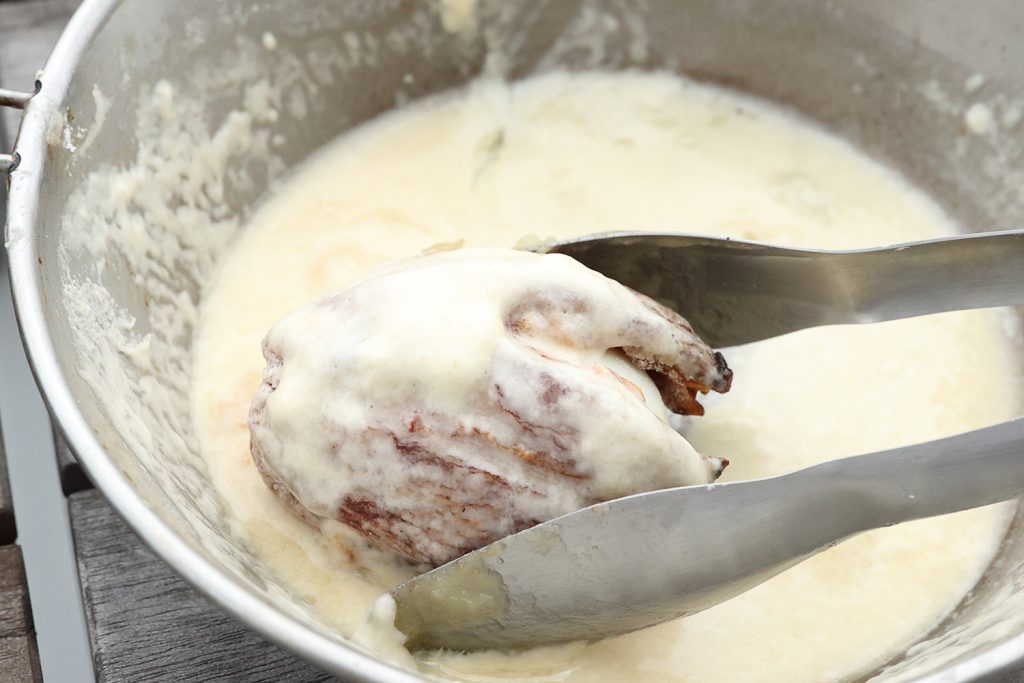
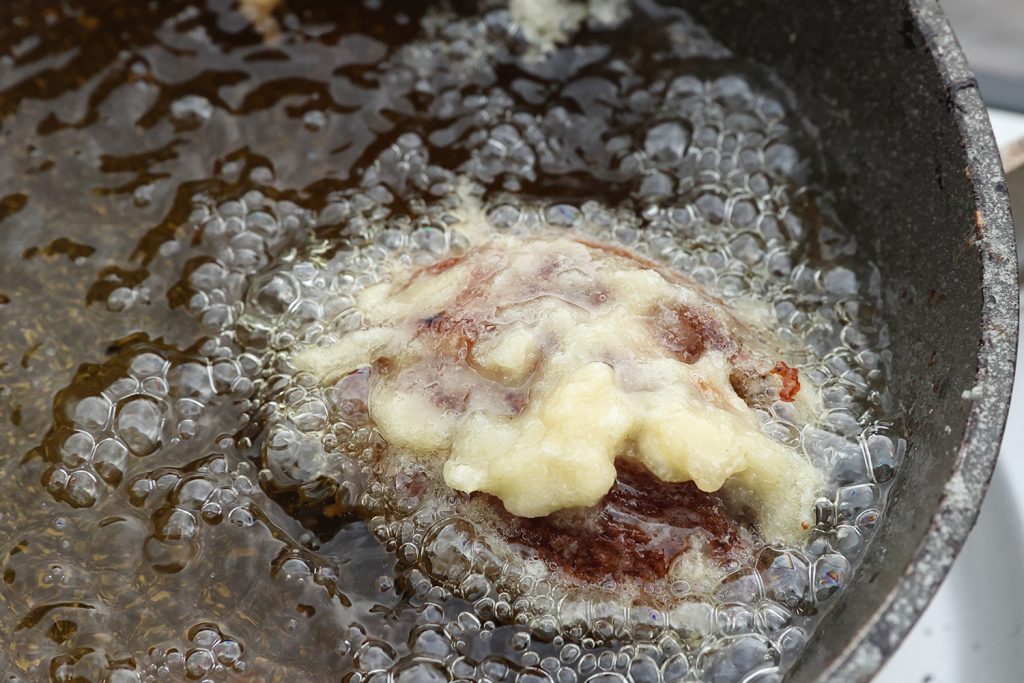
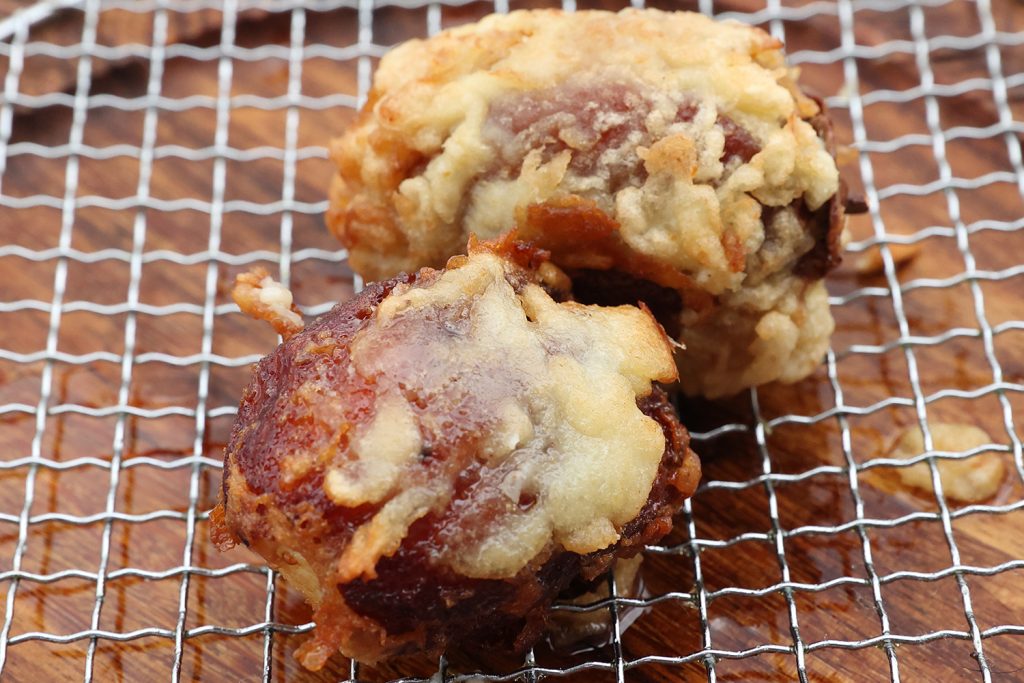
4. Combine (A) and mix lightly to make the batter. Coat (3) and deep-fry in oil. Serve halved to reveal the cross sections.
The Hata area, nestled in the mountains of Higashiizumo Town, in Matsue City, Shimane Prefecture, is the well-known production area of Hata Hoshigaki dried persimmons. The community is dotted with wooden glass-walled three-story buildings dubbed persimmon huts, where the fruits are strung up by their stems and hung out to dry from early November, tinting the landscape with the bright red-orange color of persimmons. One of the moms making the dried persimmons beamed as she told me that the color gradation of a boxful of dried persimmons is as lovely as the slopes of Mt. Fuji at sunset.
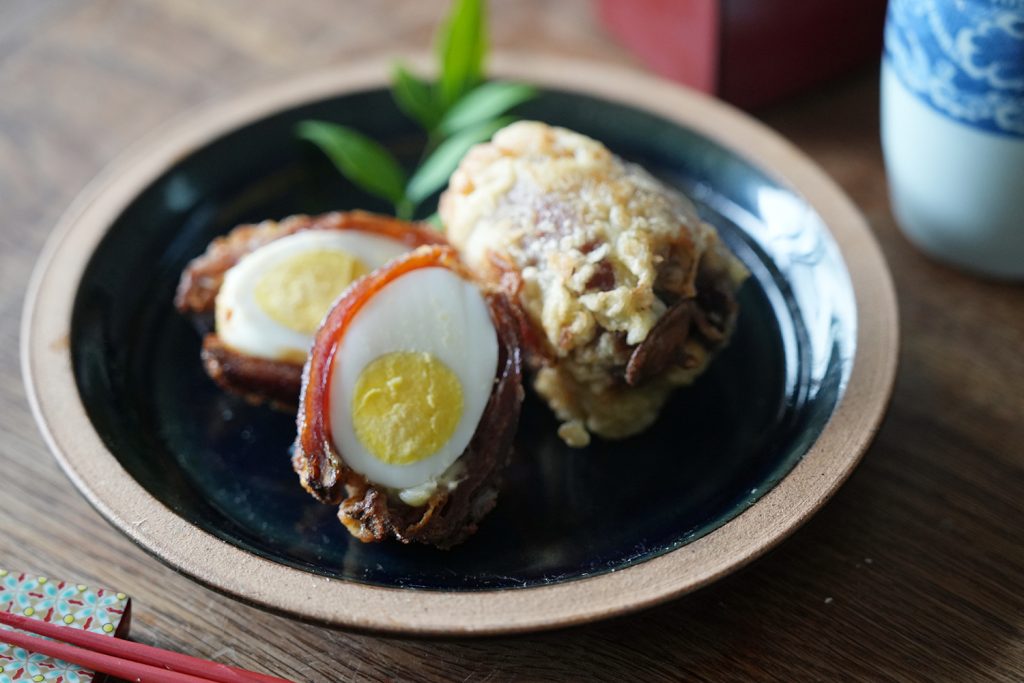
A traditional local dish of this Hata area is kujaku tamago, or “peacock egg,” a New Year’s treat made by wrapping boiled egg in whole dried persimmon, coating with batter, and deep-frying in oil. The delicacy is also served to the priests making their rounds to the producers’ homes in the New Year, and each family sets aside a number of dried persimmons large enough to wrap boiled eggs specially for this occasion.
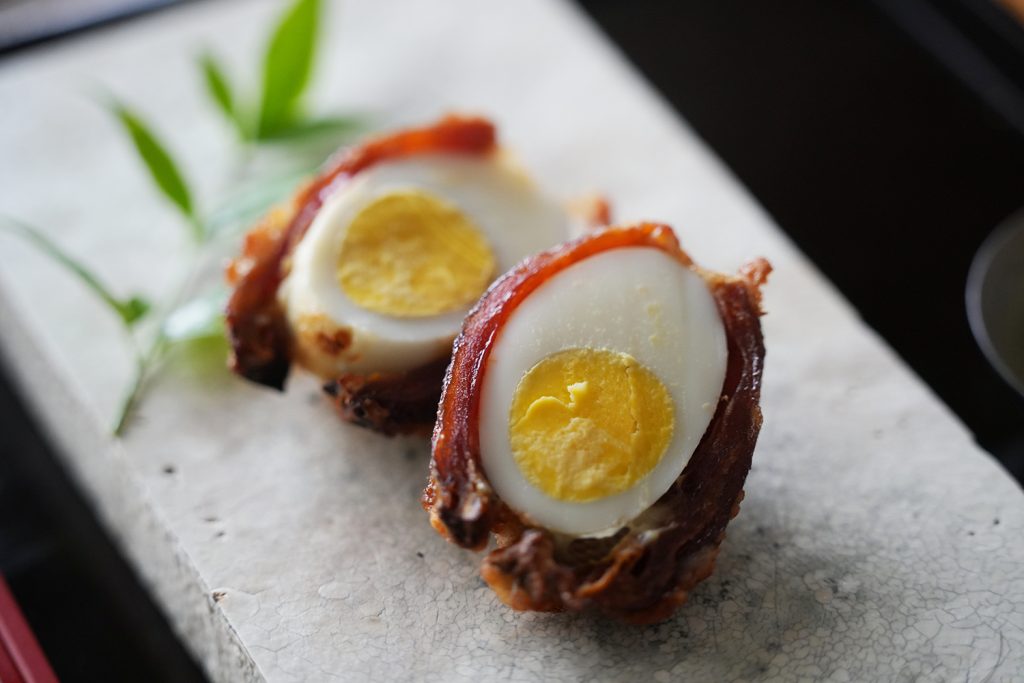
The brilliant cross section of the boiled egg in the dried persimmon, and the fresh surprise of the natural sweetness of the persimmon with the fluffy soft egg—peacock persimmon is a unique dish of the Hata area made with the local specialty produced with patience and care, and filled with the hospitable wish to offer delight even in the cool winter.
minokamo | Cookery expert / Photographer
Gifu Prefecture native minokamo’s culinary adventures were inspired by her fond childhood memories of cooking with her grandmother. She researches, writes about, and arranges regional dishes that capture, through their preparation and presentation, sensory enjoyments inspired by local climate, history, and lifestyles. Ryori tabi kara tadaima(Back from a Cooking Journey; Fudosha), published in September 2020, is a collection of recipes from minokamo’s visits to homes up and down Japan.