







After relocating to a new city, I realized just how vast Tokyo is—an endless forest of concrete where countless lives unfold. From time to time, I yearn to escape its vastness, a feeling I give in to quite often.
In those moments, the boulders of Mitake seem to peer into my soul, quietly listening to the river’s steady flow.
Taking the train from Shinjuku to Okutama, it’s not long before the passengers transform into climbers and mountaineers, many alighting at Mitake Station. The station, compact yet full of character, evokes a nostalgic sense of adventure for those seeking nature. On weekends, the express hiking train makes the journey from Shinjuku to Mitake Station in just ninety minutes, no transfers required. What makes Mitake truly special is its rocky terrain, accessible by train from the beating heart of Tokyo.
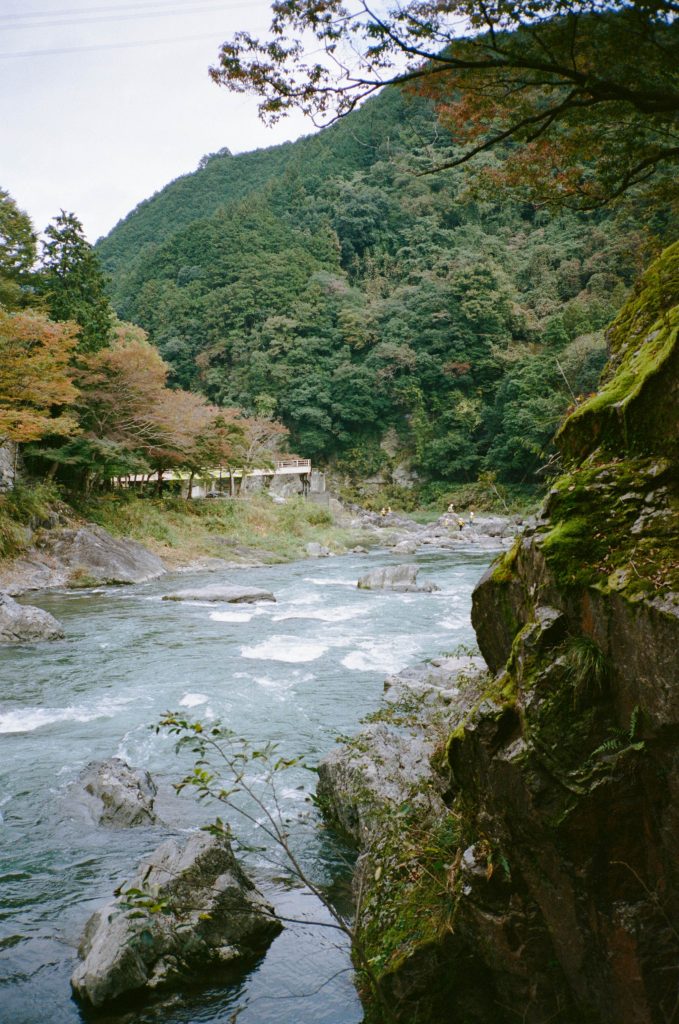
From the bridge in front of the station, one can gaze down at a cluster of chert rocks scattered along the river.
Mitake Boulder remains a popular destination for climbers, despite a regrettable incident in 2018 that caused significant chipping of the rock face. The tough challenges still serve as a testament to the persistence of those who tackle them.
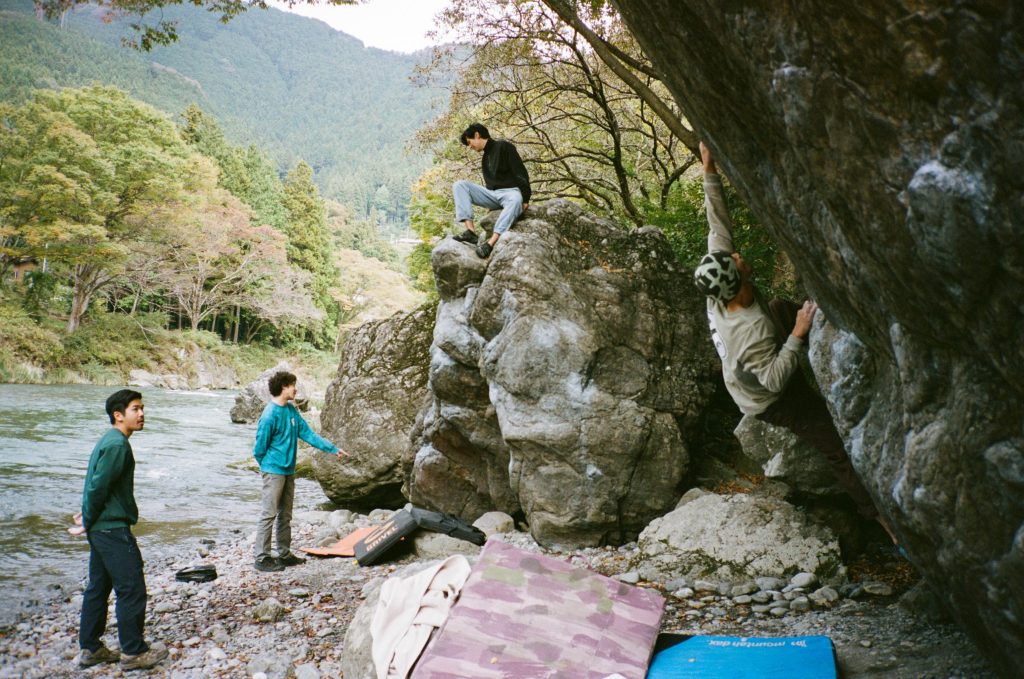
The “Ninja Gaeshi” – arguably the most iconic rebound in Japanese climbing – follows a single line up the vertiginous “Ninja” rock. It was the first in Japan to earn a grade 1 rating, setting the benchmark for that difficulty level across the land. While its easy accessibility from Tokyo is a definite advantage, it’s the multitude of demanding routes on this famous rock that draws climbers in droves.
On weekends and holidays, the area around the boulder becomes a vibrant hub, with dozens of pads spread out, creating an atmosphere reminiscent of an international climbing summit. Climbers from all over Japan and beyond converge, drawn by the challenge and camaraderie.
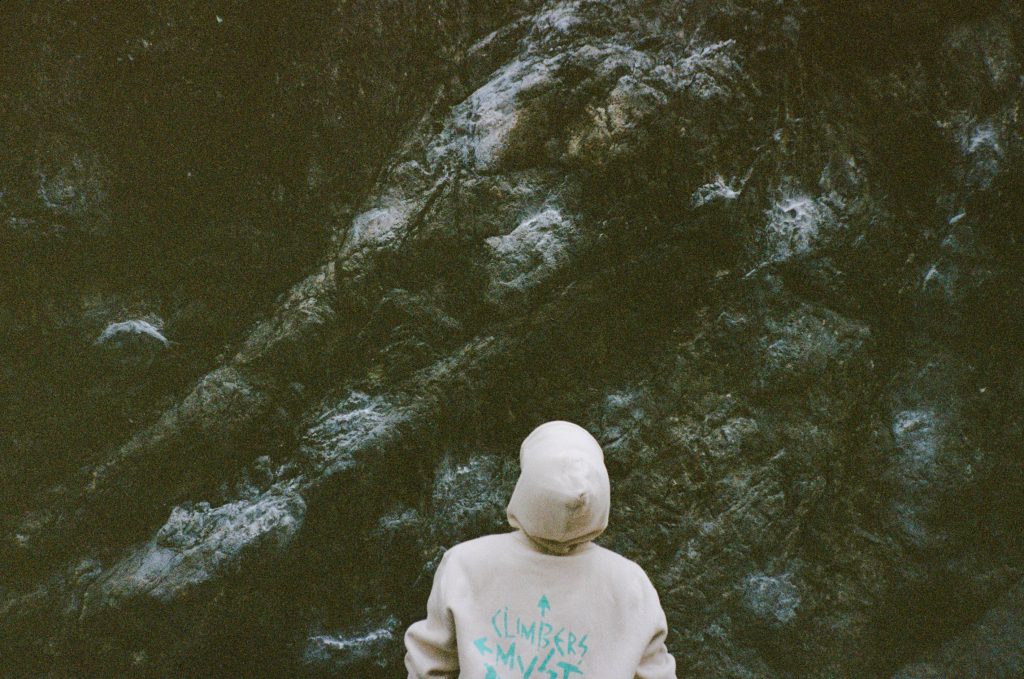

Climbing is a journey marked by a series of falls, each one leading to the next challenge. Yet, once you conquer a route, your mind shifts to the next challenge, searching for a way to solve it—only to fall again and begin the cycle anew. The crowd often watches the rock in suspense, eyes locked on the goal of reaching the “Ninja” summit. One climber may fall at a familiar spot, only for another to begin the same line, as though bound by an unspoken ritual.
When it’s finally your turn, you steady yourself, chalking your hands, assuming your starting position, and begin climbing. At a critical moment, you fall onto the mat, and when you glance up, you realize you’re being watched—your struggle now a visible part of the ongoing spectacle.
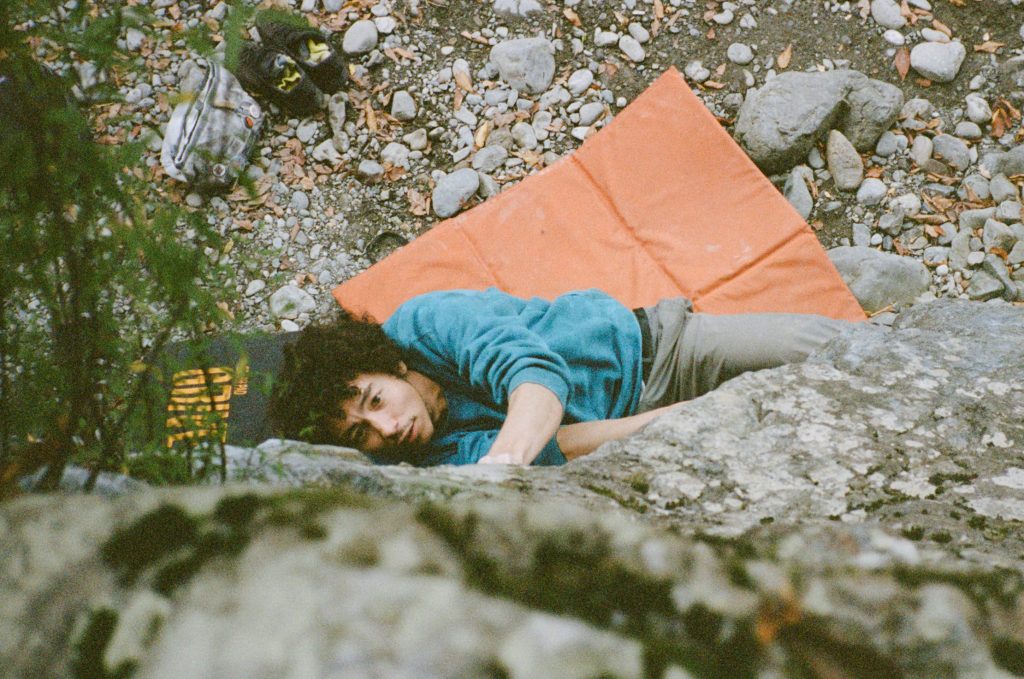
I typically climb at my own pace, enjoying the solitude of quiet, secluded rocks. But in front of the “Ninja,” I feel an unspoken urgency. No one is rushing me, yet I can’t escape the feeling of urgency, trapped in a restless loop—gripping holds, setting down my chalk bag, only to pick it up again and again.
For a taste of this unique, informal international summit, visit Mitake Boulder on a sunny weekend and stand before the “Ninja.” Quiet yet welcoming climbers, absorbed in the wall and often turned inward, will draw you into a world unlike any other.
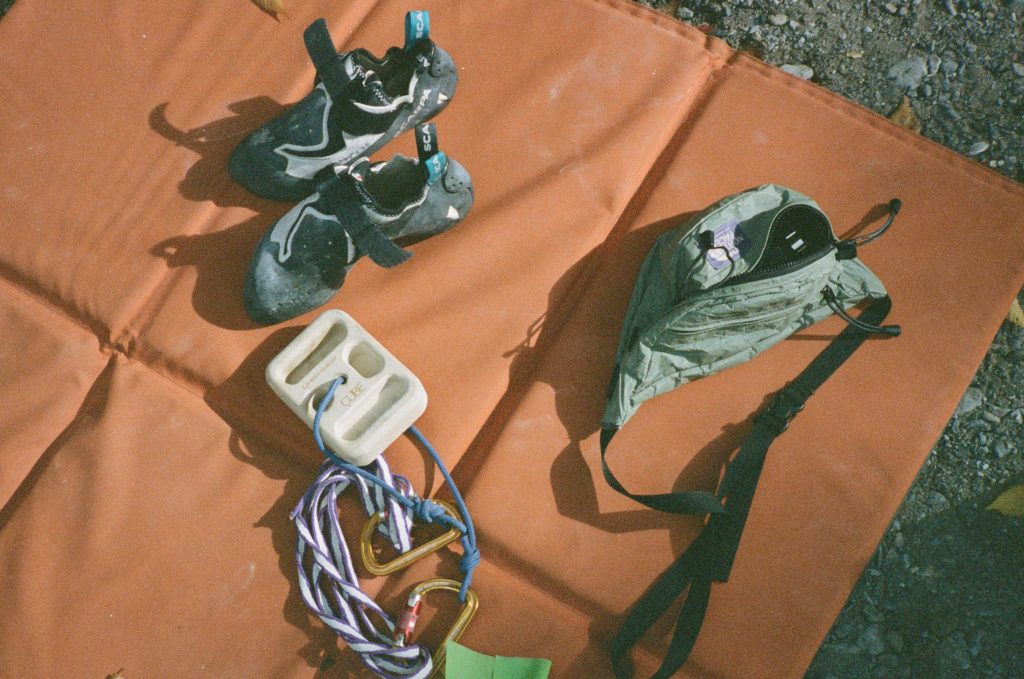
Lunch time!
Mitake lacks the convenience stores I’m so fond of—there’s one, but it’s too far to reach on foot with a mat in hand. While packing a lunch to enjoy by the river is a pleasant option, some might find it hard to wake up early and head to the kitchen when all they really want is to rush straight to the boulders’ edge. For those who are so inclined, there’s no need to worry. Right in front of Mitake Station, soba shops and Chinese restaurants are ready to satisfy the appetites of rock climbers and mountain lovers year-round.
Tamagawa-ya, renowned for its handmade soba, stands out not only for the flavor of its buckwheat noodles but also for the unique ambiance created by the many Daruma dolls with long, bushy eyebrows and beards that line the walls. Meanwhile, Touhoen, a Chinese eatery nearby, has earned popularity among local workers for its classic ramen made with homemade egg noodles and the friendly, kindhearted proprietress.
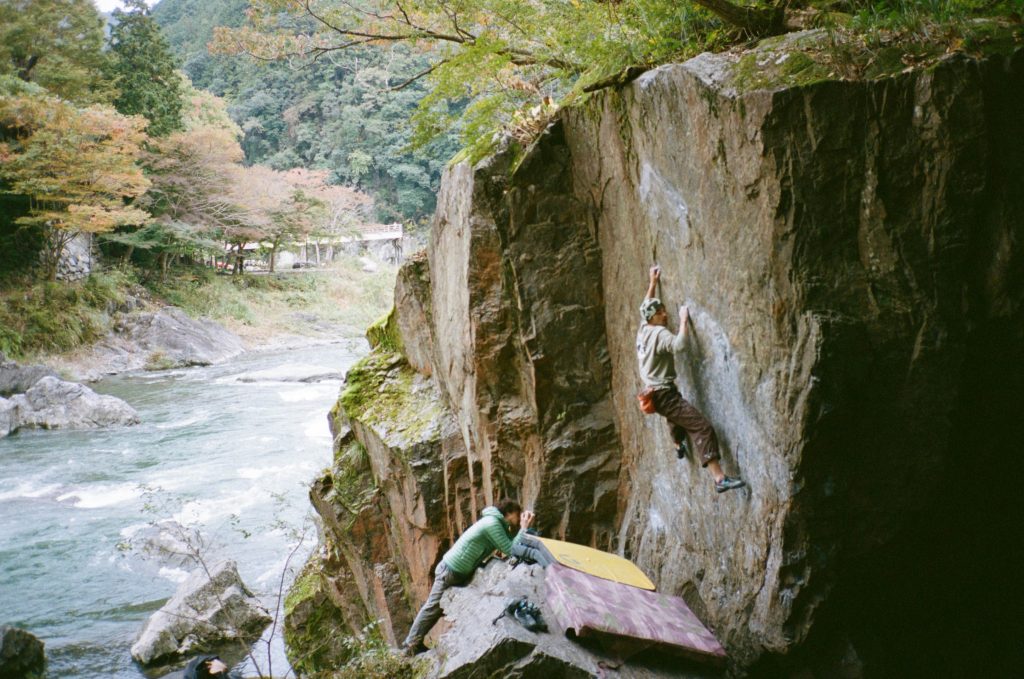
After lunch, head over to the renowned “Mine-no-Yu,” a challenging problem on a sheer vertical wall that looms in full view from the bridge just in front of the station.
It’s high, and the base can be intimidating at first, but the holds—neatly aligned from bottom to top—offer a clear path for those brave enough to reach the top. By the fall of 2024, some of the holds had faded, but the problem is still doable. Once you’ve had your fill and are ready for another round in the afternoon, a variety of boulders with different grades are just a short walk away. As you jump from one rock to the next, climbing without a care, the sun starts to set, signaling it’s time to wash off the chalk in the river and head home.
We returned our rental mats at the outdoor shop “Maunga” in front of the station and celebrated with a cold craft beer. As the buildings visible from the train window grew taller and the city center drew nearer, a quiet sense of relief washed over my tired body. And I know that in just a few days, I’ll be back on my way to Mitake—seeking refuge from the city and reconnecting with the rocks.
