







Day 1: The deep green stillness of Mt. Koya
Our journey with Brompton this time takes us to the cycling kingdom of Wakayama Prefecture, boasting the 800-kilometer-long cycling route Wakayama 800, cycle trains, and other cyclist-friendly local features. Our guide for this ride is Miki Kubota, a native of Hashimoto City, neighboring Mt. Koya, the sacred site commonly known as Koyasan.
Miki has only five-plus years of experience as a cyclist, but she has taken on the Mt. Fuji Hill Climb, known as the toughest race of its kind in Japan, and considers herself a hill climbing buff. She came home for the first time in 20 years this spring and has been exploring the fields of Wakayama Prefecture on road and gravel bikes.
Together, Miki and PAPERSKY map out a one night, two day bike trip through the best highlights of Wakayama Prefecture. Day 1 covers the sacred sites of the Kii Mountain Range and the Koyasan pilgrimage route, registered as a UNESCO World Heritage Site and a magnet for cyclists from around the world. After a night in a guesthouse with a brewery, Day 2 takes us for a ride along the coast to Miki’s favorite Shirasaki Ocean Park.

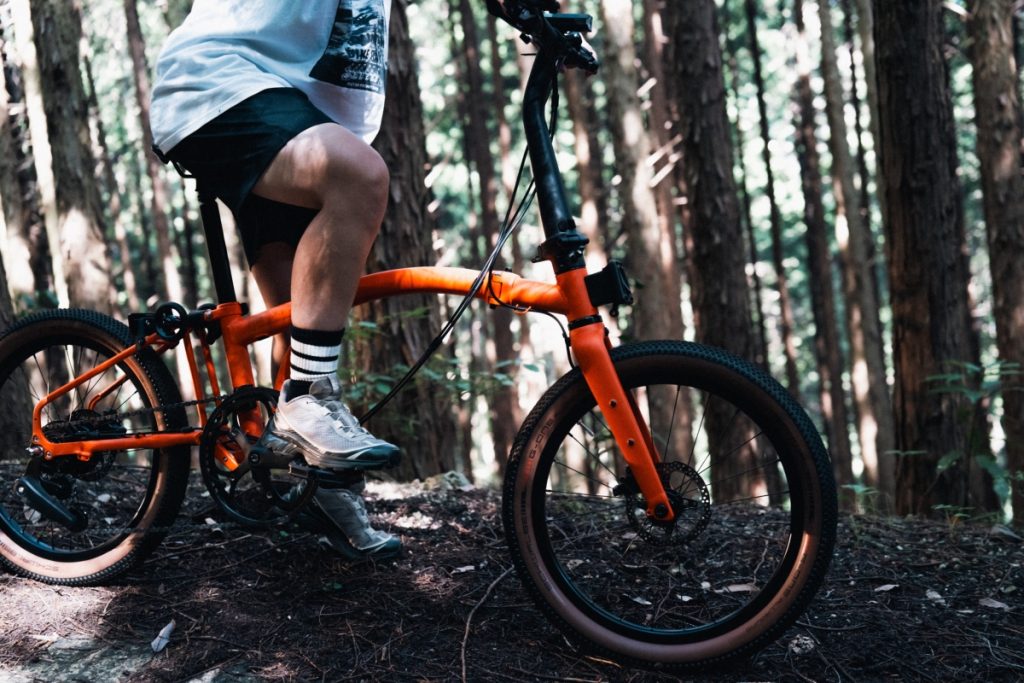
The Koyasan pilgrimage route makes the perfect hill climb from the foot to the top of the mountain through a UNESCO World Heritage Site. On the weekend, plenty of road bikes can be seen climbing the steep pass. But for our trip with Brompton, we opt for a fun ride that goes halfway up the mountain by train. From Shin-Osaka, go to Nankai Namba Station and transfer to the Nankai Koya Line, or via Wakayama Station, take the JR Wakayama Line to Hashimoto Station and transfer to the Nankai Koya Line, and head to Gokurakubashi Station for access to Koyasan.
Koyasan was founded by the monk Kukai (posthumously called Kobo Daishi) as a monastery of the esoteric Shingon school of Buddhism in the year 816, during the early Heian period, and later became the well-known head temple of the Koyasan sect of Shingon Buddhism. The solemn grounds at an elevation of 840 meters in the Kii Mountain Range attract large numbers of worshippers including henro, aka o-henro-san, who have completed the Shikoku 88 Temple Pilgrimage.
At PAPERSKY, we feel a strong affinity to Kukai—a great thinker and a master of traveling on foot—and once replicated Kukai’s journey to the sacred Koyasan for our article called “The Kobo Daishi Trail.” Kukai was a child prodigy showing future promise. He went to study in Kyoto at an early age, but disillusioned with the authoritarian, insular organization of the elite, dropped out, devoted himself instead to the attainment of natural wisdom, and made his own way in the world of esoteric Buddhism. We today can easily relate to Kukai’s brave ways and sense of adventure—and perhaps also to his attraction to the concept of attaining natural wisdom owing to the mythical mood of the misty trail from Gokurakubashi Station to the main temple Kongobuji.
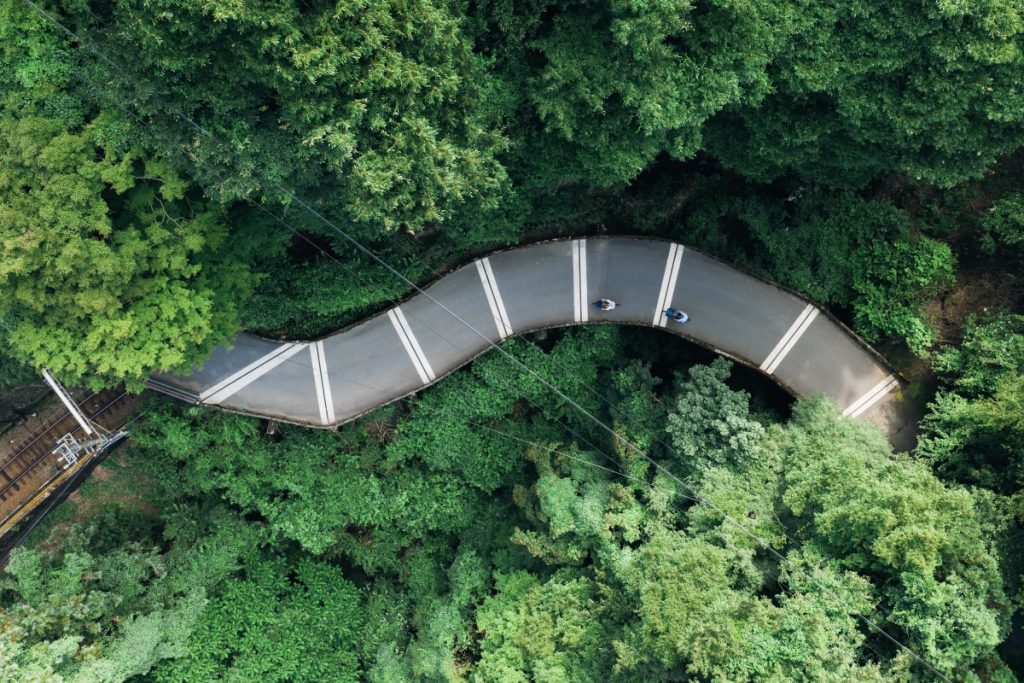
The incline becomes gradually steeper. Fudozaka slope is the final and most difficult section of Kyo-Osaka Michi, the route from Kyoto and Osaka, and a component part of the UNESCO World Heritage site. There is the original mountain trail (kyudo) and a newer paved trail (shindo) with 99 curves climbing an elevation of 300 meters over a distance of 2.4 kilometers. The path running through the woods offers no real view.
That may be fine for hill climbers like Miki, who find elevation and incline a motivation, but it’s incredibly hard for the rest of us who ride for the reward of a fantastic view. We pedal on regardless, picturing in our minds the mystical world Kukai must have journeyed 1,200 years ago.
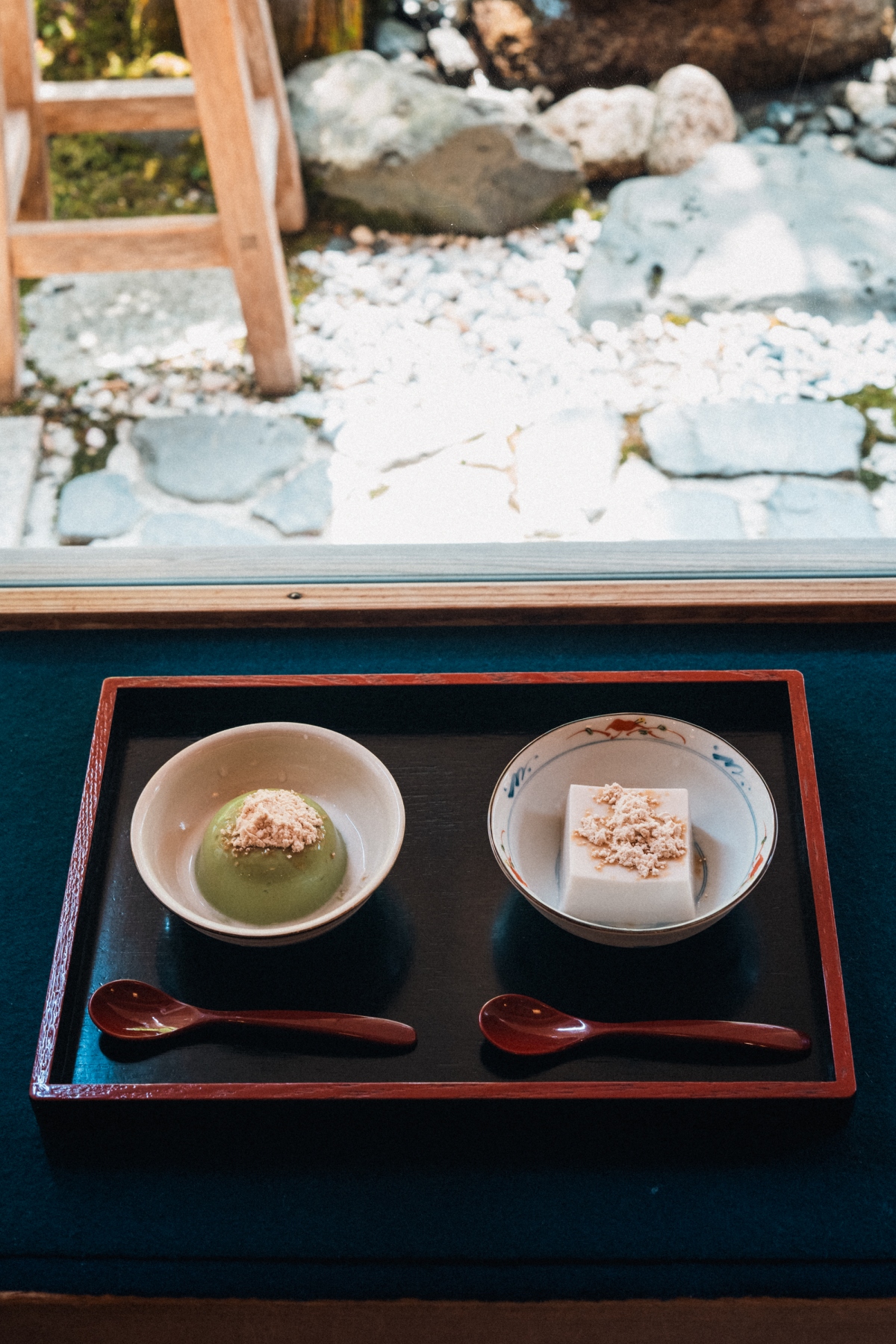
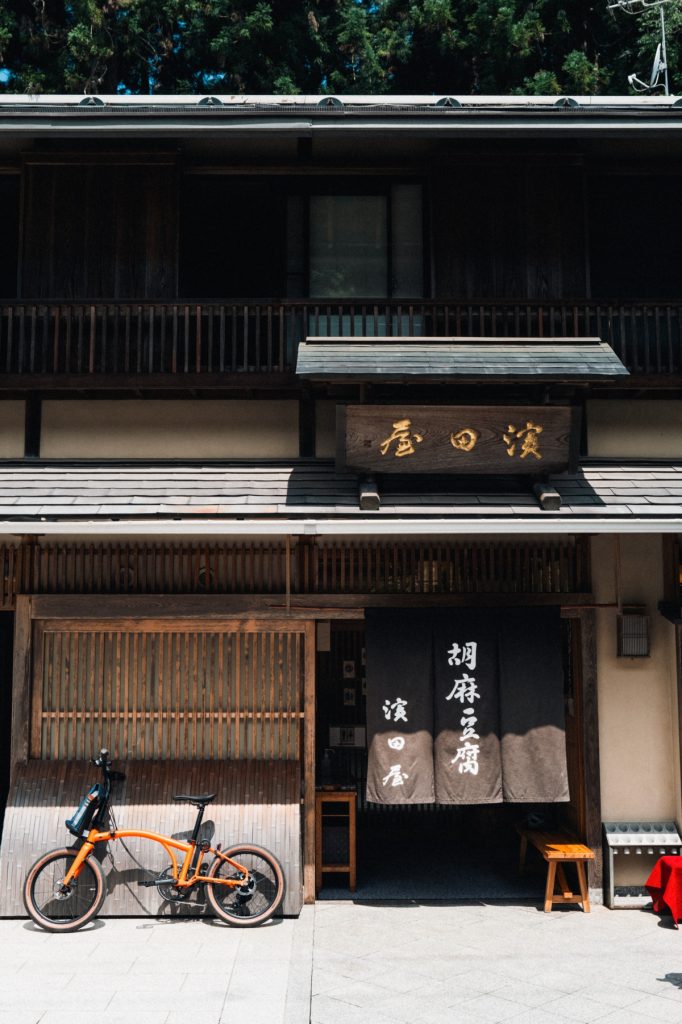
A standard specialty of Koyasan is goma-dofu (sesame tofu). Hamadaya was originally founded as a tofu shop. Its sesame tofu made only with 100% pure kudzu starch, white sesame seeds, and well water has a wonderfully soft, melt-in-the-mouth texture. The main ingredient is Yoshino Hon-kudzu, made by a specialist producer in the Yoshino area of Nara Prefecture since the Edo period (1603–1868). Pictured here are Goma-dofu with Wasanbon Sugar 400 yen (left) and Matcha Goma-dofu 600 yen.
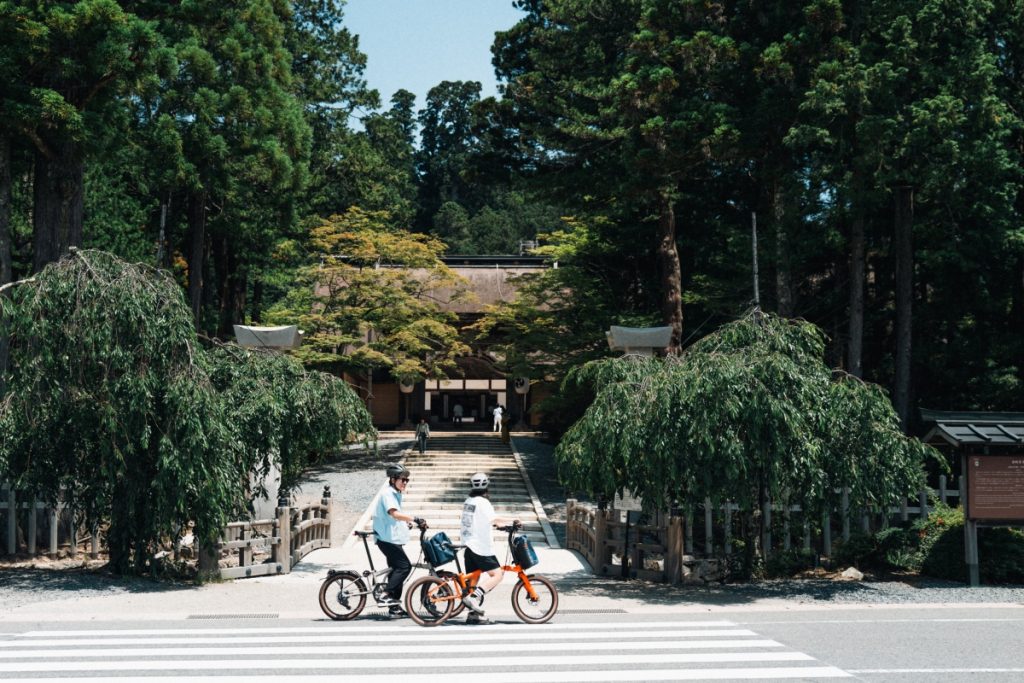
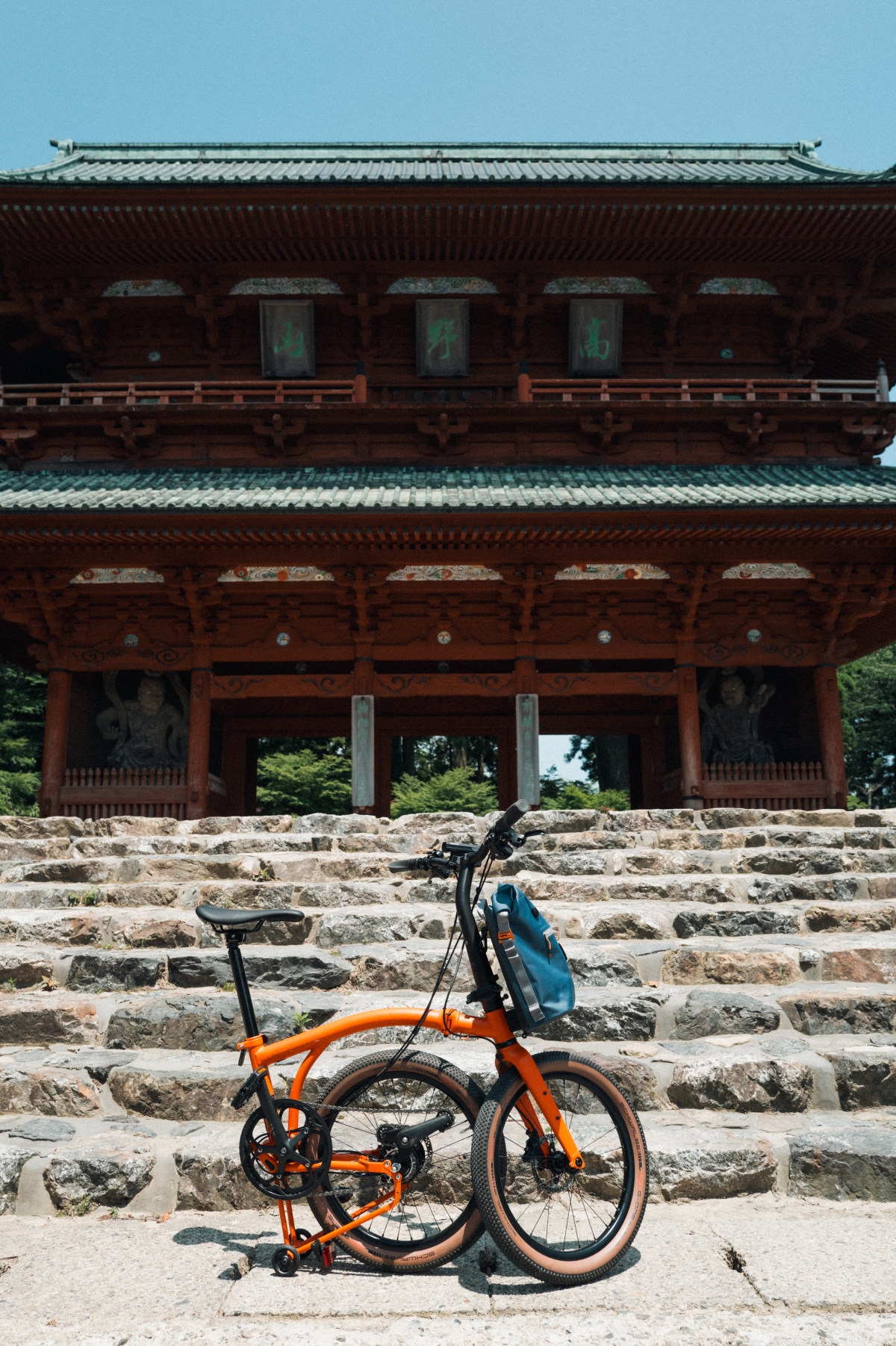
At the top of the mountain, priests in vivid yellow robes come and go between Buddhist sites such as Okunoin, Danjo Garan, and Kongobuji. The very atmosphere is sacred. Before exploring the grounds, we make a stop at Hamadaya, founded around 1897 (Meiji 30), for a short break over goma-dofu (sesame tofu) made only with 100% pure kudzu starch, white sesame seeds, and well water. After paying our respects at Kongobuji, we pass by the symbolic gate Daimon and head straight down National Route 480.
Along the way, we make a pit stop at Monto Coffee, an irresistibly charming, modest coffee stand usually in business only on the weekend, but open by chance on this day. The sister proprietors self-renovated their grandparents’ shop selling Koyamaki, or Japanese umbrella pine, and offer handmade sweets using seasonal fruit too. We decide to order the lemon coffee. Wait, what is that?


“Lemon coffee is a cold drink combining iced coffee with lemon syrup. It’s light and smooth, and really popular with cyclists,” says one of the co-proprietors. The tart lemon, fragrant coffee, and fresh sweetness are a delicious perfect match. We drink our cups in one long sip and order seconds. The secret ingredient is the handmade syrup—a blend of honey and organically grown lemon picked in the sisters’ garden.
“Knowing this coffee stand is waiting for you at the bottom of the slope makes the uphill climb worthwhile!” says Miki.


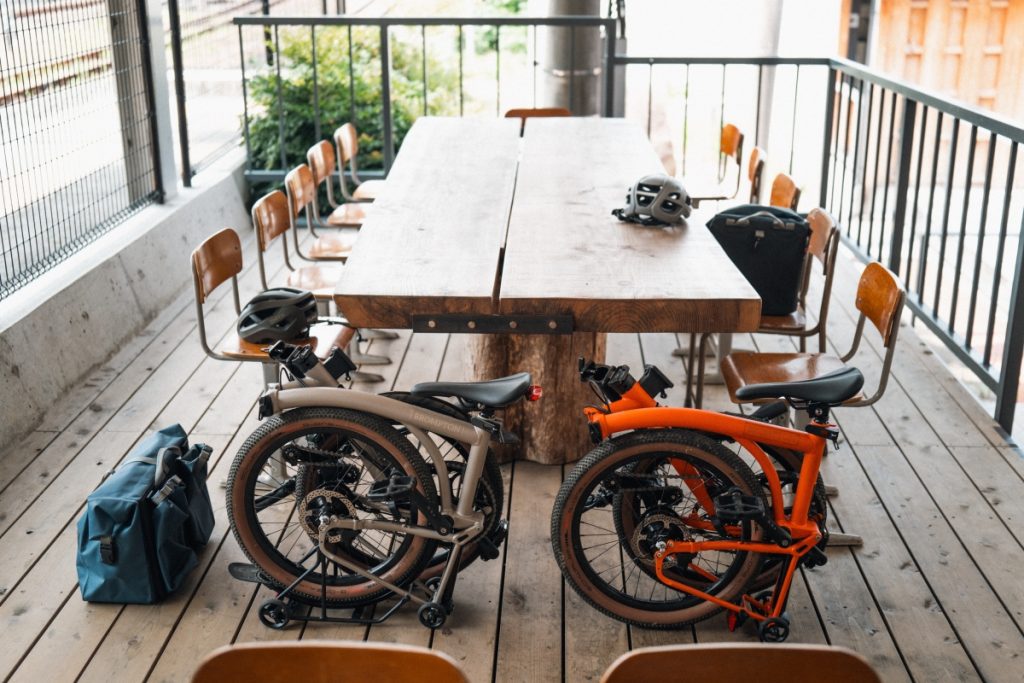
With our energy recharged by the lemon coffee, we continue pedaling down National Route 480 and make it to ground level. Having come from the world of myths back down to earth, we head to JR Nishi-Kaseda Station, and from here, travel by train—partly with our bikes folded, and partly unfolded on the cycle train—toward Arida. On the Kinokuni Line from Wakayama Station onward, cycle trains run only at certain times, so be sure to check the timetable in advance.
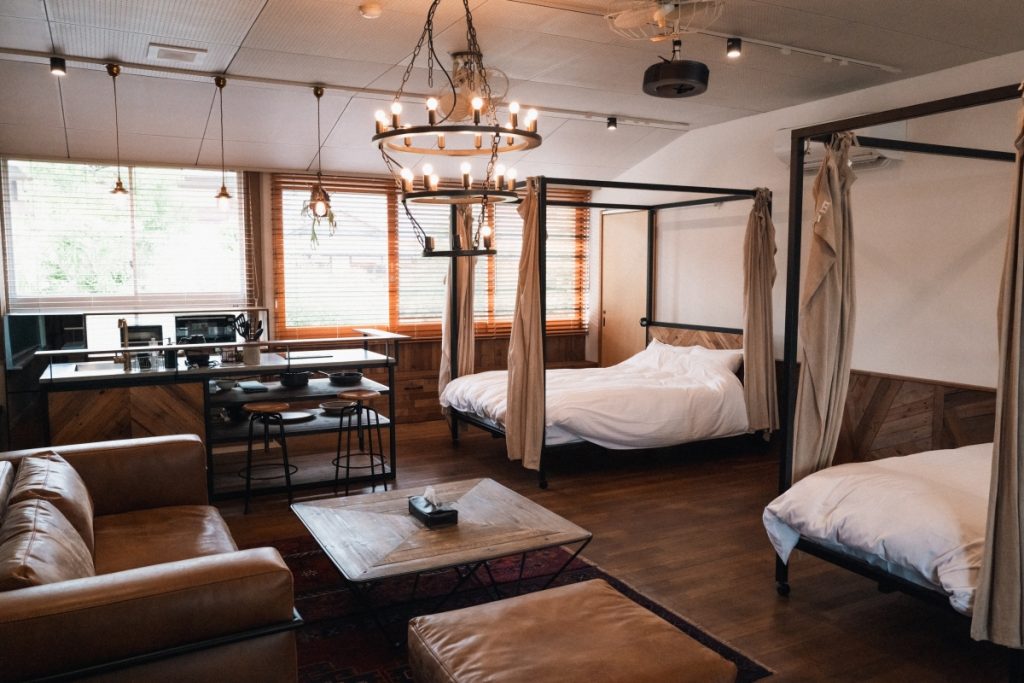
From Kinokuni Line Yuasa Station, we pedal to our accommodation for the night, Golden River. The complex renovated from a nursery school building currently houses tenants including the diner Golden River, the guesthouse Tadono the Bedroom, and the craft beer brewery Nom Craft launched by brewers from Portland who fell in love with the area’s clear water and delectable fruit.
First and foremost, we make a toast with Nom Craft IPA. The last time Miki stayed here, she drank until her legs refused to move the next day. Thank you for the warning, let’s not make the same mistake. This time, we call it a night and make a swift retreat to Tadono.



Day 2: A tour of the birthplace of soy sauce


In a complete change from Koyasan, Day 2 takes us along the coastal route to Shirasaki Ocean Park, with a view dubbed the Aegean Sea of Wakayama. But before that, let’s take a stroll through the old streetscape of Yuasa. Yuasa developed as a commercial center from the second half of the Muromachi period (1336–1573) through the Edo period (1603–1868), and flourished as the sole post town on the Kumano Kodo pilgrimage route that passed through a commercial area.
Yuasa is also the birthplace of soy sauce production, and townhouses and storehouses of the soy sauce brewing industry line the area designated a Preservation District for Groups of Traditional Buildings. The roots of soy sauce can be traced back to a liquid that was a byproduct of the production of Kinzanji miso paste brought from China during the Kamakura period (1185–1333). That liquid was discovered here in Yuasa. Kadocho, founded in 1841, continues to make soy sauce in the area today, and displays curious old equipment and materials in its soy sauce museum.


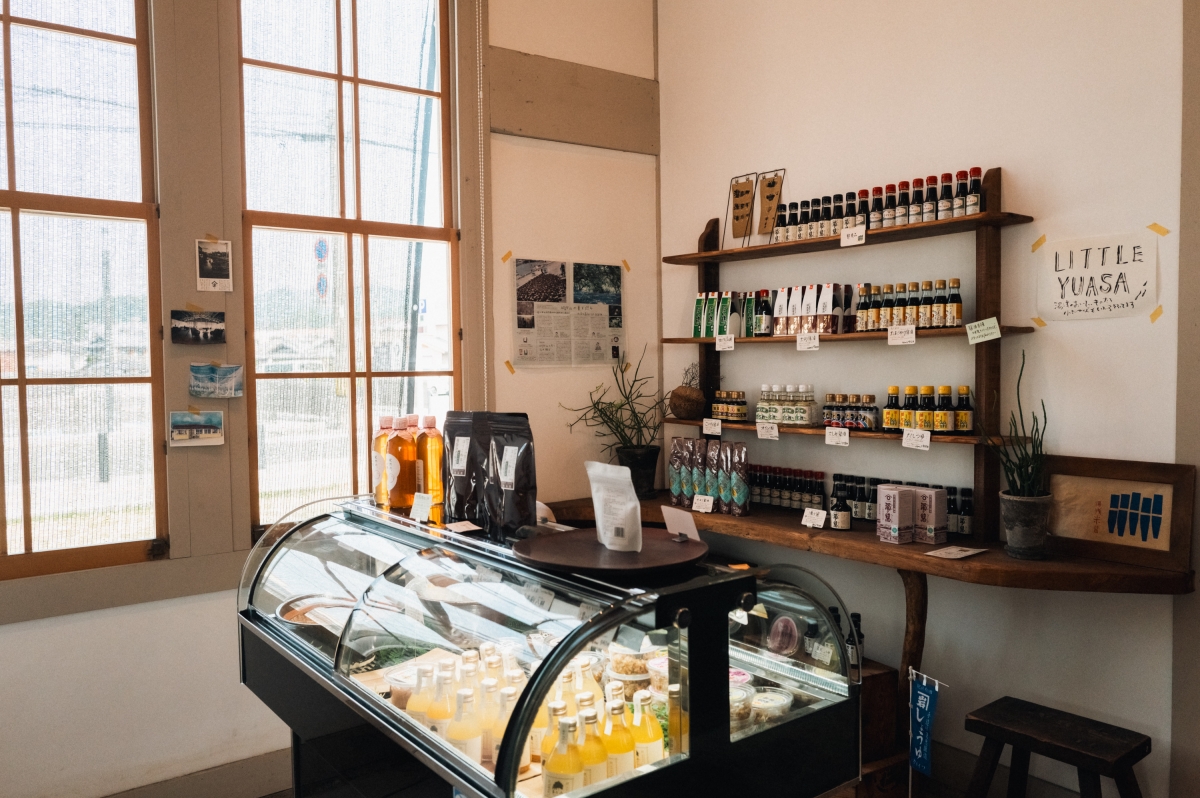
The gateway to the town of Yuasa is Yuasa Station. The old station building that opened in 1927 currently houses Yuasa Beisho, a diner serving meals flavored with Yuasa’s specialty soy sauce. We stuff our bags with the signature rice balls and enjoy them on the road. The fluffy oven-cooked rice and fillings featuring the deep flavor of the soy sauce are the perfect match!

White cape, blue sea, green rice terraces
We reluctantly say good-bye to Yuasa Town and head south along the coastline on Prefectural Route 23. Past the small station building of JR Kinokuni Line Hirokawa Beach Station, we are finally greeted with an ocean view. From here on, we pedal along taking in the views of the sparkling ocean on the right, and the mountains and rice terraces on the left. The shallow waters of Nishihiro Beach extend out into Karo Bay, and the salty smell of the sea fuels our excitement. After a series of rhythmical ups and downs, the view of the rustic fishing port fades into the tasteful Ena Beach.

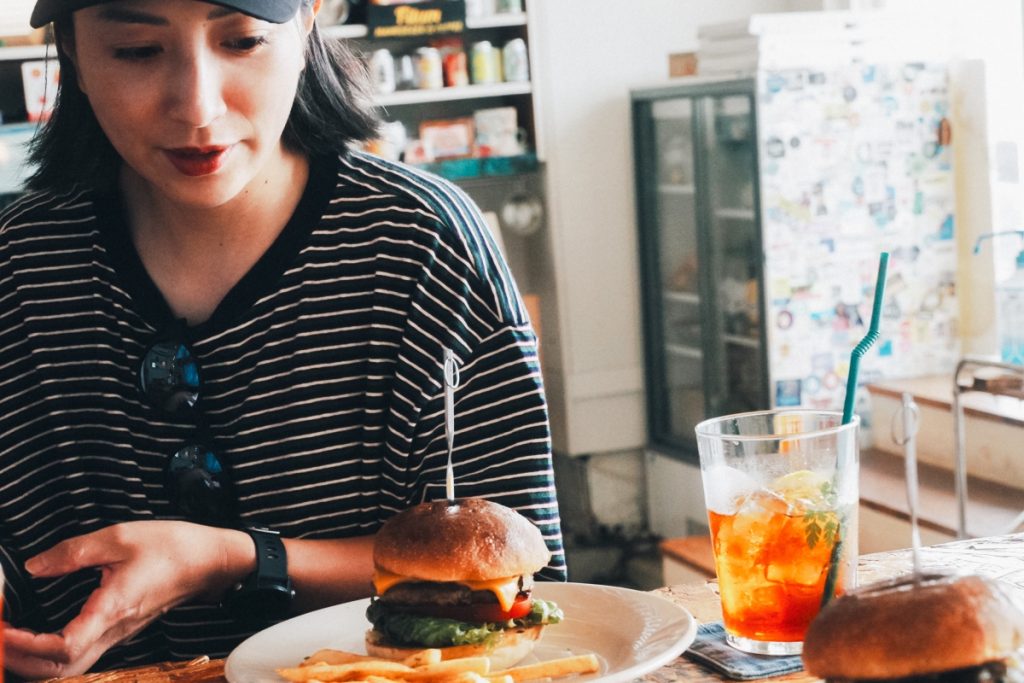
Fitam offers a sweeping view the shallow beach along with hearty hamburgers. The balance between the juicy, meaty patty, the fresh, crunchy vegetables, and the crisp toasted bun is so perfect that we wish our meal would last forever.
Afterward, we go out to the terrace and sip hand-dripped coffee while gazing at the beach. On a hot day, it would be awesome to go straight for a dip in the water. The dreamy ambience of the diner and scenery from the window invite us to hang around for a long while.

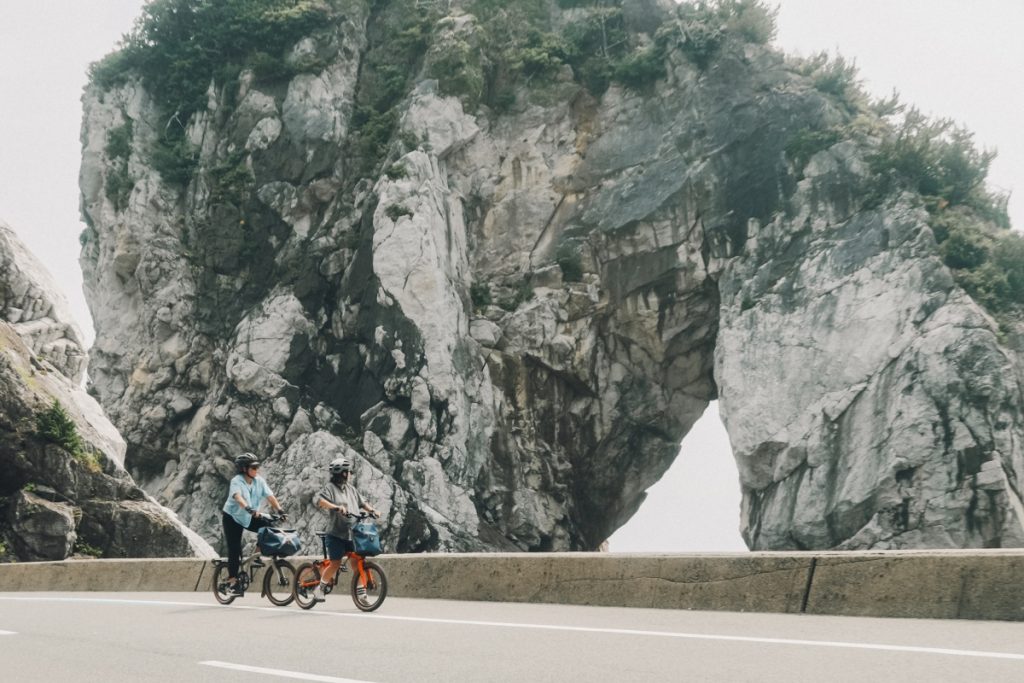
After lunch, we make one last uphill climb to our final destination: Shirasaki Ocean Park. Around the curve, the cape comes into view—massive white limestone against the vibrant blue sea. The rocks in fantastic shapes rise straight up from the water to create a view dubbed the Aegean Sea of Japan, and not only that, but the geologically rare formations are believed to date back a whopping 250 million years ago.
Hearing the park on the cape commands a 360-degree panoramic view, we take a ride through and admire the beach vitex flowers in bloom in the garden. The dainty light purple petals swaying against the white limestone look exotic, like they are in a faraway country.


We take a break in the rest house, and then pedal along the coast to JR Kinokuni Line Kii-Yura Station. Around the string of nearly identical log houses lining Obiki Beach, we look back and take in the view of the Shirasaki Coast before veering inland and riding through the fields and paddies to Kii-Yura Station. From here, we could take the train straight to Wakayama Station, or make a stopover at a hot spring spa. Any bath along the way would feature water flowing fresh from the source, untreated, unheated, and drinkable—all of that is a given in the wonderful Wakayama.
The mountain, the ocean, old Japanese highways, a post town, plus the bonus of a fine onsen hot spring bath. Wakayama is packed full of cyclist-friendly features.
Travel Guide

Koyasan Shingo Sect Main Temple Kongobuji
132 Koyasan, Koya-cho, Ito-gun, Wakayama
TEL:0736-56-2011

Golden River
546 Nagata, Aridagawa-cho, Arida-gun, Wakayama
TEL:0737-53-3005
Koyasan Goma-dofu Hamadaya
444 Koyasan, Koya-cho, Ito-gun, Wakayama
TEL:0736-56-2343

Monto Coffee
557-1 Shiga, Katsuragi-cho, Ito-gun, Wakayama
Yuasa Beisho
1075-2 Yuasa, Yuasa-cho, Arida-gun, Wakayama
TEL:070-9133-0737

Fitam
862-2 Ena, Yura-cho, Hidaka-gun, Wakayama
TEL054-631-6016

Shirasaki Ocean Park
213 Kamiya, Yura-cho, Hidaka-gun, Wakayama
TEL:0738-65-0125
Cycling Route Map
Brompton
Brompton was invented in the British capital of London in 1975. Founder Andrew Ritchie decided there must be a better way of moving around London and engineered the bike in the bedroom of his flat. The vehicle folds into a light, compact package in under 20 seconds.
https://jp.brompton.com