







Born of this island, found nowhere else
In just a few short hours, Tokyo’s concrete sprawl gives way to islands that feel worlds apart. That heady rush of arrival is all part of the island getaway. Blinding white cliffs rise above a milky-blue sea—an arresting sight shaped by deep geological time.
The Izu Archipelago was formed tens of thousands of years ago by volcanic eruptions, its islands mostly dark with basalt. But Niijima and Shikinejima are rare exceptions, cloaked in pale rhyolite. A powerful eruption in the late Heian period hewed their current forms and unearthed kōga stone—a luminous white rock found only here, prized for its lightness, fire-resistance, and ease of shaping.
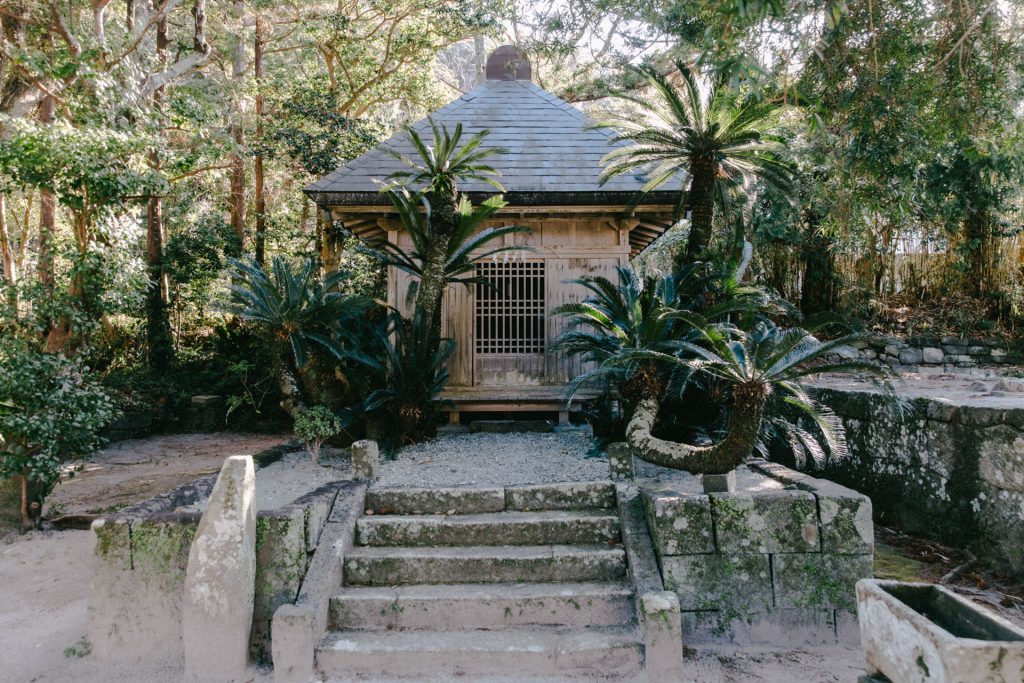
“Kōga stone can be rendered into various forms,” explains Kumi Umeda of Hostel NABLA, as she guides us through Niijima’s stone-crafted streets. Round windows cut into house walls, ornate eaves carved with surprising finesse—these are details only kōga stone makes possible. Winters on the island are lashed by fierce western winds; fires sparked by gusts once ravaged the island. Out of this danger came the idea to build with the island’s own fire-resistant stone. Shrines, torii gates, and even gravestones of exiles once banished to Niijima in the Edo period—many are carved from kōga stone. Moss-covered white shrines stand quietly dignified. Some gravestones bear playful carvings: dice for gamblers, sake barrels for drinkers—echoes of connection between the islanders and the exiled.
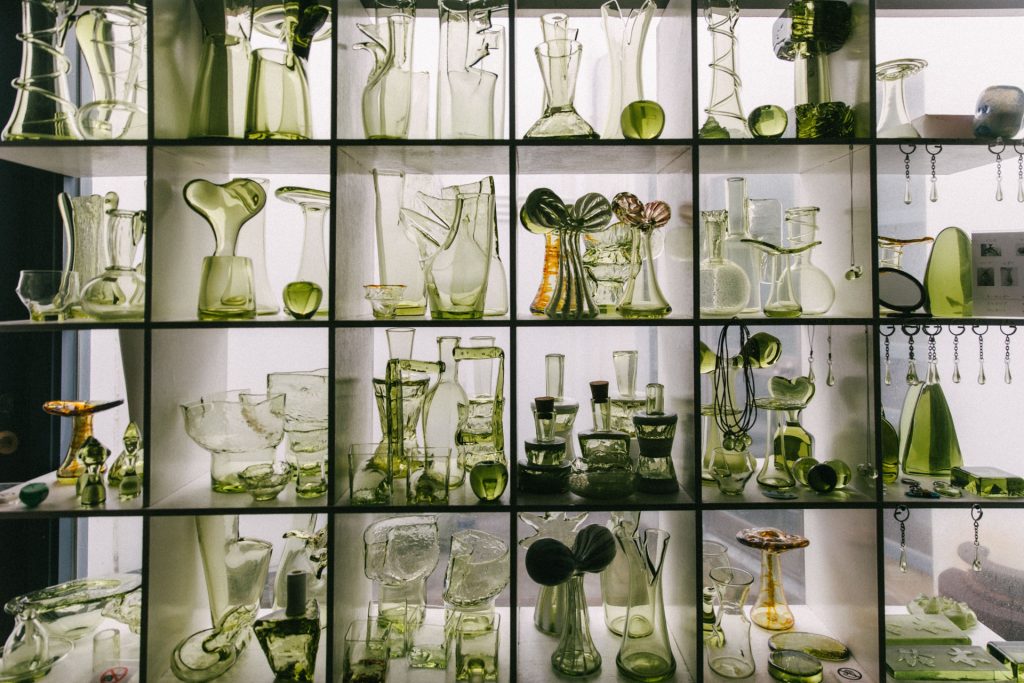
Bouquets of vivid flowers placed with care offer a burst of color that lingers in memory. Heated, kōga stone transforms into a translucent olive-green glass, naturally pigmented by its own mineral content. Holding one of these Niijima glass spheres up to the light, it shimmers like a distillation of nature and human craft.
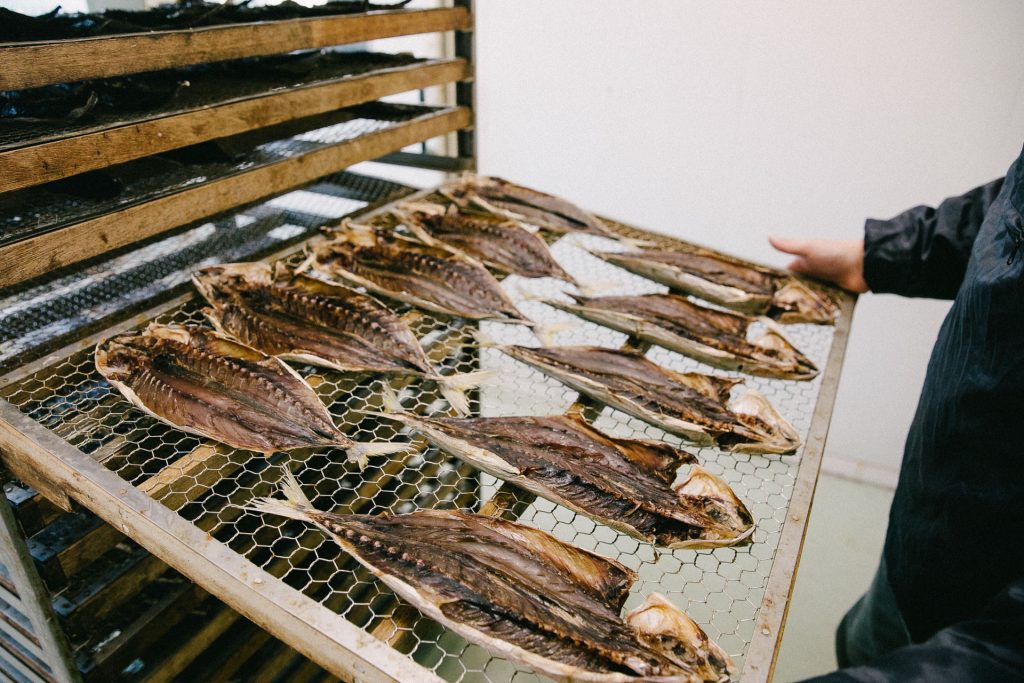
Kusaya—often dubbed Japan’s most pungent fermented food—is a bona fide Niijima product. With no rice to pay tax in, islanders under the Edo shogunate delivered salt instead. To conserve this precious resource, they reused the same brine to make dried fish—kusaya was born from that frugality. “I still get hungry when I catch a whiff,” laughs Ryota Ikemura of Iketa Shoten. “Back in school, the smell would waft through the village on Saturday afternoons.” He offers a brown kusaya stick—hesitantly, you take a bite. The flavor is sharp, singular. Not for everyone, perhaps, but worth a try.
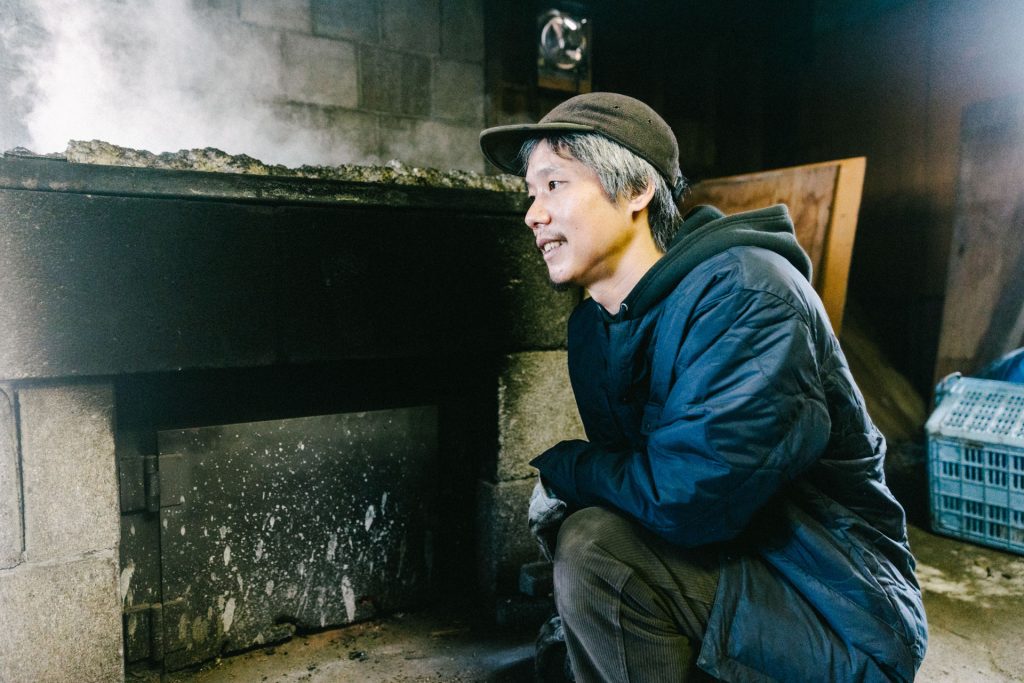
Not just for kusaya—salt is the soul of island cuisine, and of life itself. “Humans came from the sea, after all,” says Yusuke Saiki, whose fascination with salt led him to craft a version unique to Niijima. By day, he runs Nagomi-dokoro Sunshine; in between, he boils down seawater using island offcuts for firewood, insulating his iron cauldron with Kōga stone, and drying with Habushiura sand. “When you taste salt and can picture the sea behind it, I think that feeling connects us to caring for the Earth,” he says. Niijima’s sea—untouched by river runoff—yields a pure, sharp salt. Close your eyes and taste it, and it’s as if you’re standing in the Pacific’s clear, surging tide.
On this small island, a quiet moment stirred with deep gratitude.
That day, I set out to stay on Shikinejima—just a ten-minute ferry ride from Niijima Port. As the boat cut through the spray, a sense of adventure stirred. Just 12 kilometers around, the island is ringed with inlets. Soon after arriving, a local fishing master handed me a rod with a nod: “Give it a try.” A flash of silver—an aomuro horse mackerel on the line—marked an auspicious start.
My first port of call is Okuyama, the island’s general store where proprietor Toshihito Okuyama distills his own shochu using American sweet potatoes he grows himself. Aged three years, the result is smooth, aromatic, and deeply rooted in local flavor. He’s also working on new products that highlight this unique crop.

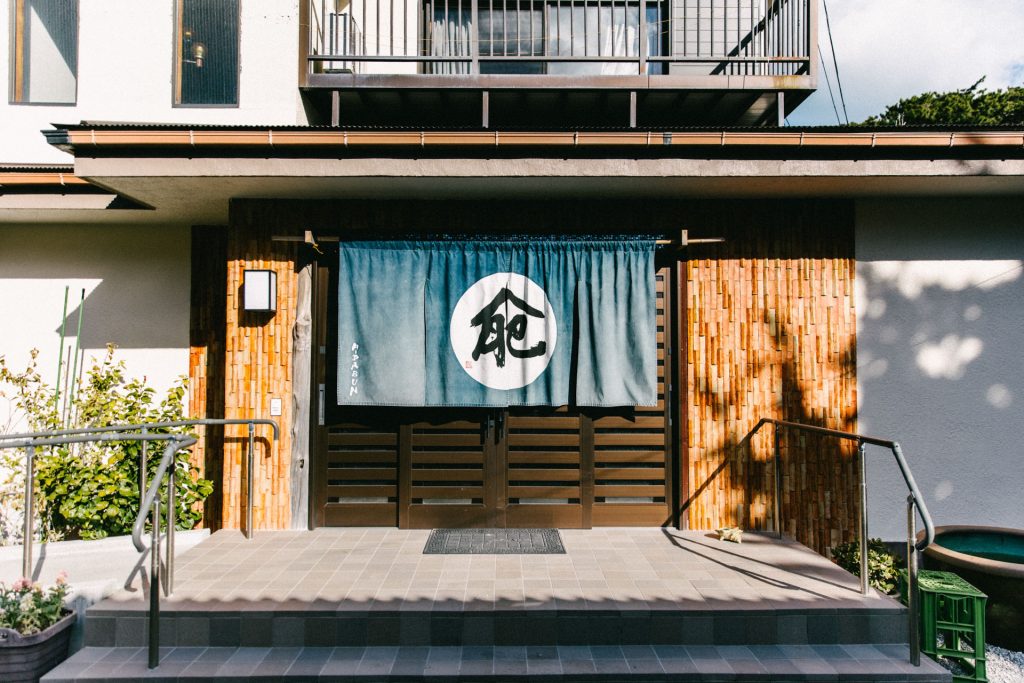
Chasing the sunset, I hurry to the Kamabiki Observatory, where the Izu Peninsula and Mount Fuji come into view. Below, the sea shimmers in layered shades of blue. The sun sinks into the horizon, turning white stone and creeping pines to gold. Behind me, Niijima is awash in soft hues. A quiet joy settles in, imagining the colors this island has witnessed across the ages. Before night falls, I make my way to Guesthouse Hidabun. Laughter drifts from the kitchen—regulars and locals gathered, sharing a warm, familiar evening.
The next morning, I listened to a sermon at Tōyō-ji Temple. Chief priest Tomoyuki Yokoyama spoke of the temple as a place to release suffering and attachments, and to offer gratitude to one’s ancestors. A quiet morning spent in meditation, focusing on the breath. On the way out, his gentle smile eased my mind as he said, “When you find yourself overthinking things you can’t control, move your body and soak in the hot springs.”
Shikinejima’s onsen are famed, even visited by poet Akiko Yosano for healing. Deep in a gorge that looks cleaved open by a blade lies Jinata Onsen, a wild spring where iron-rich water gushes from the seafloor at 80°C, its temperature shifting with the tides. There’s even a nighttime sea onsen tour led by Mitsuyo Hida, proprietress of Hidabun Inn. Floating in the dark ocean beneath a sky full of stars, waves whispering all around—you’ll find a kind of mindfulness that exists only here.

A journey across Niijima and Shikinejima—so close there are even theories they were once connected by land. Shaped over ages by nature and human wisdom, these islands continue to produce hues found nowhere else. As time layers like sediment, new shades emerge. To witness these ever-changing tones, I find myself drawn back again and again, crossing the sea between these two islands.


Sea, mountains, and town strolls—
Island hopping between Niijima and Shikinejima
Tour de Nippon
Niijima & Shikinejima
September 27–28, 2025 (Saturday & Sunday)

Day 1 begins at Niijima’s harbor. Feel the sea breeze as you cycle and stroll through Niijima’s vast landscapes and rich history. Explore stunning, almost exotic beaches and hike with ocean views. By evening, take the ferry to neighboring Shikinejima, where you’ll savor fresh island seafood and relax in hot springs. On Day 2, start with meditation at a temple to center your mind, then enjoy sea fishing and visit scenic, secluded hot springs. Experience two days of island hopping between Niijima and Shikinejima—a perfect escape from the city’s hustle, filled with new discoveries and connections. Join us for this unforgettable journey.
Tour de Nippon Guide
Niijima & Shikinejima
Hostel NABLA
Tokyo-to, Niijima-mura, Motomura 6-3-1
TEL:04992-5-0376
Iketa Shoten
Tokyo-to Niijima-mura Motomura 6-3-3
TEL:04992-5-0118
Nagomi Dokoro Sunshine
Tokyo-to Niijima-mura Motomura 6-1-3
TEL:080-3713-4157
Niijima Glass Art Centre
Mamashita Seaside Road, Niijima Village, Tokyo Prefecture
TEL:04992-5-1540
Okuyama
Tōkyō-to Niijima-mura Shikinejima 281-1
TEL:04992-7-0211
Guesthouse Hidabun
9 Shikinejima, Tōkyō-to Niijima-mura
TEL:04992-7-0072
Tōyōji Temple
Tōkyō-to Niijima-mura Shikinejima 11-1
TEL:04992-7-0133
