







I met Master while we worked at a travel agency—he was in sales but already exploring cooking, starting at a yakitori shop. He later trained in Ginza and fully embraced the culinary arts.
Mama, also from the agency, traveled often, gaining a broad worldview. Before all this, Master had worked at Columbia Records, collaborating with legends like Harumi Miyako and Hibari Misora. Leaving music eventually led him to Mama.
They deeply explored shōjin ryōri, a nearly 900-year-old Zen Buddhist vegetarian cuisine, discovering its remarkable depth. Inspired by its principles, they embraced soulful, nuanced dishes that highlight each vegetable’s unique character.

Bottom, from left: Dried natural matsutake mushroom, freeze-dried daikon, lotus seeds, root vegetables
To deepen their understanding, they studied under a respected monk in Kamakura—the tenzo (head cook) of Kenchō-ji Temple—who taught Zen cooking at his home on Saturdays. This was not just culinary training but also an immersion into Dōgen’s Zen teachings. A key moment came during a conversation with a tea ceremony practitioner who said, “Tea has deep spirituality—so why not master the Way of Cooking?” This question stayed with them. Later, while searching for old books on Zen and shōjin ryōri, a secondhand bookstore owner introduced them to the monk. Though classically trained in Kyoto and highly respected, he was also known for his fondness for alcohol—a contradiction quietly accepted in monastic circles.
The origins of kaiseki cuisine are said to lie in Zen training, where monks would place warm stones on their chests to endure the cold—kaiseki literally means “stone on the chest.” In such austere environments, alcohol was often consumed, sometimes jokingly referred to as hannya-tō (Prajñā soup). During our Kamakura visits, it became customary to offer fine sake, even though there were no set fees for lessons. This often led to personal sacrifice—and eventually, debt. We eventually stepped back from temple lessons and turned to self-study: reading books, experimenting with dishes, and observing how guests responded. Over time, this path led us to embrace vegetarian and vegan practices naturally.
Mama remains vegan today. As more guests abroad avoid animal products, we created dishes that satisfy both vegans and non-vegans.
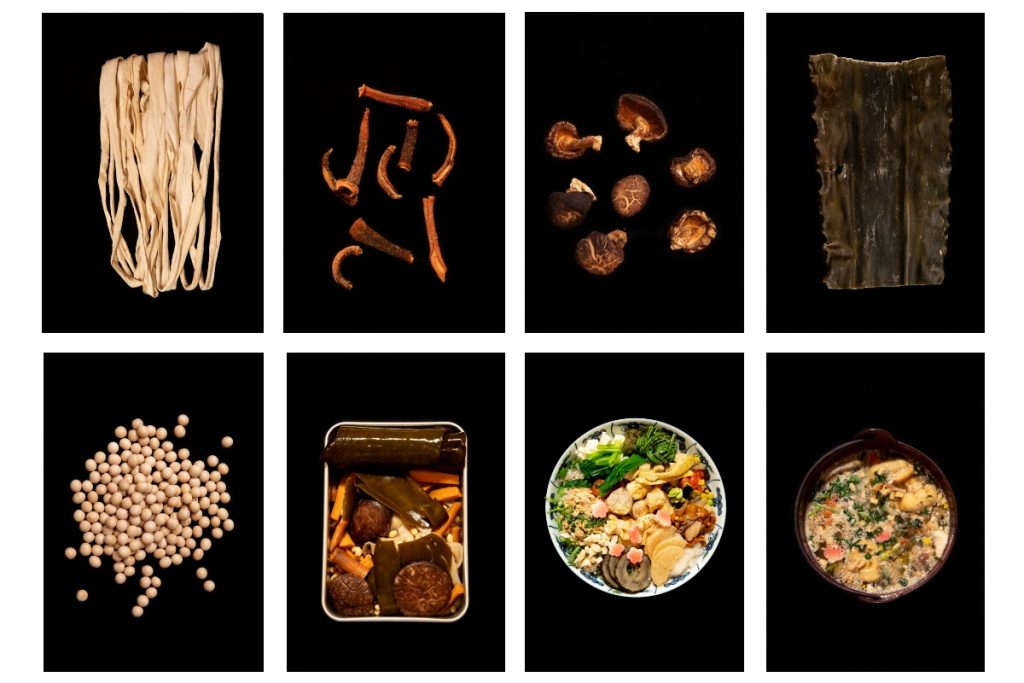
In Japan, dashi (broth) is typically made with bonito flakes, which aren’t vegan-friendly. So, we created our own shōjin-style broth using kombu, soybeans, kampyō, shiitake mushrooms, carrots—all carefully sun-dried by Master himself—and other plant-based ingredients. It’s a blend of blessings from both the sea and the mountains.
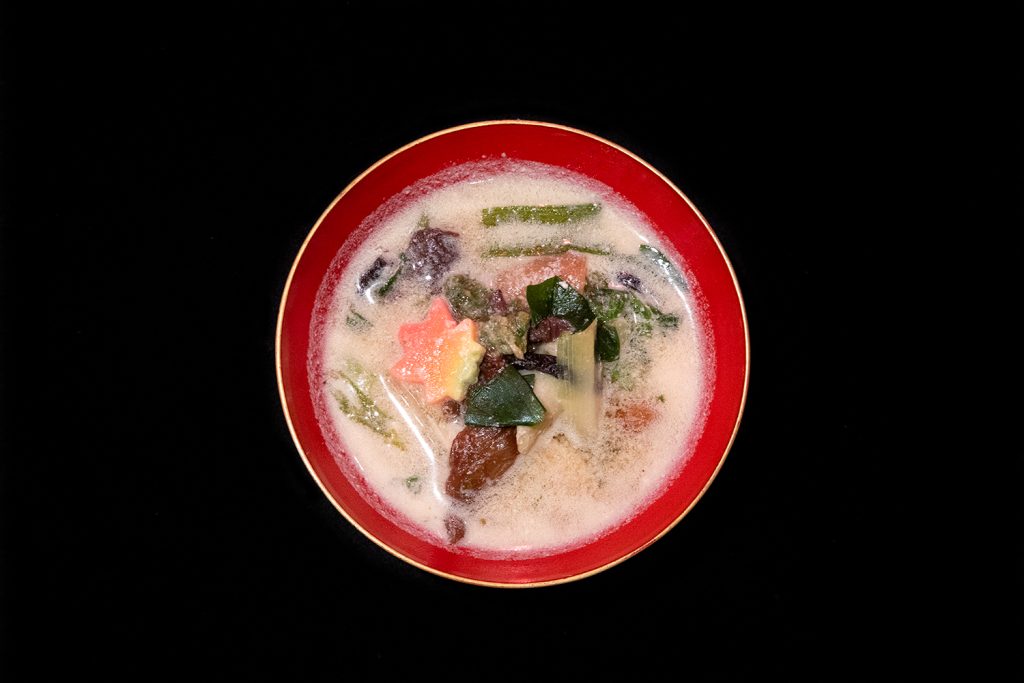
For over 30 years, their hotpots made with this broth have been well-loved, often served as nourishing, restorative meals.
Their time in Kamakura inspired the concept of the “five flavors,” each linked to a vital organ: bitterness to the heart, sourness to the liver, sweetness to the spleen, spiciness to the lungs, and saltiness to the kidneys. Interestingly, many of the kanji for these organs include the moon radical, symbolizing the inner tides of the body.
Each vegetable carries its own distinct character, and when combined with care, they complement one another in a kind of culinary harmony. This reflects a world grounded in mutual respect and love—free from competition and rooted in compassion.
Zen, with its foundations in Buddhism, teaches that everything in the universe is part of a greater cycle of love and harmony. When that harmony is disrupted, flavor becomes dull, and our thinking loses clarity. Yet nature always remains in balance—it’s simply a matter of whether we’re aware enough to recognize it.
Though not religious, their belief that food expresses love and kindness grew stronger. Cooking with care is their way of sharing that love. They never cut corners—time and effort give meaning to food. Using seasonal ingredients honors the Japanese respect for nature’s spirits, eating cucumbers in summer and root vegetables in winter to match the body’s needs. Living in harmony with nature supports health and longevity. “I feel more sustained by the earth and its ingredients than by my own efforts,” says Mama.
Even the table has a kind of consciousness. That’s why we use only wooden tableware, never plastic. The legendary Chinese emperor Shennong, who classified medicinal herbs, once said, “Food and medicine are the same.” While traditional Chinese medicine may include animal products, Zen cuisine offers a plant-based form of medicinal cooking—perfectly attuned to Japan’s seasonal sensitivities. Though modern life allows us to eat anything year-round, humans originally lived in close harmony with plants. Plants are highly perceptive—they respond to energy, vibration, and emotion. Birds begin singing not because of sunlight, but because they sense trees releasing sap. Trees grow stronger when spoken to with kindness, just as water forms beautiful crystals when treated gently. Experiments show that plants are emotionally responsive—something we should teach children to appreciate. Even poisonous plants and overlooked grasses contribute to the cycle of life and ecosystems. All are part of the intricate web of karma, where everything is connected through cause and effect.
True peace begins with individual acts of kindness—toward others, toward food, and toward nature. That’s why we say: “Don’t just cook with your hands—cook with your heart.” Cooking with love transforms food into healing—a prayer that circulates energy. Each dish we prepare is a tribute to the lives that nourish us, honoring the moment and the ingredient. Food made with care touches both body and spirit.
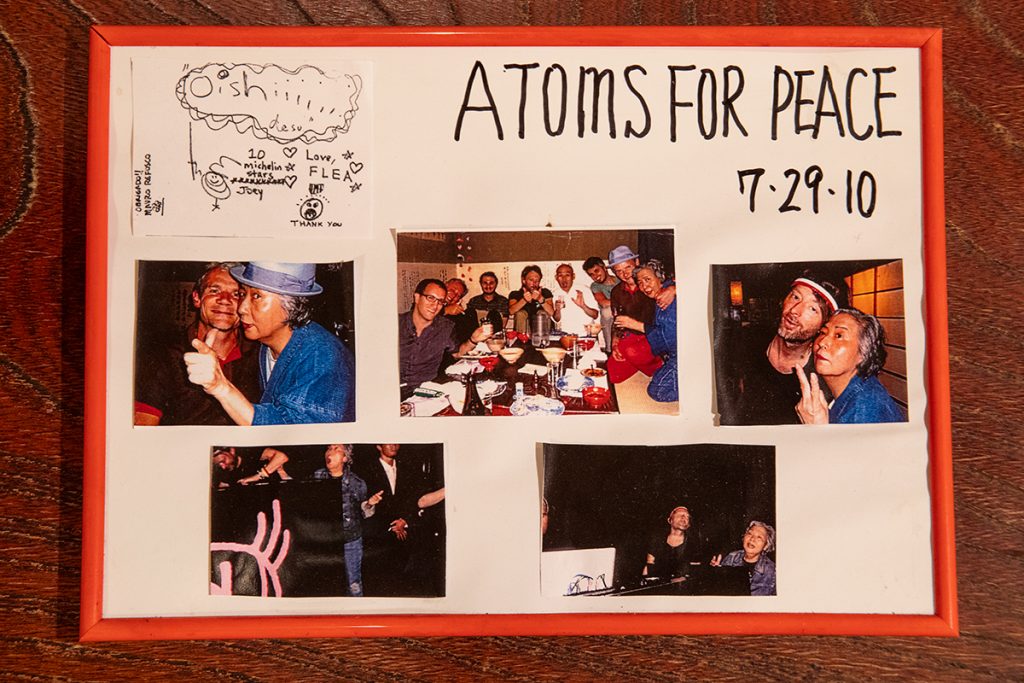
Interestingly, many musicians follow vegetarian or vegan diets. Our restaurant first drew attention when a renowned French fashion producer dined with us—and word spread quickly. Since then, we’ve welcomed Radiohead on several occasions, who even introduced us to the Red Hot Chili Peppers. The Beastie Boys have also visited. Coldplay planned to come, though scheduling conflicts got in the way.
Other notable guests include Chloe Svigny, Christopher Doyle, Glenn Ligon, Wolfgang Tillmans, and many more. We’re not a conventional restaurant—there’s something in our atmosphere and philosophy that seems to deeply resonate with artists.
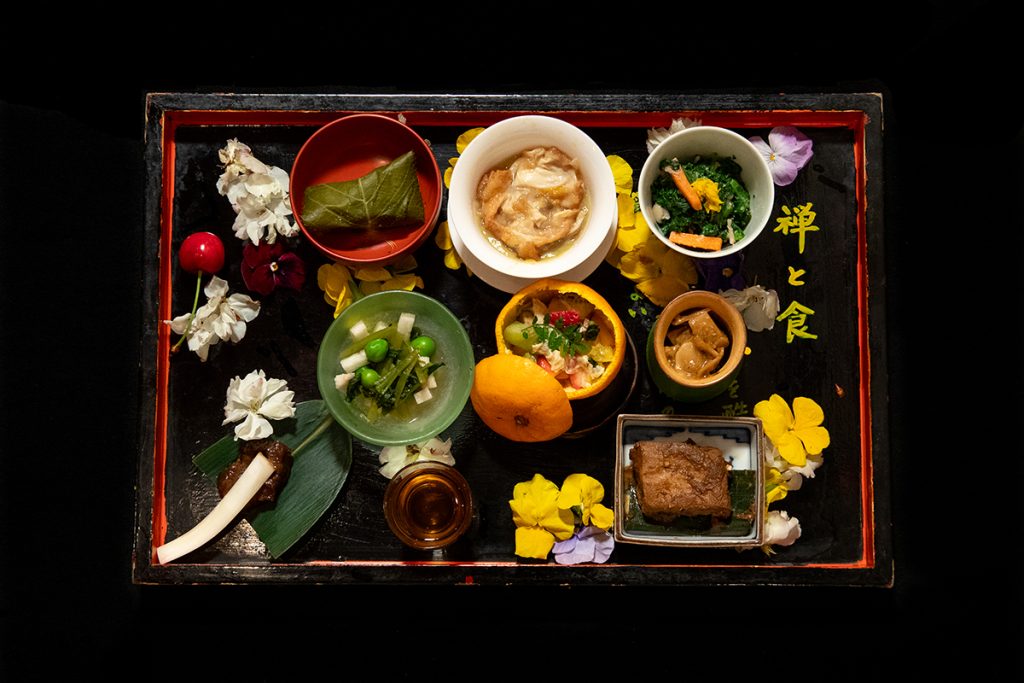
At Sosaibō, we’ve practiced Zen cuisine for over 40 years, guided by harmony, love, reverence for nature, and interconnectedness. Our goal isn’t elaborate meals but nourishing the body, heart, and soul. If even one guest leaves feeling grounded, grateful, or at peace, our efforts are fulfilled.
Each dish is prepared with gratitude, honoring nature’s blessings. The five fundamental flavors—sour, bitter, sweet, spicy, and salty—correspond to vital organs and carry nature’s love to the body. Cooking is a sacred act, aligning us with the universe’s rhythms and our connection to all life.
Charcoal grilling adds not only flavor but purifying energy, believed to dispel negativity and infuse food with ki (life energy). Seasonal tempura, signature aemori (dressed vegetables), and balanced courses showcase Japanese culinary artistry with a focus on seasonality, nutrition, and color, harmonizing with sake and other drinks.

Center: Skewers・Tofu with sansho (Japanese pepper) miso・Ichigo goma miso: Strawberry sesame miso・Manganji tōgarashi negi miso: Manganji pepper and green onion miso
Right: Kumquat・Long yam croquette・Inari sushi (sushi rice wrapped in sweet, seasoned tofu pockets)・Monaka (crispy rice wafer) with kabocha squash salad・Asparagus
We serve our dishes in antique Japanese vessels, embracing timeless beauty. Mama handwrites notes on golden origami paper in various languages, symbolizing pause and the value of meaningful relationships.
Our fermented foods use beneficial microbes, and sun-dried vegetables boost nutrition, offering gentle, low-calorie options especially suited for midlife and beyond.
At Sosaibō, we believe that “you are what you eat.” Each dish is prepared with loving intent and a prayer for our guests’ well-being. To us, true food is a gift—one that nourishes, returns, and is reborn.
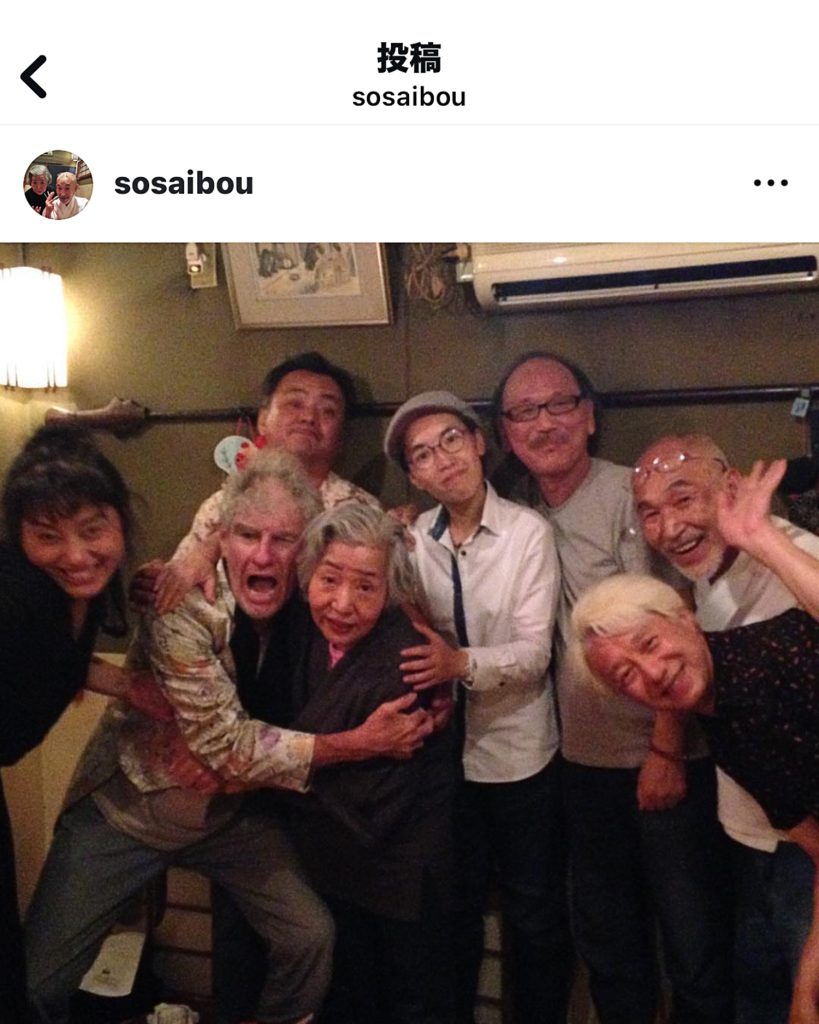
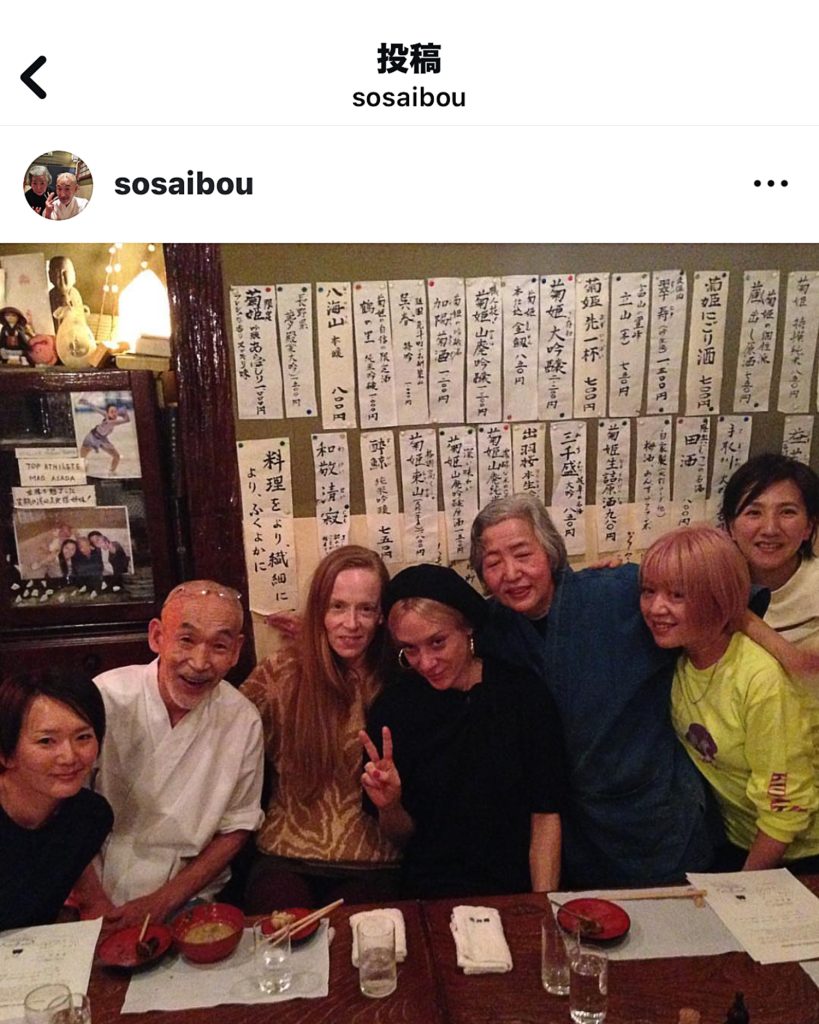
No one can plan a restaurant expecting legendary artists to return time and again. Yet, despite language barriers and life’s unpredictability, people keep coming back to Sosaibō. There is something in the balance between Master and Mama—the harmony they share with each other and with the universe—that creates a timeless, flowing energy. It is this intangible warmth that draws people back.
At Mama’s request, I will close this article with a quote by Rainer Maria Rilke:
“There is only one way to travel, to go within yourself.”
Yasuyuki Takagi
Yasuyuki Takagi is a photographer / director born in Tokyo, Japan. He Studied Media Arts at Pratt Institute in Brooklyn, New York and lives And works in Tokyo, Japan. He has published photo books “小さな深い森 Petite Foret Profonde” and “植木 UEKI” both from France and his latest photo book “BLR: Brooklyn Lot Recordings” was published by Neat Papers in Tokyo Japan. His directing works include: “How to be like Tom Sachs” “A portrait of a place: Arakicho” amongst others.