







Ōhechi in the 2020s: Where Old and New Coexist
“It’s been a while since we’ve walked an old pilgrimage trail.”
No sooner had we voiced the urge to hit the proverbial road again, than the perfect opportunity fell in our lap: a hike along the Ōhechi route of the Kumano Kodo. The plan was to walk a 40-kilometer stretch from Kushimoto to Fudarakusan-ji Temple—part of the full 120-kilometer trail—while staying at a temple inn with a 1,200-year history and stopping by seaside cafés and a tucked-away gallery shop run by a relocated artist.
The trip was organized by Takashi Iwakura, head of HITONOHA, a design studio uncovering the charms of Wakayama through creative work. According to Iwakura, Ōhechi’s appeal lies in its constant interplay between nature and satoyama culture (the traditional rural landscapes that border mountains and villages), between the “good ol’ days” and contemporary life.
The trail begins in Kushimoto, a town known as the southernmost point of Honshu and home to the striking Hashigui-iwa rock formations. Joining the walk is Lebo Tladi, an artist based in Shirahama and originally from South Africa. From Kushimoto Station, the route follows the Ōhechi trail along the Kujinokawa River, heading toward Koza, where the clear waters of the Kozagawa meet the sea.

Koza flourished during the Edo period as a center for whaling under the Kishu Domain. In addition to the Ōhechi, it was also the starting point of several key routes, including the mountain-side Nachi Kaidō, and the Koza Kaidō, made famous by Ryōtarō Shiba’s travelogue Kaido o Yuku. Beyond whaling, Koza served as a major distribution hub, collecting timber and binchōtan charcoal transported from deep in the mountains upstream.
We cross the Kozagawa and continue along the coast for a while. Just past Kii-Tahara Station, we reach a sign marking the entrance to Shimizu-toge Pass, one of the most scenic sections between Kushimoto and Nachikatsuura. Officially added to the UNESCO World Heritage list in 2016, this roughly 2-kilometer stretch of ancient trail retains its historical textures. The eastern slope is still lined with stone steps and stone paths, while the western side preserves the unrefined character of the old trail. Much of the path was restored by local volunteers who interviewed elders, uncovered buried stonework, and carefully revived the route by hand.
We pass through the narrow cleft of Shimizu-toge in a stillness that feels almost too quiet for a World Heritage site, and pause to rest at Yasudaira, a shaded clearing marked by an enormous tree. Descending the far side of the pass, we arrive in the small village of Kii-Uragami. From there, the route climbs again toward Uragami-toge.
We pass a charcoal-burning hut still producing Kishū Binchōtan (premium white charcoal) and eventually reach a ridge with a sweeping ocean view. A weathered trail marker carved with “Right: mountain path / Left: Ōhechi” points the way down through the forest. At the foot of the slope, awaits our lodging for the night, Daitai-ji, a Zen temple of the Rinzai school.

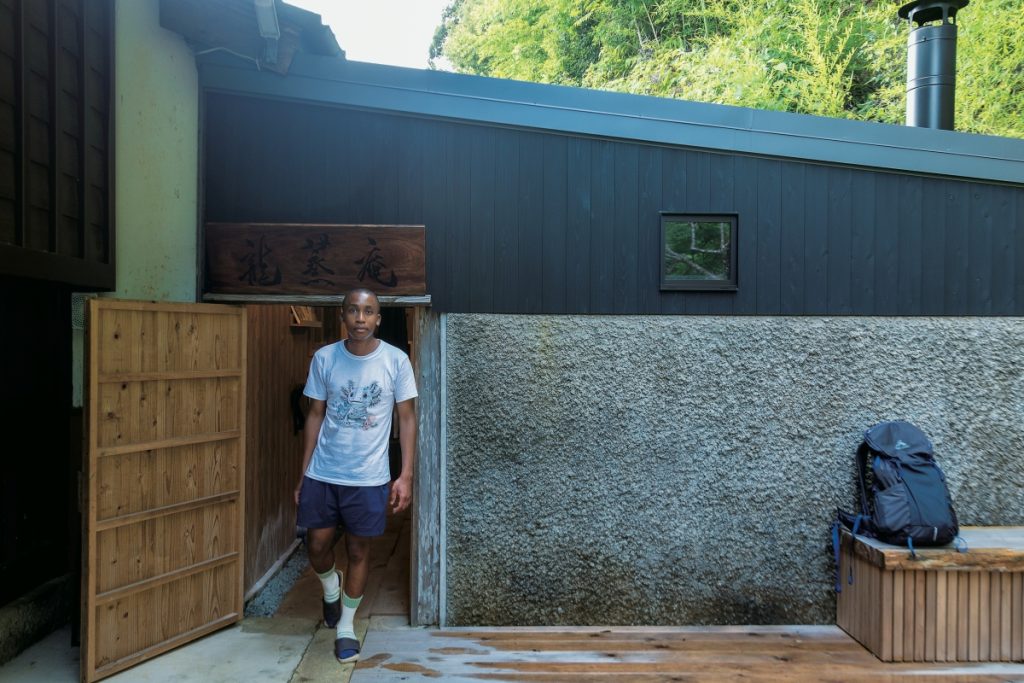
Daitai-ji was founded 1,200 years ago by renowned monk Saichō, who is said to have carved a statue of Yakushi Nyorai from a willow tree to seal away a giant serpent threatening the village. Despite its deep history, the temple offers modern experiences like guided nighttime tours of the illuminated grounds and a “Zen Sauna” where guests engage in Zen dialogue via tablets while relaxing in the heat.
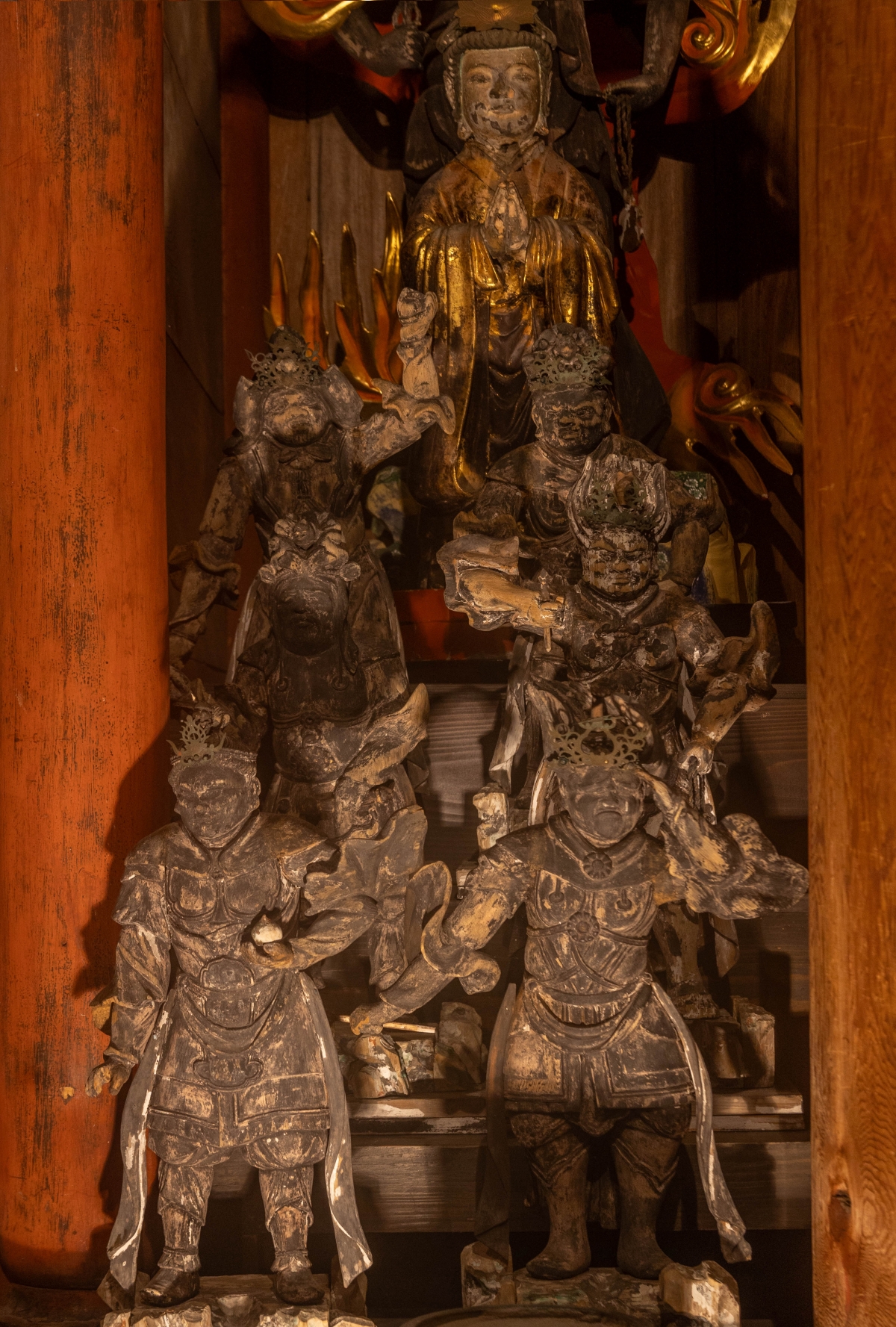
Especially notable is the guided tour of Buddhist statues from the Heian, Kamakura, Muromachi, and Edo periods, each explained in its historical context. Even Lebo, our local guest, is deeply impressed, remarking how it changed the way he looks at statues.
After taking part in the morning prayers, we say goodbye to Daitai-ji and set out toward our final stop, Fudarakusan-ji Temple. We pause for a quick purifying soak (“yugori”) at Yurino-yama Onsen, known for its mineral-rich water that flows straight from the source. No added heat, no dilution.
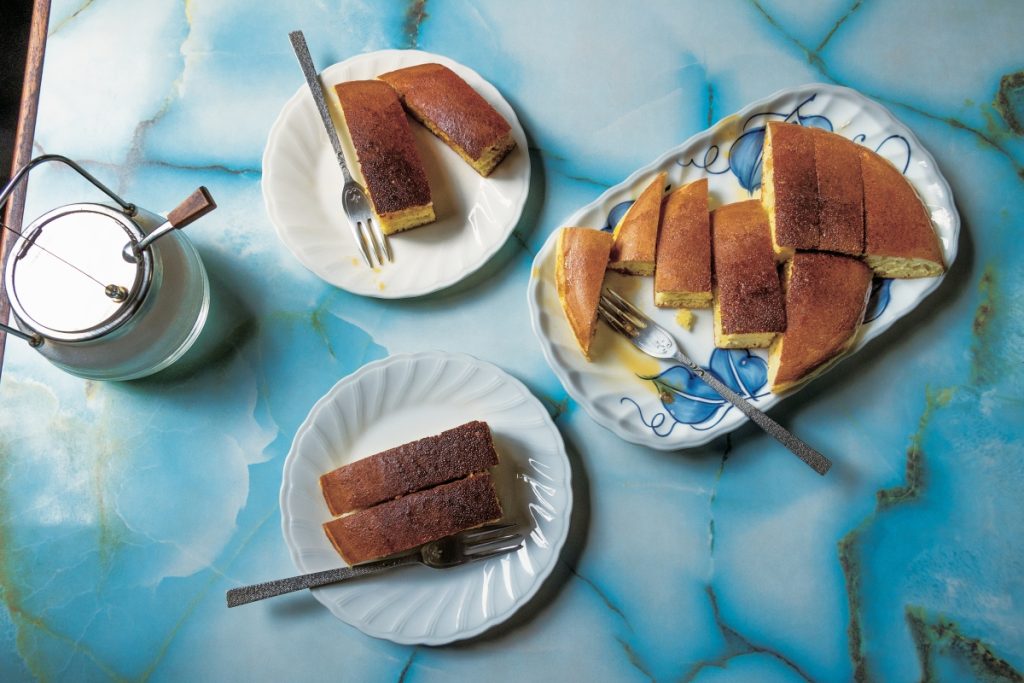
But before reaching the goal, we’re tempted into one last detour, manufact jam Kaede, a beautifully restored old inn now serving as a gallery shop run by woodcraft artist Haruto Furuhashi, who relocated here from Tsukuba. Alongside his own work, the space features hand-crafted pieces by fellow artisans he’s built friendships with over the years.


From measuring spoons to butter knives, Furuhashi’s creations are captivating not just for the natural elegance of the wood grain, but for the delicate silhouettes and striking surface finishes achieved through techniques like mud dyeing and lacquer work. After gawking over the fine craftsmanship, we leave with clear minds and renewed energy for the last leg of the journey.

Commoners Journeyed to Kumano, Monks to Paradise
Founded, according to legend, by a wandering ascetic who washed ashore from India during the reign of Japanese Emperor Nintoku (approx 313 to 399 AD), Fudarakusan-ji Temple takes its name from the Sanskrit “Potalaka,” or the Pure Land (mythical island paradise) of the bodhisattva Kannon. In centuries past, monks here undertook a final, solemn rite known as Fudaraku Tokai, or “voyage to paradise.” Boarding a boat with no windows or doors, they set off across the Kumano Sea, bound for the southern horizon where they believed Kannon’s paradise awaited.
Just as common folk once sought rebirth by making the pilgrimage to Kumano, perhaps these monks, too, longed for salvation in Kannon’s realm. Standing before the full-scale replica of one of these vessels displayed on the temple grounds, one can’t help but reflect on the radical devotion and austere practices that once pulsed through this land of spiritual renewal.

n the second night, after visiting Fudarakusan-ji Temple, we stay over at WhyKumano in Nachikatsuura. Still buzzing from the day’s impressions, we head out to a recommended local establishment, Kappo Bar EL CAMINO DEL POETA, (“The Poet’s Pilgrimage Path”).
True to its name, the place is run by poet Yoshiaki Sato and his wife Sayuri.


The menu blends obanzai (home-style daily dishes prepared in advance) with Spanish pintxos, served under the inventive name OBANTXOS. Each dish is crafted with seasonal local ingredients, and elevated thanks to Sayuri’s sharp eye and refined taste honed from a childhood in her family’s fresh fish shop
With peaty Scotch lining the back bar, and Yoshiaki’s spoken-word reflections on life as a pilgrimage providing the night’s soundtrack, EL CAMINO DEL POETA is a layered, unhurried experience, one that could never be fully unraveled in a single visit. Put poetically, a deep, and fittingly rich, final chapter to the journey along the Ōhechi trail.


Ōhechi detour: If time allows after arriving at Fudaraku-ji Temple, consider extending your journey to visit Kumano Nachi Taisha and the stunning Nachi Falls.
Trail Guide

775 Shimowada, Nachikatsuura, Higashimuro District, WakayamaTEL:080-2781-3483

2727-7 Shimosato, Nachikatsuura, Higashimuro District, WakayamaTEL:080-9256-7967

1085 YukawaNachikatsuura, Higashimuro District, Wakayama
TEL:0735-40-0012

5-1-3 2F Tsukiji, Nachikatsuura, Higashimuro District, Wakayama
TEL:0735-30-0921

333 Katsuura, Nachikatsuura, Higashimuro District, WakayamaTEL:070-4087-6762
4-79 Asahi, Nachikatsuura, Higashimuro District, WakayamaTEL:0735-52-2387
Ohechi Official map is here
https://www.wakayama-kanko.or.jp/asset/map/oohechikaidomap
Trek the Kumano Kodo
with a lightweight Macpac trekking pack
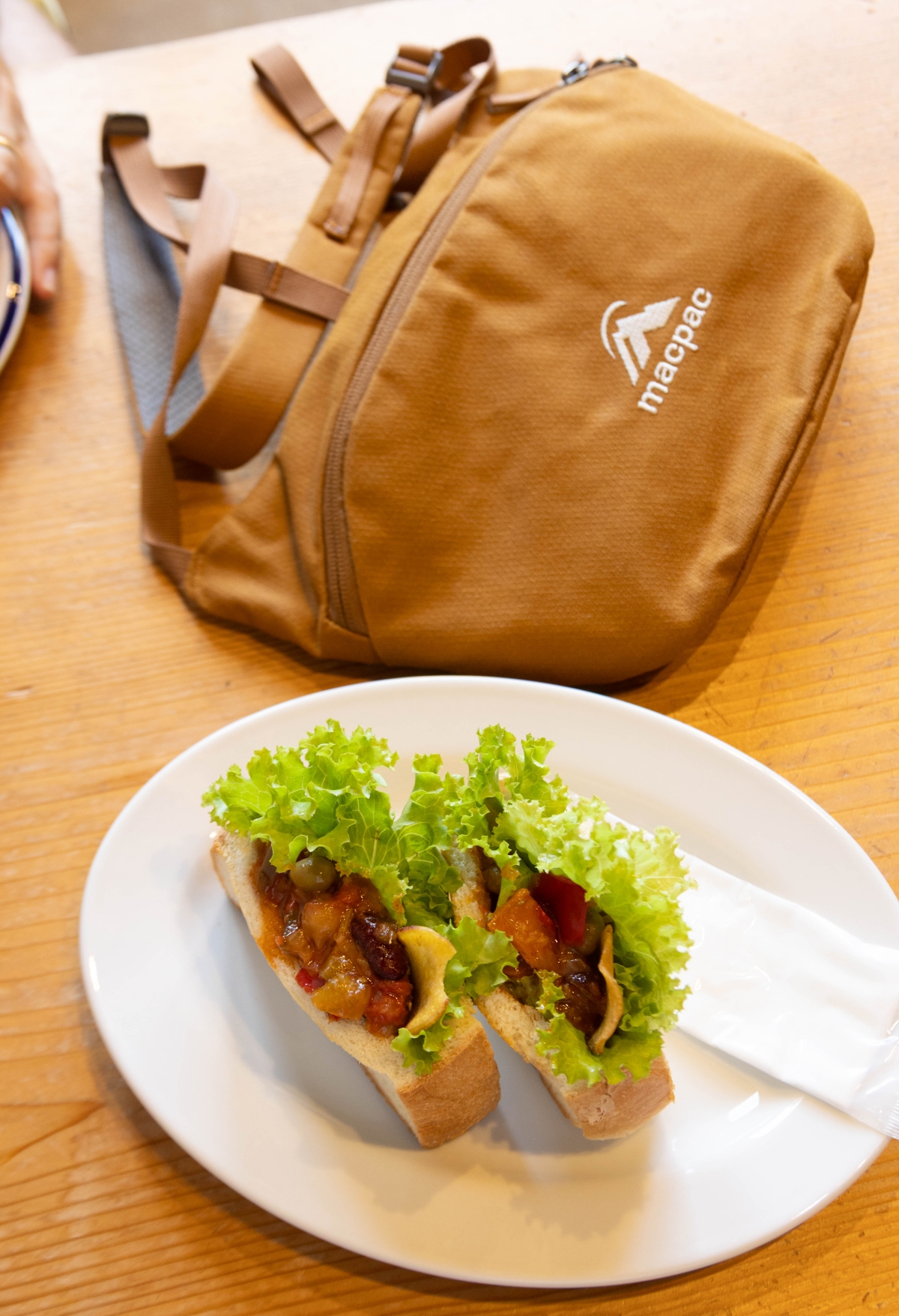
From café breaks to single-track ridge crossings, hiking the Kumano Kodo means shifting through a wide range of scenes. For this journey, we chose the simple and lightweight Hesper 30 trekking pack. Weighing in at just 730g, it features a breathable back panel that keeps you moving comfortably. Thoughtful details like generous side pockets and a wide U-shaped opening make every step of the hike feel easier and more intuitive.

