







Naoko Ogigami is a renowned figure in Japan’s film industry. At 52, she has directed 10 feature films and numerous television projects over the course of more than two decades. Her work has earned her several prestigious awards, including the Teddy Award at the Berlin Film Festival. Widely regarded as one of Japan’s most distinctive female filmmakers, Ogigami is celebrated for her unique style and storytelling.
Her films are filled with eccentric, sarcastic, and often bizarre elements, yet they remain deeply heartwarming, offering reflections on family and human relationships. Her approach to filmmaking is akin to that of a chef crafting a secret recipe, blending surprising notes, flavors, and textures. Bursting with an endless stream of ideas, she brings a keen sensitivity to detail, applying the precision of a mad scientist to her craft.
The characters in her films often appear as outcasts—isolated and misunderstood. Some, she says, are drawn from her own experiences as the only female Asian student in her class, a role that shaped much of her perspective and storytelling approach.
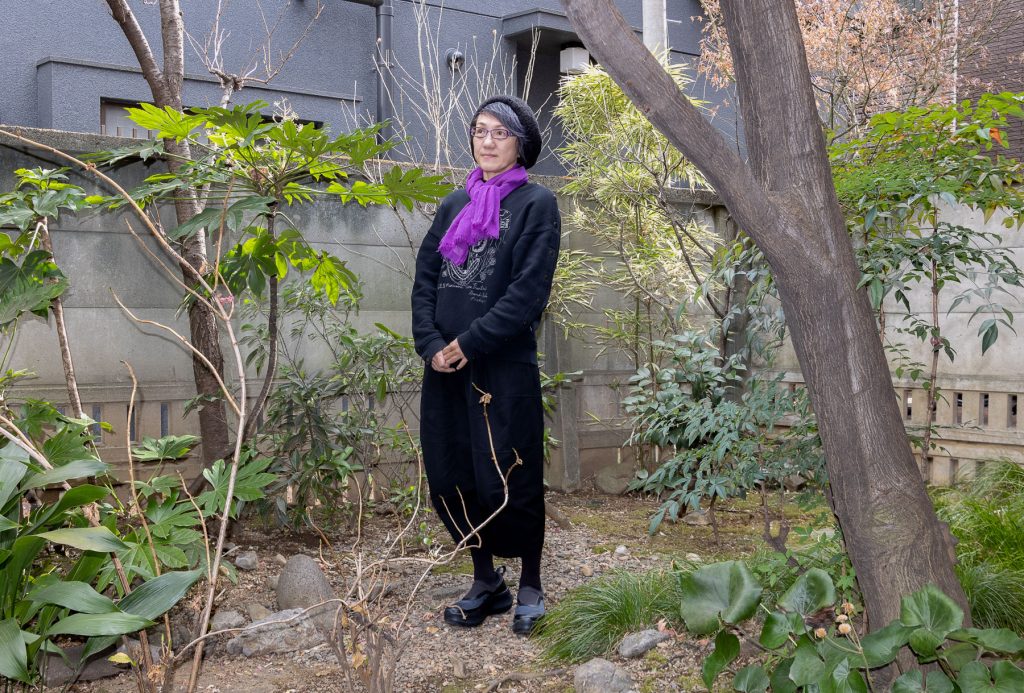
“I went to the U.S. to study without knowing any English and enrolled at UFC, where the goal for graduate students was to become directors, making the program highly competitive. I was the only Asian student who couldn’t speak English, and there were very few women. This was 30 years ago. Due to my background and language barrier, I was often left out of group work and felt like an outsider—almost like baggage. It was incredibly frustrating.
One day in my scriptwriting class, I had friends review my script, and when I read it aloud, everyone loved it. I made them laugh every time. Despite feeling left out in other ways, my script was a hit, and I realized my humor connected with the American students. That boosted my confidence.
I had no experience with scriptwriting; I was more into science and math in Japan. Writing didn’t interest me, so I lacked confidence in it. But when my classmates responded to my humor, I saw scriptwriting as a puzzle, like math. This approach clicked with me and made me realize I wanted to become a movie director.”
As an asian who lived in the U.S., Ogigami’s experienced what it’s like to be left out. While she doesn’t intentionally write about outsiders, many of her characters end up as outlaws or misfits, perhaps reflecting her own experiences of feeling like an outsider. This sense of separation resonates with her love for solo travel. A frequent traveler, she often journeyed alone, even as a student. While she occasionally travels with family, she particularly enjoys solo driving trips, where she can sleep in the back of her car and savor good food. Though traveling alone was easier when she was younger, the presence of a family now makes it more challenging. Still, after attending film festivals and or screenings abroad, she finds moments to wander on her own, embracing the peace she finds in solitude.

This sense of independence is carried into her writing process, where she draws inspiration from the world around her, collects ideas from newspapers, and stores them for future projects. While about a third of her scripts never make it to the screen, she occasionally reuses elements from old scripts in new films, as she writes all her scripts herself.
Filmmaking, she says, is not just about technique—it’s about feeling. As she’s gained experience, she’s learned to recognize what works, but she finds that kind of formulaic approach boring. She openly admits that, though it may be considered taboo in Japan, she wants to be “properly crazy.” If filmmaking stops feeling fun, she insists it’s important to stay funny or strange to keep the creative energy alive. She draws inspiration from other filmmakers whose “craziness” stands out, particularly David Lynch, whom she admires for embracing his eccentricity. She believes that kind of audacious creativity is something to be cherished.
Ogigami has a deep love for movies and takes great pride in filmmaking. It’s something she’s passionate about continuing. However, there’s a noticeable shift: she’s going to the movie theater less and less, now seeming to experience it like the average moviegoer. With the growing dominance of streaming services, it’s clear that there are new opportunities in that space, possibly even with better pay. Despite this, she can’t see herself fully committing to that side of the industry. From time to time, she receives inquiries to write scripts for streaming platforms, but she doesn’t feel entirely invested in those projects. Given her diminishing visits to the theater, she acknowledges that she will have to take the streaming aspect more seriously.
She doesn’t adhere to any particular religion when thinking about aging. Like many Japanese, she finds it difficult to differentiate between a shrine and a temple. While religion doesn’t play a central role in her life, she is intrigued by the teachings of Buddhism and often explores them in her spare time.

“A few years back, I made a film called Hamon, where the main character creates a Japanese rock garden. Through this, I wanted to convey a sense of being Japanese and highlight the positive aspects of Japanese culture—something I believe is beautiful about Japan. As I studied rock gardens, I realized their deeper connection to Buddhism, which I found both interesting and fun. This might seem like a small thing, but from 2012 to 2013, I lived in New Jersey as part of the Agency for Cultural Affairs Overseas Arts Dispatch Program.
During this time, I took a yoga class, and when it got hot, people would often shed a layer of clothing and toss it aside. However, as a Japanese person, I noticed we tend to fold our clothes neatly and place them down gently. It’s a small detail, but I find these little acts of care quite humble. It’s not just about Americans in particular; when I visited Finland and went to a sauna, I observed that people often left their clothes in a messy pile, depending on the individual. To me, it’s not about being proud or loud about Japanese culture, but rather finding beauty in these small, simple things—like how delicious soba can be. I like to express that subtle beauty in my films.”
Yasuyuki Takagi
Yasuyuki Takagi is a photographer / director born in Tokyo, Japan. He Studied Media Arts at Pratt Institute in Brooklyn, New York and lives And works in Tokyo, Japan. He has published photo books “小さな深い森 Petite Foret Profonde” and “植木 UEKI” both from France and his latest photo book “BLR: Brooklyn Lot Recordings” was published by Neat Papers in Tokyo Japan. His directing works include: “How to be like Tom Sachs” “A portrait of a place: Arakicho” amongst others.