







Inheritors of life, weavers of will
As one of the foremost volcanic countries, Japan has experienced the breath of the earth since time immemorial, with eruptions constantly changing the shape of the archipelago. The formation of the Shimabara Peninsula, which we visited this time, also began with the eruption of an undersea volcano some 4.3 million years ago. Mt.Unzen, in the center of the site, is also an active volcano that had a major eruption 30 years ago. From this landscape, one can keenly feel the ever-changing dynamism of the land. I couldn’t help wondering if that boundless energy also pervades the people who live here.
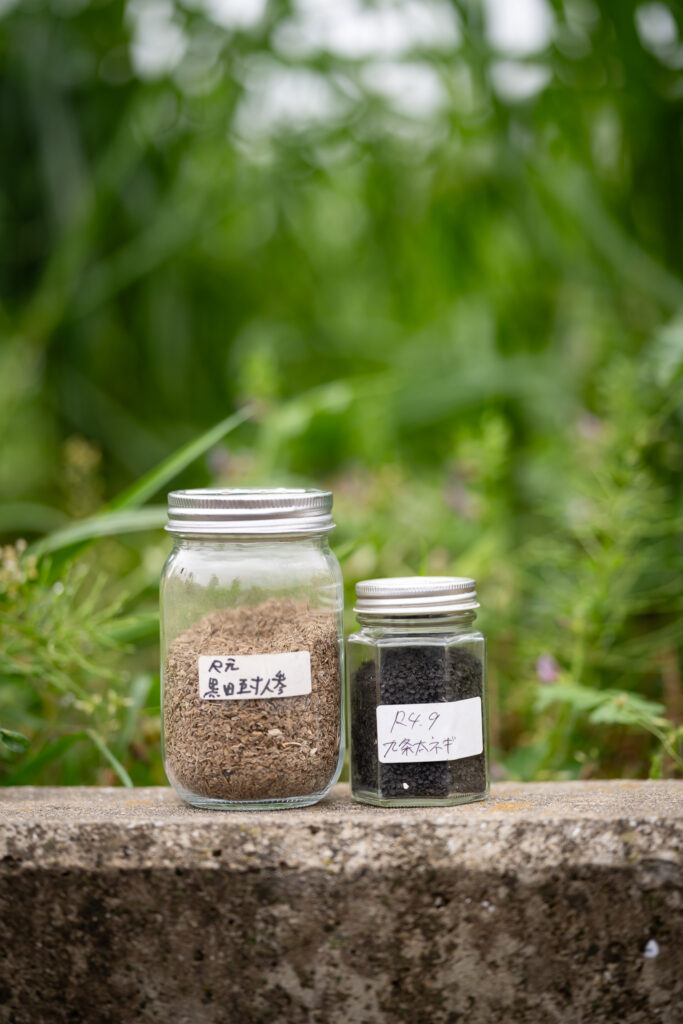
An encounter with Ryuta Takeda of “Takeda Katatsumuri Farm” was the beginning of a journey that led me to believe so. While the norm today is for vegetables to be distributed as one-generation varieties that are uniform in color and size, many unique native varieties are being lost. Takeda-san is a seed farmer who preserves the seeds of such ancient Japanese vegetables. He purposely does not harvest some of the produce. Instead, he flowers them, dries them, and collects the seeds; a time-consuming and labor-intensive process. “The seeds remember the climate and conditions, so they taste better in this region. Also, they thrive with the way I grow them,” says Takeda with a smile. Behind those eyes, I saw a fierce will and determination to pass on the diversity of life to the future.

“We use local produce not because it is local, but because it comes from people who take risks in pursuit of deliciousness,” explains Chef Takafumi Yoshida of “villa del nido”. Today, the restaurant is a must-visit destination for chefs and foodies from far and wide. The plates are adorned with Takeda’s seasonal vegetables, prepared in a way that fully brings out their flavors . It seemed as if the passion of the farmers and the chefs and their pursuit of deliciousness was sublimely expressed in each dish. The woody interior of the restaurant evokes a sleek forest. I sensed a mystical power pervading the space, evoking a sense of serenity and peacefulness that lifted our spirits.

Mr. Yoshikazu Tsumura of “Unzen Tsumura Estate” became a farmer from a desire to feed his children delicious food. It was surprising to hear that he moved to Unzen after learning organic farming in Ogawa-machi, Saitama Prefecture, which was covered in the previous article of this series. Tsumura, who formerly had a different background in drug-related research, sees the field as a grand laboratory where results only come in once a year.
With the help of nature, he grows in harmony with the land, collects the seeds, and grows them again with careful observation. His children are the ultimate judges of whether the food is tasty or not. I was particularly struck by one of his pearls of wisdom: “We do not judge a species by how well it grows under a singular condition, but rather select varieties that offer great versatility and potential.”


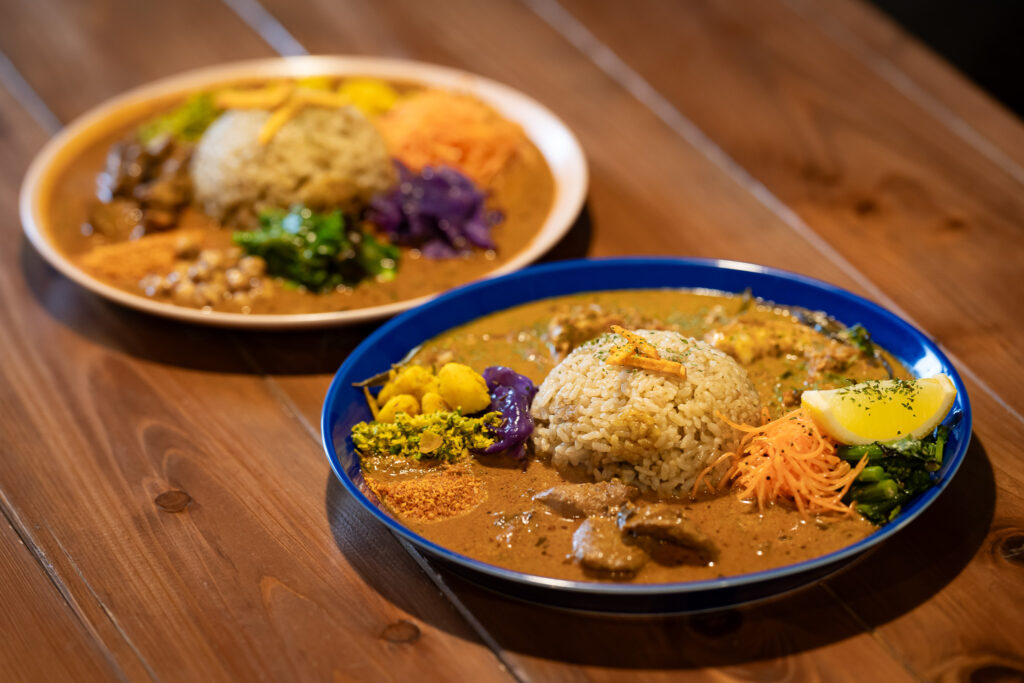
The next stop was “Poppoya Chaba,” which stands across the street from Furube Station with its commanding view of the ocean. As if on cue, Tsumura-san’s wife Naomi walked into the store clutching a basket of vegetables. Of course, the restaurant’s beloved Sri Lankan curry is laden with Tsumura’s vegetables. Perhaps it was the synergy of the potent spices and vegetables, but after eating I could feel my body warming up. Learning that the rice was local grains cooked with Unzen’s hojicha (roasted green tea), after the meal, Atsushi Nagata of Nagata Tea Manufacturing took me on a tour of his tea plantation. A brisk and refreshing breeze was blowing in the tea fields offering a panoramic view of the Ariake Sea with Mt.Unzen Fugendake in the background.

The power to change the minds of visitors
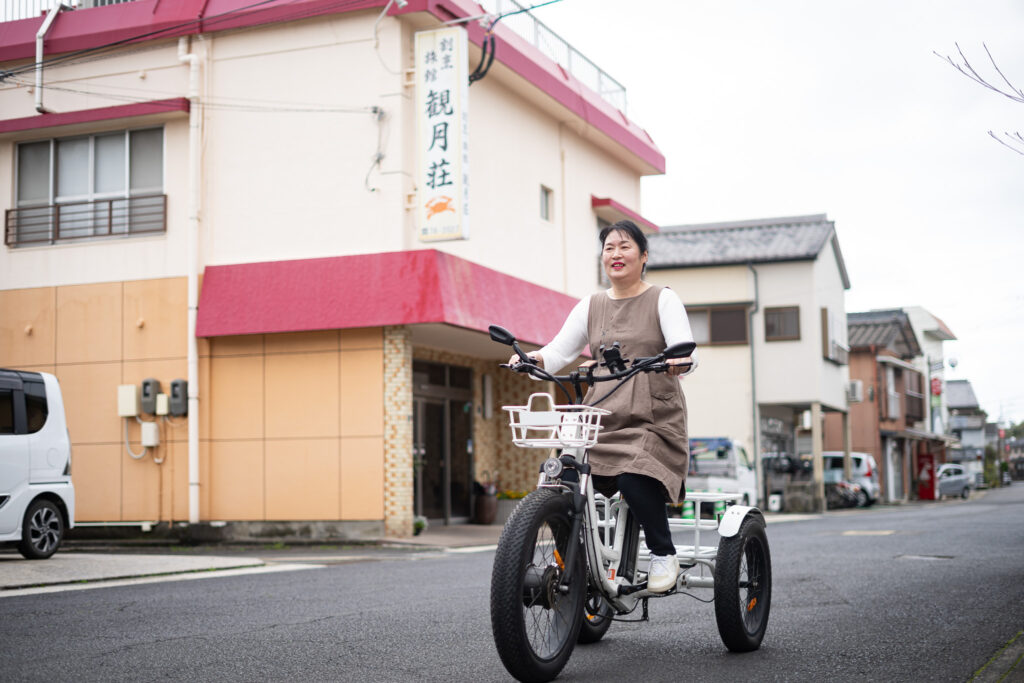
Perhaps in response to the increasing number of restaurants offering delicious local food, lodging facilities have also changed. The long-established “Kangetsu-so” inn is located near the port of Tahira, which is served by ferry from Kumamoto Prefecture. Various local ingredients are rendered into delicious dishes by owner Yasuko Sonoda, and served to guests. This includes vegetables from Takeda-san and Tsumura-san, and even local sake and bergamot beer. Sonoda-san is a pivotal figure who energetically weaves together the unique personalities of Unzen to create new attractions. Many returning customers have become fans of this matriarch.
Another new style of lodging is TOKITOKI, an all-to-yourself hotel renovated from a 190-year-old old private house on Kojirokuji Street. This street is an important traditional building preservation district where the samurai residences of the Nabeshima clan still remain. The concept is to “the art of doing nothing. I want guests to have some me time,” states owner Kengo Sakai. The notion is that of a “machiyado,” where the entire town is treated as an inn. The reception desk is a clothing store near the nearest station, and in the morning a nearby inn brings a breakfast using local ingredients.

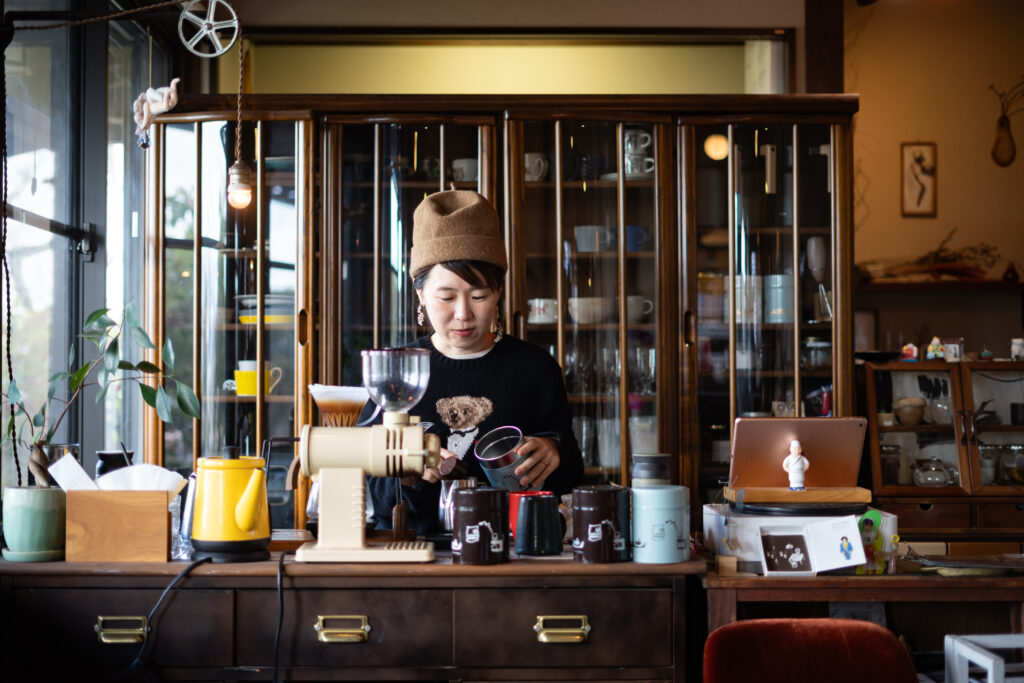
Another addition is a café where one can linger in quiet solitude. Anna Ogawa, who used to run a coffee pop-up store on a corner of Kojirokuji Street, opened “ku-ji,” a coffee shop and general goods store, on the premises of her family’s stonemasonry store. Many seats were designed to make solo customers feel comfortable, with plenty of books for them to peruse. In a corner of the café, lined with handpicked goods, is a notebook in which Ogawa has written an imaginary story of what a café like this would be like. The climax of the story, that the café is right here where you are now, was somewhat poignant.
The sight of people who never stop pushing themselves reminded me of the maxim of a philosopher: “To live is to keep on changing.” This shifting land, and the ever-changing power that resides in each of the diverse tangible and intangible elements within it.
Perhaps that vector to the future is what we refer to as life force. The next time we visit, new buds will be unfurling and will look different to what I saw today.
A Journey to Imbibe the Blessings and Bounty of the Earth
Tour de Nippon in Unzen
To be held on Dec 14 (sat) and 15 (sun)

Two days to enjoy the magnificent blessings and dynamic nature bestowed by Mount Unzen. On the first day, visit a farm and experience harvesting vegetables grown in fertile soil and collecting seeds. In the evening, savor a special dinner using local ingredients with the growers and local folks. On the second day, after ascending to the midpoint of Mt. Unzen and checking out shrines and workshops, romp all the way down and stroll along Kojirokuji Street, with its traditional townscape. Blissful bike routes basking in the breeze of the Ariake Sea. Come and enjoy a bicycle tour of Unzen, a land filled with the beauty of the mountains, the ocean, and the people who live there.
Tour de Nippon in Unzen
Sign up Now!!
https://papersky.jp/en/tour-de-nippon-unzen/
Tour de Nippon Guide
Unzen, Nagasaki
villa del nido
313-2 Tahirako, Kunimi Town, Unzen City, Nagasaki Prefecture
TEL:0957-73-9713
Poppoya Chaba
82-6, Furube Otsu, Mizuho-cho, Unzen, Nagasaki, Japan
TEL:0957-77-3030
Kappo Ryokan Kangetsuso
93 Tahira Otsu, Kunimi Town, Unzen City, Nagasaki
TEL:0957-78-2027
TOKITOKI
132-1, Jindai Hei, Kunimi Town, Unzen City, Nagasaki Prefecture
TEL:090-9762-3525
General merchandise and coffee shop ku-ji
Bo-2576-1 Kunimicho Kojiro, Unzen, Nagasaki
