







※This article is a re-edited excerpt from content originally published in the November 2016 issue of the magazine PAPERSKY no.52.
Takashi Chiyoda, founder and buyer of the outdoor gear shop Moonlight Gear in Iwamoto-cho, Tokyo, is a central figure in Japan’s alternative outdoor scene. He’s helped define the culture of ultralight hiking (UL) and fastpacking, not only through his impeccable eye for gear, but by actively taking to the field and sharing his experiences. Interestingly, his recent social media posts have been less about hiking and more about bikepacking.
“I actually got into the outdoors through mountain biking,” explains Chiyoda-san. “Back in my senior year of college, I bought a mountain bike, more for the look than anything else. But I realized pretty quickly that unless I actually used it, I wasn’t going to pull it off. I had time on my hands, so I started riding all over the place. That led me to hiking, and eventually to ultralight gear. Now it’s even become my job. But to be honest, mountain biking is still what I love most.
What I enjoy most is pushing my bike up a mountain at night, camping at the summit, then flying down the trails at sunrise. That whole camp-and-downhill style really hits the spot for me. But until recently, I didn’t want to mix cycling with UL. I’d drawn a line between the two. Cycling was my hobby, UL was my work.”
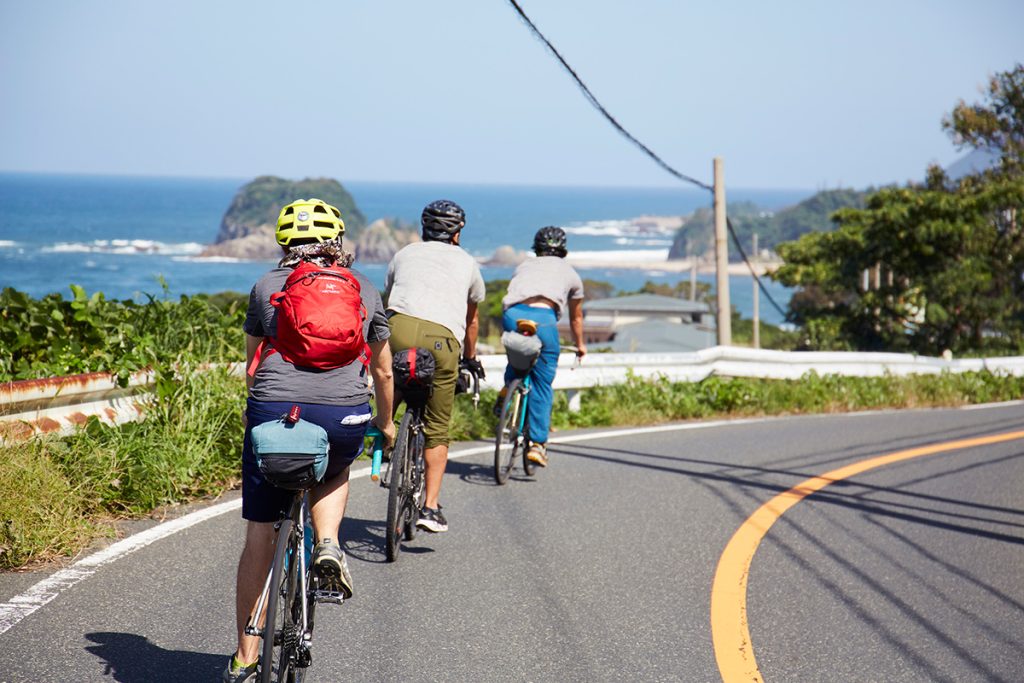
For Chiyoda, what finally brought the two worlds together was the rise of a new outdoor culture: bikepacking.
“About five years ago, I started seeing photos on overseas sites. Bikes rigged with these strange-looking bags. Before long, bikepacking had become a real movement in the West. Then brands started popping up with slogans like ‘Ultralight Bikepacking,’ and I thought, ‘This is something we need to be talking about.’ After that, I was hooked. Like a fish returned to water. Now it’s bikepacking all the time,” he laughs.
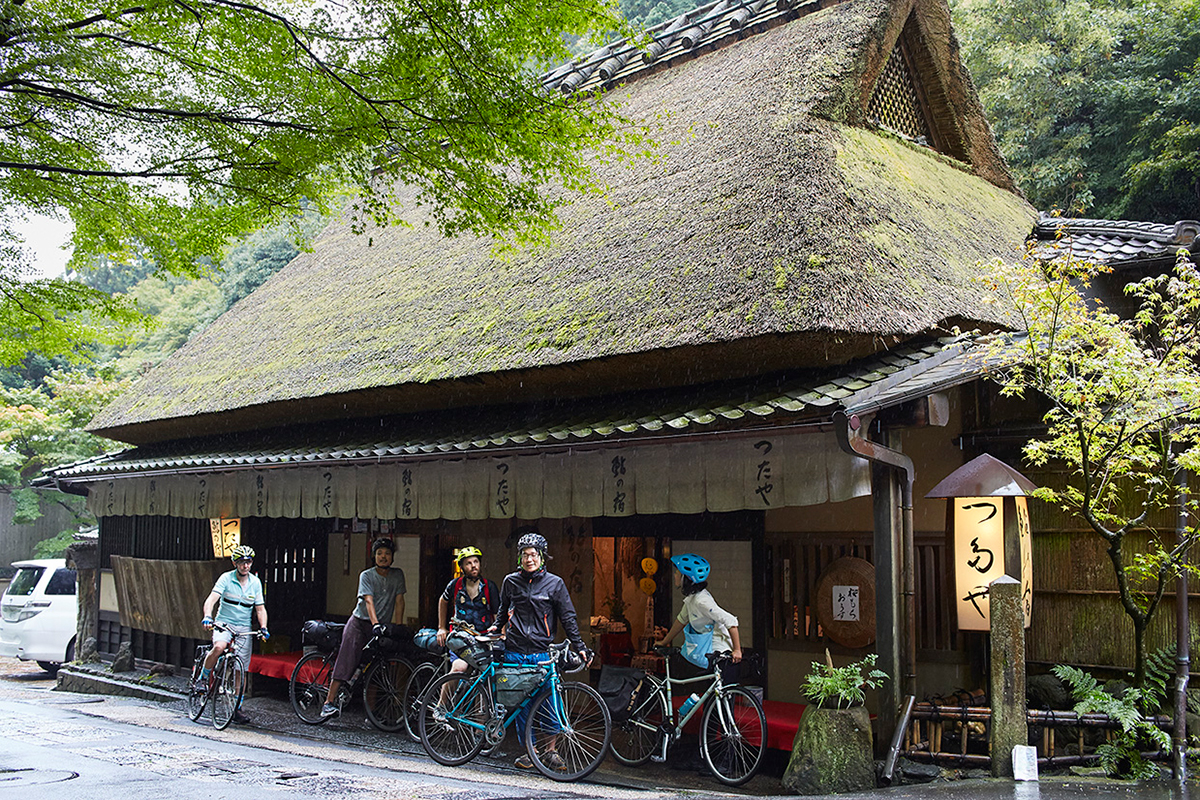
Still, it wasn’t straightforward. Bikepacking as a concept evolved in places like the US, where the terrain is often wide and flat. Trying to adapt that approach to Japan with its steep, mountainous landscapes meant navigating a lot of unknowns. It took time to find a way to “translate” the method for local terrain.
“I kind of took it upon myself to define what bikepacking could be in Japan,” Chiyoda says. “At first, I felt like it had to cover long distances or stick to unpaved trails. As if it didn’t count otherwise. I think I was a bit too rigid about it.”
“But then I started trying different styles, circling the Noto Peninsula, pass-hunting across Yatsugatake, island trips on Izu Ōshima and other places. The feeling of each journey would gradually settle into my body. Now I think it’s totally fine for bikepacking to take different forms.”

The trip PAPERSKY planned turned out to be a slower-paced journey than what Chiyoda-san usually takes on, but that shift brought its own rewards.
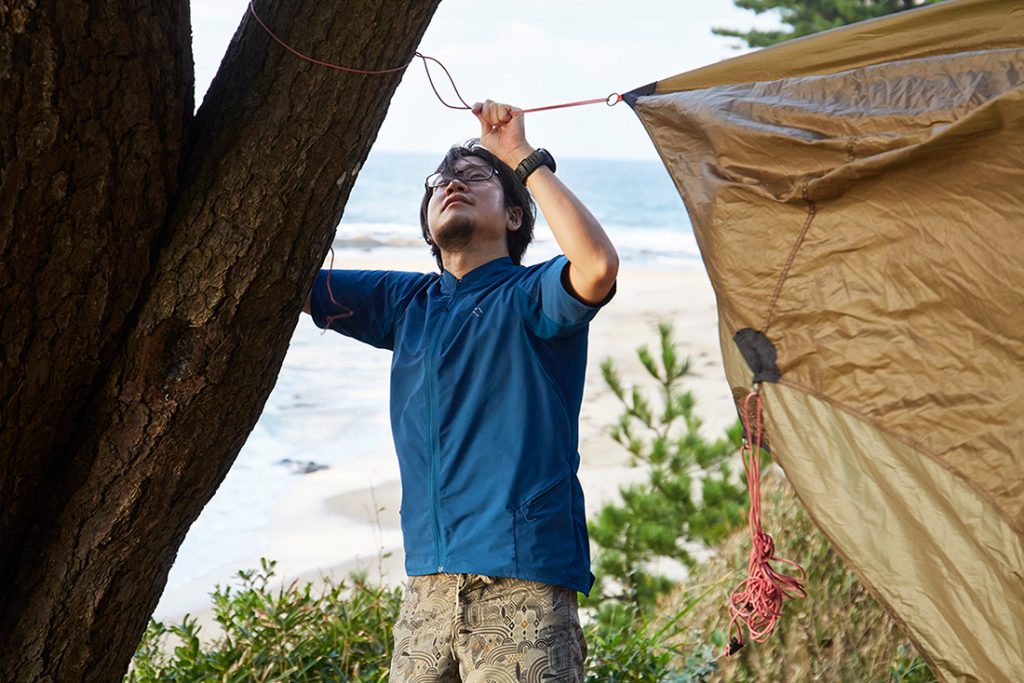
“I normally go for one or two nights, maybe three,” he confesses. “And to make those short trips feel worthwhile, I end up pushing myself, trying to go farther, do something harder. But this time we had six days, so we had the space to do things like light a fire on the beach or take it slow in the morning over coffee. It reminded me that slow trips are great too. Even though we still covered good ground and climbed a few passes, it all felt pretty relaxed. I think that’s really thanks to having such a light pack.”

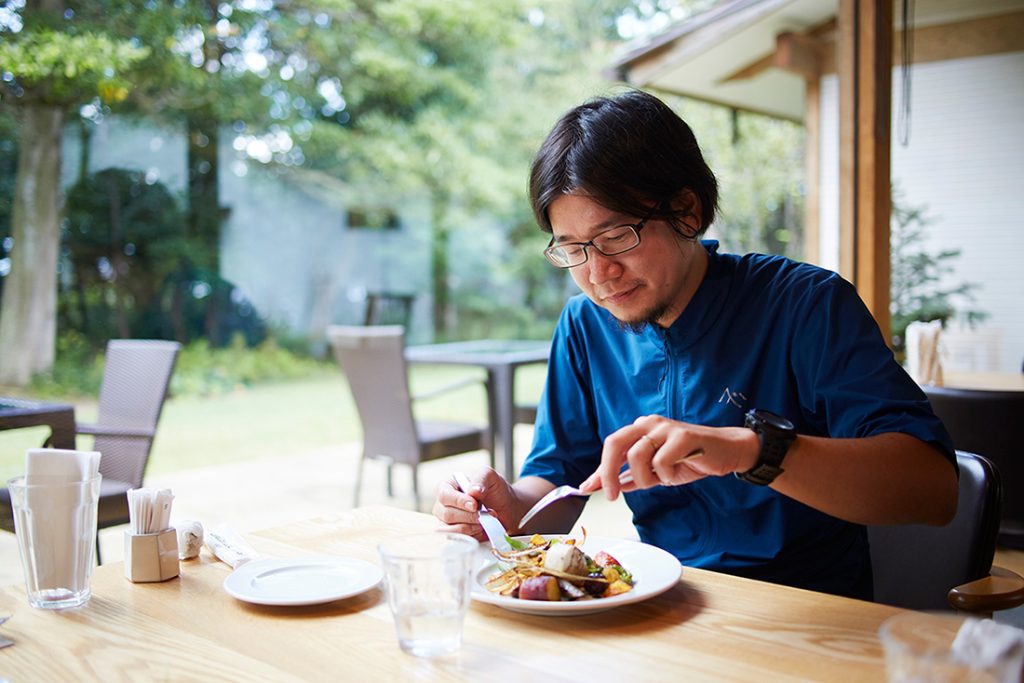
This trip wasn’t just slower-paced, it stood out for the people we met and parted with along the way.
“On the first day, getting to ride Vincent’s ‘home mountain’ with him was great. He was telling me, ‘Kyoto Prefecture has got tons of trails. You can ride down this one, that one,’ and I honestly got a bit jealous. And the visit to Otokomae Tofu Shop! I realized factory tours are totally fair game for bikepacking. I had a genuinely great time.
Talking with locals is always one of the best parts. Like the baker up in the mountains, or the folks running Bokkatte where we stayed on the second night. I loved hearing about why they moved there. That kind of conversation adds life to the place.
And with bike travel, you’ve got to climb a tough pass or two to even get to places like that, right? When you show up like that, I feel like people really appreciate it, like, ‘you actually came all the way out here?’ I think that’s why Aki-san from Bokkatte ended up joining us for part of the ride. I nearly died on a few of those climbs, though.”
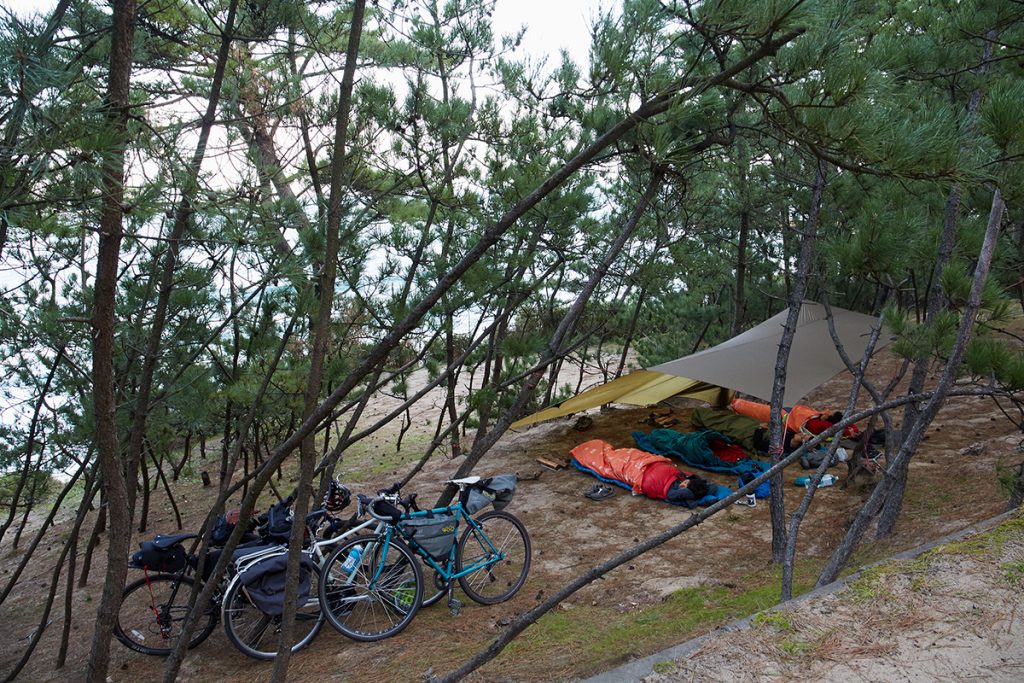

Oh, yes. The biggest struggle, and the most unforgettable part of this trip, was the endless mountain passes. When you’re riding through Japan, where most of the country is mountainous, there’s no avoiding them. But something changed after crossing so many. We realized we didn’t hate them anymore.
No matter how brutal a climb is, the end will always come. And just like with hiking, reaching the top feels good. Simple as that. If you’re debating whether or not to take the long way around or go over a pass, trust me, the day always feels more meaningful if you take the pass. At some point, while gritting my teeth on yet another climb, I started thinking, maybe it’s the same with life. Whether it’s a day or a lifetime, pushing through the hard parts makes it feel worth it.
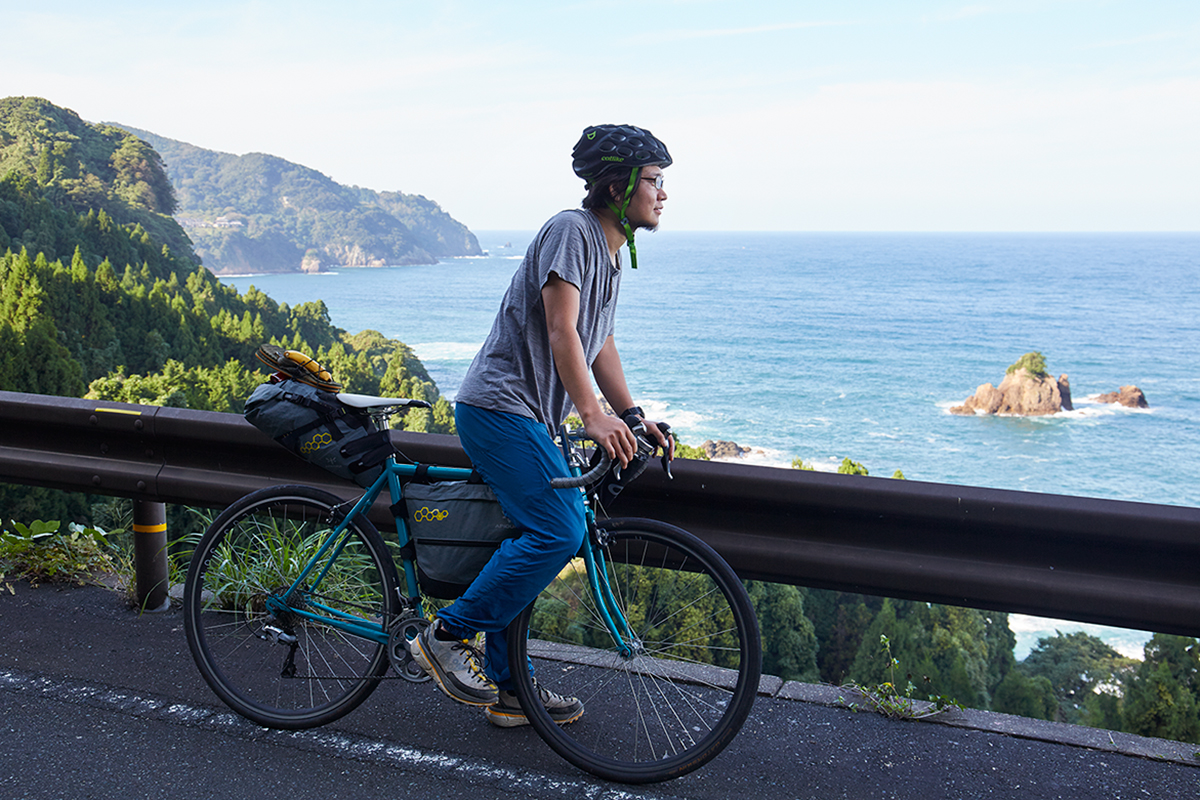
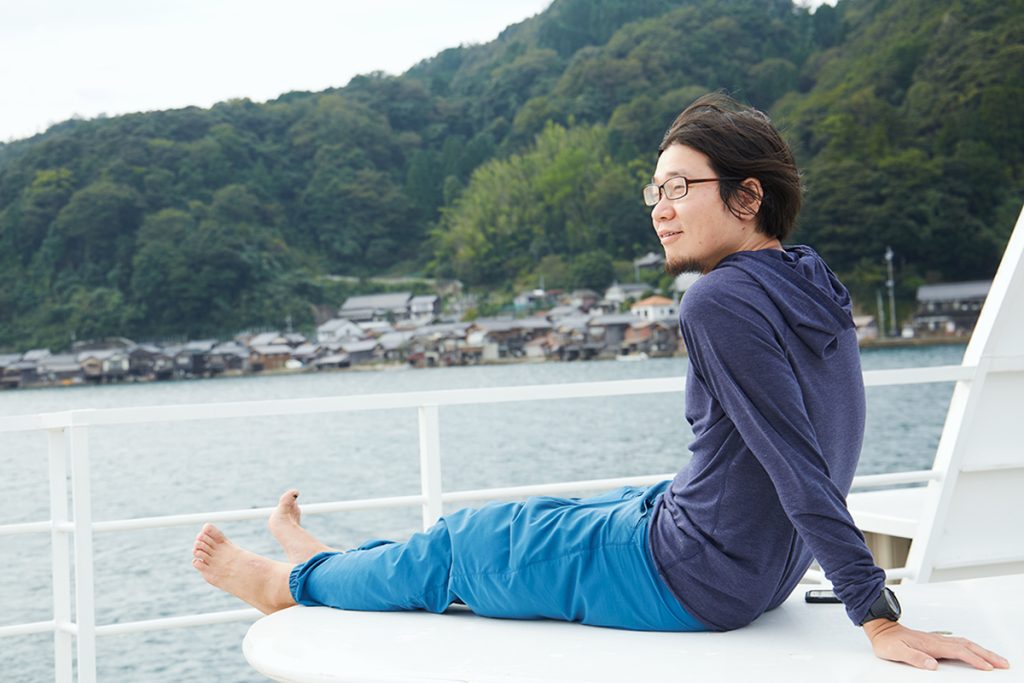
“Sure, mountain passes are tough. And yeah, if you’re optimizing for distance or speed, sticking to national roads probably makes more sense. But if we’re talking about the joy of the journey, then passes win every time. I honestly feel like one pass a day is ideal,” he laughs.
“Japan’s terrain gives you so much variety. It’s never flat for long, and that rhythm—climb a pass, reach a plain, climb another—makes each new town or village feel earned. It deepens the sense of traveling.
This trip made me realize that. I used to think of bikepacking more as an activity, focused on the ride itself, how to corner through a descent, that kind of thing. But travel is different. The places you visit give you something, leave something with you. The changing scenery, the shift in mood. That’s where the fun is. People might think bikepacking sounds hard or technical, but it’s actually a very relaxed, flexible way to travel. You feel the wind, you feel free, and you can just keep going. Even for a trip longer than this one, the gear stays the same. As long as you’ve got half a day to dry your laundry, the journey continues.
Even just riding through Kyoto Prefecture, I discovered so much I’d never seen. There’s still a whole Japan I haven’t met. When I get home, I think I’ll take another look at the map.”


Takashi Chiyoda
Takashi Chiyoda is the founder and lead buyer of Moonlight Gear, an outdoor gear shop located in Iwamotocho, Tokyo. Beyond running the store, he’s active across multiple facets of the outdoor industry: distributing overseas brands, organizing events, and developing original products. An avid adventurer himself, Chiyoda regularly shares insights from his own challenging journeys, whether hiking, fastpacking, or bikepacking.
