







※This article is a re-edited excerpt from content originally published in the April 2017 issue of the magazine PAPERSKY no.53.
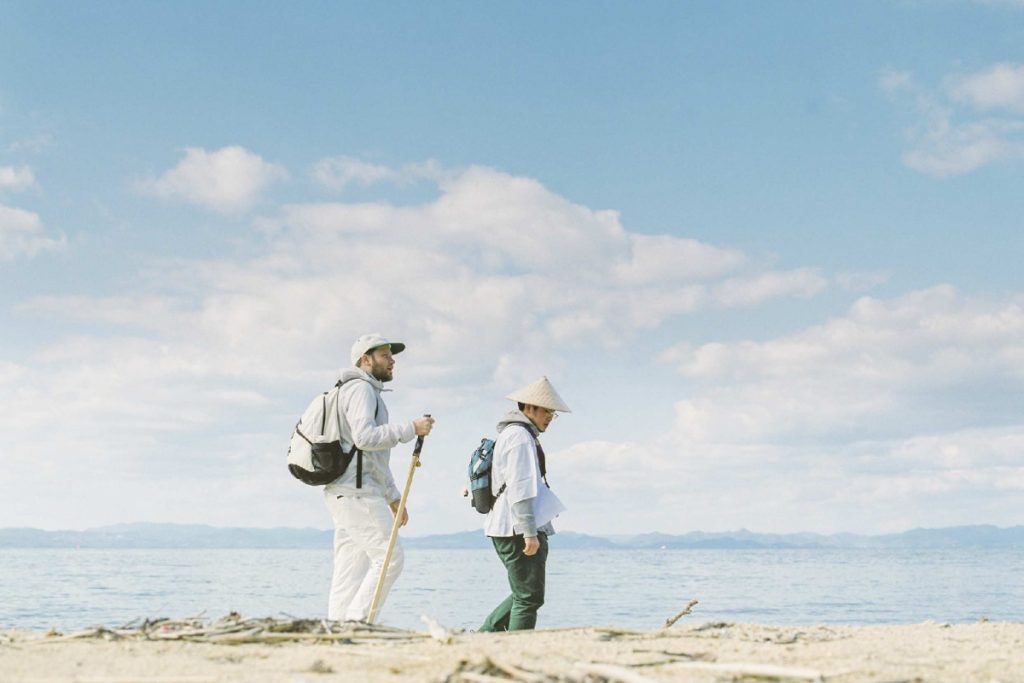
Lucas B.B., editor-in-chief of PAPERSKY, first fell in love with walking Japan’s old routes in 2009 during a journey along the Tokaido. Spanning roughly 490 kilometers between Nihonbashi and Kyoto, this historic artery of Edo-period culture takes just two and a half hours to traverse by bullet train—an easy day trip in modern terms. But Lucas chose to spend nearly two weeks walking it. That experience taught him the true value of moving slowly, in most cases, under 5 kilometers per hour.
“Roads don’t just carry people and goods,” Lucas says, reflecting on the walk. “They carry culture and history too. Eating delicious food, soaking in hot springs, and staying in old post towns… when you walk through all the changing landscapes, climbing up and down mountain passes, the culture tied to the road seeps in, and your emotions shift along with it. That’s what I discovered makes walking journeys so fascinating.”

Which brings us to Shodoshima. This actually marks Lucas’s second time here. He had privately completed the same route at the end of last year and was completely captivated by the depth of the island’s pilgrimage paths.
“The whole pilgrimage on Shodoshima is only about 150km. But within that short distance, there are so many layers, packed in tight. One moment you’re strolling by the sea, and the next you’re climbing a mountain trail, using chains to reach a temple perched on a cliff. The landscape shifts dramatically, from sea to mountains, rocks, and forests. That kind of dynamic change is something only a remote island can offer.”
Unlike the usual routes tied to history and culture, this journey had a slightly different tone, rooted more firmly in religion. Even for someone like Lucas, who’s walked many ancient paths, Shodoshima was his first time undertaking a true pilgrimage.
“I think a lot of people instinctively shy away when they hear the word ‘henro-michi’ (pilgrimage path). Then I walked it myself, and I realized that this psychological barrier isn’t just something outsiders feel. It exists among the islanders, too. I asked a few locals, ‘Have you ever walked the pilgrimage path?’ and many replied, ‘I’ve never even thought about it.’ Because it’s a path of religious devotion, many assume it has nothing to do with them. That mindset seems fairly common on the island.”
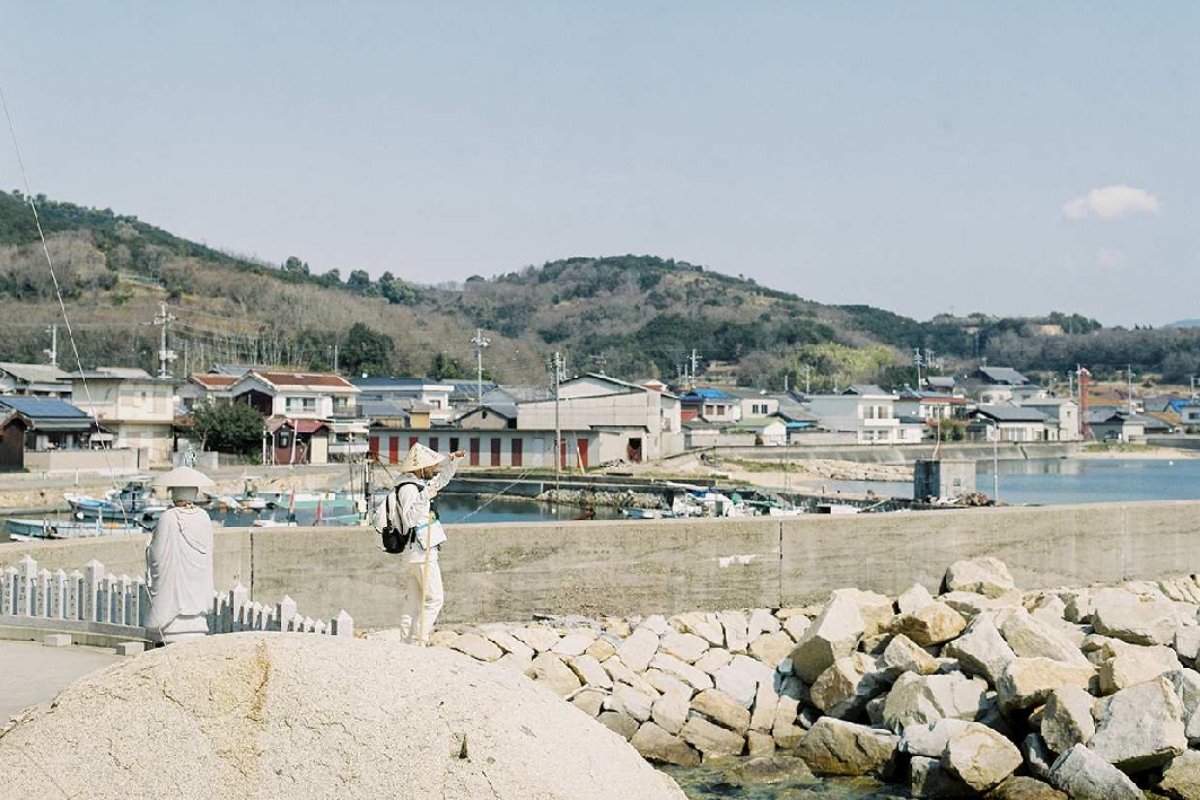
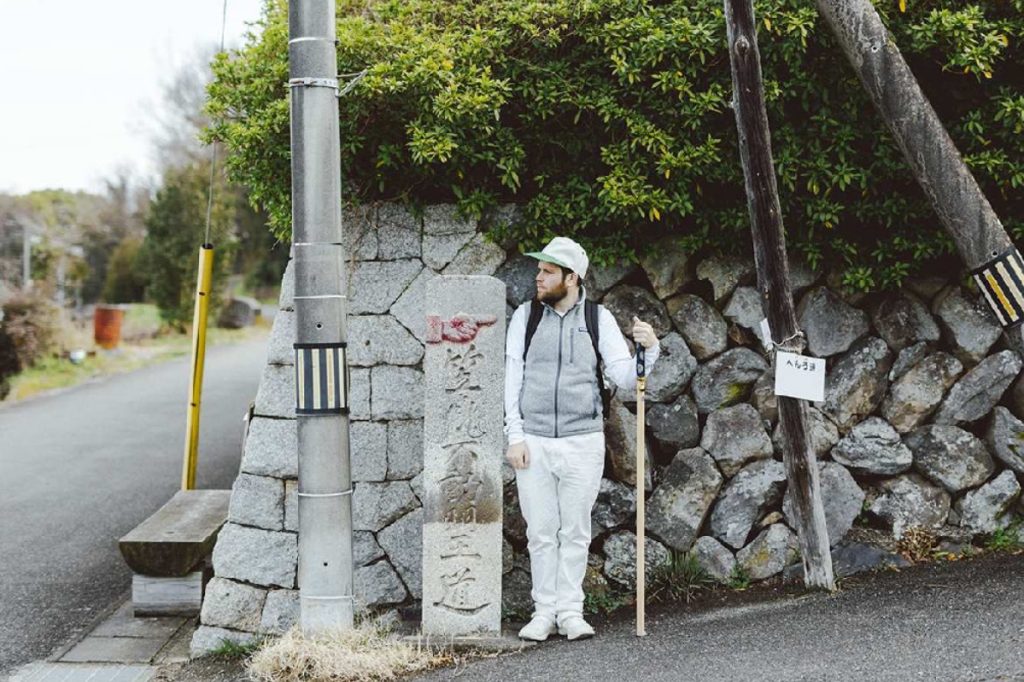
For this trip, the PAPERSKY team made a point of wearing white as an homage to the traditional attire of Ohenro-san (pilgrims). It wasn’t out of religious devotion, but rather out of respect for the pilgrim culture. Still, something curious happened along the way.
The act of walking began to stir something inside us. When we lit incense and chanted a mantra at the first temple of the day, we felt a sense of clarity wash over us. Maybe it was the subtle pride of knowing we were walking on the tail end of a tradition that had been passed down on this island for over a thousand years.
“But it’d be a shame to avoid this path just because it’s religious,” declares Lucas. “It’s packed with special qualities you can only find in Japan, and honestly, it’s one of the best trails I’ve walked. That’s exactly why I wanted to invite friends and even locals to walk it with me. You don’t need to pray or visit every temple. Once you’re out there, I think you’ll naturally become curious about the culture of Ohenro.”


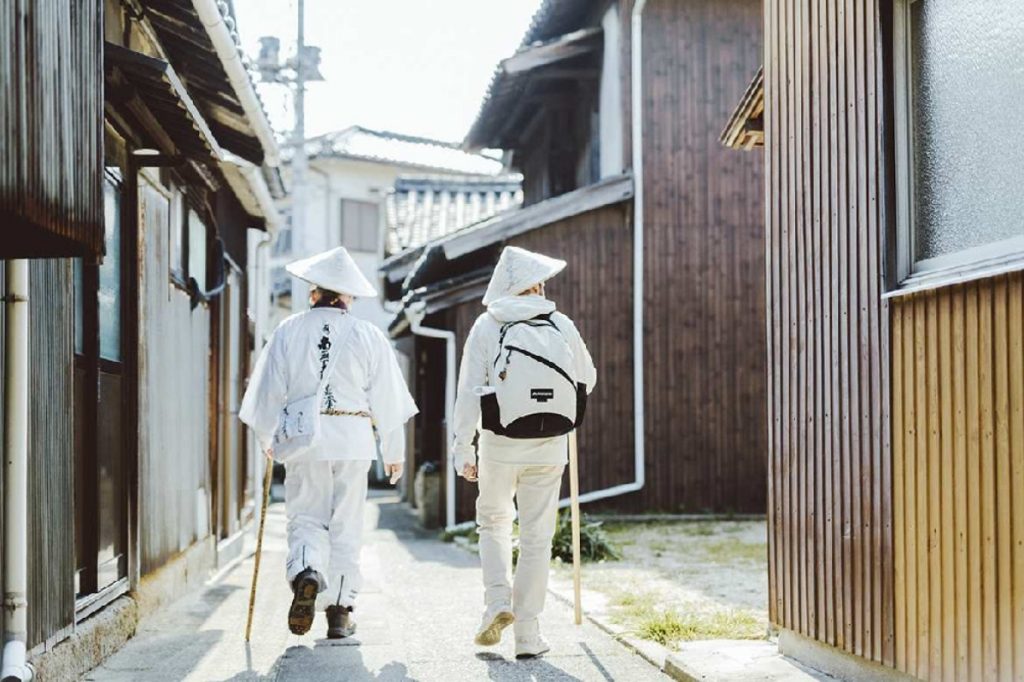
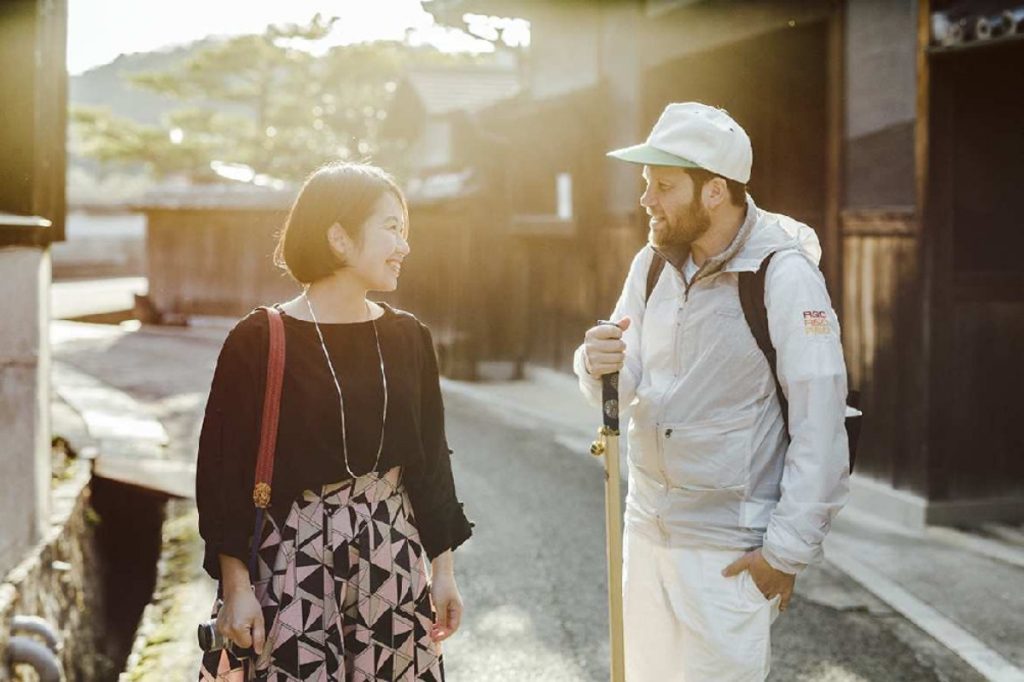
Lucas always connects with people during his travels. This time, he invited key local figures to walk alongside him, sharing the same views, steps, and stories along the way.
“Take Tadahiro Inoue, for example, who joined us on Day 2. He was born and raised on the island, but he’s constantly going places, picking up new ideas, and thinking about how to bring them back home to benefit the island. At the same time, he’s proud of where he’s from and doesn’t hesitate to show it off, getting people involved, starting new things, shaking things up. It’s people like him who keep local communities alive and interesting. Spending a whole day walking together gave us time to really connect. That’s one of the best parts of these kinds of trips.”
One thing Lucas often notices while traveling through the countryside is a kind of “city allergy” that some transplants from urban areas seem to develop. It’s a reaction to all things metropolitan. To Lucas, that’s a shame. Cities and rural areas each have their own strengths. It’s not about which is better or worse, but about blending the best of both. That spirit, he believes, is where the most exciting movements begin to take shape.
That’s why the people we met on Shodoshima were so encouraging. The locals, like Inoue-san, are unique and carry a grounded but open and neutral perspective.
“On day three, we walked with Tomohiro Watari. And honestly, I felt like he was the model example of what this trip could be. He’s super into the outdoors, but until now, walking just wasn’t really his thing. Still, once he started exploring the island on foot and connecting with its culture firsthand, he began to have a blast. He told us this journey changed how he thinks about walking. Watari’s always been passionate about climbing, so if he can weave the cultural side of the island into that passion, I think both his work and the local climbing scene could really grow in exciting ways.”

Another deeply moving part of the pilgrimage experience was learning about the sendatsu, or veteran pilgrims who serve as guides and leaders for others. On Shodoshima, these experienced locals take the initiative in maintaining and preserving the trails. It’s thanks to their tireless efforts that we can still walk the very same paths carved out by Kūkai, aka Kōbō Daishi, over 1,200 years ago. The dedication of these few aside, even this tradition feels precarious, like a flame on the verge of being extinguished.
“One of Japan’s greatest cultural assets, I think, is how it can speak about something that happened 1,200 years ago as if it were just a few decades back. But I worry that Japan these days is trading that richness for efficiency, letting these irreplaceable traditions quietly fade away. On our first day, Morishita-san, the sendatsu who guided us, told me that the number of pilgrims has plummeted over the last 20 years. With fewer people walking, the paths fall into disrepair. So then, what can people like us, who work in media, actually do for these trails? The answer is simple. Walk them. Experience them. And share what we see. That’s how the culture lives on.”
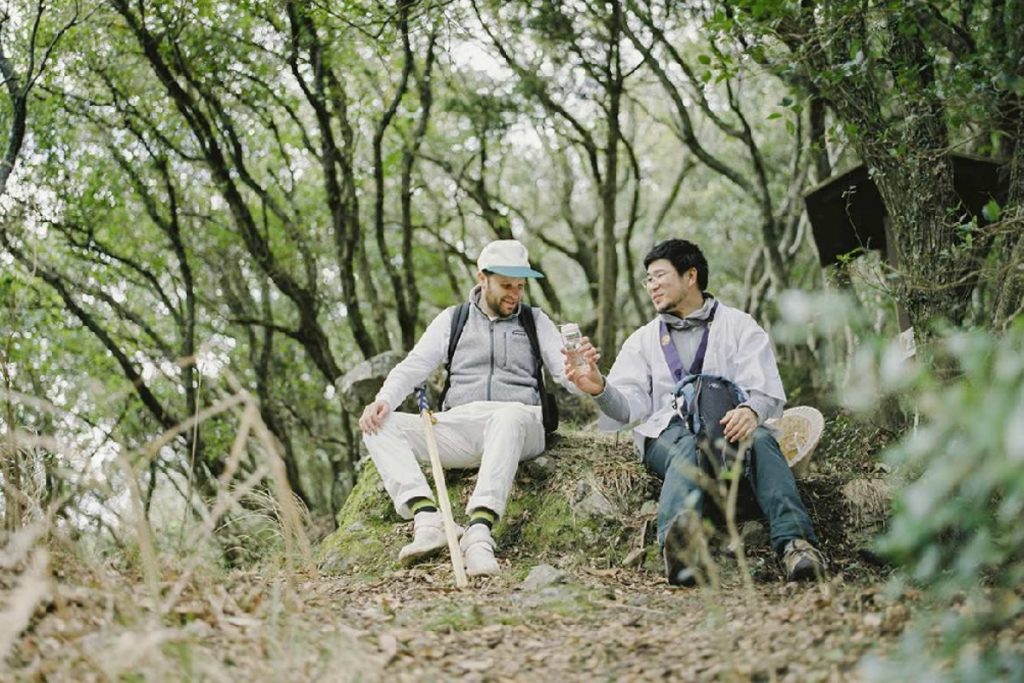

John Muir, the famed naturalist behind the trail that bears his name, was known for never hiking alone. He’d always bring a friend along, believing the shared experience made the journey richer. That idea stuck with Lucas. Since then, he has made it a thing to invite as many different people as he can when heading out on a trail. The more people walk together, the more surface area that journey has to impact others.

“Something clicked on this trip,” says Lucas. “It confirmed that walking alongside the locals creates a deeper connection to the island and the trail itself. Everyone who joined us came away with a genuine interest in the pilgrimage path.
Back when I walked the Tokaido eight years ago, no one cared about a 490km walking journey. But now, more and more people are curious, even excited, to walk together. If continuing to share this kind of experience helps bring attention to these trails and the cultural value they hold, then I know I’m doing something worthwhile.”
Lucas B.B.
American-born creative director, editor, and editor-in-chief of PAPERSKY. After graduating from the University of California, he came to Japan. He is actively involved in a wide range of projects, including event production for the “PAPERSKY tour de Nippon” journey of rediscovering Japan.
